
-4.png)
-5.png)
-5.png)
-5.png)
-5.png)
AISI 316/316L Paslanmaz Çelik Bilyalar – Korozyona Dayanıklı Östenitik Paslanmaz Çelik Bilyalar
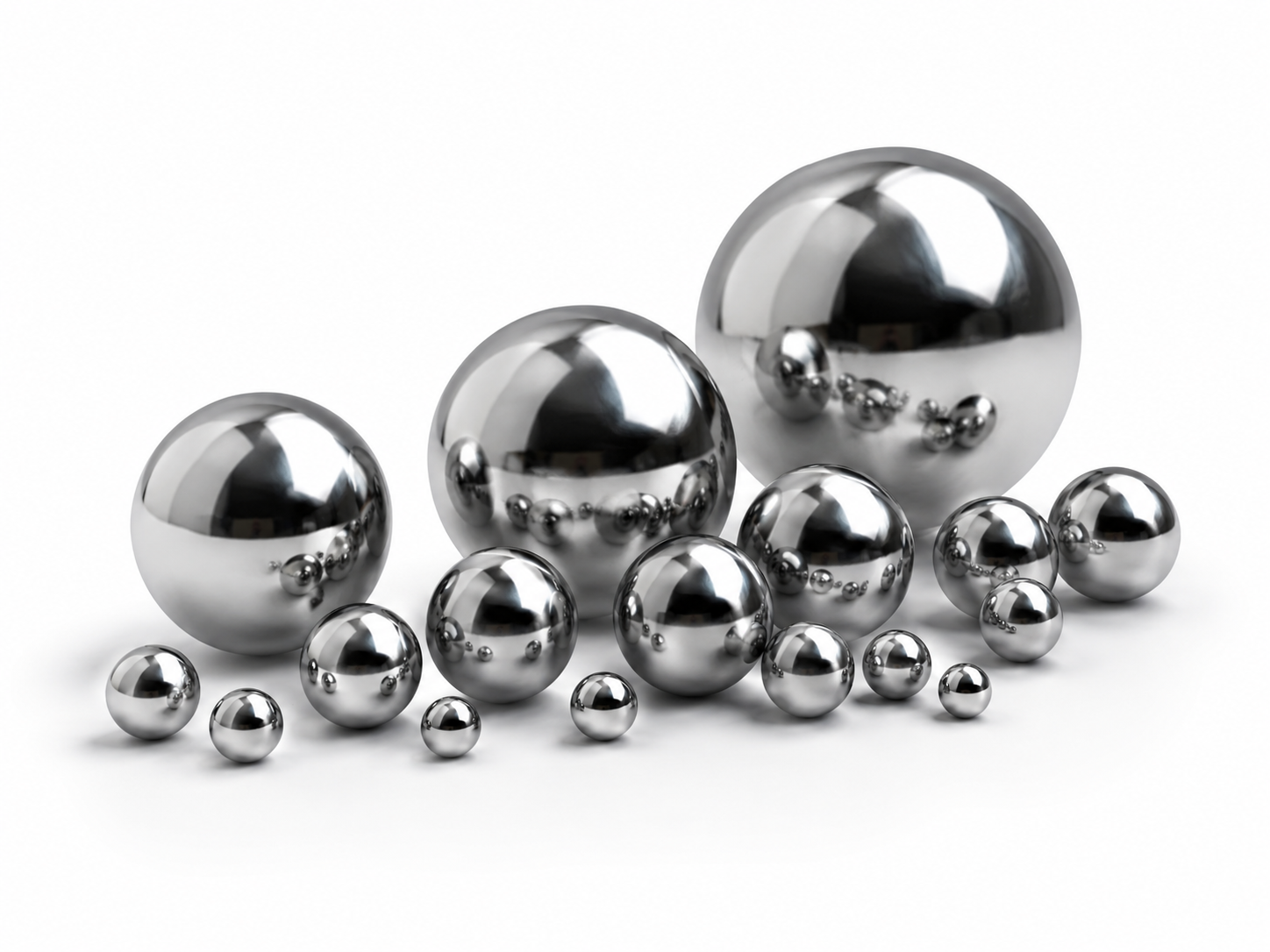
AISI 316/316L Paslanmaz Çelik Bilyalar, standart 302/304 paslanmaz çelik bilyalardan daha güçlü korozyon direnci gerektiren uygulamalar için tasarlanmış östenitik paslanmaz çelik bilyalardır. Alaşım sistemine eklenen molibden ile 316 ve 316L paslanmaz çelik bilyalar, kimyasal, denizcilikle ilgili, gıda ile ilgili, tıbbi, pompa, valf, püskürtücü ve aerosol uygulamalarında gelişmiş direnç sağlar.
SDBALLS, AISI 316 ve AISI 316L paslanmaz çelik bilyaları, 0,5 mm'den 150,00 mm'ye kadar metrik ve inç boyutlarında, G100, G200, G500 ve G1000 gibi yaygın hassasiyet dereceleriyle tedarik eder. Bu bilyalar, tipik sertliği HRC 20-39 civarında olan, tamamen sertleştirilmemiş östenitik paslanmaz çelik bilyalardır. Yüksek rulman sertliğinden ziyade korozyon direnci, temizlik, tokluk ve manyetik olmayan veya zayıf manyetik davranış için seçilirler.
| Öğe | Önerilen Sayfa İçeriği |
| Malzeme | AISI 316 / AISI 316L paslanmaz çelik |
| Ürün Tipi | Östenitik paslanmaz çelik bilyalar; tamamen sertleştirilmemiş paslanmaz bilyalar |
| Çap Aralığı | 0.5 mm – 150.00 mm |
| Hassas Sınıflar | G100, G200, G500, G1000 |
| Sertlik | Tipik sertlik HRC 20-39; |
| Tipik Uygulamalar | Pompalar, valfler, püskürtücüler, aerosoller, özel rulmanlar, tıbbi ekipman, gıda ile ilgili ekipman, kaplinler, mürekkep kartuşları, mücevher, fotoğraf ekipmanları, kimya ve tekstil endüstrileri |
Bu ürünü paylaşın
Ürün Genel Bakışı
AISI 316/316L Paslanmaz Çelik Bilyalar, standart karbon çeliği, krom çeliği veya 304 paslanmaz çeliğin yeterli korozyon performansı sağlayamadığı yerlerde kullanılan korozyona dayanıklı östenitik paslanmaz çelik bilyalardır. 302/304 paslanmaz çelik bilyalarla karşılaştırıldığında, 316/316L bilyalar molibden içerir, bu da oyuklanma, klorürler ve birçok kimyasal ortama karşı direnci artırır.
Bu bilyalar, AISI 52100 krom çelik bilyalar veya 440C paslanmaz çelik bilyalar gibi yüksek sertlikte rulman performansı için tasarlanmamıştır. Ana değerleri, korozyon direnci, tokluk, temiz yüzey durumu ve sertleştirilebilir rulman çeliğinin paslanacağı veya sistemi kirleteceği aşındırıcı olmayan ila aşındırıcı endüstriyel ortamlar için uygunluktur.
Malzeme Seçimi ve Teknik Konumlandırma
AISI 316 ve AISI 316L, 300 serisi östenitik paslanmaz çelik ailesine aittir. Geleneksel ısıl işlemle tamamen sertleştirilemezler ve bu nedenle 420C veya 440C gibi martensitik paslanmaz çelik bilyalardan daha düşük sertliğe sahiptirler. Bu nedenle, 316/316L bilyalar, maksimum yük taşıma yorulması veya yüksek hızlı hassas rulman görevi için değil, korozyon direnci ve hijyene duyarlı hizmet için seçilmelidir.
AISI 316L, AISI 316'dan daha düşük karbon içeriğine sahiptir, bu da karbür çökelmesi riskini azaltmaya yardımcı olur ve kaynaklı düzenekler veya daha düşük karbon içeriğinin gerekli olduğu uygulamalar için uygunluğu artırır. Alıcı, 304'ten daha iyi korozyon direncine ihtiyaç duyuyor ancak yine de temiz, tok, östenitik bir paslanmaz bilya gerekiyorsa, 316/316L genellikle tercih edilen malzeme seçimidir.
- Korozyon direnci yüksek sertlikten daha önemli olduğunda AISI 316/316L'yi seçin.
- Düşük karbon içeriği, çizim, spesifikasyon veya çalışma ortamı tarafından özellikle gerekli olduğunda AISI 316L'yi seçin.
- Maksimum korozyon direncinden daha yüksek sertlik ve rulman performansı daha önemli olduğunda 440C paslanmaz çeliği seçin.
- Uygulama kuru, yağlamalı ve yüksek hassasiyetli rulman performansına odaklanmış olduğunda AISI 52100 krom çeliği seçin.
- Şiddetli asitler, güçlü kimyasallar, yüksek sıcaklık korozyonu veya yüksek derecede özelleşmiş ortamlar için seramik veya diğer özel malzemeleri seçin.
Teknik Özellikler
| Özellik Maddesi | AISI 316/316L Paslanmaz Çelik Bilyeler |
| Malzeme Sınıfı | AISI 316 / AISI 316L |
| Çelik Ailesi | Östenitik paslanmaz çelik, 300 serisi |
| Çap Aralığı | 0,5 mm – 150,00 mm; diğer boyutlar üretim onayına tabidir |
| Hassas Sınıf | G100, G200, G500, G1000; uygulama ve maliyet hedefine göre seçilir |
| Sertlik | Tipik HRC 20-39; 300 serisi paslanmaz çelik ısıl işlemle sertleştirilmez |
| Yoğunluk | Yaklaşık 7,98 g/cm³ |
| Ana Avantaj | 302/304 paslanmaz çelik bilyalardan daha yüksek korozyon direnci |
| Ana Sınırlama | 420C, 440C ve krom çelik bilyalardan daha düşük sertlik |
| Manyetizma | Normalde manyetik değildir veya zayıf manyetiktir; soğuk işleme veya işleme sonrası hafif manyetizma oluşabilir |
| Korozyon Direnci | AISI 302/304/304L'den daha yüksek korozyon direnci; klorür ve kimyasal ortamlarda iyileştirilmiş direnç, ancak tüm deniz suyuna veya güçlü asitlere karşı bağışıklı değildir |
| Yüzey İşlemi | Cilalı, pasifleştirilmiş, temizlenmiş, yağsız veya talep üzerine özelleştirilmiş yüzey durumu |
Kimyasal Bileşim Referansı
| Seviye | C % maks. | Cr % | Ni % | Mo % | Mn % maks | Si % maks | P % maks | S % maks |
| AISI 316 | 0.08 | 16.00-18.00 | 10.00-14.00 | 2.00-3.00 | 2.00 | 1.00 | 0.045 | 0.030 |
| AISI 316L | 0.030 | 16.00-18.00 | 10.00-14.00 | 2.00-3.00 | 2.00 | 1.00 | 0.045 | 0.030 |
Not: Kompozisyon aralıkları referans değerlerdir. Nihai spesifikasyon, üzerinde anlaşılan malzeme standardı, çizim ve satın alma siparişi gereksinimlerine uymalıdır.
Uluslararası Sınıf Eşdeğerleri
| Yaygın Adı | AISI / SAE | EN / DIN Referansı | JIS Referansı | Malzeme Ailesi |
| 316 paslanmaz çelik | AISI 316 | 1.4401 / X5CrNiMo17-12-2 | SUS316 | Ostenitik paslanmaz çelik |
| 316L paslanmaz çelik | AISI 316L | 1.4404 / X2CrNiMo17-12-2 | SUS316L | Düşük karbonlu östenitik paslanmaz çelik |
Not: Eşdeğer kaliteler yalnızca genel referans içindir. Alıcılar, düzenlenmiş, tıbbi, gıda teması, deniz veya kimyasal uygulamalar için gereken tam standardı teyit etmelidir.
Isıl İşlem, Sertlik ve Performans
AISI 316/316L paslanmaz çelik bilyalar östenitik paslanmaz çelik bilyalardır ve geleneksel ısıl işlemle sertleştirilmez. Tipik sertlikleri martensitik paslanmaz çelik bilyalardan çok daha düşüktür, ancak birçok ortamda daha iyi korozyon direnci ve tokluk sağlarlar.
| Performans Faktörü | AISI 316/316L Konumlandırması | Alıcı Notu |
| Sertlik | Tipik HRC 20-39 | Ana gereksinim yüksek rulman sertliği olduğunda uygun değildir |
| Korozyon direnci | Yaygın paslanmaz çelik bilya kaliteleri arasında mükemmel; birçok klorür ve kimyasal ortamda 302/304'ten daha iyidir | Gerçek ortamı, konsantrasyonu, sıcaklığı ve temizleme sürecini doğrulayın |
| Tokluk | Östenitik yapısı nedeniyle iyi tokluk | Vanalar, pompalar, püskürtücüler ve genel endüstriyel montajlar için kullanışlıdır |
| Manyetizma | Normalde manyetik değildir veya zayıf manyetiktir | Soğuk işleme veya işleme sonrası hafif manyetizma oluşabilir |
| Yüzey durumu | Cilalanabilir, temizlenebilir ve pasifleştirilebilir | Hijyen hassasiyeti olan kullanımlar için temizlik ve paketleme gereksinimlerini doğrulayın |
Uygulamalar ve Uygulama Uygunluğu
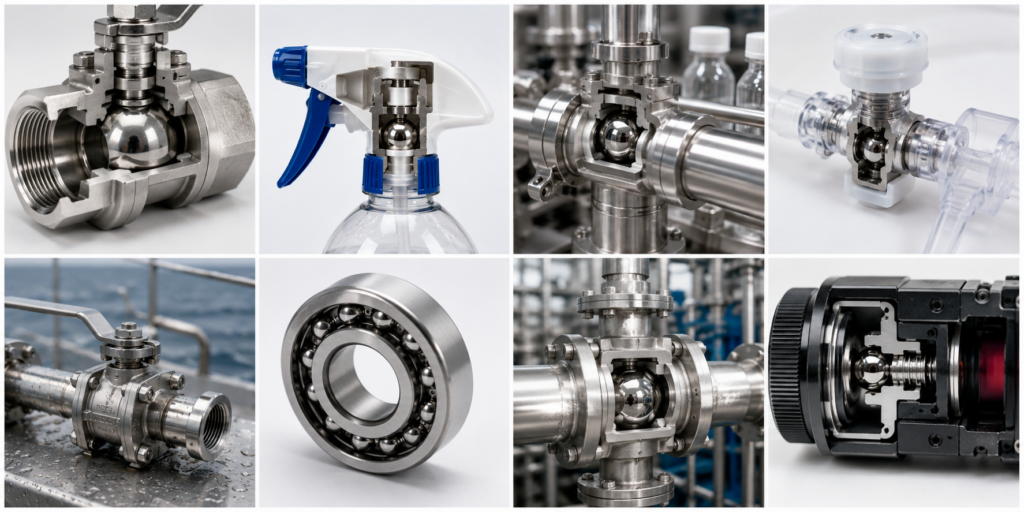
AISI 316/316L paslanmaz çelik bilyalar, korozyon direnci, temiz görünüm ve kimyasal uyumluluğun yüksek sertlikten daha önemli olduğu uygulamalar için en uygunudur. Yaygın olarak pompa ve valf montajlarında, püskürtücülerde, aerosollerde, özel rulmanlarda, tıbbi ekipmanlarda, gıda ile ilgili ekipmanlarda, mürekkep kartuşlarında, kaplinlerde, takılarda, fotoğraf ekipmanlarında ve kimya, kağıt, kauçuk ve tekstil endüstrilerinde kullanılırlar.
| Başvuru | Uygunluk Seviyesi | Neden Uygun? | Alıcı Notu |
| Pompalar ve vanalar | Çok iyi | İyi korozyon direnci, temiz yüzey ve tokluk | Ortam, sıcaklık, basınç ve sızdırmazlık durumunu teyit edin |
| Püskürtücüler ve aerosoller | Çok iyi | Temiz akış kontrol ve dağıtım bileşenleri için uygundur | Bilye boyutunu, yüzey kalitesini ve kimyasal uyumluluğu teyit edin |
| Gıda ile ilgili ekipmanlar | İyi | Temiz ve korozyona dayanıklı hizmet için genellikle östenitik paslanmaz çelik seçilir | Gıda teması gerekliliklerini, temizlik sürecini ve dokümantasyonu teyit edin |
| Tıbbi ekipman | İyi | Temiz yüzey ve korozyon direnci, implante edilmeyen birçok mekanik bileşende kullanışlıdır | Düzenleyici ve malzeme sertifikasyon gerekliliklerini teyit edin |
| Denizcilikle ilgili veya klorür maruziyeti | Koşullu | Molibden içeriği sayesinde 304'e göre daha iyi klorür direnci | Tüm deniz sularına karşı bağışıklı değildir; gerçek maruziyeti ve bakımı teyit edin |
| Özel düşük yüklü rulmanlar | Koşullu | Korozyon direncinin sertlikten daha önemli olduğu yerlerde kullanılabilir | Daha yüksek sertlik ve yorulma performansı için 440C veya 52100 kullanın |
| Kimya endüstrisi | Koşullu | Birçok ortamda 304'e kıyasla gelişmiş kimyasal direnç | Kimyasal türünü, konsantrasyonunu ve sıcaklığını teyit edin |
| Yüksek hızlı hassas rulmanlar | Sınırlı | Sertlik, rulman çeliği ve 440C'den daha düşüktür | AISI 52100 krom çeliği veya 440C paslanmaz çelik bilyeleri değerlendirin |
Malzeme Seçim Kılavuzu
| Malzeme Seçeneği | Tipik Mukavemet | Kısıtlama | Ne Zaman Tavsiye Edilmeli |
| AISI 316/316L paslanmaz çelik bilyalar | Yaygın 300 serisi paslanmaz bilye seçenekleri arasında en iyi korozyon direnci; iyi tokluk; temiz yüzey | 420C, 440C ve krom çelik bilyalardan daha düşük sertlik | Pompalar, vanalar, gıda ile ilgili ekipmanlar, püskürtücüler, aerosoller, kimyasal ve denizcilikle ilgili uygulamalar |
| AISI 302/304/304L paslanmaz çelik bilyalar | İyi genel korozyon direncine sahip ekonomik östenitik paslanmaz çelik | Klorürlü veya daha zorlu ortamlarda 316/316L'den daha az dirençlidir | 316 korozyon direncinin gerekmediği genel paslanmaz çelik uygulamaları |
| AISI 420C paslanmaz çelik bilyalar | 316/316L'den daha yüksek sertlik ve aşınma direnci | 316/316L'den daha düşük korozyon direnci | Sertlik, manyetizma ve orta düzeyde korozyon direnci gerektiren mekanik parçalar |
| AISI 440C paslanmaz çelik bilyalar | Yüksek sertlik, yüksek aşınma direnci ve yataklama kapasitesi | Klorürlü ve kimyasal ortamlarda 316/316L'den daha az korozyona dayanıklıdır | Hassas paslanmaz rulmanlar, pompalar, vanalar ve aşınmaya dayanıklı mekanik düzenekler |
| AISI 52100 krom çelik bilyalar | Rulmanlar için mükemmel sertlik ve yorulma performansı | Paslanmaz değildir; koruma olmadan korozyon direnci zayıftır | Kuru veya yağlamalı yüksek hassasiyetli rulman uygulamaları |
| Seramik bilyalar | Mükemmel korozyon direnci, malzemeye bağlı olarak düşük yoğunluk veya elektriksel yalıtım | Daha yüksek maliyet ve malzemeye özgü kırılganlık | Şiddetli korozyon, yalıtım, yüksek sıcaklık veya özel teknik ortamlar |
Üretim ve Proses Kontrolü
SDBALLS, ham madde seçimi, tel çekme, soğuk şişirme, çapak alma, taşlama, gerektiğinde lepleme veya parlatma, temizleme, belirtildiğinde pasivasyon, muayene ve ihracat paketlemesi yoluyla paslanmaz çelik bilye üretimini kontrol eder. 316/316L paslanmaz çelik bilyeler için süreç kontrolü; malzeme izlenebilirliği, yüzey temizliği, boyutsal tutarlılık ve korozyonla ilgili yüzey durumuna odaklanır.
- Üretim öncesi hammadde ve kalite teyidi.
- Stabil bilya taslakları için soğuk dövme ve şekillendirme kontrolü.
- Kalite ve yüzey gereksinimlerine göre taşlama, lepleme ve parlatma.
- Korozyona duyarlı projeler için temizleme ve pasivasyon seçenekleri.
- Sevkiyat öncesi parti muayenesi ve paketleme kontrolü.
- Proje bazlı siparişler için özel dokümantasyon, etiketleme ve OEM paketleme desteği.
Kalite Kontrol ve Muayene
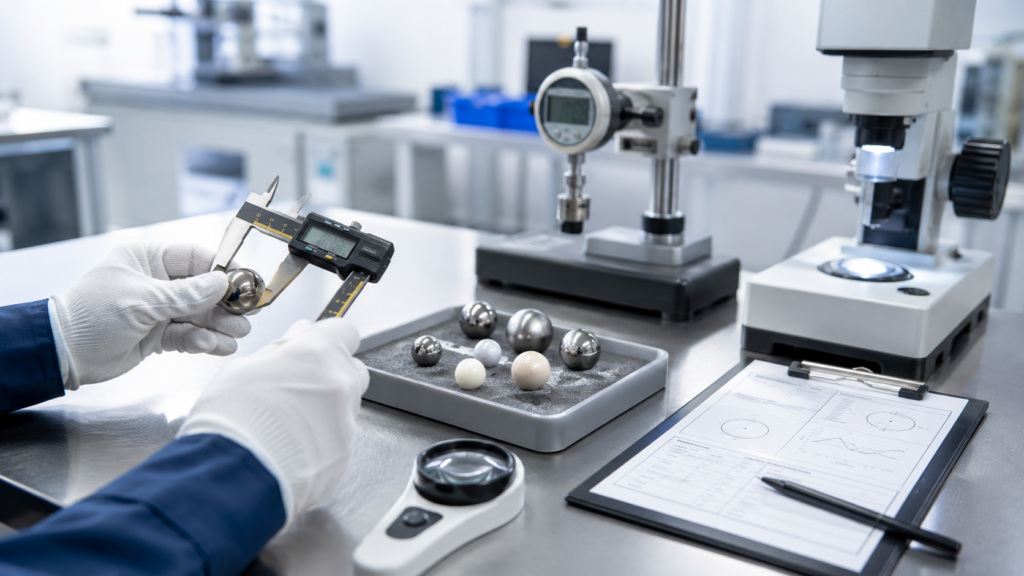
AISI 316/316L paslanmaz çelik bilyalar için kalite kontrol; boyutsal doğruluk, yüzey durumu, malzeme teyidi ve korozyonla ilgili gereksinimlere odaklanmalıdır. Kritik projeler için alıcılar, üretim öncesinde istenen kalite, sertlik referansı, yüzey cilası, pasivasyon durumu ve muayene dokümanlarını tanımlamalıdır.
| Muayene Maddesi | Amaç |
| Çap ve boyut toleransı | Bilyanın istenen metrik veya inç boyutuna uygunluğunu teyit edin |
| Hassasiyet sınıfı / yuvarlaklık | Yuvarlanma davranışını ve montaj uyumunu kontrol eder |
| Yüzey görünümü | Parlaklık, çizikler, oyuklar, lekeler ve görünür kusurları kontrol edin |
| Malzeme onayı | Sipariş gereksinimine göre AISI 316 veya AISI 316L olduğunu doğrulayın |
| Sertlik referansı | Gerektiğinde tipik östenitik paslanmaz sertlik aralığını teyit edin |
| Pasivasyon / temizleme durumu | Korozyona duyarlı veya temiz yüzey uygulamalarını destekler |
| Ambalaj denetimi | Sevkiyat sırasında kirlenme, nem ve karışık boyutlardan kaçının |
| Üçüncü taraf testi / RoHS / malzeme sertifikası | Proje veya alıcı spesifikasyonu gerektirdiğinde temin edilir |
Paketleme Seçenekleri
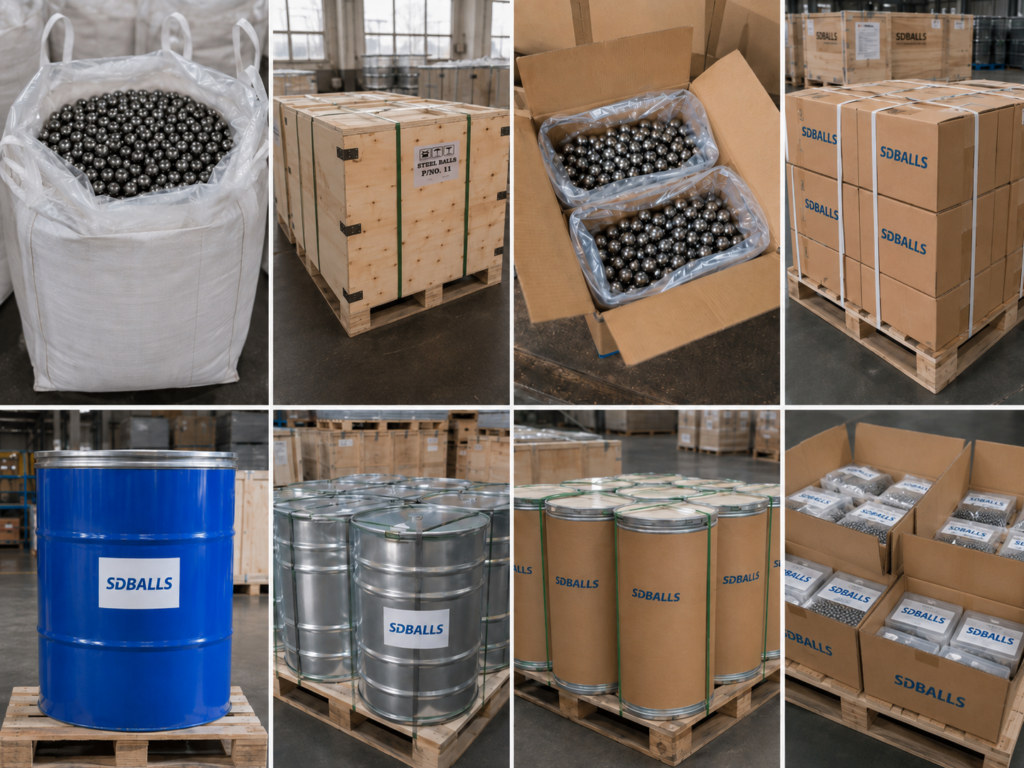
SDBALLS, AISI 316/316L paslanmaz çelik bilyaları boyut, miktar, temizlik ve ihracat gereksinimlerine göre dökme endüstriyel ambalajda veya özelleştirilmiş proje ambalajında tedarik edebilir.
- Küçük ve orta miktarlar için plastik torba + karton kutu.
- Daha ağır endüstriyel siparişler için kova, varil veya ahşap sandık.
- Deniz veya hava sevkiyatı için paletli ihracat ambalajı.
- Talep üzerine temiz paketleme veya yağsız paketleme.
- Malzeme, boyut, kalite, parti numarası ve müşteri bilgilerini içeren özelleştirilmiş etiketler.
- OEM ve distribütör paketlemesi proje teyidine tabidir.
Teklif Almak İçin Nasıl Belirtmelisiniz?
AISI 316/316L paslanmaz çelik bilyalar için doğru fiyat teklifi verebilmek için lütfen aşağıdaki bilgileri teyit edin:
- Malzeme kalitesi: AISI 316 veya AISI 316L.
- Çap: metrik veya inç boyut.
- Hassasiyet sınıfı: G100, G200, G500, G1000 veya istenen diğer sınıf.
- Yüzey kalitesi: parlatılmış, pasive edilmiş, temizlenmiş, yağsız veya özel yüzey durumu.
- Miktar: numune miktarı, deneme siparişi miktarı veya yıllık talep.
- Uygulama: pompa, vana, püskürtücü, gıda ile ilgili ekipman, tıbbi ekipman, kimya endüstrisi veya diğer kullanımlar.
- Çalışma ortamı: su, tuz, kimyasal ortam, sıcaklık, temizleme yöntemi ve maruz kalma süresi.
- Muayene dokümanları: malzeme sertifikası, RoHS, üçüncü taraf testi, PPAP tarzı dokümanlar veya özel rapor.
- Paketleme gereksinimi: torba, karton kutu, varil, kova, palet, temiz paketleme veya OEM etiketi.
- Ticari terim ve varış yeri: EXW, FOB, CIF, DAP/DDP (varsa).
Teknik SSS
S: AISI 316 ve AISI 316L paslanmaz çelik bilyalar arasındaki fark nedir?
C: Her ikisi de molibden içeren östenitik paslanmaz çelik bilyalardır. AISI 316L, AISI 316'ya göre daha düşük karbon içeriğine sahiptir; bu, spesifikasyon, kaynakla ilgili koşullar veya korozyona duyarlı uygulamalar nedeniyle düşük karbon içeriği gerektiğinde faydalıdır.
S: AISI 316/316L paslanmaz çelik bilyalar sertleştirilmiş midir?
C: Hayır. AISI 316/316L bilyalar östenitik paslanmaz çelik bilyalardır ve geleneksel ısıl işlemle tamamıyla sertleştirilemezler. Tipik sertlikleri yaklaşık HRC 20-39 aralığındadır. Yüksek sertlik için, ortama bağlı olarak 420C, 440C veya AISI 52100 krom çelik bilyaları değerlendirin.
S: 316/316L paslanmaz çelik bilyalar manyetik midir?
C: Normalde manyetik değildirler veya zayıf manyetiktirler. Ancak, soğuk işleme, şekillendirme veya yüzey bitirme işlemlerinden sonra hafif bir manyetizma görülebilir. Manyetizma kritik önem taşıyorsa, lütfen fiyat teklifi öncesinde gereksinimi teyit edin.
S: 316/316L bilyalar, 304 paslanmaz çelik bilyalara göre korozyona daha mı dayanıklıdır?
C: Evet. 316/316L'deki molibden içeriği, özellikle birçok klorürlü veya kimyasal ortamda korozyon direncini artırır. Bununla birlikte, 316/316L her asit, deniz suyu koşulu veya yüksek sıcaklıklı kimyasal ortama karşı dirençli değildir; bu nedenle gerçek ortam teyit edilmelidir.
S: AISI 316/316L paslanmaz çelik bilyalar gıda ile ilgili ekipmanlarda kullanılabilir mi?
C: Korozyon dirençleri ve temiz yüzeyleri nedeniyle gıda ile ilgili ve temiz endüstriyel ekipmanlar için yaygın olarak tercih edilirler. Alıcılar, sipariş vermeden önce gıda temas gereksinimlerini, temizlik sürecini, dokümantasyonu ve ambalajlamayı teyit etmelidir.
S: 316/316L paslanmaz çelik bilyalar, 440C paslanmaz çelik bilyaların yerini alabilir mi?
C: Yalnızca korozyon direnci sertlikten daha önemli olduğunda. 316/316L birçok ortamda daha iyi korozyon direnci sunarken, 440C çok daha yüksek sertlik ve daha iyi yatak aşınma performansı sağlar.
S: SDBALLS hangi yüzey bitirme seçeneklerini sunabilir?
C: SDBALLS, uygulama, boyut, kalite ve miktara bağlı olarak cilalanmış, pasifleştirilmiş, temizlenmiş, yağsız veya özelleştirilmiş yüzey koşullarını görüşebilir.
Fiyat teklifi için hangi bilgiler gereklidir?
C: Lütfen malzeme kalitesi, çap, hassasiyet derecesi, yüzey bitirme, miktar, uygulama, çalışma ortamı, istenen muayene belgeleri, ambalajlama yöntemi, varış yeri ve ticaret terimini belirtin.
İlgili Ürünler
- paslanmaz çelik bilyeler
- 304 paslanmaz çelik bilyeler / 304L paslanmaz çelik bilyeler
- 420C paslanmaz çelik bilyeler
- Daha yüksek sertlik için 440C paslanmaz çelik bilyeler
- AISI 52100 krom çelik bilyalar
- Vanalar için paslanmaz çelik bilyeler
- Pompalar için paslanmaz çelik bilyeler
- SDBALLS kalite kontrol
Bir Talep Planlayın
Herhangi bir hizmet için bugün bizimle iletişime geçin. (*) İşaretli alanlar zorunludur.