
-5.png)
-6.png)
-6.png)
-6.png)
-6.png)
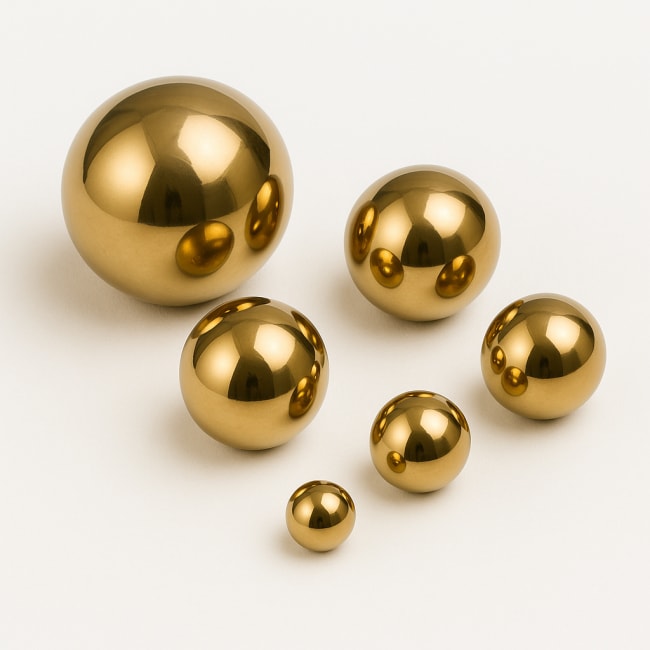
Alüminyum Bronz Bilyalar – C61000 CuAl8 Bakır Alaşımlı Bilyalar
Alüminyum Bronz Bilyalar; daha yüksek mekanik dayanım, aşınma direnci, deniz suyu korozyon direnci ve kararlı yüzey performansı gerektiren uygulamalar için tasarlanmış bakır esaslı alaşım bilyalardır. Standart pirinç veya genel bronz bilyalarla karşılaştırıldığında alüminyum bronz; özel pompalar, valfler, denizcilikle ilgili bileşenler, elektrik aksamları, enstrümanlar ve dekoratif donanımlar için daha güçlü ve daha dayanıklı bir malzeme seçeneği sunar.
SDBALLS, tipik malzemesi C61000 / CuAl8 / QAl7'ye denk, çap aralığı 1,5 mm ile 150,0 mm arasında ve hassasiyet sınıfları G100'den G1000'e kadar olan alüminyum bronz bilyaları pasifleştirilmiş durumda tedarik eder. Bu bilyalar, hem korozyon direncinin hem de mekanik performansın önemli olduğu OEM projeleri için uygundur, ancak çalışma ortamı teyit edilmeden yüksek hızlı rulman çelik bilyaları veya evrensel kimyasallara dayanıklı bilyalar olarak değerlendirilmemelidir.
| Öğe | Önerilen Sayfa İçeriği |
| Ürün Adı | Alüminyum Bronz Bilyalar |
| Malzeme | Bakır-alüminyum bronz alaşımı; C61000 / CuAl8 tipi |
| Çap Aralığı | 1,5 mm – 150,0 mm |
| Hassas Sınıflar | G100 – G1000 |
| Sertlik | Tipik HRC 27-32 |
| Tipik Uygulamalar | Özel pompalar, valfler, deniz suyuyla ilgili bileşenler, elektronik sektörü, enstrümanlar, estetik ve dekoratif uygulamalar |
Bu ürünü paylaşın
Ürün Genel Bakışı
Alüminyum Bronz Bilyalar, bakır-alüminyum bronz malzeme ailesinden üretilen hassas bakır alaşımlı bilyalardır. Bu alaşım grubu, uygulamanın birçok sıradan pirinç veya genel bronz seçeneğinden daha iyi aşınma direnci ve korozyon performansına sahip, daha güçlü bir bakır alaşımlı bilya gerektirdiği durumlarda seçilir.
Alüminyum bronzun temel avantajı, zorlu akışkan işleme ortamlarında mukavemet, sertlik, korozyon direnci ve istikrarlı performansın bir araya gelmesidir. Özel pompalar, vanalar, elektronik bileşenler, denizcilikle ilgili mekanizmalar veya dekoratif montajlar için bilya tedarik eden alıcılar için alüminyum bronz, mekanik dayanıklılık ile korozyon direnci arasında faydalı bir denge sağlayabilir.
Bu ürün sayfası, yalnızca genel bir dekoratif metal bilya sayfası olarak değil, bir mühendislik bakır alaşımlı bilya sayfası olarak konumlandırılmalıdır. İfadeler hem “Aluminium Bronze Balls” hem de “Aluminum Bronze Balls” şeklinde yer almalıdır, çünkü uluslararası alıcılar hem İngiliz hem de Amerikan yazımını kullanarak arama yapmaktadır.
Malzeme Seçimi ve Teknik Konumlandırma
Alüminyum bronz, ana alaşım elementi olarak alüminyum içeren bakır esaslı bir bronz alaşımıdır ve kesin kaliteye bağlı olarak az miktarda diğer alaşım elementleri de bulunur. Bu sayfa için malzeme konumlandırması, bakır alaşımları arasında yüksek mukavemet, iyi korozyon direnci ve iyi aşınma davranışı ile bilinen C61000 / CuAl8 tipi alüminyum bronza dayandırılmalıdır.
Saf bakır bilyalarla karşılaştırıldığında, alüminyum bronz bilyalar çok daha yüksek mukavemet ve sertlik sunar. Pirinç bilyalarla karşılaştırıldığında, genellikle daha iyi mekanik dayanıklılık ve geliştirilmiş deniz suyu korozyon direnci sağlarlar. Fosfor bronz bilyalarla karşılaştırıldığında, mukavemet, deniz suyu performansı ve pompa veya vana dayanıklılığının yay benzeri yorulma davranışından daha önemli olduğu durumlarda alüminyum bronz sıklıkla tercih edilir. Paslanmaz çelik bilyalarla karşılaştırıldığında, alüminyum bronz demir dışı bir malzeme seçeneği sunar, ancak gerçek ortam için kimyasal uyumluluk yine de teyit edilmelidir.
Alüminyum bronz bilyalar, yüksek hızlı rulman düzeneklerinde krom çelik rulman bilyalarının yerine kullanılmak üzere tasarlanmamıştır. Ayrıca tüm aşındırıcı ortamlarda 316 paslanmaz çelik veya seramik bilyaların evrensel bir alternatifi değildir. Her proje için, alıcılar nihai malzeme seçiminden önce akışkan ortamı, sıcaklık, yük, sızdırmazlık durumu ve gerekli hassasiyet kalitesini teyit etmelidir.
Teknik Özellikler
| Özellik Maddesi | Değer / Açıklama |
| Malzeme | Alüminyum bakır alaşımı / alüminyum bronz alaşımı |
| Uluslararası Eşdeğerler | ABD C61000; Çin QAl7; Almanya 2.0920 / CuAl8; Birleşik Krallık CA102; İtalya CuAl8; Rusya Br7; Japonya CuAl8 |
| Ana Kalite Referansı | C61000 / CuAl8 / QAl7 tipi |
| Çap | 1,5 mm – 150,0 mm |
| Hassas Sınıf | G100 – G1000 |
| Sertlik | Tipik HRC 27-32, malzeme durumuna ve üzerinde anlaşılan spesifikasyona bağlıdır |
| Yoğunluk | Yaklaşık 7,66 g/cm³ |
| Manyetizma | Genellikle manyetik olmayan / çok düşük manyetik tepki |
| Young Modülü | Yaklaşık 119 GPa |
| Çekme Mukavemeti | Yaklaşık 600-700 MPa |
| Yüzey / Durum | Pasifleştirilmiş durum; sipariş gereksinimlerine göre parlatılmış yüzey mevcuttur |
| Korozyon Direnci | Deniz suyu koşullarında mükemmel; tuz çözeltilerinde ve seçili kostik veya kimyasal ortamlarda iyi |
| Özelleştirme | Çap, kalite, yüzey cilası, muayene belgesi ve ambalaj proje ihtiyaçlarına göre görüşülebilir |
Kimyasal Bileşim Referansı
| Element | Tipik İçerik (%) |
| Cu | Denge |
| Al | 6,00 – 8,50 |
| Si | maks. 0,10 |
| Ni | maks. 0,50 |
| Zn | maks. 0,20 |
| Pb | maks. 0,02 |
| Fe | maks. 0,50 |
Not: Kimyasal bileşim değerleri, sayfa içeriği ve fiyat teklifi görüşmesi için referans değerlerdir. Nihai malzeme spesifikasyonu, onaylanmış satın alma siparişini, çizimi, üzerinde anlaşılan standardı ve muayene gerekliliklerini takip etmelidir.
Uluslararası Sınıf Eşdeğerleri
| Ülke / Standart Sistemi | Yaygın Eşdeğer |
| Amerika | C61000 |
| Çin | QAl7 |
| Almanya | 2.0920 / CuAl8 |
| Fransa | CuAl8 |
| Birleşik Krallık | CA102 |
| İtalya | CuAl8 |
| Rusya | Br7 |
| Japonya | CuAl8 |
Sertlik, Mukavemet ve Korozyon Performansı
Alüminyum bronz bilyalar, sertlik, mukavemet ve korozyon direncinin kullanışlı kombinasyonu nedeniyle seçilir. Bu sayfa için tipik sertlik aralığı HRC 27-32, çekme mukavemeti yaklaşık 600-700 MPa ve Young Modülü yaklaşık 119 GPa'dır. Bu değerler, standart yumuşak bakır alaşımlarının yeterli dayanıklılık sağlayamayabileceği mekanik temas, akışkan kontrolü ve vana ile ilgili düzeneklerde kullanımı destekler.
Korozyon performansı açısından, alüminyum bronz özellikle deniz suyu ve tuz çözeltisi direnci için değerlidir. Ürün sayfası, orijinal sayfa bilgisine göre alüminyum bronz bilyaların deniz suyu koşullarında mükemmel korozyon direnci ve asetik asit, kuru amonyak, sodyum karbonat, fosfatlar, bromür ve klorür çözeltileri dahil olmak üzere tuz çözeltilerinde ve seçili kostik veya kimyasal ortamlarda iyi direnç gösterdiğini belirtebilir. Bununla birlikte, gerçek kimyasal uyumluluk konsantrasyona, sıcaklığa, oksijen seviyesine, akış koşuluna ve temas eden malzemelere bağlıdır.
Uygulama güçlü asitler, bilinmeyen kimyasallar, yüksek sıcaklık hizmeti, gıda teması gereksinimleri, tıbbi kullanım veya düzenlenmiş güvenlik gereksinimleri içerdiğinde, SDBALLS teklif vermeden önce malzeme ve dokümantasyon gereksinimlerini teyit etmelidir.
Uygulamalar ve Uygulama Uygunluğu
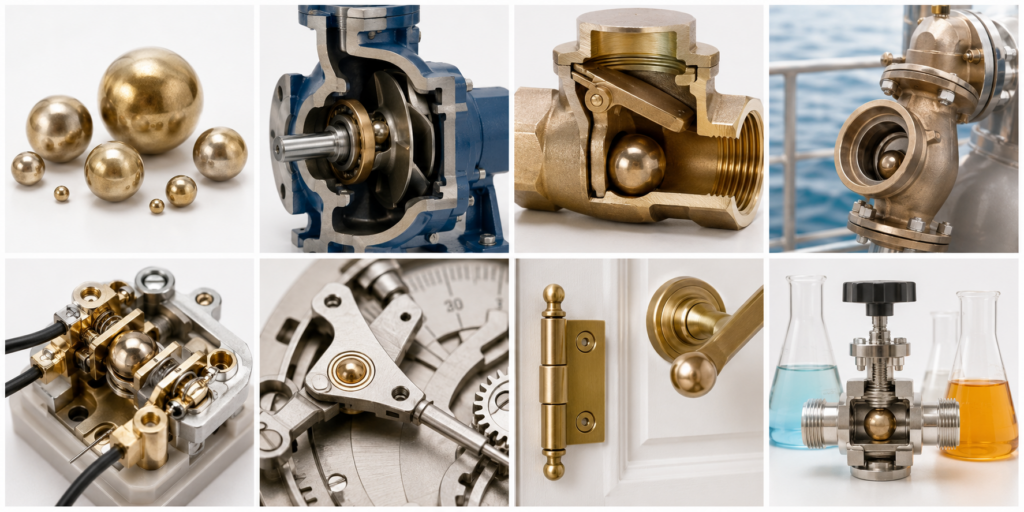
Alüminyum bronz bilyeler, korozyon direnci ve mekanik dayanımın her ikisinin de gerekli olduğu uygulamalar için uygundur. Genellikle özel pompalar, valfler, çek valf bileşenleri, akış kontrol parçaları, elektronik cihazlar, enstrümanlar, denizel yakınlıklı montajlar ve estetik donanımlar için düşünülür.
| Başvuru | Uygunluk Seviyesi | Neden Uygun? | Alıcı Notu |
| Özel pompalar | Çok iyi | Daha güçlü bakır alaşımı performansıyla deniz suyu ve tuz çözeltisi direnci | Akışkan ortamını, sıcaklığı ve basıncı doğrulayın |
| Valfler / çek valf bileşenleri | Çok iyi | İyi sertlik ve korozyon performansı, tekrarlanan oturma ve sızdırmazlık temasını destekler | Oturma yüzeyi malzemesini ve sızıntı gereksinimini doğrulayın |
| Denizel yakınlıklı bileşenler | İyi | Alüminyum bronz, deniz suyuyla ilgili servis için yaygın olarak tercih edilir | Gerçek deniz suyu maruziyetini, akışını ve galvanik koşulları doğrulayın |
| Elektronik sektörü | İyi | Kararlı yüzey davranışı ve kullanışlı iletkenliğe sahip demir dışı alaşım | İletkenlik ve yüzey temizliği gereksinimlerini doğrulayın |
| Estetik / dekoratif uygulamalar | İyi | Bronz rengi ve pasivize edilmiş yüzey, çekici bir görünüm sağlayabilir | Yüzey bitişini ve renk tutarlılığını doğrulayın |
| Yüksek hızlı hassas rulmanlar | Sınırlı | AISI 52100 veya 440C rulman bilyeleriyle aynı performans sınıfında değildir | Yorulma ömrünün kritik olduğu yerlerde rulman çeliği veya rulman sınıfı paslanmaz çelik kullanın |
| Bilinmeyen kimyasal ortamlar | Uygulamaya bağlı | Korozyon direnci ortama özgüdür | Siparişten önce konsantrasyonu, sıcaklığı ve kimyasal uyumluluğu doğrulayın |
Malzeme Seçim Kılavuzu
| Malzeme Seçeneği | Tipik Mukavemet | Kısıtlama | Ne Zaman Tavsiye Edilmeli |
| Saf Bakır Bilyeler | Yüksek iletkenlik, yumuşak, kolay şekillendirilebilir | Düşük sertlik ve düşük aşınma direnci | Elektrik kontağı, dekoratif, yumuşak metal uygulamaları |
| Pirinç Toplar | İyi işlenebilirlik, düşük sürtünme, demir dışı, ekonomik bakır alaşımı | Birçok zorlu kullanımda alüminyum bronza göre daha düşük mukavemet ve deniz suyu direnci | Valfler, enstrümanlar, cihazlar, genel bakır alaşımlı bilye kullanımı |
| Fosfor Bronz Toplar | İyi aşınma direnci, yorulma mukavemeti ve elektriksel özellikler | Alüminyum bronzdan farklı korozyon ve mukavemet profili | Kontaklar, enstrümanlar, özel rulmanlar, akış kontrol parçaları |
| Alüminyum Bronz Toplar | Daha yüksek mukavemet, iyi sertlik, deniz suyu direnci, pasivize edilmiş yüzey | Daha özel alaşım; kimyasal uyumluluğun yine de doğrulanması gerekir | Özel pompalar, valfler, denizel yakınlıklı ve zorlu bakır alaşımı uygulamaları |
| Paslanmaz Çelik Bilyeler 316/316L | Birçok kimyasal ve hijyenik ortamda daha iyi genel korozyon direnci | 420C/440C'ye göre daha düşük sertlik ve farklı metal ailesi | Gıda ile ilgili, tıbbi, kimyasal, ıslak ve hijyene duyarlı uygulamalar |
| Krom Çelik Bilyalar AISI 52100 | Yüksek sertlik ve rulman performansı | Korozyona dayanıklı olmayan ve manyetik çelik | Yüksek hızlı rulmanlar ve hassas haddeleme düzenekleri |
Üretim ve Proses Kontrolü
SDBALLS alüminyum bronz bilya üretimini, malzeme onayı, şekillendirme, kalite gereksinimine göre taşlama veya lepleme, gerektiğinde pasivasyon, parlatma, temizleme, muayene ve ihracat paketlemesi yoluyla kontrol eder. Alüminyum bronz, belirli mekanik ve yüzey özelliklerine sahip bir bakır alaşımı olduğundan, süreç kontrolü malzeme izlenebilirliği, yüzey görünümü, çap doğruluğu, yuvarlaklık ve tutarlı yüzey kalitesi üzerine odaklanmalıdır.
OEM projeleri için SDBALLS, alıcının çizimine veya uygulama gereksinimine göre özelleştirilmiş çap, hassasiyet derecesi, yüzey durumu, parlatma seviyesi, pasivasyon, ambalaj formatı ve muayene belgelerini görüşebilir.
Kalite Kontrol ve Muayene
Alüminyum bronz bilyalar için tipik muayene kalemleri arasında çap, hassasiyet derecesi, yuvarlaklık, yüzey görünümü, sertlik, malzeme onayı, yüzey durumu ve ambalaj durumu bulunur. Proje bazlı siparişler için alıcılar, uygulama gerektirdiğinde ek muayene dokümantasyonu, numune onayı, üçüncü taraf testi, RoHS ile ilgili onay veya diğer belgeler talep edebilir.
Pompalar, vanalar, akış kontrol parçaları ve denizcilikle ilgili uygulamalar için SDBALLS, seri üretimden önce gerçek çalışma ortamı, yatak malzemesi, basınç, sıcaklık, sızdırmazlık gereksinimi ve korozyon maruziyetinin teyit edilmesini önerir. Bu, teknik olarak uygun bir alaşımın uygun olmayan bir çalışma ortamında kullanılmasını önlemeye yardımcı olur.
Paketleme Seçenekleri
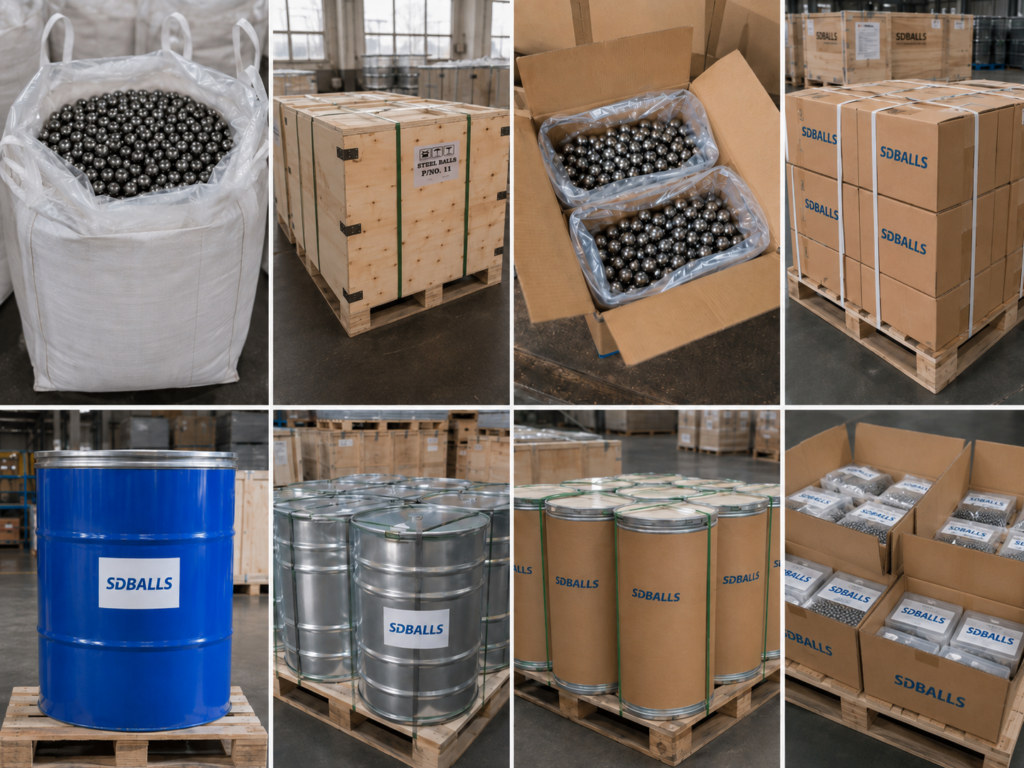
SDBALLS, alüminyum bronz bilyaları standart dökme ihracat ambalajı veya alıcı gereksinimlerine göre özelleştirilmiş OEM ambalajı ile tedarik edebilir. Yaygın seçenekler arasında küçük poşetler, kartonlar, kovalar, variller, paletler ve müşteriye özel etiketler bulunur. Ambalaj, gerektiğinde ürün adı, malzeme, çap, kalite, parti numarası, miktar ve müşteri referans bilgilerini içerebilir.
Teklif Almak İçin Nasıl Belirtmelisiniz?
Alüminyum bronz bilyaları doğru fiyatlandırmak için lütfen şunları teyit edin: malzeme kalitesi veya eşdeğer standart, mm veya inç cinsinden bilya çapı, hassasiyet derecesi, kritikse sertlik gereksinimi, yüzey kalitesi veya pasivasyon gereksinimi, miktar, ambalaj yöntemi, uygulama, çalışma ortamı, sıcaklık, basınç veya yük durumu, muayene belgesi gereksinimleri, varış limanı ve ticaret şekli.
Yedek parça veya mühendislik projeleri için alıcıların çizimler, mevcut tedarikçi şartname föyleri, fotoğraflar, numuneler, korozyon gereksinimleri, kimyasal ortam detayları ve montaj koşulları sağlamaları teşvik edilir. Bu, SDBALLS'a alüminyum bronzun doğru malzeme olup olmadığını veya pirinç, fosfor bronzu, paslanmaz çelik, seramik veya başka bir malzemenin daha uygun olup olmadığını teyit etme imkanı verir.
Teknik SSS
S: Alüminyum bronz bilyeler ne için kullanılır?
C: Alüminyum bronz bilyalar, mukavemet ve korozyon direncinin her ikisinin de önemli olduğu özel pompalar, vanalar, akış kontrol bileşenleri, elektronik sektör uygulamaları, enstrümanlar, denizcilikle ilgili bileşenler ve estetik hırdavatlarda kullanılır.
S: Alüminyum bronz bilyalar pirinç bilyalarla aynı mıdır?
C: Hayır. Pirinç esas olarak bakır-çinko alaşımıdır, alüminyum bronz ise bakır-alüminyum alaşımıdır. Alüminyum bronz genellikle birçok standart pirinç malzemeye göre daha yüksek mukavemet ve daha iyi deniz suyu direnci sunar.
S: Bu ürün için tipik kalite (hassasiyet sınıfı) nedir?
C: Önerilen sayfa konumlandırması C61000 / CuAl8 / QAl7 tipi alüminyum bronzdur. Nihai kalite, alıcının çizimine veya satın alma siparişine göre teyit edilmelidir.
S: Alüminyum bronz bilyalar deniz suyunda korozyona dayanıklı mıdır?
C: Evet, alüminyum bronz güçlü deniz suyu korozyon direnciyle tanınır ve orijinal ürün sayfası deniz suyu koşullarında mükemmel korozyon direncini açıklar. Gerçek performans yine de konsantrasyon, sıcaklık, akış, oksijen ve galvanik temas koşullarına bağlıdır.
S: Alüminyum bronz bilyalar manyetik midir?
C: Genellikle manyetik değildirler veya bakır esaslı alaşım bilyalar oldukları için çok düşük manyetik tepki gösterirler. Eğer düzeneğin katı manyetik gereksinimleri varsa, bu siparişten önce teyit edilmelidir.
S: Alüminyum bronz bilyalar yüksek hızlı rulmanlarda kullanılabilir mi?
C: Yüksek hızlı hassas rulman düzenekleri için ilk tercih değildirler. Yüksek hızlı rulman yorulma performansı için genellikle AISI 52100 krom çelik bilyalar veya uygun paslanmaz rulman bilyaları daha uygundur.
S: SDBALLS hangi boyut ve kaliteleri tedarik edebilir?
C: Sayfa spesifikasyonu, 1,5 mm'den 150,0 mm'ye kadar çap ve G100'den G1000'e kadar hassasiyet derecelerini listeler. Özel gereksinimler üretim fizibilitesine göre görüşülebilir.
Fiyat teklifi için hangi bilgiler gereklidir?
C: Lütfen çap, malzeme kalitesi, hassasiyet derecesi, sertlik veya yüzey gereksinimi, miktar, ambalaj, uygulama, çalışma ortamı, muayene belgeleri, varış yeri ve ticaret şeklini sağlayın.
İlgili Ürünler
Bir Talep Planlayın
Herhangi bir hizmet için bugün bizimle iletişime geçin. (*) İşaretli alanlar zorunludur.