
-5.png)
-6.png)
-6.png)
-6.png)
-6.png)
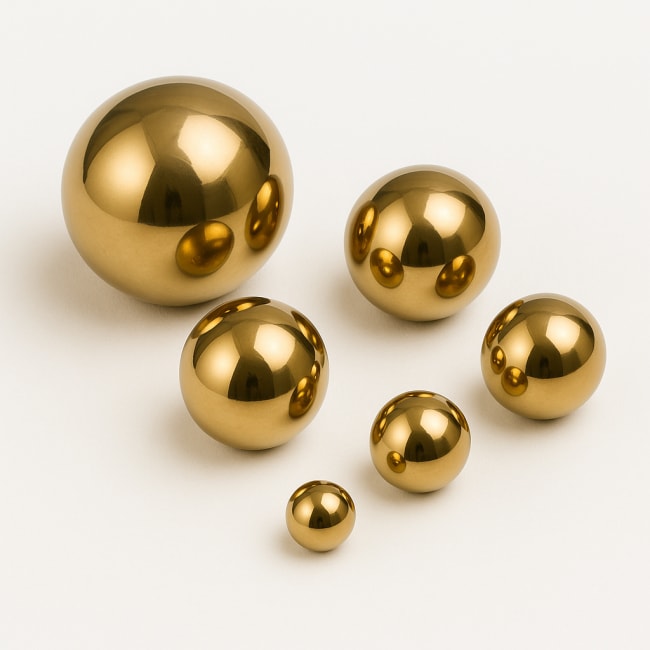
Sfere in bronzo alluminio / Sfere in bronzo di alluminio – Sfere in lega di rame C61000 CuAl8
Le sfere in bronzo alluminio sono sfere in lega a base di rame progettate per applicazioni che richiedono maggiore resistenza meccanica, resistenza all'usura, resistenza alla corrosione in acqua di mare e prestazioni superficiali stabili. Rispetto alle sfere in ottone comune o bronzo generico, il bronzo alluminio offre un materiale più resistente e duraturo per pompe speciali, valvole, componenti per impieghi marini, connessioni elettriche, strumenti e ferramenta decorativa.
SDBALLS fornisce sfere in bronzo alluminio in condizione passivata, con materiale tipico equivalente a C61000 / CuAl8 / QAl7, gamma di diametri da 1,5 mm a 150,0 mm e gradi di precisione da G100 a G1000. Queste sfere sono adatte per progetti OEM in cui sia la resistenza alla corrosione che le prestazioni meccaniche sono importanti, ma non devono essere considerate come sfere in acciaio per cuscinetti ad alta velocità o sfere universali resistenti agli agenti chimici senza aver verificato il mezzo di lavoro.
| Articolo | Contenuto della pagina consigliato |
| Nome del prodotto | Sfere in bronzo alluminio / Sfere in alluminio bronzo |
| Materiale | Lega rame-alluminio bronzo; tipo C61000 / CuAl8 |
| Gamma di diametri | 1,5 mm – 150,0 mm |
| Gradi di precisione | G100 – G1000 |
| Durezza | HRC tipico 27-32 |
| Applicazioni tipiche | Pompe speciali, valvole, componenti a contatto con acqua di mare, settore elettronico, strumenti, applicazioni estetiche e decorative |
Condividi questo prodotto
Panoramica del prodotto
Le sfere in bronzo alluminio sono sfere di precisione in lega di rame realizzate da una famiglia di materiali di bronzo rame-alluminio. Questo gruppo di leghe viene scelto quando l'applicazione richiede una sfera in lega di rame più robusta con migliore resistenza all'usura e prestazioni di corrosione rispetto a molte opzioni in ottone comune o bronzo generico.
Il principale vantaggio del bronzo alluminio è la combinazione di resistenza, durezza, resistenza alla corrosione e prestazioni stabili in ambienti gravosi di gestione fluidi. Per gli acquirenti che cercano sfere per pompe speciali, valvole, componenti elettronici, meccanismi per impieghi marini o assemblaggi decorativi, il bronzo alluminio può fornire un utile equilibrio tra durabilità meccanica e resistenza alla corrosione.
Questa pagina di prodotto deve essere posizionata come una pagina di sfere in lega di rame per ingegneria, non solo come una pagina generica di sfere metalliche decorative. La formulazione deve includere sia "Aluminium Bronze Balls" che "Aluminum Bronze Balls" perché gli acquirenti internazionali cercano utilizzando entrambe le ortografie britannica e americana.
Selezione dei Materiali e Posizionamento Tecnico
Il bronzo alluminio è una lega di bronzo a base di rame con l'alluminio come elemento legante principale, con piccole quantità di altri elementi leganti a seconda del grado esatto. Per questa pagina, il posizionamento del materiale dovrebbe basarsi sul bronzo alluminio tipo C61000 / CuAl8, comunemente associato a elevata resistenza, buona resistenza alla corrosione e buon comportamento all'usura tra le leghe di rame.
Rispetto alle sfere in rame puro, le sfere in bronzo alluminio offrono resistenza e durezza molto superiori. Rispetto alle sfere in ottone, generalmente garantiscono una migliore durabilità meccanica e una migliore resistenza alla corrosione in acqua di mare. Rispetto alle sfere in bronzo fosforoso, il bronzo alluminio è spesso preferito dove resistenza, prestazioni in acqua di mare e durabilità di pompe o valvole sono più importanti del comportamento a fatica tipico delle molle. Rispetto alle sfere in acciaio inossidabile, il bronzo alluminio offre un'opzione di materiale non ferroso, ma la compatibilità chimica deve comunque essere confermata per il mezzo effettivo.
Le sfere in bronzo alluminio non sono destinate a sostituire le sfere in acciaio cromato nei gruppi cuscinetto ad alta velocità. Non rappresentano inoltre una sostituzione universale per le sfere in acciaio inossidabile 316 o ceramiche in tutti gli ambienti corrosivi. Per ogni progetto, gli acquirenti dovrebbero confermare il mezzo fluido, la temperatura, il carico, la condizione di tenuta e il grado di precisione richiesto prima della selezione finale del materiale.
Specifiche tecniche
| Voce di specifica | Valore / Descrizione |
| Materiale | Lega rame-alluminio / lega bronzo alluminio |
| Equivalenti internazionali | USA C61000; Cina QAl7; Germania 2.0920 / CuAl8; Regno Unito CA102; Italia CuAl8; Russia Br7; Giappone CuAl8 |
| Riferimento Grado Principale | Tipo C61000 / CuAl8 / QAl7 |
| Diametro | 1,5 mm – 150,0 mm |
| Grado di precisione | G100 – G1000 |
| Durezza | Tipico HRC 27-32, soggetto alle condizioni del materiale e alle specifiche concordate |
| Densità | Appross. 7,66 g/cm3 |
| Magnetismo | Generalmente non magnetico / risposta magnetica molto bassa |
| Modulo di Young | Appross. 119 GPa |
| Resistenza alla trazione | Appross. 600-700 MPa |
| Superficie / Condizione | Condizione passivata; superficie lucidata disponibile secondo i requisiti dell'ordine |
| Resistenza alla corrosione | Eccellente in condizioni di acqua marina; buono in soluzioni saline e mezzi caustici o chimici selezionati |
| Personalizzazione | Diametro, grado, finitura superficiale, documento di ispezione e imballaggio possono essere discussi in base alle esigenze del progetto |
Riferimento composizione chimica
| Elemento | Contenuto Tipico (%) |
| Cu | Resto |
| Al | 6,00 – 8,50 |
| Si | 0,10 max. |
| Ni | 0,50 max. |
| Zn | 0,20 max. |
| Pb | 0,02 max. |
| Fe | 0,50 max. |
Nota: i valori di composizione chimica sono valori di riferimento per il contenuto della pagina e la discussione del preventivo. La specifica finale del materiale deve seguire l'ordine di acquisto confermato, il disegno, lo standard concordato e i requisiti di ispezione.
Equivalenti internazionali di grado
| Paese / Sistema Standard | Equivalente Comune |
| U.S.A. | C61000 |
| Cina | QAl7 |
| Germania | 2.0920 / CuAl8 |
| Francia | CuAl8 |
| Regno Unito | CA102 |
| Italia | CuAl8 |
| Russia | Br7 |
| Giappone | CuAl8 |
Durezza, Resistenza e Prestazioni alla Corrosione
Le sfere in bronzo all'alluminio sono scelte per la loro combinazione utile di durezza, resistenza e resistenza alla corrosione. L'intervallo di durezza tipico per questa pagina è HRC 27-32, con resistenza a trazione di circa 600-700 MPa e modulo di Young di circa 119 GPa. Questi valori supportano l'uso in contatti meccanici, controllo fluidi e assemblaggi relativi alle valvole dove le leghe di rame morbide standard potrebbero non fornire sufficiente durabilità.
Per quanto riguarda le prestazioni di corrosione, il bronzo all'alluminio è particolarmente apprezzato per la resistenza all'acqua di mare e alle soluzioni saline. La pagina del prodotto può affermare che le sfere in bronzo all'alluminio mostrano un'eccellente resistenza alla corrosione in condizioni di acqua di mare e una buona resistenza in soluzioni saline e in determinati mezzi caustici o chimici, inclusi acido acetico, ammoniaca secca, carbonato di sodio, fosfati, soluzioni di bromuro e cloruro, secondo le informazioni della pagina originale. Tuttavia, la compatibilità chimica reale dipende dalla concentrazione, temperatura, livello di ossigeno, condizione di flusso e materiali di contatto.
Quando l'applicazione coinvolge acidi forti, sostanze chimiche sconosciute, servizio ad alta temperatura, requisiti di contatto alimentare, uso medico o requisiti di sicurezza regolamentati, SDBALLS dovrebbe confermare i requisiti di materiale e documentazione prima del preventivo.
Applicazioni e idoneità applicativa
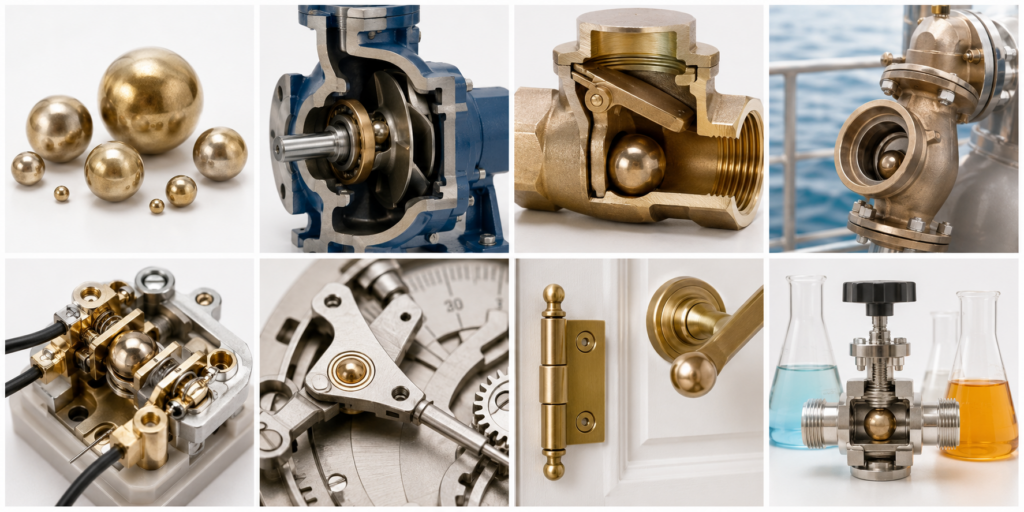
Le sfere in bronzo all'alluminio sono adatte per applicazioni dove sono richieste sia resistenza alla corrosione che resistenza meccanica. Sono spesso considerate per pompe speciali, valvole, componenti di ritegno, parti di controllo del flusso, dispositivi elettronici, strumenti, assemblaggi marittimi e ferramenta estetica.
| Applicazione | Livello di idoneità | Perché è Adatto | Nota per l'acquirente |
| Pompe speciali | Molto buono | Resistenza all'acqua di mare e alle soluzioni saline con prestazioni superiori di lega di rame | Confermare il mezzo fluido, temperatura e pressione |
| Valvole / componenti di ritegno | Molto buono | Buona durezza e prestazioni di corrosione supportano contatti ripetuti di tenuta e sede | Confermare il materiale della sede e i requisiti di tenuta |
| Componenti adiacenti al settore marittimo | Bene | Il bronzo all'alluminio è ampiamente scelto per servizi legati all'acqua di mare. | Confermare l'esposizione effettiva all'acqua di mare, il flusso e le condizioni galvaniche. |
| Settore elettronico | Bene | Lega non ferrosa con comportamento superficiale stabile e conduttività utile | Confermare i requisiti di conduttività e pulizia superficiale |
| Applicazioni estetiche / decorative | Bene | Il colore bronzo e la superficie passivata possono conferire un aspetto attraente | Confermare la finitura superficiale e la consistenza del colore |
| Cuscinetti di precisione ad alta velocità | Limitato | Non della stessa classe prestazionale delle sfere per cuscinetti AISI 52100 o 440C | Utilizzare acciaio per cuscinetti o acciaio inossidabile di grado per cuscinetti dove la durata a fatica è critica |
| Mezzi chimici sconosciuti | Dipende dall'applicazione | La resistenza alla corrosione è specifica del mezzo | Confermare concentrazione, temperatura e compatibilità chimica prima dell'ordine |
Guida alla selezione dei materiali
| Opzione materiale | Resistenza tipica | Limitazione | Quando consigliare |
| Sfere di rame puro | Alta conduttività, morbide, facili da formare | Bassa durezza e minore resistenza all'usura | Contatti elettrici, applicazioni decorative, in metallo morbido |
| Palline di ottone | Buona lavorabilità, basso attrito, non ferrosa, lega di rame economica | Resistenza e resistenza all'acqua di mare inferiori rispetto al bronzo alluminio in molti impieghi gravosi | Valvole, strumenti, apparecchi, uso generale di sfere in lega di rame |
| Sfere di bronzo fosforoso | Buona resistenza all'usura, resistenza a fatica e proprietà elettriche | Profilo di corrosione e resistenza diverso dal bronzo alluminio | Contatti, strumenti, cuscinetti speciali, parti per il controllo del flusso |
| Sfere in bronzo all'alluminio | Maggiore resistenza, buona durezza, resistenza all'acqua di mare, superficie passivata | Lega più specializzata; compatibilità chimica ancora da confermare | Pompe speciali, valvole, applicazioni in ambito marino e impegnative in lega di rame |
| Sfere in acciaio inossidabile 316/316L | Migliore resistenza generale alla corrosione in molti ambienti chimici e igienici | Durezza inferiore rispetto a 420C/440C e diversa famiglia di metalli | Applicazioni alimentari, medicali, chimiche, umide e sensibili all'igiene |
| Sfere in acciaio al cromo AISI 52100 | Elevata durezza e prestazioni nei cuscinetti | Acciaio non resistente alla corrosione e magnetico | Cuscinetti ad alta velocità e complessi di rotolamento di precisione |
Produzione e controllo del processo
SDBALLS controlla la produzione di sfere in bronzo all'alluminio attraverso la conferma del materiale, formatura, rettifica o lappatura secondo i requisiti di grado, lucidatura, passivazione quando richiesta, pulizia, ispezione e imballaggio per l'esportazione. Poiché il bronzo all'alluminio è una lega di rame con caratteristiche meccaniche e superficiali specifiche, il controllo del processo dovrebbe concentrarsi su tracciabilità del materiale, aspetto superficiale, precisione del diametro, rotondità e finitura omogenea.
Per progetti OEM, SDBALLS può discutere diametro personalizzato, grado di precisione, condizione superficiale, livello di lucidatura, passivazione, formato di imballaggio e documenti di ispezione secondo il disegno o i requisiti applicativi dell'acquirente.
Controllo Qualità e Ispezione
Gli articoli tipici di ispezione per le sfere in bronzo all'alluminio includono diametro, grado di precisione, rotondità, aspetto superficiale, durezza, conferma del materiale, condizione superficiale e stato dell'imballaggio. Per ordini basati su progetto, gli acquirenti possono richiedere documentazione di ispezione aggiuntiva, approvazione del campione, test di terze parti, conferma relativa alla RoHS o altri documenti quando richiesto dall'applicazione.
Per pompe, valvole, parti di controllo del flusso e applicazioni in ambito marino, SDBALLS raccomanda di confermare il mezzo operativo effettivo, il materiale della sede, la pressione, la temperatura, i requisiti di tenuta e l'esposizione alla corrosione prima della produzione in serie. Questo aiuta a evitare l'uso di una lega tecnicamente adatta in un ambiente di lavoro inadatto.
Opzioni di Imballaggio
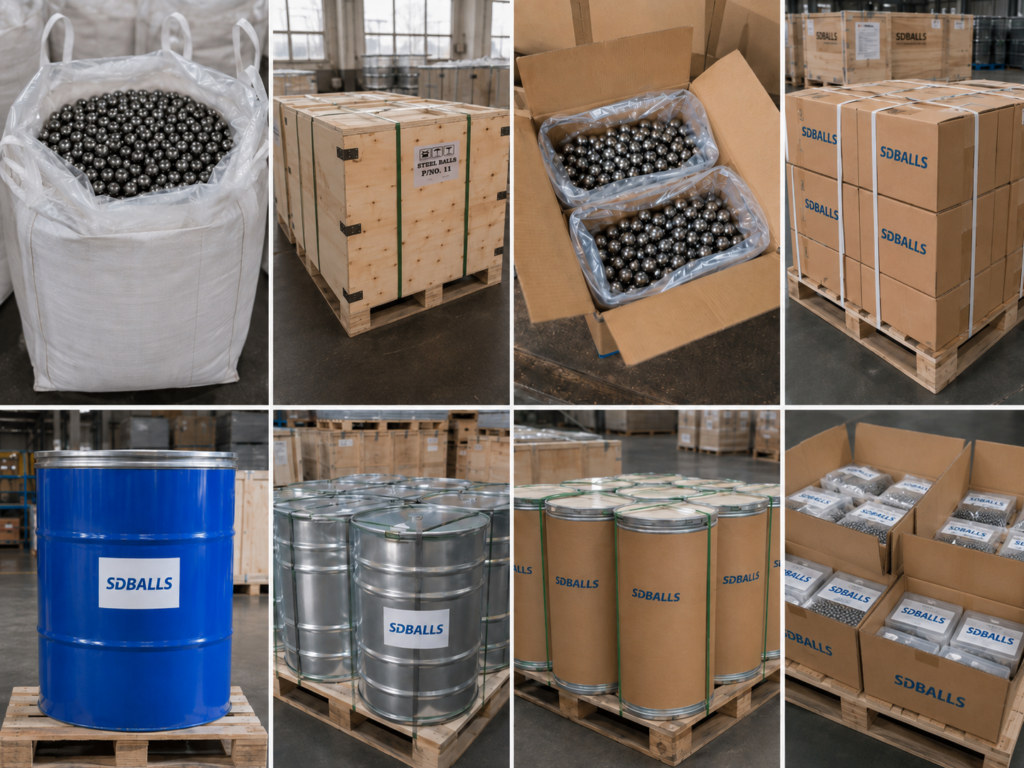
SDBALLS può fornire sfere in bronzo all'alluminio in imballaggio sfuso standard per l'esportazione o imballaggio OEM personalizzato secondo le esigenze dell'acquirente. Le opzioni comuni includono piccoli sacchetti, scatole di cartone, secchielli, fusti, pallet ed etichette specifiche del cliente. L'imballaggio può includere nome del prodotto, materiale, diametro, grado, numero di lotto, quantità e informazioni di riferimento del cliente, se richiesto.
Come Specificare per un Preventivo
Per quotare accuratamente le sfere in bronzo all'alluminio, si prega di confermare: grado del materiale o standard equivalente, diametro della sfera in mm o pollici, grado di precisione, requisito di durezza se critico, finitura superficiale o requisito di passivazione, quantità, metodo di imballaggio, applicazione, mezzo operativo, temperatura, condizioni di pressione o carico, requisiti della documentazione di ispezione, porto di destinazione e termine di resa.
Per progetti di sostituzione o ingegneristici, si incoraggiano gli acquirenti a fornire disegni, schede tecniche del fornitore attuale, foto, campioni, requisiti di corrosione, dettagli del mezzo chimico e condizioni di assemblaggio. Ciò consente a SDBALLS di confermare se il bronzo all'alluminio è il materiale corretto o se ottone, bronzo fosforoso, acciaio inossidabile, ceramica o un altro materiale sia più adatto.
FAQ Tecniche
D: A cosa servono le sfere di bronzo all'alluminio?
R: Le sfere in bronzo all'alluminio sono utilizzate in pompe speciali, valvole, componenti di controllo del flusso, applicazioni nel settore elettronico, strumenti, componenti in ambito marino e ferramenta estetica dove resistenza e resistenza alla corrosione sono entrambe importanti.
D: Le sfere in bronzo alluminio sono uguali alle sfere in ottone?
R: No. L'ottone è principalmente una lega rame-zinco, mentre il bronzo all'alluminio è una lega rame-alluminio. Il bronzo all'alluminio offre generalmente maggiore resistenza e migliore resistenza all'acqua di mare rispetto a molti materiali di ottone standard.
D: Qual è il grado tipico di questo prodotto?
R: Il posizionamento di pagina raccomandato è il bronzo all'alluminio tipo C61000 / CuAl8 / QAl7. Il grado finale deve essere confermato secondo il disegno o l'ordine d'acquisto dell'acquirente.
D: Le sfere in bronzo alluminio sono resistenti alla corrosione in acqua di mare?
R: Sì, il bronzo all'alluminio è ben noto per la forte resistenza alla corrosione in acqua di mare, e la pagina prodotto originale descrive un'eccellente resistenza alla corrosione in condizioni di acqua marina. Le prestazioni effettive dipendono ancora da concentrazione, temperatura, flusso, ossigeno e condizioni di contatto galvanico.
D: Le sfere in bronzo alluminio sono magnetiche?
R: Sono generalmente non magnetiche o mostrano una risposta magnetica molto bassa perché sono sfere in lega a base di rame. Se l'assemblaggio ha requisiti magnetici rigorosi, ciò dovrebbe essere confermato prima dell'ordine.
D: Le sfere in bronzo alluminio possono essere utilizzate in cuscinetti ad alta velocità?
R: Non sono la prima scelta per assemblaggi di cuscinetti di precisione ad alta velocità. Per le prestazioni a fatica dei cuscinetti ad alta velocità, le sfere in acciaio al cromo AISI 52100 o le sfere appropriate in acciaio inossidabile per cuscinetti sono solitamente più adatte.
D: Quali dimensioni e gradi può fornire SDBALLS?
R: La specifica della pagina elenca diametri da 1,5 mm a 150,0 mm e gradi di precisione da G100 a G1000. Requisiti speciali possono essere discussi in base alla fattibilità produttiva.
D: Quali informazioni sono necessarie per un preventivo?
R: Si prega di fornire diametro, grado del materiale, grado di precisione, requisito di durezza o superficie, quantità, imballaggio, applicazione, mezzo operativo, documenti di ispezione, destinazione e termine di resa.
Prodotti correlati
Richiesta di programma A
Contattaci oggi stesso per qualsiasi servizio. (*) Indica i campi obbligatori.