
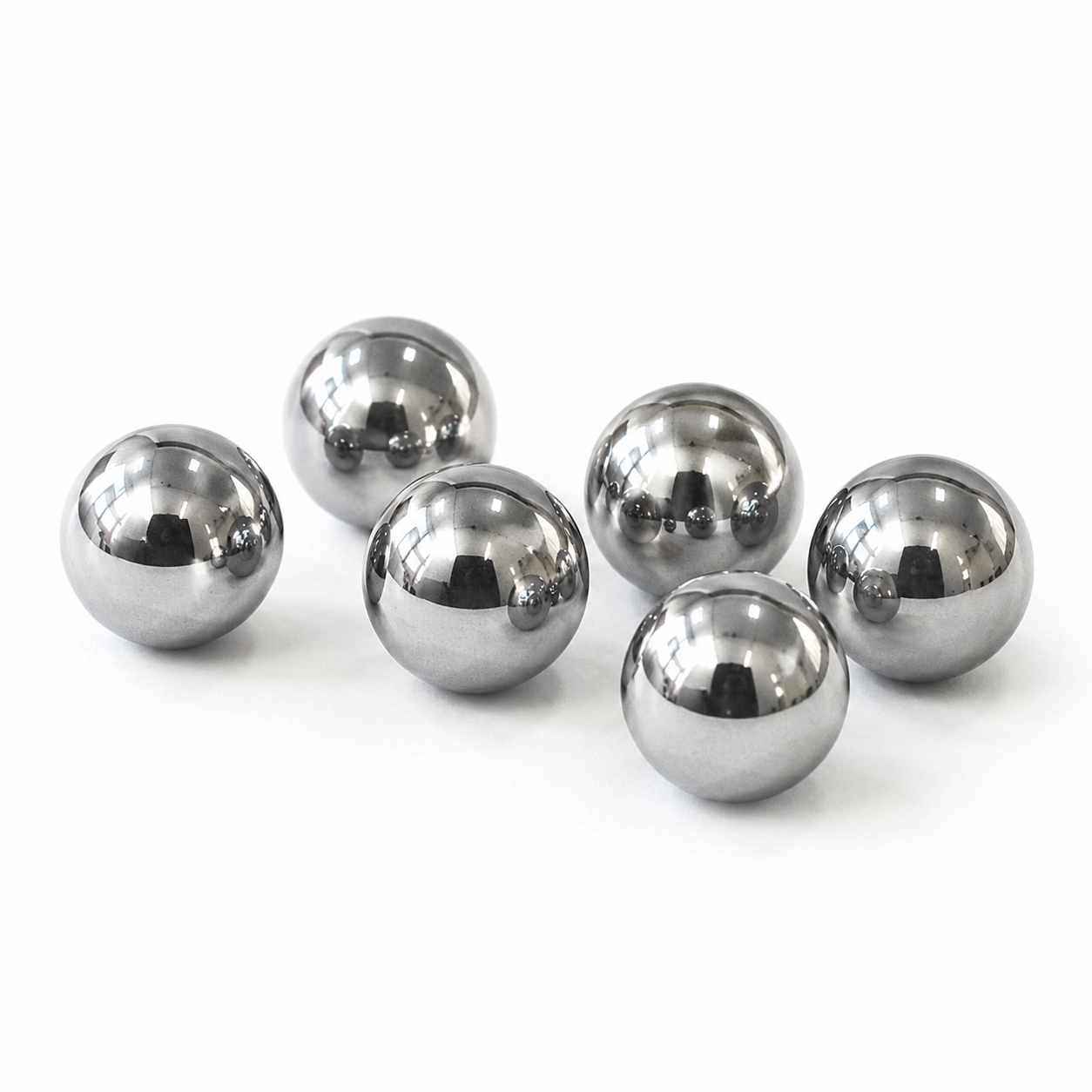
-2.png)
-3.png)
-3.png)
-3.png)
-3.png)
Sfere in acciaio inossidabile AISI 420C – Sfere in acciaio inossidabile martensitico temprato
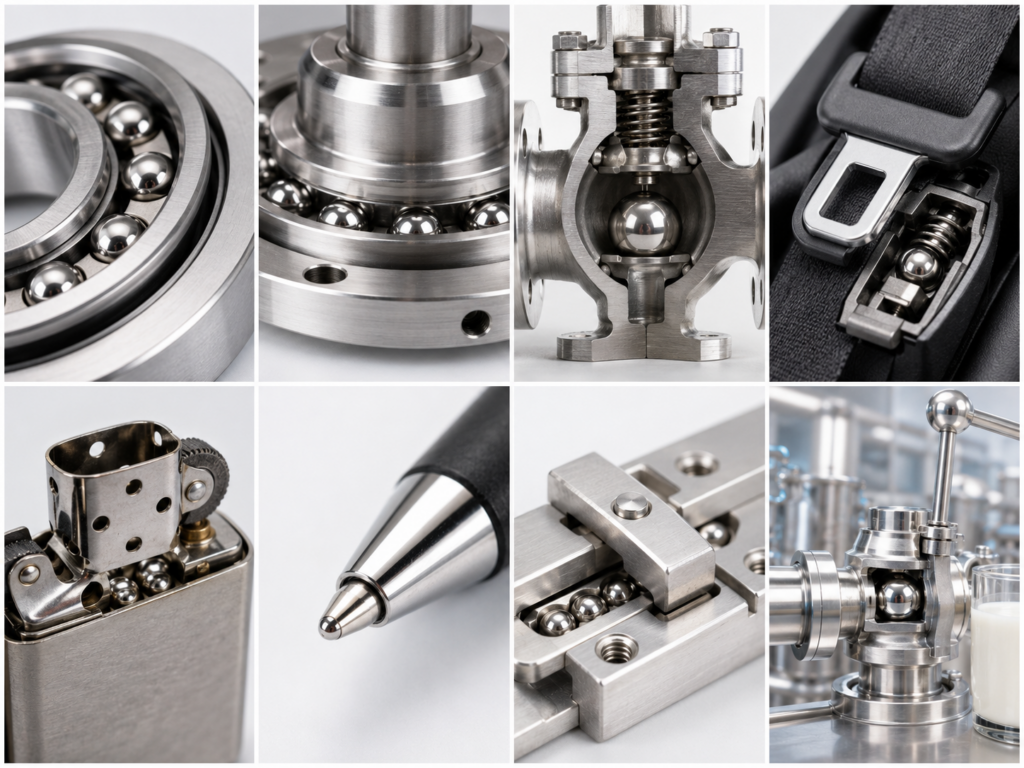
Le Sfere in Acciaio Inox AISI 420C sono sfere in acciaio inossidabile martensitico temprato progettate per applicazioni che richiedono maggiore durezza, buona resistenza all'usura, risposta magnetica e una pratica resistenza alla corrosione in molti ambienti industriali comuni. Sono ampiamente utilizzate in cuscinetti speciali, componenti di cinture di sicurezza automobilistiche, parti di pompe e valvole, accendini, penne a sfera, sistemi di ricircolo e meccanismi di precisione di consumo.
SDBALLS fornisce sfere in acciaio inox AISI 420C in dimensioni metriche e in pollici da 0,5 mm a 300,00 mm, con gradi di precisione comuni che includono G20, G40, G80, G100, G200, G500 e G1000. La durezza standard dopo tempra è tipicamente HRC 52-60. Per acqua di mare, acidi forti, fluidi ricchi di cloruri o altamente corrosivi, si dovrebbero valutare alternative specifiche per la corrosione come 316/316L, 440C, ceramica o altre, in base all'ambiente di lavoro.
| Articolo | Contenuto della pagina consigliato |
| Tipo di Prodotto | Sfere in acciaio inox temprato / sfere in acciaio inossidabile martensitico |
| Materiale | Acciaio inossidabile martensitico AISI 420C |
| Gamma di diametri | 0,5 mm – 300,00 mm; altre dimensioni soggette a conferma di produzione |
| Gradi di precisione | G20, G40, G80, G100, G200, G500, G1000 |
| Durezza | HRC 52-60 |
| Applicazioni tipiche | Cuscinetti speciali, componenti di cinture di sicurezza automobilistiche, pompe, parti di valvole, accendini, penne a sfera, componenti di ricircolo, meccanismi industriali |
Condividi questo prodotto
Panoramica del prodotto
Le Sfere in Acciaio Inox AISI 420C sono sfere in acciaio inossidabile martensitico temprato sviluppate per sistemi meccanici dove la durezza e la resistenza all'usura sono più importanti del massimo livello di resistenza alla corrosione. Rispetto alle sfere in acciaio inossidabile austenitico come AISI 304 o 316, l'AISI 420C può essere trattato termicamente per ottenere una durezza molto più elevata. Rispetto all'AISI 440C, generalmente fornisce una durezza massima per cuscinetti leggermente inferiore, ma può essere una scelta pratica per molte applicazioni in cuscinetti speciali, pompe, valvole e meccanismi di consumo.
Per gli acquirenti, il valore chiave dell'AISI 420C è una prestazione bilanciata: struttura inossidabile temprata, buona resistenza all'usura per rotolamento e appoggio, manipolazione magnetica e una resistenza alla corrosione utilizzabile in molti fluidi industriali ordinari. È adatto quando l'acciaio al carbonio o l'acciaio cromato non forniscono sufficiente resistenza alla corrosione, ma l'acciaio inox 316 è troppo dolce per il carico meccanico o le condizioni di usura.
Selezione dei Materiali e Posizionamento Tecnico
L'AISI 420C appartiene alla famiglia degli acciai inossidabili martensitici. È magnetico e temprabile tramite trattamento termico. Questo lo differenzia dalle sfere in acciaio inox AISI 304 e 316, che sono normalmente selezionate principalmente per la resistenza alla corrosione e non sono trattabili termicamente per ottenere alta durezza nello stesso modo.
L'AISI 420C dovrebbe essere selezionato quando l'applicazione richiede una sfera inossidabile più dura per contatto volvente, appoggio, fermo, pompa, valvola, strumento di scrittura o uso in meccanismi. Non dovrebbe essere presentato come il grado migliore per ambienti con acqua di mare, acidi forti, cloruri forti o altamente chimici. In quelle condizioni, SDBALLS dovrebbe guidare gli acquirenti verso sfere in acciaio inox 316/316L, sfere in ceramica o un'altra soluzione specifica per la corrosione dopo aver confermato i fluidi effettivi.
I termini industriali corretti per questa pagina includono: sfere in acciaio inox AISI 420C, sfere inox 420C, sfere in acciaio inossidabile martensitico temprato, sfere in acciaio inox magnetico, sfere in acciaio resistenti alla corrosione, sfere inox per cuscinetti, sfere per valvole e pompe e sfere in acciaio inox per cuscinetti speciali.
Specifiche tecniche
| Proprietà | Contenuto Tipico per la Pagina Prodotto |
| Grado del Materiale | AISI 420C |
| Struttura | Acciaio inossidabile martensitico temprato |
| Durezza | HRC 52-60 dopo trattamento termico |
| Densità | Circa 7,75 g/cm3 |
| Modulo di Young | Circa 205 GPa |
| Resistenza alla trazione | Circa 1700-1900 MPa; valore di riferimento in funzione del trattamento termico e dello stato del materiale |
| Magnetismo | Magnetico / ferromagnetico |
| Resistenza alla corrosione | Buona resistenza pratica alla corrosione in acqua dolce, vapore, atmosfera industriale, composti organici e ambienti leggermente acidi; non raccomandato per immersione in acqua di mare o acidi forti |
| Finitura superficiale | Condizione superficiale lucidata, passivata, oliata o personalizzata su richiesta |
Riferimento composizione chimica
| Grado | C % | Si % | Mn % | P max % | S max % | Cr % | % Mo |
| AISI 420C | 0.43-0.50 | 1,00 massimo | 1,00 massimo | 0.040 | 0.030 | 12.50-14.50 | – |
Nota: Gli intervalli di composizione sono valori di riferimento per la specifica della scheda prodotto. La conferma finale del materiale deve attenersi allo standard concordato, all'ordine di acquisto, al piano di ispezione e al certificato di laminazione quando richiesto.
Equivalenti internazionali di grado
| U.S.A. | Cina | Germania | Francia | Italia | Regno Unito | Russia | Giappone |
| AISI 420C | 4Cr13 | 1.4034 | Z34C14 | X46Cr13 | – | 40Kh13 | – |
Nota: Gli equivalenti internazionali sono forniti solo come riferimento per l'acquirente. L'equivalenza esatta può variare in base alla revisione della norma e all'intervallo chimico. Per progetti tecnici, i disegni, le norme sui materiali e i certificati devono essere confermati prima della produzione.
Trattamento termico, durezza e prestazioni
Le sfere in acciaio inox AISI 420C sono fornite in condizione temprata per raggiungere il tipico intervallo di durezza di 52-60 HRC. Il maggior contenuto di carbonio rispetto ai gradi 420 inferiori favorisce una migliore temprabilità e resistenza all'usura, mantenendo il comportamento pratico alla corrosione di un acciaio inossidabile al cromo.
La struttura martensitica temprata aiuta la sfera a resistere a deformazioni e usura in cicli ripetuti di rotolamento, assestamento e contatto. Ciò rende l'AISI 420C adatto per cuscinetti speciali, componenti di pompe, meccanismi automobilistici e parti di precisione per beni di consumo dove la durabilità meccanica è importante.
La prestazione alla corrosione deve essere specificata con attenzione. L'AISI 420C offre buone prestazioni in molte atmosfere industriali, acqua dolce, vapore, composti organici, mezzi lattiero-caseari e ambienti leggermente acidi, e può essere adatto per esposizione ad ambienti alcalini o con nebbia salina se non immerso in acqua di mare. Non è raccomandato per il contatto diretto con acqua di mare, acidi forti o ambienti aggressivi con cloruri.
Applicazioni e idoneità applicativa
| Applicazione | Livello di idoneità | Perché è Adatto | Nota per l'acquirente |
| Cuscinetti speciali / componenti antifrizione | Molto buono | La struttura inossidabile temprata supporta la resistenza all'usura da rotolamento e la stabilità dimensionale | Confermare grado, carico, velocità e requisito di lubrificazione |
| Sfere per valvole a pompa / componenti di ritegno | Molto buono | Buona durezza e resistenza pratica alla corrosione in acqua dolce, vapore e molti fluidi comuni | Confermare fluido, temperatura, materiale della sede di tenuta e rischio di corrosione |
| Componenti per cinture di sicurezza automobilistiche | Bene | Sfera inossidabile magnetica con durezza stabile per funzionamento ripetuto del meccanismo | Confermare specifiche relative alla sicurezza, documentazione PPAP o di ispezione se necessaria |
| Accendini e meccanismi per beni di consumo | Bene | Resistenza all'usura e superficie liscia supportano un movimento ripetibile | Verificare la finitura superficiale, la tolleranza dimensionale e la pulizia dell'imballaggio |
| Penne a sfera / strumenti di scrittura | Bene | La geometria costante e la resistenza all'usura favoriscono le funzioni di rotolamento e di appoggio | Verificare la tolleranza dimensionale miniaturizzata, la finitura e la pulizia |
| Apparecchiature adiacenti a settori alimentari o lattiero-caseari | Condizionata | L'AISI 420C può funzionare in alcuni ambienti legati agli alimenti, ma viene scelto principalmente per la sua durezza | Verificare se le specifiche igieniche o di corrosione richiedono 304/316 |
| Acqua di mare / acidi forti / mezzi clorurati aggressivi | Limitato / non raccomandato | Il 420C non offre la resistenza alla corrosione necessaria per questi ambienti | Considerare 316/316L, sfere in ceramica o materiali speciali per la corrosione |
Guida alla selezione dei materiali
| Opzione materiale | Resistenza tipica | Limitazione | Quando consigliare |
| Sfere in acciaio inossidabile AISI 420C | Acciaio inossidabile martensitico temprato, HRC 52-60, buona resistenza all'usura, magnetico | Non adatto per acqua di mare o acidi forti; resistenza alla corrosione inferiore al 316 | Cuscinetti speciali, pompe, parti di valvole, componenti per cinture di sicurezza, accendini, penne |
| Sfere in acciaio inossidabile AISI 420A/420B | Acciaio inossidabile martensitico temprabile con durezza e resistenza all'usura moderate | Durezza inferiore rispetto al 420C in molte specifiche | Applicazioni che richiedono sfere in acciaio inossidabile magnetico con durezza moderata |
| Sfere in acciaio inossidabile AISI 440C | La più elevata durezza comune per cuscinetti in acciaio inossidabile e forte resistenza alla fatica da rotolamento | Costo più elevato; resistenza alla corrosione ancora non paragonabile al 316 in mezzi clorurati | Cuscinetti di precisione, gruppi di cuscinetti in acciaio inossidabile per carichi elevati, sistemi di pompe e valvole |
| Sfere in acciaio inossidabile AISI 304/316 | Migliore resistenza alla corrosione e aspetto pulito; il 316 è particolarmente più resistente in molti ambienti chimici/clorurati | Durezza e resistenza all'usura inferiori rispetto ai gradi martensitici | Applicazioni alimentari, medicali, in prossimità di ambienti marini, chimiche e sensibili all'igiene |
| Sfere in acciaio al cromo AISI 52100 | Elevata durezza, precisione e prestazioni di supporto a costi competitivi | Non inossidabile; richiede protezione dalla ruggine | Supporti di precisione a secco o protetti e gruppi di rotolamento ad alte prestazioni |
Produzione e controllo del processo
SDBALLS controlla la produzione di sfere in acciaio inox AISI 420C attraverso la selezione delle materie prime, la preparazione del filo, la ricalcatura a freddo, la sbavatura, il trattamento termico, la rettifica dura, la lappatura quando richiesta, la lucidatura, la pulizia, la passivazione o protezione antiruggine se specificata, l'ispezione e l'imballaggio per l'esportazione.
Per le sfere in acciaio inox martensitico temprato, la coerenza del trattamento termico e della finitura è particolarmente importante. Durezza, rotondità, condizione superficiale e precisione dimensionale influenzano direttamente il comportamento di rotolamento, il contatto di tenuta, la scorrevolezza del meccanismo e la vita utile del prodotto.
Per i programmi OEM, SDBALLS può confermare il grado corretto, la durezza, la finitura superficiale, il grado di precisione, la documentazione e il metodo di imballaggio prima della produzione in serie, aiutando gli acquirenti a evitare specifiche eccessive o una selezione inadeguata del materiale.
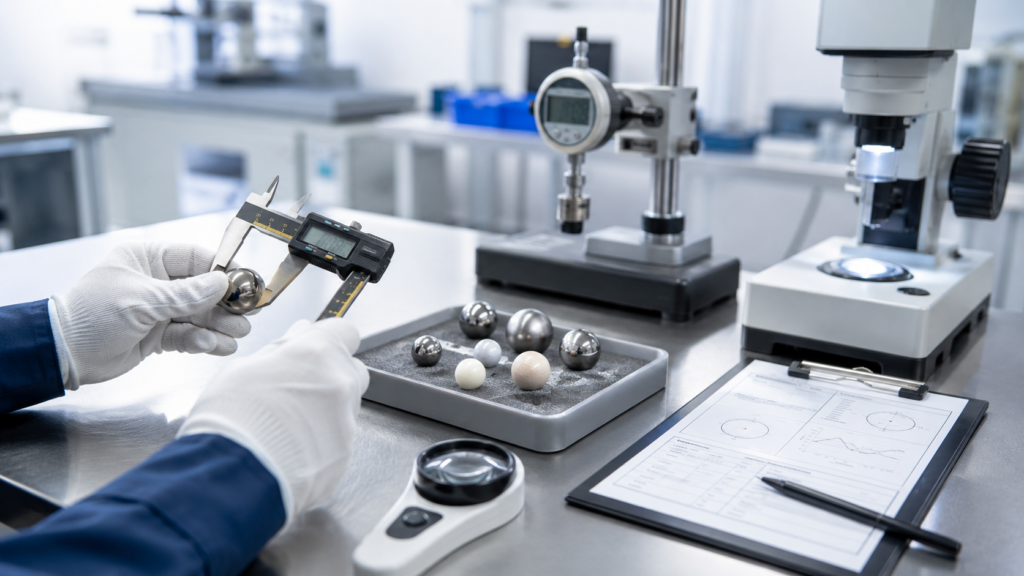
Controllo Qualità e Ispezione
Gli elementi tipici di ispezione per le sfere in acciaio inox AISI 420C includono diametro, grado, rotondità, aspetto superficiale, durezza, conferma del materiale, rugosità se specificata, passivazione o condizione superficiale, pulizia, condizione dell'imballaggio e tracciabilità del lotto.
Per applicazioni come componenti automobilistici, pompe, supporti speciali, strumenti di scrittura o assemblaggi OEM, gli acquirenti possono richiedere l'approvazione dei campioni, rapporti di ispezione, documentazione in stile PPAP, dichiarazioni RoHS, test di terze parti o etichettatura personalizzata. L'ambito di ispezione dovrebbe essere confermato prima dell'offerta e della produzione.
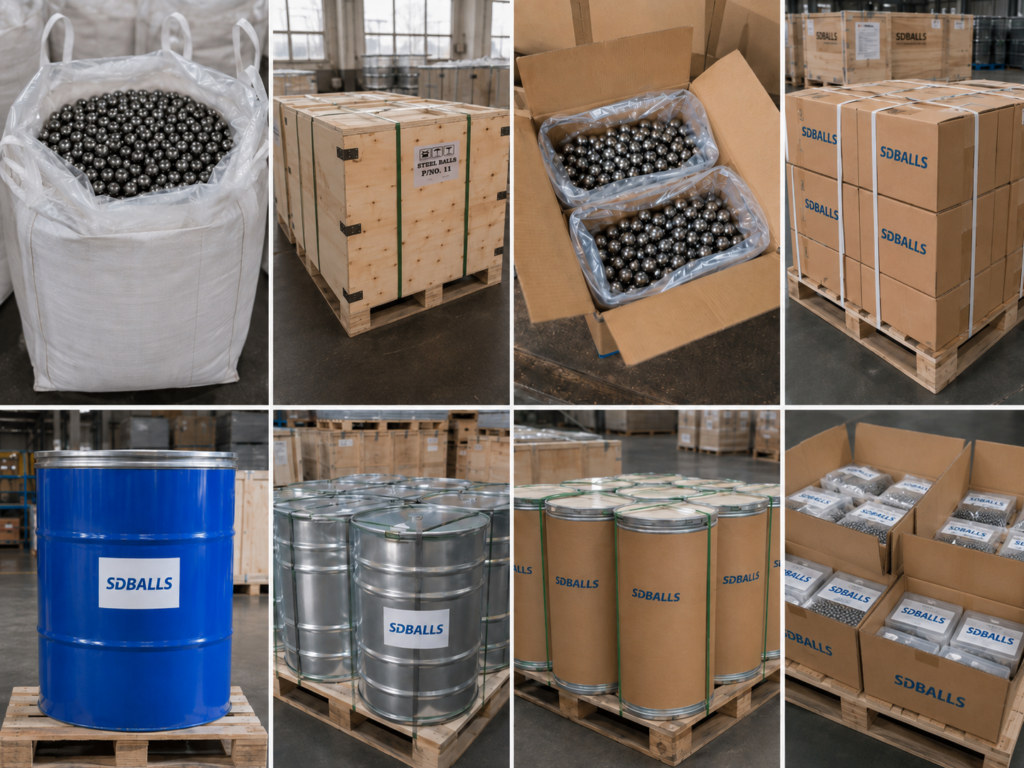
Opzioni di Imballaggio
SDBALLS può fornire sfere in acciaio inox AISI 420C in sacchi sfusi, scatole di cartone, secchi, fusti, casse di legno, pallet o imballaggio OEM personalizzato. L'imballaggio può essere selezionato in base alla dimensione delle sfere, alla quantità, al requisito di pulizia, al metodo di trasporto e alla pratica di movimentazione del magazzino del cliente.
Per le piccole dimensioni di precisione, si raccomandano sacchetti interni puliti e scatole protette. Per la fornitura industriale di grandi volumi, l'imballaggio in fusti o pallet può ridurre i costi di movimentazione. Le etichette personalizzate possono includere il grado del materiale, il diametro, il grado di precisione, la quantità, il numero di lotto, il codice articolo del cliente e le informazioni sulla destinazione.
Come Specificare per un Preventivo
Per un preventivo accurato, si prega di confermare: grado del materiale (AISI 420C o equivalente), diametro in mm o pollici, grado di precisione, intervallo di durezza, finitura superficiale, requisito di passivazione o oliatura, ambiente corrosivo, quantità, metodo di imballaggio, applicazione, disponibilità di disegni o campioni, requisiti del documento di ispezione, porto di destinazione e termine commerciale.
Per i progetti di sostituzione, si incoraggiano gli acquirenti a fornire disegni, schede tecniche del fornitore attuale, foto, campioni, requisiti di durezza, fluidi di lavoro, temperatura, carico, velocità e dettagli sull'esposizione alla corrosione. Ciò aiuta SDBALLS a confermare se l'AISI 420C è adatto o se si dovrebbe raccomandare il 440C, il 316, la ceramica o un altro materiale.
FAQ Tecniche
D: Che cos'è una sfera in acciaio inox AISI 420C?
R: La sfera in acciaio inox AISI 420C è una sfera in acciaio inossidabile martensitico temprato. Offre elevata durezza, buona resistenza all'usura, risposta magnetica e una pratica resistenza alla corrosione per molte applicazioni meccaniche.
D: L'AISI 420C è magnetico?
R: Sì. L'AISI 420C è un acciaio inossidabile martensitico ed è magnetico. Questo può essere utile per l'alimentazione automatizzata, lo smistamento magnetico e i sistemi di assemblaggio.
D: Quale durezza può fornire SDBALLS per le sfere in AISI 420C?
R: L'intervallo di durezza temprata tipico è HRC 52-60. Se è richiesto un intervallo di durezza più r
D: L'AISI 420C offre una resistenza alla corrosione superiore rispetto agli acciai inossidabili 304 o 316?
R: No. L'AISI 420C viene scelto principalmente per durezza e resistenza all'usura. L'AISI 304 e specialmente l'AISI 316 rappresentano solitamente scelte migliori per ambienti fortemente corrosivi, requisiti di contatto alimentare, esposizione chimica o mezzi ricchi di cloruri.
D: Qual è la differenza tra le sfere in acciaio inox AISI 420C e AISI 440C?
R: Entrambe sono gradazioni di acciaio inossidabile martensitico. L'AISI 440C offre generalmente una durezza più elevata e prestazioni da cuscinetto di qualità superiore, mentre l'AISI 420C rappresenta un'opzione pratica in acciaio temprato per cuscinetti speciali, pompe, componenti per valvole e meccanismi di consumo, dove non sono richieste le prestazioni complete del 440C.
D: Le sfere in acciaio inox AISI 420C possono essere utilizzate in acqua di mare?
R: L'AISI 420C non è consigliato per immersione in acqua marina o ambienti aggressivi ricchi di cloruri. Per condizioni marine o corrosive severe, gli acquirenti dovrebbero prendere in considerazione acciaio inox 316/316L, sfere ceramiche o un altro materiale specifico per la corrosione.
D: Quali applicazioni utilizzano comunemente le sfere in acciaio inox AISI 420C?
R: Le applicazioni comuni includono cuscinetti speciali, componenti per cinture di sicurezza automobilistiche, parti di pompe e valvole, accendini, penne a sfera, componenti per il ricircolo e meccanismi industriali che richiedono durezza unita a una resistenza alla corrosione pratica.
D: Quali informazioni sono necessarie per un preventivo?
R: Si prega di fornire il grado del materiale, diametro, grado di precisione, durezza, finitura superficiale, quantità, metodo di imballaggio, applicazione, ambiente di lavoro, requisiti della documentazione di ispezione, destinazione e termine commerciale.
Prodotti correlati
Richiesta di programma A
Contattaci oggi stesso per qualsiasi servizio. (*) Indica i campi obbligatori.