
-3.png)
-4.png)
-4.png)
-4.png)
-4.png)
Sfere in acciaio inossidabile AISI 302/304/304L – Sfere in acciaio inossidabile austenitico per applicazioni resistenti alla corrosione
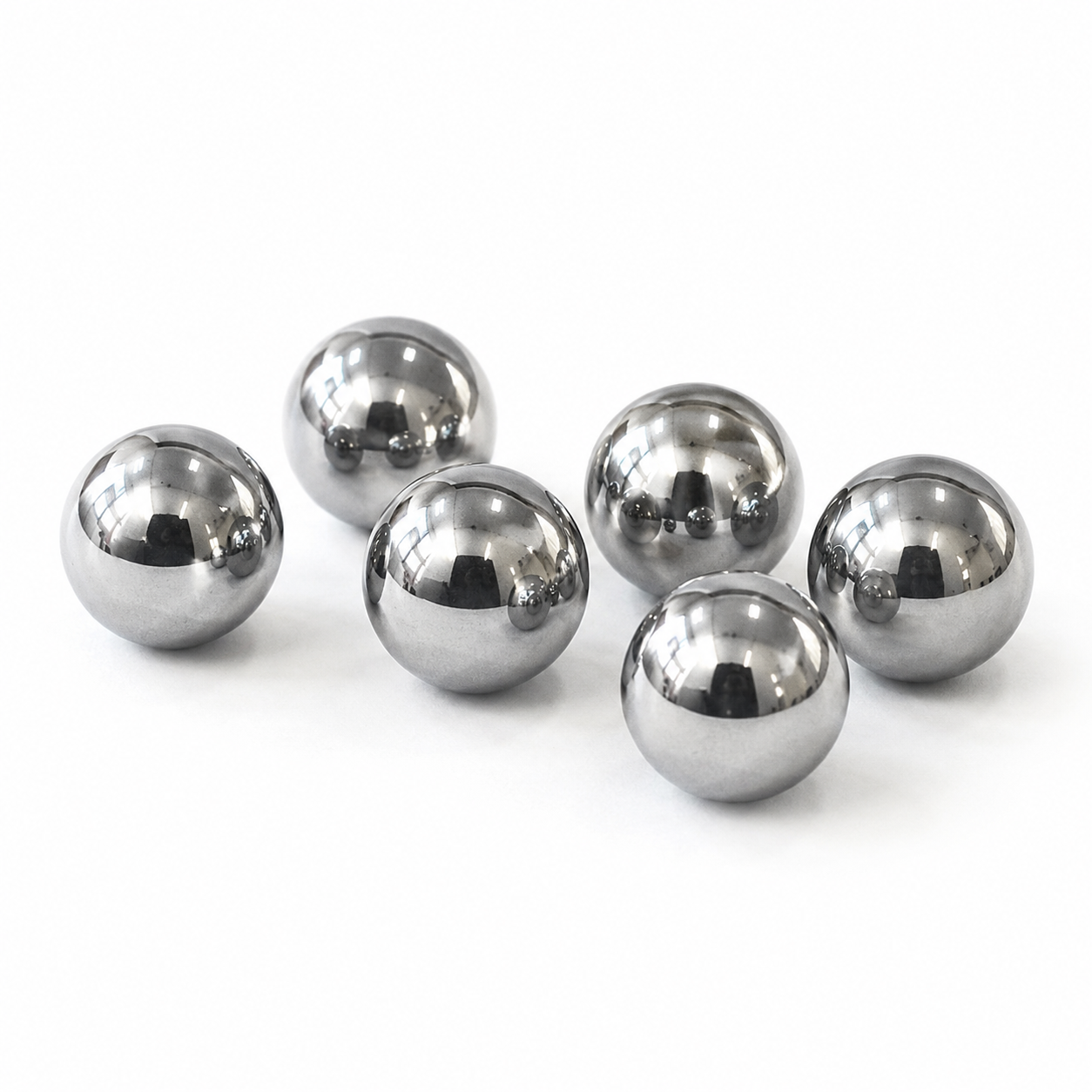
Le sfere in acciaio inossidabile AISI 302/304/304L sono sfere in acciaio inossidabile austenitico non temprato, progettate per applicazioni in cui resistenza alla corrosione, condizioni superficiali pulite, tenacità e prestazioni meccaniche stabili sono più importanti della massima durezza. Sono ampiamente utilizzate in pompe, spruzzatori, valvole per erogatori, valvole per applicazioni medicali, cuscinetti speciali, attrezzature per uso alimentare, confezionamento cosmetico e assemblaggi industriali generici resistenti alla corrosione.
SDBALLS fornisce sfere in acciaio inossidabile AISI 302, AISI 304 e AISI 304L da 0,5 mm a 150,00 mm, con gradi di precisione comuni come G100, G200, G500 e G1000. Queste sfere sono tipicamente fornite in condizione passivata e possono essere selezionate in base all'ambiente corrosivo, al requisito di durezza, al comportamento magnetico, alla finitura superficiale e ai requisiti applicativi.
| Articolo | Contenuto della pagina consigliato |
| Materiale | Acciaio inossidabile austenitico AISI 302 / AISI 304 / AISI 304L |
| Tipo di Prodotto | Sfere in acciaio inossidabile austenitico non temprato / non temprato a cuore |
| Gamma di diametri | 0,5 mm – 150,00 mm |
| Gradi di precisione | G100, G200, G500, G1000; |
| Durezza | HRC 20-39 a seconda delle condizioni del materiale e della lavorazione a freddo; |
| Applicazioni tipiche | Pompe, spruzzatori, valvole aerosol, valvole per erogatori, confezionamento cosmetico, valvole per applicazioni medicali, attrezzature per uso alimentare, cuscinetti speciali, giunti e meccanismi generici resistenti alla corrosione |
Condividi questo prodotto
Panoramica del prodotto
Le sfere in acciaio inossidabile AISI 302/304/304L sono sfere in acciaio inossidabile austenitico resistenti alla corrosione, prodotte per applicazioni industriali, igieniche, di gestione dei fluidi e meccaniche di semi-precisione. A differenza delle sfere in acciaio inossidabile martensitico AISI 420C o AISI 440C, queste qualità non sono selezionate principalmente per l'elevata durezza. I loro principali vantaggi sono la resistenza alla corrosione, la tenacità, l'aspetto pulito e le prestazioni stabili in molti ambienti chimici, alimentari, cosmetici, medicali e atmosferici comuni.
Per gli acquirenti internazionali, questa famiglia di prodotti è spesso specificata quando le sfere in acciaio al carbonio potrebbero arrugginire, le sfere in acciaio cromato non sono adatte all'esposizione corrosiva e non è richiesto acciaio inossidabile martensitico ad alta durezza. L'AISI 304 è l'opzione inossidabile generica più comune, l'AISI 304L offre un contenuto di carbonio inferiore per una migliore resistenza alla corrosione intergranulare in applicazioni idonee, e l'AISI 302 può offrire una migliore resistenza meccanica e comportamento all'incrudimento rispetto al 304 in alcune applicazioni.
Selezione dei Materiali e Posizionamento Tecnico
Gli AISI 302, 304 e 304L sono acciai inossidabili austenitici. Sono comunemente descritti nell'industria come sfere in acciaio inossidabile non temprato, sfere in acciaio inossidabile 18-8, sfere inossidabili resistenti alla corrosione e sfere in acciaio inossidabile passivato.
- AISI 302: selezionato quando sono richieste una buona resistenza alla corrosione e migliori caratteristiche meccaniche rispetto alle comuni applicazioni del 304.
- AISI 304: il grado di sfera in acciaio inossidabile austenitico generico più utilizzato per pompe, valvole, attrezzature per uso alimentare, spruzzatori e meccanismi per prodotti di consumo.
- AISI 304L: versione a basso contenuto di carbonio del 304, spesso selezionata quando un contenuto di carbonio inferiore è richiesto dalla specifica dell'acquirente o quando è importante una migliore resistenza alla sensibilizzazione.
- Se è richiesta una maggiore durezza e resistenza all'usura, le sfere in acciaio inox AISI 420C o AISI 440C possono essere più adatte.
- Se è richiesta una maggiore resistenza ai cloruri, agli ambienti marini, all'acido solforico o ad ambienti chimici più aggressivi, si dovrebbero considerare gli acciai AISI 316/316L o leghe speciali.
Specifiche tecniche
| Specifiche | Sfere in acciaio inox AISI 302/304/304L |
| Famiglia di materiali | Acciaio inossidabile austenitico |
| Materiali Standard | AISI 302, AISI 304, AISI 304L |
| Diametro Disponibile | 0,5 mm – 150,00 mm; altre dimensioni soggette a conferma di produzione |
| Gradi Comuni | G100, G200, G500, G1000; selezionato in base all'applicazione e all'obiettivo di costo |
| Intervallo di Durezza | Tipicamente HRC 20-39; confermare la durezza finale in base al grado, alla dimensione e alla condizione del materiale; non è una sfera in acciaio inox martensitico ad alta durezza |
| Densità | Circa 7,93 g/cm³ per AISI 302/304/304L |
| Resistenza alla corrosione | Buona resistenza alla corrosione atmosferica, agli ambienti alimentari, a molti prodotti chimici organici, soluzioni ossidanti e sterilizzanti; non raccomandato per ambienti contenenti acido solforico o ricchi di cloruri senza una valutazione ingegneristica |
| Condizione di montaggio | Passivato come standard quando richiesto; finitura superficiale lucidata o personalizzata disponibile su progetto |
| Magnetismo | Generalmente non magnetico o leggermente magnetico; la lavorazione a freddo può aumentare la risposta magnetica |
| Condizione di montaggio | Condizione superficiale passivata, lucidata, pulita, esente da oli o personalizzata su richiesta |
| Livello di Utilizzo Raccomandato | Applicazioni resistenti alla corrosione, con superficie pulita, a carico medio-basso e di semi-precisione |
Riferimento composizione chimica
I seguenti intervalli di composizione sono valori di riferimento per la selezione del materiale. I requisiti finali del materiale devono seguire lo standard concordato, il disegno, l'ordine di acquisto e i documenti di ispezione.
| Grado | C % | Si % | Mn % | P max % | S max % | Cr % | Ni % |
| AISI 302 | ≤0,15 | ≤1,00 | ≤2,00 | 0.045 | 0.030 | 17.00-19.00 | 8.00-10.00 |
| AISI 304 | ≤0.08 | ≤1,00 | ≤2,00 | 0.045 | 0.030 | 18.00-20.00 | 8.00-10.50 |
| AISI 304L | ≤0.03 | ≤1,00 | ≤2,00 | 0.045 | 0.030 | 18.00-20.00 | 8.00-12.00 |
Equivalenti internazionali di grado
| AISI / ASTM | UNS | Riferimento EN / DIN | Riferimento JIS | Note |
| AISI 302 | S30200 | 1.4310 | SUS302 | Acciaio inossidabile austenitico con buone proprietà meccaniche e comportamento di incrudimento |
| AISI 304 | S30400 | 1.4301 | SUS304 | Acciaio inossidabile austenitico 18-8 per uso generale |
| AISI 304L | S30403 | 1.4307 | SUS304L | Versione a basso tenore di carbonio del 304; verificare la specifica quando i requisiti di corrosione o saldatura sono critici |
Durezza, Magnetismo e Prestazioni alla Corrosione
Le sfere in acciaio inossidabile AISI 302/304/304L non sono sfere in acciaio per cuscinetti temprate termicamente. Sono selezionate principalmente per la resistenza alla corrosione e le prestazioni superficiali pulite piuttosto che per la massima durezza. L'intervallo di durezza tipico in questa pagina è HRC 20-39, ma la durezza finale può variare in base alle dimensioni della sfera, al ciclo di lavorazione e alla deformazione a freddo. Per una maggiore durezza e resistenza all'usura, è opportuno valutare sfere in acciaio inossidabile AISI 420C o AISI 440C.
Allo stato ricotto, l'acciaio inossidabile austenitico è generalmente non magnetico. Tuttavia, la produzione delle sfere in acciaio include processi di deformazione a freddo e formatura, pertanto le sfere AISI 302/304/304L potrebbero mostrare una leggera risposta magnetica. Se il comportamento magnetico è critico, l'acquirente dovrebbe confermare i requisiti di permeabilità o magnetismo prima della quotazione.
Questi gradi forniscono una buona resistenza alla corrosione atmosferica, a molti ambienti alimentari, a molti prodotti chimici organici, ad ambienti ossidanti, a supporti correlati ai coloranti e a soluzioni sterilizzanti. Non sono raccomandati per soluzioni di acido solforico, forte esposizione ai cloruri, impieghi marini o supporti chimici aggressivi, a meno che l'applicazione non venga esaminata. Per ambienti corrosivi più impegnativi, sfere in AISI 316/316L, 904L, ceramica o leghe speciali potrebbero essere più adatte.
Applicazioni e idoneità applicativa
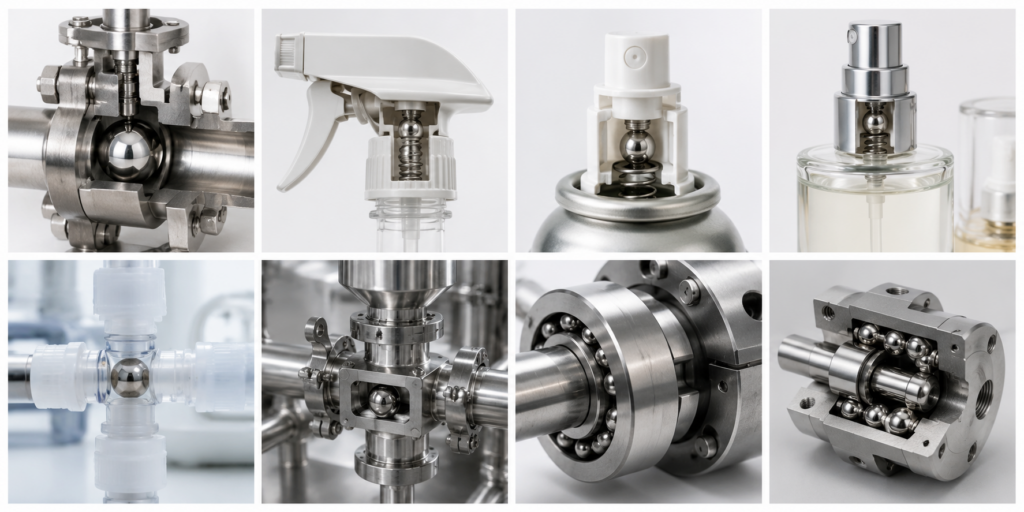
Le sfere in acciaio inossidabile AISI 302/304/304L sono ampiamente utilizzate in applicazioni dove la resistenza alla corrosione, l'aspetto pulito, il funzionamento regolare e la fornitura stabile sono più importanti di un'elevata resistenza a fatica dei cuscinetti.
| Applicazione | Livello di idoneità | Perché è Adatto | Nota per l'acquirente |
| Pompe e valvole di non ritorno | Molto buono | L'acciaio inossidabile austenitico supporta un funzionamento pulito e la resistenza alla corrosione in molti sistemi di gestione dei fluidi | Confermare i fluidi, la temperatura e la compatibilità chimica |
| Erogatori per aerosol, dispenser e spruzzatori a grilletto | Molto buono | La buona resistenza alla corrosione e la superficie liscia rendono queste sfere adatte per funzioni ripetute di azionamento e tenuta | Verificare il diametro della sfera, la finitura superficiale e il requisito di pulizia |
| Pompe miniaturizzate per profumi e confezionamento cosmetico | Molto buono | L'aspetto inossidabile pulito e la resistenza alla corrosione si adattano ai sistemi di erogazione di fragranze, lozioni e cosmetici | Verificare la compatibilità con il fluido e se è richiesta una pulizia senza oli |
| Valvole per applicazioni medicali | Bene | Adatto a molti componenti puliti per valvole dove sono richieste resistenza alla corrosione e un funzionamento fluido | Confermare i requisiti di documentazione normativa, pulizia e ispezione |
| Apparecchiature per uso alimentare | Bene | Le sfere in acciaio inox 304/304L sono comunemente utilizzate dove sono richieste lavabilità e resistenza generale alla corrosione | Verificare se è necessaria documentazione per contatto alimentare o una pulizia speciale |
| Cuscinetti e giunti speciali | Dipende dall'applicazione | Utili in applicazioni con cuscinetti o giunti resistenti alla corrosione, per carichi da bassi a medi | Utilizzare 440C o 52100 quando sono richieste elevata resistenza a fatica o elevata durezza |
| Assiemi aerospaziali e industriali di precisione | Dipende dall'applicazione | I gradi di acciaio inox standardizzati supportano una selezione ingegneristica controllata | Confermare i requisiti di disegno, normativa, grado e ispezione |
| Ambienti con acido solforico, marini o ricchi di cloruri | Limitato | 302/304/304L non sono la scelta migliore per queste condizioni | Prendere in considerazione 316/316L, 904L, sfere in ceramica o leghe speciali resistenti alla corrosione |
Guida alla selezione dei materiali
| Opzione materiale | Resistenza tipica | Limitazione | Quando consigliare |
| Sfere in acciaio inox AISI 302 | Buone proprietà meccaniche, tenacità e resistenza generale alla corrosione | Non selezionato per la massima durezza; può mostrare un leggero magnetismo dopo la lavorazione a freddo | Spruzzatori, pompe, valvole, cuscinetti speciali e applicazioni che necessitano di un comportamento leggermente più robusto nell'acciaio inox austenitico |
| Sfere in acciaio inox AISI 304 | Grado austenitico inossidabile per uso generale più comune, con aspetto pulito e buona resistenza alla corrosione | Non adatto per applicazioni con cloruri forti, acido solforico o che richiedono elevata durezza | Attrezzature per alimenti, valvole per dosatori, pompe per cosmetici, valvole per applicazioni medicali e meccanismi generali resistenti alla corrosione |
| Sfere in acciaio inossidabile AISI 304L | Contenuto di carbonio inferiore rispetto al 304; utile quando è richiesta una specifica a basso tenore di carbonio | La resistenza meccanica può essere inferiore al 302 in alcuni casi; non è una sfera ad alta durezza | Progetti che richiedono specifica del materiale 304L, maggiore resistenza alla sensibilizzazione o selezione di acciaio inossidabile a basso carbonio |
| Sfere in acciaio inossidabile AISI 316/316L | Migliore resistenza alla corrosione in molti ambienti clorurati e chimici grazie al contenuto di molibdeno | Costo più elevato rispetto al 304/304L | Ambienti marini, clorurati, chimici più aggressivi, farmaceutici o con rischio di corrosione più elevato |
| Sfere in acciaio inossidabile AISI 420C / 440C | Maggiore durezza e resistenza all'usura | Resistenza alla corrosione inferiore rispetto ai gradi austenitici in molti ambienti | Cuscinetti, valvole e assemblaggi meccanici che richiedono maggiore durezza e resistenza all'usura |
| Sfere in acciaio al cromo AISI 52100 | Eccellenti durezza, precisione e prestazioni a fatica nei cuscinetti | Non inossidabile; richiede protezione dalla ruggine | Cuscinetti di alta precisione, motori, guide lineari e applicazioni di rotolamento con carichi elevati |
Produzione e controllo del processo
SDBALLS controlla la produzione di sfere in acciaio inossidabile attraverso selezione delle materie prime, trafilatura, stampaggio a freddo, sbavatura, rettifica o lappatura quando richiesto, lucidatura, pulizia, passivazione se specificata, ispezione e imballaggio per l'esportazione. Per le sfere in acciaio inossidabile AISI 302/304/304L, il controllo del processo si concentra sulla consistenza dimensionale, la pulizia superficiale, le prestazioni alla corrosione e l'idoneità applicativa piuttosto che sul trattamento termico per l'alta durezza.
Le condizioni superficiali sono particolarmente importanti per pompe, spruzzatori, valvole, imballaggi cosmetici e attrezzature per alimenti. SDBALLS può discutere superfici passivate, superfici lucidate, imballaggi puliti, consegna senza olio, etichettatura speciale e piani di ispezione personalizzati in base all'applicazione dell'acquirente.
Controllo Qualità e Ispezione
- Ispezione del diametro e del grado secondo i requisiti di precisione concordati
- Ispezione di rotondità, aspetto superficiale e difetti per un funzionamento regolare
- Verifica del materiale secondo i requisiti AISI 302, AISI 304 o AISI 304L
- Ispezione della durezza quando richiesto da disegno, specifica o ordine di acquisto
- Conferma della passivazione e delle condizioni superficiali quando specificato
- Ispezione dell'imballaggio per ridurre contaminazione, rischio di ruggine, rischio di mescolamento e danni durante il trasporto
- Per progetti OEM, SDBALLS può discutere l'approvazione dei campioni, i rapporti di ispezione, la documentazione in stile PPAP, le richieste RoHS, i test di terze parti e l'etichettatura personalizzata.
Opzioni di Imballaggio
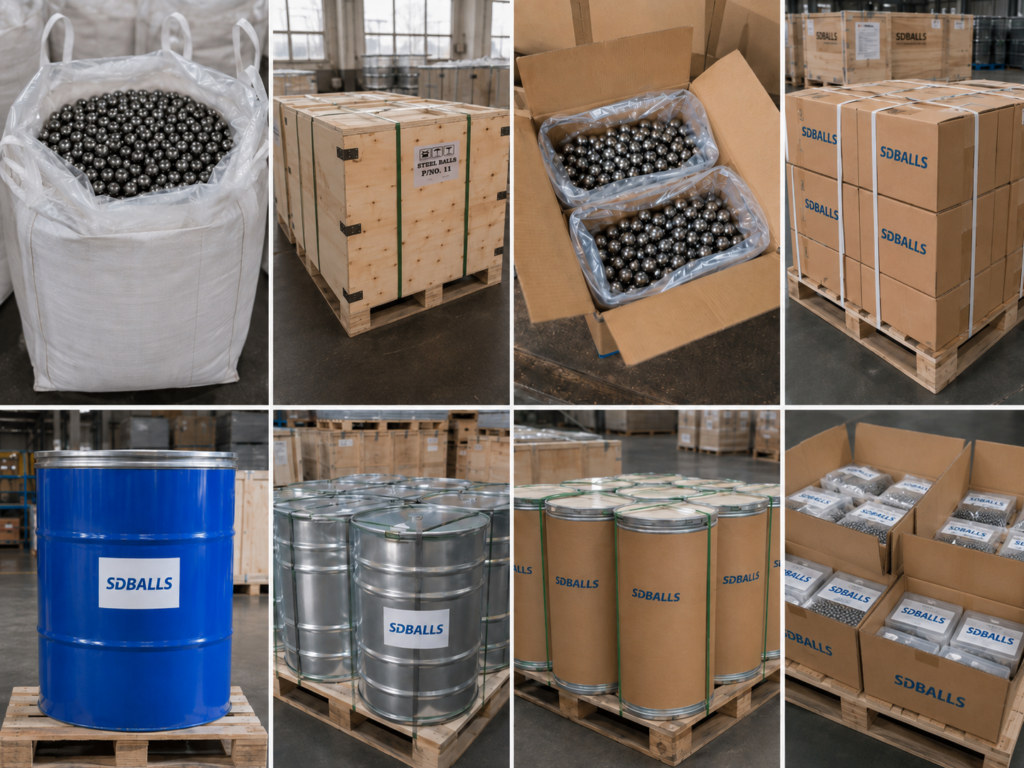
L'imballaggio può essere selezionato in base alla quantità dell'ordine, ai requisiti di pulizia, al metodo di trasporto per l'esportazione e all'applicazione finale. Le opzioni comuni includono sacchetti di plastica, scatole di cartone, secchielli, fusti, pallet e imballaggi OEM personalizzati. Per applicazioni medicali, alimentari, cosmetiche e per pompe, gli acquirenti devono confermare se è richiesto un imballaggio pulito, privo di olio, con etichettatura per lotti separati o un imballaggio speciale anti-contaminazione.
Come Specificare per un Preventivo
Per un preventivo accurato, si prega di confermare: grado del materiale (AISI 302, AISI 304 o AISI 304L), diametro in mm o pollici, grado di precisione, durezza o requisito magnetico se critico, condizione superficiale, requisito di passivazione, requisito di pulizia, fluido di applicazione, quantità, metodo di imballaggio, documenti di ispezione, porto di destinazione e termine di resa.
Per progetti di sostituzione, si incoraggiano gli acquirenti a fornire disegni, schede tecniche del fornitore attuale, foto, campioni, ambiente applicativo, fluidi liquidi o chimici, grado richiesto ed eventuali requisiti di test speciali.
FAQ Tecniche
D: Qual è la differenza tra le sfere in acciaio inossidabile AISI 302, 304 e 304L?
R: AISI 302, 304 e 304L sono acciai inossidabili austenitici. AISI 304 è il grado per uso generale più ampiamente utilizzato. AISI 304L ha un contenuto di carbonio inferiore e viene selezionato quando è richiesta una specifica di acciaio inossidabile a basso tenore di carbonio. AISI 302 può fornire migliori caratteristiche meccaniche e comportamento all'incrudimento in alcune applicazioni.
D: Le sfere in acciaio inossidabile AISI 302/304/304L sono temprate?
R: Sono normalmente descritte come sfere in acciaio inossidabile austenitico non temprato o non temprato a cuore. Non sono temprate termicamente come le sfere in acciaio al cromo 420C, 440C o 52100. La durezza tipica è intorno a HRC 20-39 a seconda della lavorazione e della deformazione a freddo.
D: Queste sfere in acciaio inossidabile sono magnetiche?
R: L'acciaio inossidabile austenitico è generalmente non magnetico in condizione ricotta, ma la lavorazione a freddo durante la produzione delle sfere può creare una leggera risposta magnetica. Se il magnetismo è critico, si prega di confermare il requisito prima del preventivo.
D: Le sfere in acciaio inossidabile 304 sono adatte per applicazioni a contatto con alimenti?
R: Le sfere in acciaio inossidabile AISI 304 e 304L sono comunemente utilizzate in apparecchiature legate al settore alimentare a causa del loro aspetto pulito e della buona resistenza generale alla corrosione. L'acquirente deve confermare i requisiti esatti di contatto con gli alimenti, pulizia, passivazione e documentazione per il progetto.
D: Queste sfere possono essere utilizzate in pompe e spruzzatori?
R: Sì. Le sfere in acciaio inossidabile AISI 302/304/304L sono comunemente utilizzate in pompe, valvole aerosol, valvole dosatrici, spruzzatori per orticoltura, spruzzatori domestici, pompe in miniatura per profumi e valvole per applicazioni medicali. La compatibilità con i fluidi deve essere sempre confermata.
D: Le sfere AISI 302/304/304L sono resistenti all'acido solforico o all'acqua di mare?
R: Non sono la scelta preferita per acido solforico, acqua di mare, ambienti ad alto contenuto di cloruri o chimicamente aggressivi. Sfere in AISI 316/316L, 904L, ceramica o altri materiali speciali resistenti alla corrosione possono essere più adatti.
D: Quando dovrei scegliere le sfere in acciaio inossidabile 304 invece di quelle 440C?
R: Scegliere 304 o 304L quando la resistenza alla corrosione, la pulizia e la tenacità sono più importanti dell'elevata durezza. Scegliere 440C quando sono richieste maggiore durezza, resistenza all'usura e prestazioni nei cuscinetti, e l'ambiente corrosivo non è troppo aggressivo.
D: Di quali informazioni ha bisogno SDBALLS per un preventivo?
R: Si prega di fornire grado del materiale, diametro, grado di precisione, quantità, applicazione, condizione superficiale, requisito di passivazione, metodo di imballaggio, requisito del documento di ispezione, destinazione e termine di resa. Disegni o campioni sono utili per progetti di sostituzione.
Prodotti correlati
- sfere in acciaio inossidabile
- Sfere in acciaio inossidabile 316/316L per una maggiore resistenza alla corrosione
- Sfere in acciaio inossidabile 420C per una maggiore durezza
- Sfere in acciaio inossidabile 440C per cuscinetti di precisione
- Sfere in acciaio al cromo AISI 52100
- controllo qualità SDBALLS
- applicazioni delle sfere in acciaio inossidabile
Richiesta di programma A
Contattaci oggi stesso per qualsiasi servizio. (*) Indica i campi obbligatori.