
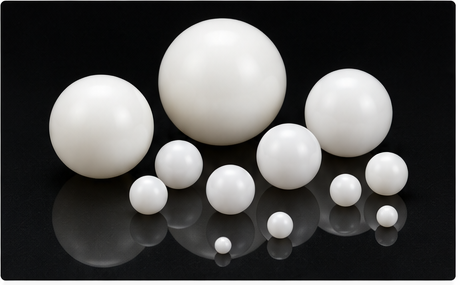


Sfere in Delrin POM – Sfere in plastica acetalica per valvole a basso attrito, cuscinetti e componenti scorrevoli
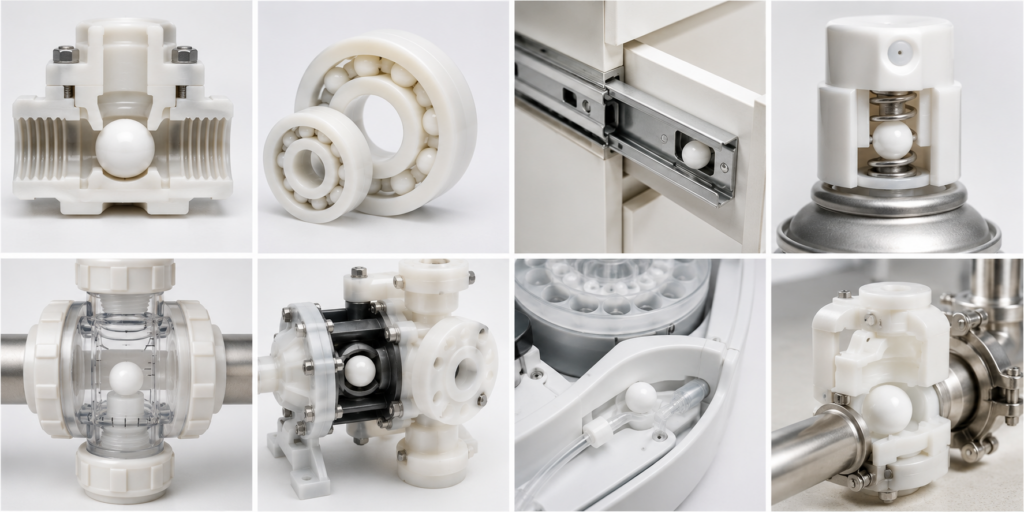
Le sfere in POM Delrin, note anche come sfere in plastica acetilica o sfere in poliossimetilene, sono sfere tecniche in plastica leggera progettate per basso attrito, buona resistenza all'usura, stabilità dimensionale e isolamento elettrico. Sono comunemente utilizzate come alternative alle sfere metalliche in valvole di sicurezza leggere, cuscinetti a basso carico, agitatori a spruzzo, guide scorrevoli per mobili, regolatori di flusso per fluidi, pompe e valvole specializzate e assemblaggi elettricamente sensibili.
SDBALLS fornisce sfere in POM in bianco naturale e colori personalizzati, con diametri comuni da 1,5 mm a 160 mm e gradi di precisione I, II e III. Rispetto alle sfere in nylon, le sfere in POM offrono generalmente un minore assorbimento di umidità e una migliore stabilità dimensionale. Rispetto alle sfere metalliche, sono più leggere, amagnetiche, resistenti alla corrosione in molti fluidi compatibili e adatte per applicazioni a basso carico a secco o autolubrificanti.
| Articolo | Contenuto della pagina consigliato |
| Materiale | POM / Poliossimetilene / Resina acetilica;
Delrin è un nome commerciale ampiamente utilizzato per il materiale omopolimero acetilico. |
| Gamma di diametri | 1,5 mm – 160 mm; dimensioni personalizzate soggette a conferma di produzione |
| Gradi di precisione | Grado I, II, III; selezionati in base a tolleranza, applicazione e obiettivo di costo |
| Durezza | Shore D tipico 80-90 |
| Applicazioni tipiche | Valvole di sicurezza leggere, valvole di ritegno, cuscinetti a basso carico, agitatori a spruzzo, guide scorrevoli per mobili, flussimetri, regolatori di flusso per fluidi, pompe, componenti per valvole, apparecchiature medicali, parti elettroniche e attrezzature per uso alimentare quando il grado di resina è idoneo |
Condividi questo prodotto
Panoramica del prodotto
Le sfere in Delrin POM sono sfere di plastica di precisione realizzate in poliossimetilene (POM), un tecnopolimero semicristallino noto per il suo equilibrio tra resistenza meccanica, basso attrito, resistenza all'usura e stabilità dimensionale. Nelle applicazioni industriali con sfere, il POM viene spesso scelto quando i progettisti necessitano di una sfera leggera, non magnetica ed elettricamente isolante, in grado di funzionare agevolmente in sistemi meccanici a basso carico o di controllo dei fluidi.
A differenza delle sfere in acciaio, le sfere in POM non offrono un'elevata resistenza a fatica nei cuscinetti né prestazioni metalliche ad alte temperature. Il loro valore è diverso: riducono il peso, evitano il rumore metallo-metallo, resistono a molti oli e carburanti e possono funzionare con basso attrito in assemblaggi a secco o leggermente lubrificati. Ciò le rende pratiche per valvole, dispositivi di controllo del flusso, guide di scorrimento, cuscinetti a basso carico, pompe, sistemi di nebulizzazione e strumenti dove corrosione, isolamento elettrico o riduzione del peso sono fattori importanti.
Selezione dei Materiali e Posizionamento Tecnico
Il POM viene spesso confrontato con sfere in nylon, polietilene, acrilico, PTFE e metallo. La scelta corretta dipende dalla temperatura di esercizio, dal carico, dall'esposizione chimica, dalla tolleranza dimensionale e dall'eventuale necessità di isolamento elettrico.
- Scegliere le sfere in POM quando sono richiesti basso attrito, basso assorbimento di umidità, stabilità dimensionale e resistenza all'usura.
- Scegliere le sfere in nylon quando la tenacità e la resistenza all'impatto sono più importanti e può essere accettato un certo assorbimento di umidità.
- Scegliere le sfere in HDPE o PP quando il requisito principale è una densità molto bassa o un'ampia resistenza chimica in utilizzi meno gravosi.
- Scegliere le sfere in PTFE quando sono richiesti un attrito molto basso e una maggiore resistenza chimica, ma la rigidità meccanica è inferiore.
- Scegliere le sfere in acciaio inossidabile, acciaio cromato o ceramica quando sono richiesti carichi più elevati, temperature più alte, prestazioni di precisione dei cuscinetti o durezze molto elevate.
Proprietà Tecniche e Prestazioni
| Proprietà | Valore di Riferimento Tipico |
| Tipo di Prodotto | Sfere piene in tecnopolimero per applicazioni a basso attrito, isolanti e resistenti alla corrosione |
| Famiglia di materiali | Tecnopolimero POM / acetale |
| Colore | Bianco naturale; nero o colori personalizzati potrebbero essere disponibili |
| Durezza | Shore D 80-90 |
| Densità | Circa 1,37-1,42 g/cm³ |
| Modulo elastico | Circa 2,5-4,0 GPa a seconda del grado di resina |
| Magnetismo | Non magnetico |
| Resistenza di riferimento a trazione/compressione | Intervallo ingegneristico comune intorno a 30-120 MPa a seconda del metodo di prova e del grado di resina |
| Temperatura di servizio | Tipicamente da -40 °C a +85 °C per applicazioni con sfere |
| Comportamento all'attrito | Basso attrito e comportamento autolubrificante |
| Assorbimento d'acqua | Basso rispetto al nylon |
| Proprietà elettriche | Buon isolamento elettrico |
| Assorbimento di umidità | Basso assorbimento di umidità rispetto al nylon; supporta una migliore stabilità dimensionale in molte applicazioni |
| Resistenza chimica | Buona resistenza a oli, grassi, carburanti, molti idrocarburi e mezzi chimici deboli; non adatto per acidi forti, alcali forti, agenti ossidanti o esposizione chimica aggressiva prolungata senza conferma |
Resistenza Chimica e Limiti Applicativi
Le sfere in POM offrono una resistenza utile a molti oli, grassi, prodotti petroliferi, carburanti, idrocarburi alifatici, alcoli deboli e molte soluzioni acquose neutre. Questo le rende adatte per molte applicazioni in valvole, pompe, controllo del flusso e applicazioni meccaniche dove la corrosione dei metalli o la conducibilità elettrica sono indesiderabili.
Il POM non è una plastica universale resistente agli agenti chimici. Generalmente non è raccomandato per acidi forti, alcali forti, agenti ossidanti, mezzi cloruranti forti, esposizione ad acqua calda/vapore o esposizione prolungata ai raggi UV esterni senza conferma tecnica. Per ambienti chimici aggressivi, PTFE, alcune ceramiche, acciaio inossidabile, vetro o altri materiali plastici potrebbero essere più appropriati.
Applicazioni e idoneità applicativa
| Applicazione | Livello di idoneità | Perché è Adatto | Nota per l'acquirente |
| Valvole di sicurezza leggere / valvole di non ritorno | Molto buono | Peso ridotto, resistenza alla corrosione in mezzi compatibili e comportamento di tenuta uniforme | Verificare il fluido, la temperatura, la pressione e il design della sede. |
| Cuscinetti a basso carico | Bene | Basso attrito, bassa rumorosità e comportamento autolubrificante | Non adatto per applicazioni di fatica su cuscinetti di precisione ad alta velocità o alto carico. |
| Guide di scorrimento per mobili | Bene | Riduce l'attrito e la rumorosità rispetto al contatto metallico | Verificare il carico sulla guida, il ciclo di usura e la tolleranza dimensionale. |
| Agitatori per spray / sistemi aerosol | Bene | Leggero e chimicamente compatibile con molti fluidi | Verificare il propellente, il solvente e l'esposizione chimica. |
| Controllori di flusso / flussimetri | Bene | Non magnetico, leggero ed elettricamente isolante | Verificare il requisito di densità e la compatibilità con il fluido. |
| Pompe e valvole specializzate | Bene | Utile dove sono richieste resistenza alla corrosione e contatto non metallico | Verificare la resistenza chimica e la temperatura di esercizio. |
| Attrezzature medicali/farmaceutiche | Dipende dall'applicazione | Una sfera liscia non metallica può essere adatta per attrezzature selezionate | Confermare grado di resina, pulizia e requisiti normativi. |
| Apparecchiature per uso alimentare | Dipende dall'applicazione | Il POM può essere utilizzato quando il grado e la conformità idonei sono confermati | Confermare il grado per contatto alimentare e le condizioni di pulizia prima del preventivo. |
| Cuscinetti per carichi elevati / Sistemi ad alta temperatura | Limitato | Le sfere in plastica non possono sostituire acciaio temprato o ceramica in condizioni gravose | Considerare sfere in acciaio inossidabile, acciaio cromato o ceramica. |
Guida alla selezione dei materiali
| Opzione materiale | Resistenza tipica | Limitazione | Quando consigliare |
| Sfere in POM / Delrin / Acetalica | Basso attrito, buona rigidità, basso assorbimento di umidità, stabilità dimensionale | Limitato in acidi forti, alcali forti, alta temperatura e carico pesante | Valvole, cuscinetti a basso carico, guide di scorrimento, dispositivi di flusso e componenti isolanti |
| Sfere in Nylon / PA | Buona tenacità e resistenza all'impatto | Maggiore assorbimento di umidità rispetto al POM; la variazione dimensionale potrebbe essere maggiore | Parti soggette a impatto e uso generale di sfere in plastica ingegneristica |
| Sfere in HDPE | Molto leggero, buona resistenza chimica, basso costo | Rigidità e durezza inferiori rispetto al POM | Sfere galleggianti, controllo dell'evaporazione e applicazioni chimiche a basso carico |
| Palline in PTFE | Eccellente resistenza chimica e attrito molto basso | Rigidità inferiore e costo più elevato | Valvole per prodotti chimici aggressivi e applicazioni a bassissimo attrito |
| Palline in acciaio inossidabile | Maggiore resistenza meccanica, capacità termica e resistenza alla corrosione a seconda del grado | Più pesante, conduttivo e costo più elevato | Pompe, valvole, cuscinetti e applicazioni che richiedono resistenza meccanica metallica |
| Sfere in ceramica | Elevata durezza, resistenza alla corrosione e potenziale per alte temperature | Considerazioni su costi elevati e fragilità | Applicazioni ad alta usura, con sostanze chimiche aggressive o di precisione speciale |
Produzione e controllo del processo
SDBALLS controlla la fornitura di sfere in POM attraverso la selezione della resina, la conferma del processo di formatura o lavorazione meccanica, il dimensionamento, la finitura, la pulizia, l'ispezione e l'imballaggio. Per le sfere in plastica, il controllo di processo si concentra sulla consistenza dimensionale, la rotondità, la superficie liscia, l'uniformità del colore, il controllo delle bave e la tracciabilità del materiale quando richiesto.
Per i progetti OEM, il metodo di produzione e il livello di tolleranza devono essere adeguati all'applicazione. Piccoli componenti di precisione, sfere per valvole e sfere per il controllo del flusso possono richiedere un controllo più rigoroso del diametro e della superficie, mentre sfere in plastica di grandi dimensioni per uso generico possono utilizzare una classe di tolleranza più economica.
Controllo Qualità e Ispezione
- Ispezione del diametro e della tolleranza secondo il grado concordato.
- Ispezione della rotondità e dell'aspetto superficiale per verificare la presenza di bave, graffi, segni di giunzione e contaminazione.
- Conferma del materiale in base al grado della resina, al colore e ai requisiti dell'ordine di acquisto.
- Conferma della durezza o delle proprietà del materiale quando specificato dall'acquirente.
- Verifiche basate sull'applicazione per la tenuta della valvola, il comportamento del flusso, il movimento a basso attrito o l'adattamento all'assemblaggio quando vengono forniti campioni.
- Supporto per rapporti di ispezione, richieste RoHS / REACH, test di terze parti ed etichettatura personalizzata, quando richiesto per progetti OEM.
Opzioni di Imballaggio
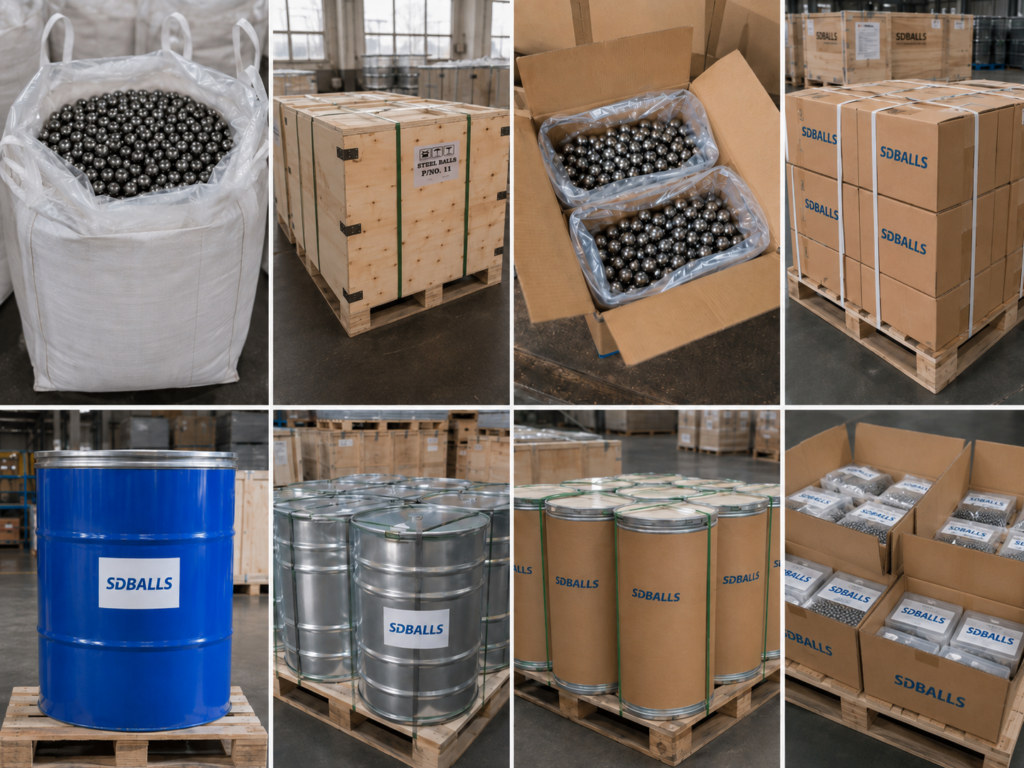
Le sfere in POM possono essere imballate in sacchetti di plastica, cartoni, secchielli, fusti o cartoni da esportazione pallettizzati a seconda del diametro, della quantità e dei requisiti di movimentazione del cliente. Per applicazioni pulite, SDBALLS può valutare una pulizia migliorata, sacchetti interni sigillati, etichette di lotto e imballaggi OEM personalizzati.
- Imballaggio in sacchi sfusi o cartoni per uso industriale generico.
- Imballaggio in piccoli sacchetti o secchielli per scorte di distributori e uso manutentivo.
- Imballaggio da esportazione pallettizzato per ordini all'ingrosso.
- Etichetta personalizzata con nome del prodotto, materiale, diametro, quantità, numero di lotto e codice cliente quando richiesto.
Come Specificare per un Preventivo
Per quotare accuratamente le Sfere in POM Delrin, si prega di confermare le seguenti informazioni:
- Requisiti del materiale: POM, acetale, Delrin, omopolimero/copolimero se specificato nel disegno.
- Diametro in mm o pollici e tolleranza o grado di precisione richiesto.
- Requisito di colore: bianco naturale, nero o colore personalizzato.
- Applicazione: valvola, cuscinetto, flussometro, guida di scorrimento, pompa, agitatore a spruzzo o altro uso.
- Ambiente di lavoro: temperatura, contatto con fluidi/sostanze chimiche, pressione, carico e velocità di esercizio.
- Documenti richiesti: rapporto di ispezione, RoHS/REACH, conferma del materiale per contatto alimentare o test di terze parti se necessario.
- Quantità, metodo di imballaggio, porto di destinazione e termine commerciale.
FAQ Tecniche
D: Di che materiale sono fatte le sfere in Delrin POM?
R: Sono realizzati in POM, chiamato anche poliossimetilene o acetalico. Delrin è un nome commerciale comune per il materiale omopolimero acetalico. Se un disegno richiede un grado specifico di resina, il grado deve essere confermato prima della quotazione.
D: Le sfere in POM sono uguali alle sfere in nylon?
R: No. Entrambe sono sfere in plastica tecnica, ma il POM ha generalmente un assorbimento di umidità inferiore, migliore stabilità dimensionale e prestazioni a basso attrito. Il nylon spesso offre buona tenacità e resistenza agli urti, ma può assorbire più umidità.
D: Quali dimensioni e gradi può fornire SDBALLS?
R: I diametri comuni vanno da 1,5 mm a 160 mm, con gradi di precisione I, II e III. Dimensioni, colori e livelli di tolleranza speciali possono essere discussi in base alla quantità e all'applicazione.
D: Qual è l'intervallo di temperatura di esercizio per le sfere in POM?
R: Un intervallo di riferimento pratico per le applicazioni con sfere in POM è di circa -40 °C a +85 °C. Esposizioni a temperature più elevate a breve termine possono essere possibili per gradi selezionati, ma devono essere verificate insieme a carico, contatto chimico e durata.
D: Le sfere in Delrin POM sono resistenti alla corrosione?
R: Resistono a molti oli, grassi, prodotti petroliferi, carburanti e mezzi chimici neutri o deboli. Non sono raccomandate per acidi forti, alcali forti, agenti ossidanti o esposizione a sostanze chimiche aggressive senza conferma del materiale.
D: Le sfere in POM possono essere utilizzate in apparecchiature alimentari o medicali?
R: Possono essere adatte per alcune apparecchiature correlate agli alimenti o adiacenti all'ambito medicale solo quando la tipologia di resina, la pulizia, i documenti di conformità e le condizioni applicative sono stati confermati. Non bisogna dare per scontato che ogni sfera in POM sia di grado per contatto alimentare o medicale.
D: Le sfere in POM possono sostituire le sfere in acciaio?
R: Possono sostituire le sfere in acciaio in applicazioni idonee a basso carico, basso attrito, isolanti o sensibili alla corrosione. Non dovrebbero essere utilizzate come sostituto diretto delle sfere in acciaio nelle applicazioni di cuscinetti ad alto carico, alta velocità, alta temperatura o critiche per la fatica.
D: Quali informazioni sono necessarie prima di effettuare un ordine?
R: Si prega di fornire tipologia di materiale, diametro, tolleranza o grado, colore, applicazione, temperatura di esercizio, esposizione chimica, quantità, imballaggio, documenti di ispezione e destinazione.
Prodotti correlati
Richiesta di programma A
Contattaci oggi stesso per qualsiasi servizio. (*) Indica i campi obbligatori.