How to Choose the Right Steel Ball Material for Your Application
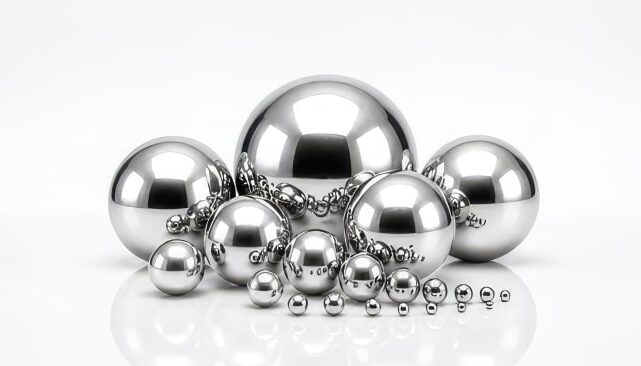
Steel balls are used in a wide range of industrial and consumer applications, from bearings and automotive systems to caster wheels, valves, spray bottles, grinding media, and hunting shot. Although many steel balls may look similar from the outside, their material, hardness, surface finish, precision grade, and corrosion resistance can be very different.
For buyers, choosing the right steel ball material is not only about price. It directly affects product performance, durability, safety, and long-term supply stability.
1. Start with the Application
The first step is to understand where the ball will be used.
For example, steel balls used in bearings usually require high hardness, tight tolerance, good roundness, and excellent fatigue resistance. Balls used in caster wheels or drawer slides may focus more on cost efficiency and stable basic performance. Stainless steel balls used in valves, food equipment, cosmetic packaging, or spray systems usually require corrosion resistance and clean surface quality.
For hunting steel shot, hardness, size consistency, sphericity, and material compliance become especially important. In grinding or polishing applications, material hardness, wear resistance, shape, and surface finish are key factors.
Different applications require different priorities.
2. Carbon Steel Balls
Carbon steel balls are widely used in general industrial applications. They are cost-effective and suitable for hardware, wheels, bicycles, sliding systems, toys, and mechanical components.
Common materials include AISI 1010, 1015, 1045, 1065, and 1085. Low-carbon steel balls can be used where softer material or further processing is required, while higher-carbon steel balls can provide better hardness and wear resistance after heat treatment.
Carbon steel balls are a practical choice when corrosion resistance is not the main requirement and cost control is important.
3. Chrome Steel Balls
Chrome steel balls, commonly made from AISI 52100 / GCr15 / SUJ2 bearing steel, are designed for high-hardness and high-wear-resistance applications.
They are widely used in bearings, automotive systems, precision machinery, linear motion components, and other applications where fatigue resistance and dimensional accuracy are important.
Compared with carbon steel balls, chrome steel balls usually offer higher hardness and better performance under load. However, they are not stainless and may require proper oiling, packing, or surface protection to prevent rust during storage and transport.
4. Stainless Steel Balls
Stainless steel balls are selected when corrosion resistance is required.
Common stainless steel grades include AISI 304, 316, 420, 440C, and 201. Each grade has different characteristics. For example, 304 and 316 stainless steel balls are commonly used for corrosion-resistant applications, while 420 and 440C stainless steel balls can provide higher hardness after heat treatment.
Stainless steel balls are widely used in food processing, medical devices, valves, pumps, cosmetic packaging, spray bottles, and harsh working environments.
The right stainless steel grade should be selected based on corrosion resistance, hardness, magnetic properties, and cost requirements.
5. Other Material Balls
In some applications, steel is not the only option. Plastic balls, glass balls, ceramic balls, copper balls, aluminum balls, and other material spheres may be used depending on weight, chemical resistance, electrical properties, appearance, or application environment.
For example, glass balls may be used in cosmetic or spray systems. Ceramic balls can be used where high hardness, wear resistance, or chemical stability is required. Plastic balls may be selected for lightweight, low-noise, or chemical-resistant applications.
6. Key Factors to Confirm Before Ordering
Before requesting a quotation, buyers should confirm:
Material grade
Diameter and tolerance
Precision grade
Hardness requirement
Surface finish
Corrosion resistance requirement
Quantity and packing method
Application and working environment
Required certificates or inspection reports
Providing complete specifications helps suppliers recommend the correct product and avoid quality risks.
Conclusion
The right steel ball material depends on application requirements, not only on price. Carbon steel balls are suitable for cost-effective industrial use. Chrome steel balls are ideal for high-hardness bearing and precision applications. Stainless steel balls are selected for corrosion-resistant environments. Other material balls can support special applications across consumer, industrial, and engineering fields.
At SDBALLS, we support global buyers with carbon steel balls, chrome steel balls, stainless steel balls, hunting steel shot, grinding media, and customized sphere solutions across multiple materials and applications.
Need help choosing the right steel ball material?
Contact SDBALLS for material selection, technical support, and quotation.

About the Author
We are SD Ball, a professional manufacturer dedicated to delivering high-precision steel ball solutions worldwide. With years of expertise, we specialize in advanced production processes, strict quality control, and customized solutions to support diverse industrial applications. From material selection to final inspection, we provide reliable products and consistent performance to help our clients achieve higher efficiency, durability, and product quality.
Share
Product Category
Related Articles
-
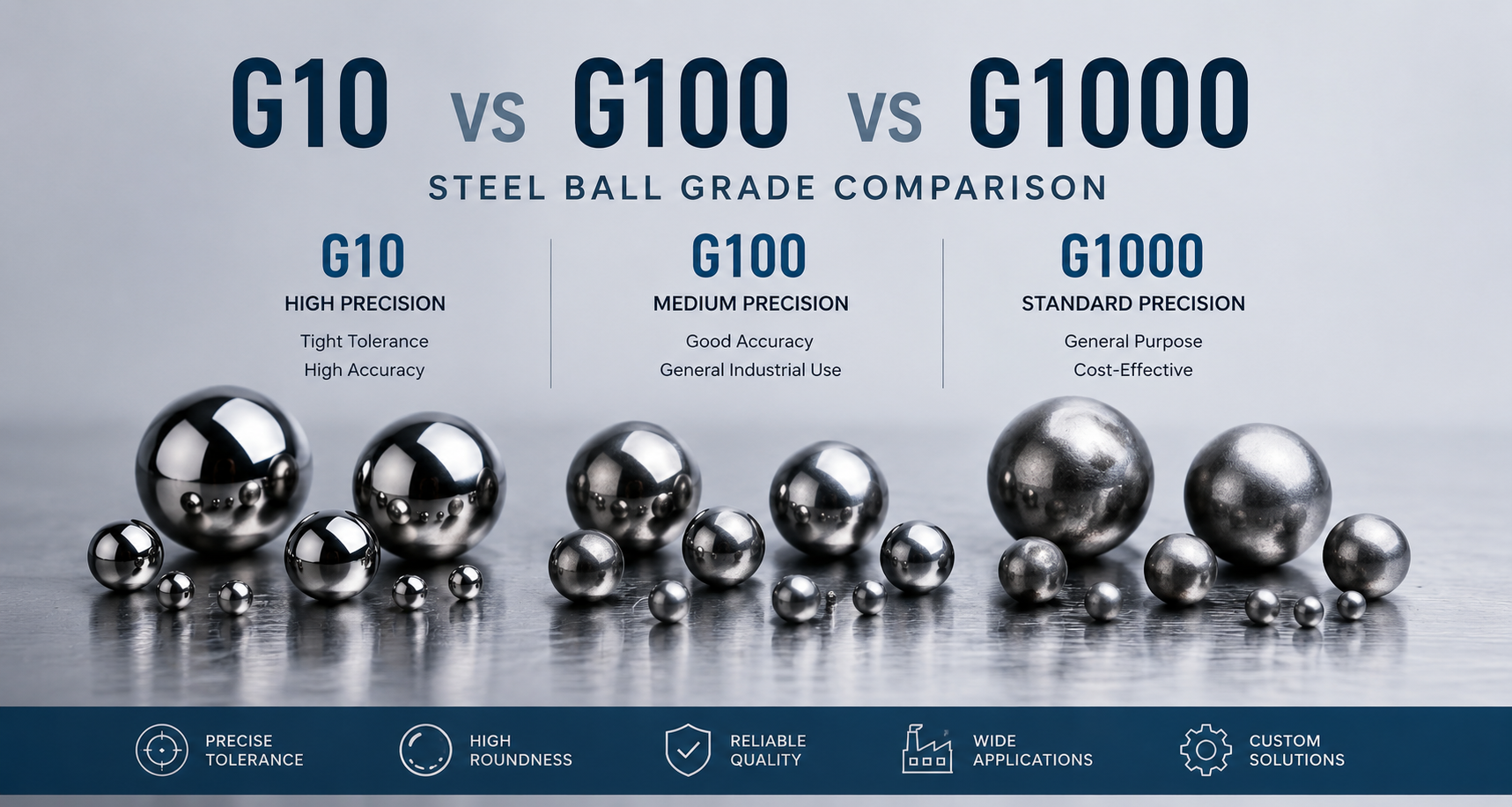
G10 vs G100 vs G1000 Steel Balls: How to Choose the Right Grade
How to Choose the Right Grade Choosing the right steel ball is not only about selecting the correct diameter and material. For many industrial applications, steel ball grade is equally important because it describes the precision level of the ball and affects dimensional consistency, roundness, surface quality and overall performance. Industrial buyers commonly encounter specifications…