
-11.png)
-10.png)
-10.png)
-10.png)
-10.png)
Aluminium Balls / Aluminum Alloy Balls
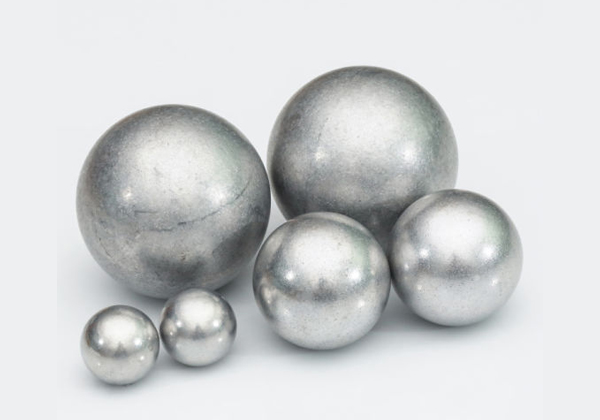
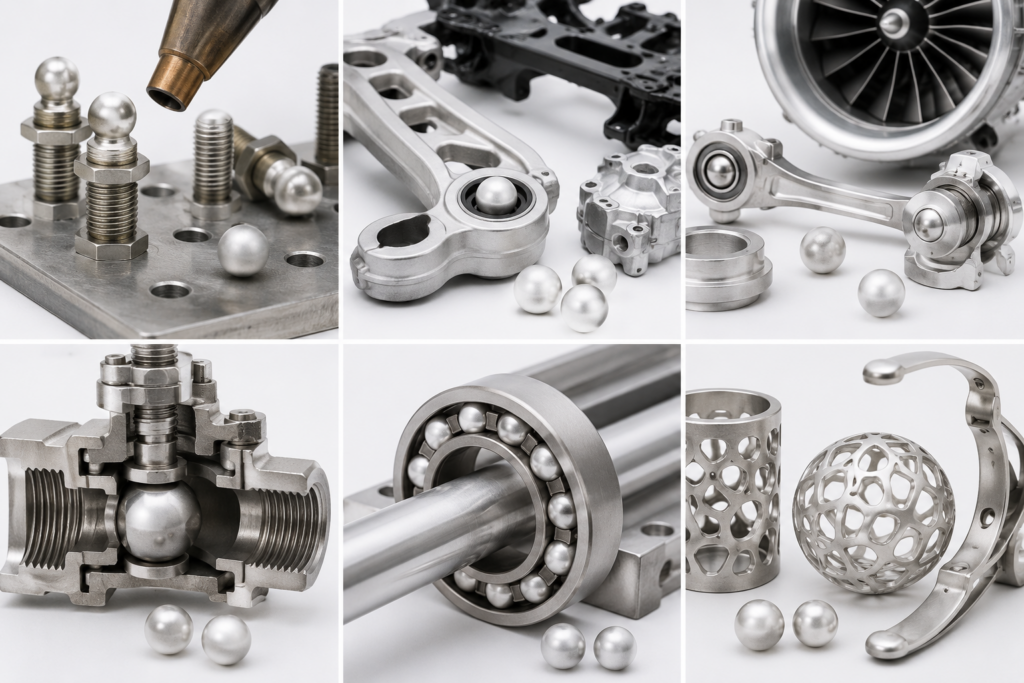
Aluminium Balls are lightweight metal alloy balls used where low density, smooth surface finish, and good general corrosion resistance are required. Compared with steel balls, aluminium balls help reduce assembly weight while still offering practical mechanical strength for selected bearings, valves, automotive components, aircraft-related assemblies, welding fastener applications, and lightweight industrial parts.
SDBALLS supplies aluminium balls in sizes from 1.0 mm to 150.0 mm with common precision grades from G10 to G100, subject to size, material grade, and production confirmation. Available aluminium alloy options may include 1100, 2017, 6061, 7075, or project-specific aluminium alloys according to the drawing, application, and mechanical performance requirement.
| Item | Recommended Page Content |
| Material | Aluminium alloy; grade to be confirmed according to application, such as 1100, 2017, 6061, 7075, or customer-specified alloy |
| Diameter | 1.0 mm – 150.0 mm |
| Precision Grade | G10-G1000 listed for this product |
| Hardness | Approx. HV 20-50 for softer aluminium alloys; alloy and temper dependent |
| Typical Applications | Special bearings, valves, automotive components, aircraft-related assemblies, welding fasteners, lightweight industrial parts |
Share This Product
Product Overview
Aluminium Balls are precision or semi-precision non-ferrous metal balls selected for applications where weight reduction, non-magnetic behavior, and clean metallic appearance are important. They are lighter than steel, copper, brass, and stainless steel balls, making them suitable for assemblies where moving mass, handling weight, or overall product weight must be controlled.
Compared with steel balls, aluminium balls are softer and less suitable for heavy-load, high-wear bearing applications. Compared with plastic balls, they offer a metallic surface, better rigidity, and higher thermal conductivity. Compared with stainless steel or ceramic balls, they are not the best choice for highly corrosive environments, especially chloride-rich conditions. Correct alloy selection is therefore important for performance and service life.
Material Selection & Technical Positioning
The product should be described as aluminium alloy balls, not aluminium oxide balls. Aluminium oxide is a ceramic material, while this page is for metallic aluminium balls. For accurate quotation and production, the alloy grade should be confirmed according to the target application.
Common aluminium alloy ball options may include softer commercially pure aluminium grades for welding or forming applications, and stronger aluminium alloy grades such as 2017, 6061, or 7075 for mechanical applications where strength, durability, and lightweight performance are required. Different alloys and tempers have different hardness, strength, machinability, corrosion resistance, and weldability, so material grade should not be left unspecified for engineering applications.
Technical Specifications
| Technical Item | Typical / Recommended Expression |
| Product Type | Lightweight non-ferrous metal balls / aluminium alloy precision balls |
| Diameter Range | 1.0 mm – 150.0 mm; custom sizes subject to production confirmation |
| Precision Grades | G10-G100 listed for this product; final grade depends on diameter, alloy, and production feasibility |
| Density | Approx. 2.7-2.8 g/cm³ |
| Young’s Modulus | Approx. 70 GPa |
| Tensile Strength | Approx. 100-500 MPa depending on alloy and temper |
| Magnetism | Non-magnetic |
| Corrosion Resistance | Good in many atmospheric environments; limited in chloride-rich environments |
| Surface Finish | Plain, polished, bright finish, or customized surface condition upon request |
Material Composition Reference
Aluminium balls can be produced from different aluminium alloy series. Final composition must follow the agreed alloy standard, drawing, or purchase order. The examples below are for material selection reference only.
| Material Option | Typical Positioning | Key Elements / Features | Common Use Direction |
| 1100 / commercially pure aluminium | Soft, formable, good corrosion resistance, excellent weldability | High aluminium content with low alloying elements | Stud welding, forming, lightweight non-load-critical parts |
| 2017 aluminium alloy | Stronger aluminium alloy with good hardness-to-weight balance | Al-Cu-Mg-Mn alloy family | Automotive, aircraft-related, mechanical components where strength and weight matter |
| 6061 aluminium alloy | Balanced strength, corrosion resistance, machinability, and availability | Al-Mg-Si alloy family | General industrial components and lightweight assemblies |
| 7075 aluminium alloy | High-strength aluminium alloy | Al-Zn-Mg-Cu alloy family | Higher-strength lightweight applications, subject to corrosion and cost evaluation |
Note: Aluminium alloy balls should be ordered by alloy grade and temper when mechanical performance is critical. If no alloy is specified, SDBALLS should confirm the practical production material before quotation.
Key Benefits for Buyers
- Lightweight material helps reduce assembly mass compared with steel, stainless steel, brass, or copper balls.
- Non-magnetic metal ball option for instruments, special assemblies, and non-ferrous systems.
- Good surface appearance and smooth finish for functional and decorative metal components.
- Good general corrosion resistance in many normal indoor or atmospheric environments.
- Available in a broad size range for OEM, distributor, and replacement requirements.
- Suitable for selected welding fastener, valve, special bearing, automotive, and aircraft-related uses.
- Can be supplied with customized packing, labels, and specification confirmation for export projects.
Applications & Application Fit
| Application | Fit Level | Why It Fits | Buyer Note |
| Welding fasteners / stud welding | Very good with suitable alloy | Aluminium is lightweight and weldable when the correct grade is selected. | Confirm alloy, surface cleanliness, and welding method. |
| Automotive lightweight components | Good | Low density helps reduce component weight. | Confirm strength, surface finish, and corrosion exposure. |
| Aircraft-related assemblies | Good with engineering review | Weight reduction is a key advantage of aluminium alloys. | Confirm alloy, temper, documentation, and application criticality. |
| Special valves | Application-dependent | Aluminium balls provide lightweight metallic sealing or movement elements. | Confirm media, pressure, seat material, and corrosion condition. |
| Special bearings / low-load rolling assemblies | Application-dependent | Useful where low mass is more important than high load capacity. | Not recommended for high-load, high-wear bearing replacement without testing. |
| Decorative and lightweight metal components | Good | Smooth metallic surface and low weight support appearance-driven uses. | Confirm finish, color, surface defects, and packing protection. |
| Chloride-rich or marine environments | Limited | Aluminium alloys may pit or crack in chloride-rich conditions. | Consider 316 stainless steel, ceramic, or coated alternatives. |
Material Selection Guide
| Material Option | Typical Strength | Limitation | When to Recommend |
| Aluminium balls | Lightweight, non-magnetic, good general corrosion resistance, metallic appearance | Softer than steel; limited in chloride-rich and heavy-load applications | Weight-sensitive components, welding fasteners, special valves, light-duty assemblies |
| Stainless steel balls 304/316 | Better corrosion resistance, clean surface | Heavier than aluminium; 304/316 are not high-hardness bearing materials | Wet, food-related, chemical, or hygiene-sensitive applications |
| AISI 52100 chrome steel balls | High hardness and bearing performance | Heavy and not corrosion resistant | Precision bearings and high-wear mechanical systems in controlled environments |
| Brass / bronze balls | Non-magnetic, conductive, good corrosion behavior in compatible media | Heavier than aluminium; alloy-specific corrosion limits | Valves, instruments, electrical and decorative components |
| Plastic balls | Very light, corrosion resistant, low cost in some applications | Lower rigidity and temperature capability than metal options | Float valves, low-load components, chemical environments, insulation needs |
| Ceramic balls | High hardness, corrosion resistance, electrical insulation | Higher cost and brittle behavior under impact | Corrosive, high-temperature, non-magnetic, or wear-critical applications |
Manufacturing & Process Control
Aluminium ball production and supply may involve raw material selection, ball forming, flashing, grinding, lapping, polishing, cleaning, sorting, inspection, and packing. Because aluminium is softer than bearing steel, process control must focus on avoiding surface dents, scratches, oxidation marks, contamination, and packing damage.
For engineering projects, SDBALLS should confirm the required alloy grade, temper, diameter tolerance, roundness, surface condition, and final packing method before production. If the ball is used as a welding fastener, valve ball, or aircraft-related component, sample approval and application testing are recommended.
Quality Control & Inspection
Typical inspection items include diameter, precision grade, roundness, surface appearance, alloy confirmation when required, hardness reference, surface finish, and packing condition. For OEM orders, SDBALLS can discuss sample approval, inspection reports, third-party testing, RoHS requests, and customized labeling.
Because aluminium balls are more easily dented than steel balls, visual inspection and protective packing are important for maintaining finished surface quality during export transportation and storage.
Packing Options
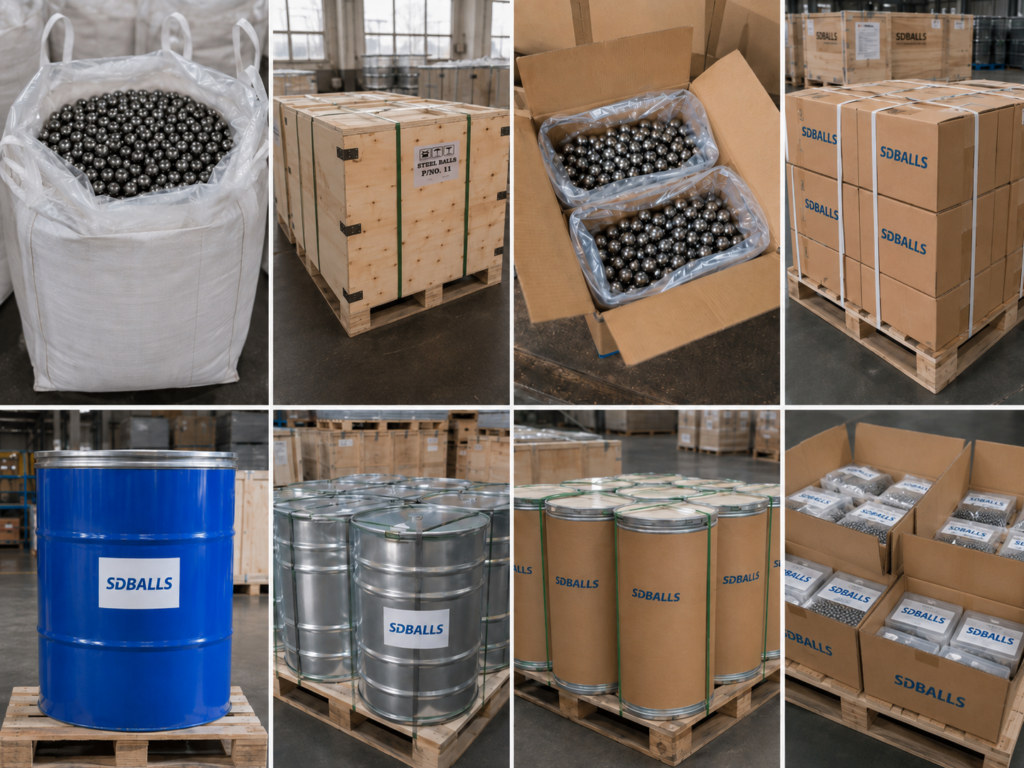
Available packing options include bulk bags, cartons, plastic bottles, pails, drums, pallets, and customized OEM packing. For polished aluminium balls or appearance-sensitive parts, separated packing, smaller inner bags, or protective cushioning may be recommended to reduce surface damage during shipment.
How to Specify for Quotation
To quote accurately, please confirm: aluminium alloy grade, temper if required, diameter in mm or inch, precision grade or tolerance, surface finish, hardness or mechanical requirement, application, operating environment, quantity, packing method, inspection document requirement, destination port, and trade term. For replacement projects, buyers are encouraged to provide drawings, current supplier specifications, photos, samples, or application details.
Technical FAQ
Q: What are aluminium balls used for?
A: Aluminium balls are used in lightweight metal assemblies such as welding fasteners, special valves, low-load special bearings, automotive components, aircraft-related assemblies, decorative parts, and industrial fixtures where low weight and non-magnetic behavior are useful.
Q: Are aluminium balls the same as aluminium oxide balls?
A: No. Aluminium balls are metallic aluminium alloy balls. Aluminium oxide balls are ceramic alumina balls. This page should be understood as aluminium alloy balls, not alumina ceramic balls.
Q: What aluminium alloy grades are available?
A: Possible alloy options may include 1100, 2017, 6061, 7075, or customer-specified aluminium alloys. Final availability depends on size, precision grade, quantity, and application requirement.
Q: Are aluminium balls magnetic?
A: No. Aluminium balls are non-magnetic, which makes them useful in some instruments, electronic-adjacent assemblies, and non-ferrous component systems.
Q: Are aluminium balls corrosion resistant?
A: Aluminium balls have good general corrosion resistance in many normal environments because of their natural oxide film, but they are not suitable for all corrosive media. Chloride-rich, marine, or strongly alkaline environments require careful material review.
Q: Can aluminium balls replace steel balls?
A: Only in suitable applications. Aluminium balls are much lighter but softer than steel balls. They should not be used as a direct replacement for chrome steel or hardened stainless steel balls in high-load bearing applications without testing.
Q: Can aluminium balls be polished or customized?
A: Yes. Aluminium balls can be supplied with plain, polished, bright, or customized surface conditions depending on the project. Appearance-sensitive parts should confirm surface finish and packing requirements before production.
Q: What information is needed for a quotation?
A: Please provide alloy grade, diameter, precision grade or tolerance, quantity, surface finish, hardness or mechanical requirement, application, environment, packing requirement, destination, and trade term.
Related Products
Schedule A Request
Get in touch with us today for any service. (*) Indicates required fields.