Tungsten Carbide Ball Guide for Global Market OEMs
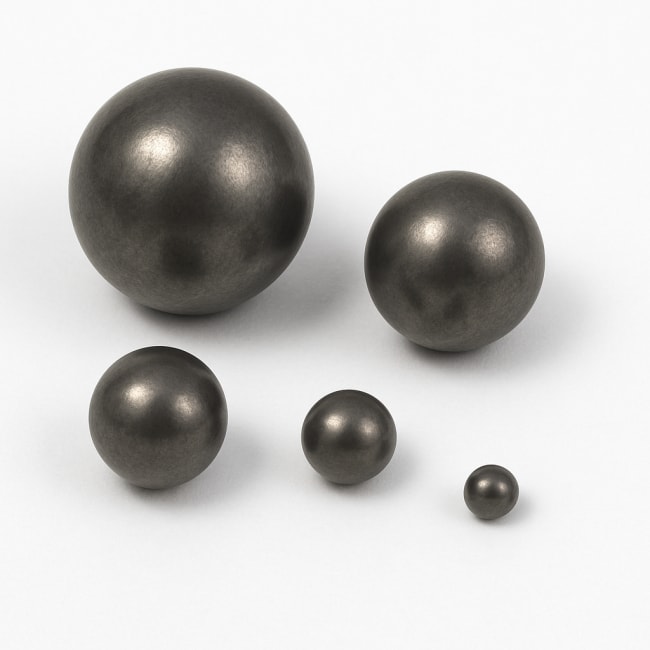
Tungsten Carbide Ball Guide for Global Market OEMs
Quick Answer

For precision OEM buyers in the Global Market, the best tungsten carbide ball supplier is not simply the one offering the lowest unit price. The right supplier should provide stable material grades such as YG6, YG8, and C2, accurate G10 to G100 precision capabilities, verified hardness and density testing, dependable global logistics, and practical engineering support for custom sizes, surface finishes, and special formulations. Tungsten carbide balls are ultra-hard spherical components used where steel balls may wear too quickly, deform under load, or fail in abrasive and corrosive environments.
If your application involves hydraulic valves, ball screws, gauging instruments, high-load bearings, flow control systems, precision measuring fixtures, or wear-resistant mechanical assemblies, tungsten carbide balls may deliver longer service life, better dimensional stability, and lower maintenance cost. However, selection must be based on application load, surface contact, mating material, operating temperature, lubrication, chemical exposure, and tolerance requirements.
A practical buying process is to confirm the material grade first, define the ball diameter and tolerance grade, specify surface roughness and roundness, request quality documentation, check minimum order quantity and lead time, then validate samples before mass production. Global buyers in regions such as North America, Europe, Southeast Asia, the Middle East, and Latin America should also consider customs clearance, shipping mode, inventory planning, and supplier communication speed.
SDBALLS Industry Corp supports international buyers through precision sphere manufacturing experience, multi-material sourcing capability, global sales service, and quality systems including ISO 9001, ISO 14001, and IATF 16949. While the company is widely known for steel balls, it also acts as an integrated supply partner for customers needing carbide, ceramic, plastic, glass, copper, aluminum, and other spherical components. For buyers seeking consolidated procurement, this reduces supplier fragmentation and improves purchasing efficiency.
| Selection Factor | Recommended Standard | Why It Matters | Low-Cost Supplier VS Qualified Supplier |
|---|---|---|---|
| Material grade | YG6, YG8, C2, or application-specific grade | Controls hardness, toughness, wear life, and impact resistance | Low-cost suppliers may mix grades; qualified suppliers document composition |
| Precision grade | G10 to G100 depending on use | Affects roundness, diameter variation, and assembly performance | Cheap parts may pass visual checks but fail dimensional inspection |
| Hardness | Rockwell A 90.5+ when required | Indicates wear resistance and sintering quality | Qualified suppliers verify by batch, not only by catalog claim |
| Surface finish | Polished, lapped, or application-specific roughness | Influences friction, sealing, and rolling fatigue | Qualified suppliers match finish to hydraulic, bearing, or gauge use |
| Quality records | Inspection report, density, microstructure, size data | Reduces risk in OEM production approval | Unverified suppliers often cannot support PPAP-style evidence |
| Supply chain | Clear lead time, packaging, Incoterms, and shipping plan | Prevents production delays and emergency freight cost | Qualified suppliers plan inventory and global logistics in advance |
The table above shows why carbide ball sourcing should be treated as an engineering decision rather than a simple commodity purchase. In ultra-hard applications, a minor difference in grade, surface condition, or microstructure can influence the lifetime of an entire valve, bearing, metering device, or measuring instrument.
Material Grades: YG6, YG8, and C2 Composition Standards

Tungsten carbide balls are generally produced from tungsten carbide powder bonded with cobalt. The carbide phase provides very high hardness and wear resistance, while cobalt improves toughness and helps the material withstand impact, contact stress, and repeated loading. In the Global Market, buyers commonly encounter grades such as YG6, YG8, and C2, although exact naming conventions may vary by country, supplier, or legacy standard.
YG6 typically contains about 6% cobalt and 94% tungsten carbide. This grade is close to the widely referenced C2 composition of 94% WC and 6% Co. It is selected when high hardness, good wear resistance, and dimensional stability are required. YG6 and C2-type carbide balls are often used in measuring tools, valve seats, precision gauges, and applications where abrasive wear is more critical than heavy impact.
YG8 usually contains about 8% cobalt and 92% tungsten carbide. The higher cobalt content improves toughness and impact resistance, although hardness may be slightly lower than a 6% cobalt grade. For high-load bearings, impact-prone mechanical assemblies, and certain hydraulic components, YG8 can be a better choice because it is less brittle under shock or edge contact.
When comparing grades, buyers should avoid selecting carbide only by hardness. A very hard grade may fail prematurely if the application involves impact, vibration, or misalignment. Conversely, a tougher grade with more cobalt may wear faster in highly abrasive media. The best grade is the one that balances hardness, fracture toughness, corrosion exposure, and surface contact conditions.
| Grade | Typical Composition | Main Strength | Common Use | YG6/C2 VS YG8 |
|---|---|---|---|---|
| YG6 | Approx. 94% WC / 6% Co | High hardness and wear resistance | Gauging, hydraulic seats, precision wear parts | Harder than YG8, but usually less impact-tolerant |
| YG8 | Approx. 92% WC / 8% Co | Improved toughness | High-load bearings, mechanical contact parts | Tougher than YG6, but slightly lower hardness |
| C2 | Often 94% WC / 6% Co | Balanced general-purpose carbide | Industrial valves, measuring balls, wear assemblies | Similar to YG6 when composition and grain size match |
| Fine-grain carbide | WC-Co with smaller grain size | Improved edge strength and finish potential | Ultra-precision components | May cost more than standard YG6 or YG8 |
| Corrosion-conscious carbide | Modified binder or selected formulation | Better chemical resistance | Fluid control, chemical processing | Better than standard cobalt binder in aggressive media |
| Special OEM formulation | Customized WC, Co, grain size, additives | Application-specific performance | Critical assemblies and long-life components | Best for high-value OEM platforms after testing |
This comparison highlights that the Global Market does not use one universal carbide ball grade for every application. A hydraulic valve manufacturer in Germany, a bearing distributor in Chicago, a ball screw assembler in Japan, and a mining equipment producer in Australia may all require different performance priorities. The correct grade should be confirmed through engineering drawings, historical failure data, and sample validation.
Material documentation should include at least grade identification, chemical composition range, density, hardness, and, when required, microstructure evidence. For mission-critical OEM parts, buyers may request batch traceability and inspection documents that connect raw powder, sintered blanks, finishing operations, and final shipment. This is especially important for export projects involving regulated industries, long warranty periods, or safety-related mechanical systems.
Precision Grades and Tolerances: G10 to G100 for Ultra-Hard Applications

Precision grade is one of the most important technical details when buying tungsten carbide balls. In ball terminology, a lower grade number generally means tighter dimensional control. G10 balls are more precise than G100 balls. The required grade depends on whether the ball functions as a rolling element, a sealing element, a measuring reference, a check valve component, a ball screw component, or a wear-resistant contact part.
For ultra-hard applications, G10 to G100 is a practical precision range. G10 is used when roundness, diameter uniformity, and surface finish are critical. G25 is common in precision mechanical systems where consistent rolling or sealing is required. G50 and G100 may be suitable for less demanding wear applications, heavy equipment, or industrial assemblies where extreme accuracy is not essential.
Specifying a grade without considering real application needs can lead to unnecessary cost. For example, a gauge ball or precision reference element may need G10, while a rugged wear ball in a mining valve may perform well at G50 or G100 if the contact geometry is forgiving. Conversely, choosing G100 for a high-speed ball screw or precision valve may cause vibration, leakage, inconsistent movement, or early wear.
| Precision Grade | Typical Buyer Priority | Suitable Application | Cost Level | G10-G25 VS G50-G100 |
|---|---|---|---|---|
| G10 | Maximum precision | Gauging instruments, calibration fixtures, high-precision ball screws | High | Best accuracy but requires more finishing and inspection |
| G16 | Very high precision | Precision valves, measuring assemblies, advanced bearings | High | Strong balance for demanding OEM use |
| G25 | Precision and practical cost | Hydraulic valves, ball screws, bearing assemblies | Medium-high | Often enough for many engineered products |
| G40 | Controlled industrial precision | Flow control components, wear-resistant mechanisms | Medium | More economical than G25 for non-measuring applications |
| G50 | Functional consistency | Industrial valves, heavy equipment, general precision parts | Medium-low | Good when system tolerances are less strict |
| G100 | Wear resistance with moderate precision | High-load contact parts, rugged machinery, non-critical assemblies | Lower | Cost-effective but not for ultra-precision motion systems |
The table shows that grade selection is a trade-off between performance and cost. Buyers should share drawings that include nominal diameter, grade, allowed diameter variation, sphericity, surface roughness, visual requirements, and packaging expectations. If the drawing is incomplete, an experienced supplier can help convert application requirements into a practical specification.
In the Global Market, tolerance expectations may differ between regions. North American OEMs may use inch-based drawings and ASME-style documentation. European buyers may emphasize metric tolerances, REACH-related material declarations, and detailed quality records. Japanese and Korean precision equipment makers often focus heavily on consistency, surface condition, and process stability. International suppliers must understand these differences and communicate clearly to avoid misunderstanding.
Ultra-hard carbide balls are more difficult to finish than standard steel balls. Grinding, lapping, polishing, and inspection require suitable equipment and process control. Because carbide is extremely hard, finishing time can be longer, and tool wear is higher. This is one reason G10 carbide balls cost significantly more than general-grade steel balls or lower-precision carbide balls.
Applications: Hydraulic Valves, Ball Screws, Gauging Instruments, and High-Load Bearings
Tungsten carbide balls are selected where hardness, compressive strength, and wear resistance are essential. Their use extends across fluid control, precision motion, measurement, energy equipment, automotive systems, aerospace support equipment, mining tools, chemical processing, and heavy machinery. In global supply chains, these balls may be small components, but they often determine the reliability of larger assemblies.
In hydraulic valves, carbide balls can serve as check elements, control elements, or sealing contact components. They resist deformation under pressure and maintain sealing geometry longer than many steel alternatives. In industries such as construction machinery, agricultural equipment, offshore systems, and industrial automation, improved valve reliability can reduce downtime and warranty claims.
In ball screws, high-precision carbide balls may be used where extreme wear resistance and stiffness are required. Although chrome steel remains common in many ball screw systems, carbide can be considered for special high-load, abrasive, or precision applications. The combination of roundness, surface finish, and material hardness is critical because any inconsistency can affect positioning accuracy and motion smoothness.
Gauging instruments require stable, precise, and wear-resistant reference elements. Carbide balls are well suited for coordinate measuring fixtures, plug gauges, calibration tools, and contact points because they resist wear during repeated measurement cycles. In manufacturing hubs such as Stuttgart, Detroit, Osaka, Shenzhen, Milan, and Monterrey, measuring reliability directly influences production quality.
High-load bearings and contact mechanisms benefit from carbide balls when conventional bearing steel cannot survive the load, wear, or operating environment. However, carbide is not automatically better in every bearing design. Designers must consider mating raceway material, lubrication, contact stress, shock load, thermal expansion, and fracture risk. In some cases, hybrid designs using carbide balls and specially treated raceways may be appropriate.
| Application | Performance Need | Suggested Grade Direction | Key Risk | Carbide Ball VS Steel Ball |
|---|---|---|---|---|
| Hydraulic valves | Sealing, pressure resistance, wear life | YG6, C2, or YG8 depending on shock | Leakage caused by poor roundness or surface defects | Carbide resists seat wear better under abrasive fluid |
| Ball screws | Precision motion and rolling consistency | Fine-grade G10 to G25 carbide | Noise, vibration, and poor positioning accuracy | Carbide offers stiffness and wear resistance but higher cost |
| Gauging instruments | Dimensional stability and surface quality | YG6 or C2 with high precision | Measurement drift from surface wear | Carbide lasts longer than many steel gauge contacts |
| High-load bearings | Compressive strength and fatigue resistance | YG8 or custom formulation | Brittle fracture under impact or misalignment | Carbide handles severe wear but needs correct design |
| Flow meters | Consistent movement and chemical exposure | Grade matched to fluid chemistry | Binder corrosion or particle contamination | Carbide improves wear life in abrasive media |
| Mining equipment | Abrasion and heavy load resistance | YG8 or toughened grade | Shock breakage in harsh service | Carbide outperforms steel in abrasive slurry conditions |
The comparison demonstrates that material choice must follow the operating environment. A tungsten carbide ball that performs well in a clean metrology fixture may not be ideal for a pulsing hydraulic circuit exposed to contamination. Similarly, a tough grade for heavy machinery may not deliver the surface precision required for high-end gauging.
Real-world case selection often begins with failure analysis. If steel balls are wearing flats, pitting, or losing roundness, carbide may be the answer. If components are cracking from shock, the solution may require a tougher carbide grade, design changes, improved lubrication, or a different material entirely. Responsible suppliers do not simply recommend the hardest ball; they evaluate the use case.
OEM Customization: Size Range, Surface Finish, and Special Formulations
OEM customization is essential when standard catalog balls cannot satisfy a product’s performance, assembly, or lifetime requirements. Customization may include non-standard diameters, metric-to-inch conversions, special grade selection, improved roundness, tighter diameter grouping, surface roughness control, special cleaning, packaging, traceability, or customized formulations. For international OEMs, customization also includes documentation format, labeling language, and export packaging.
Size range is usually the first customization topic. Some buyers need miniature carbide balls for precision instruments and micro-valves, while others need larger balls for heavy-duty valves, oilfield tools, or industrial wear systems. Large-diameter carbide balls can be more difficult to manufacture due to sintering control, internal integrity, and finishing time. Very small balls may require advanced sorting and handling to maintain consistent quality.
Surface finish is equally important. A highly polished surface can reduce friction, improve sealing, and lower wear against mating components. However, the optimum finish depends on the application. For a hydraulic sealing ball, a smooth surface helps reduce leakage and seat damage. For certain mechanical retention functions, a different finish may be acceptable. Buyers should define roughness requirements clearly rather than relying only on a grade number.
Special formulations may be necessary for unusual environments. If a ball operates in chemically aggressive fluids, the cobalt binder may be vulnerable. If the application involves repeated shock, a higher cobalt content or modified microstructure may be needed. If temperature is elevated, thermal behavior and binder stability must be considered. Custom formulations usually require sample validation and may involve higher minimum order quantities.
From a supply-chain perspective, OEM customization should be planned early. Custom carbide balls may need powder preparation, pressing, sintering, grinding, lapping, polishing, inspection, and documentation. If the buyer waits until the final assembly stage, lead time pressure may create unnecessary cost. A better approach is to develop the carbide ball specification during prototype design and maintain an approved supplier list before mass production.
SDBALLS supports customization through both manufacturing knowledge and integrated sourcing. The company’s long experience in precision ball production helps it understand diameter control, grading logic, surface finishing, inspection standards, and export packaging. For buyers who need different sphere materials in one project, such as steel balls, stainless steel balls, plastic balls, ceramic balls, and carbide balls, its integrated supply model can simplify procurement. More product categories can be explored through the precision ball product center.
Quality Assurance: Hardness Testing, Density, and Microstructure
Quality assurance for tungsten carbide balls must go beyond visual inspection. Because carbide balls are used in high-wear and high-load applications, hidden defects can cause serious performance problems. Effective quality control includes raw material verification, powder consistency, sintering control, dimensional inspection, hardness testing, density measurement, surface inspection, and microstructure evaluation.
Hardness testing is commonly expressed using Rockwell A for cemented carbide. A value of Rockwell A 90.5+ is often associated with high-hardness carbide grades, although the exact required value depends on composition and grain size. Buyers should understand that hardness alone cannot prove complete quality. Two balls with similar hardness can still differ in porosity, grain distribution, cobalt distribution, fracture resistance, and long-term wear behavior.
Density measurement helps confirm composition and sintering integrity. If density is lower than expected, it may indicate porosity, improper sintering, contamination, or incorrect material balance. Density is especially important for carbide because internal voids can reduce strength and cause premature failure under high contact stress.
Microstructure analysis is valuable for demanding OEM applications. It can reveal grain size, binder distribution, porosity, eta phase, free carbon, and other metallurgical conditions. For high-load bearings, gauging instruments, hydraulic valves, and critical wear components, microstructure evidence gives buyers confidence that the supplier controls the sintering process rather than merely finishing purchased blanks.
Dimensional inspection should include diameter, diameter variation, roundness, surface roughness, and sometimes lot-to-lot grouping. For G10 to G25 carbide balls, inspection equipment must be capable of measuring very small deviations. Surface defects such as pits, cracks, chips, scratches, burns, or uneven polish can lead to leakage, vibration, noise, or accelerated wear.
SDBALLS’ quality culture is supported by recognized management systems and experience serving international buyers. Its quality approach for precision spheres includes process control, inspection discipline, and documentation practices developed through many years of supplying demanding industrial sectors. Buyers can review broader inspection and technical capability through the quality and technical support page.
| QA Item | Purpose | Typical Method | Buyer Benefit | Basic Inspection VS Advanced QA |
|---|---|---|---|---|
| Hardness | Verify wear-resistant performance | Rockwell A testing | Confirms grade suitability | Advanced QA links hardness to batch records |
| Density | Check material integrity | Density measurement | Detects porosity or incorrect composition | Advanced QA compares against grade standard |
| Microstructure | Evaluate sintering quality | Metallographic inspection | Reduces hidden defect risk | Advanced QA identifies grain and binder issues |
| Roundness | Ensure smooth rolling or sealing | Precision measuring instruments | Improves assembly reliability | Advanced QA uses statistical control |
| Surface finish | Reduce friction and leakage | Roughness and visual inspection | Improves service life | Advanced QA defines application-specific finish |
| Packaging inspection | Prevent transit damage | Clean packing and labeling checks | Protects precision surfaces | Advanced QA includes export-ready traceability |
The difference between basic inspection and advanced QA is especially important for global sourcing. Basic inspection may confirm that parts look acceptable before shipment. Advanced QA demonstrates that a repeatable process exists. For OEM buyers, process repeatability is often more important than one good sample batch.
Pricing Factors: Raw Material Costs, MOQ, and Customization Complexity
Tungsten carbide balls are priced differently from ordinary steel balls because raw material cost, powder metallurgy processing, finishing difficulty, precision requirements, and inspection intensity are all higher. Tungsten and cobalt are globally traded materials, and their prices can fluctuate due to mining output, energy costs, geopolitical factors, environmental policy, and demand from cutting tools, mining tools, electronics, aerospace, and battery-related sectors.
Raw material cost is the foundation of carbide ball pricing. Tungsten carbide powder and cobalt binder represent a major share of total cost. When cobalt prices rise, YG8 and other higher-cobalt grades may become more expensive. When tungsten supply tightens, all carbide grades can be affected. Buyers in the Global Market should expect periodic price adjustments rather than assuming carbide prices remain fixed year after year.
Minimum order quantity, or MOQ, also influences price. Standard sizes in common grades may be available with lower MOQ or faster delivery. Non-standard diameters, rare formulations, ultra-tight G10 tolerances, or special packaging may require larger MOQ because production setup, tooling, inspection, and finishing costs must be distributed across the batch.
Customization complexity is another pricing driver. A standard G100 carbide ball will usually cost much less than a custom G10 ball with special diameter grouping, mirror polish, microstructure report, and export documentation. Buyers should avoid over-specifying requirements that do not improve actual product performance. An experienced supplier can help identify where tight tolerance is necessary and where a more economical specification is acceptable.
| Pricing Factor | Cost Impact | Buyer Control Level | Practical Advice | Standard VS Custom |
|---|---|---|---|---|
| Raw tungsten price | High | Low | Monitor market trends and secure forecasts early | Affects both standard and custom carbide balls |
| Cobalt content | Medium to high | Medium | Choose cobalt level based on performance, not habit | YG8 may cost more than YG6 during cobalt spikes |
| Precision grade | High | High | Use G10 only where the application truly needs it | Custom precision increases finishing and inspection cost |
| Order quantity | Medium | High | Combine annual demand into planned releases | Larger orders reduce per-unit setup burden |
| Surface finish | Medium | High | Define functional roughness targets | Special polish costs more than standard finish |
| Documentation | Low to medium | High | Request only necessary certificates and reports | Full QA packages add value but require time |
This table helps buyers understand where cost can be optimized without compromising performance. The goal is not to buy the cheapest carbide balls, but to buy the correct balls at the best total cost. Total cost includes purchase price, service life, maintenance, downtime, inspection burden, rejected assemblies, emergency freight, and supplier management time.
For large OEM programs, price discussions should include annual volume, release schedule, forecast accuracy, packaging method, payment terms, Incoterms, and quality documentation. A supplier can quote more competitively when demand is predictable. On the other hand, urgent small orders of uncommon sizes may carry a premium because they interrupt normal production planning.
Supply Chain Considerations: Lead Times, Inventory, and Global Shipping Logistics
Global tungsten carbide ball sourcing requires more than placing a purchase order. Lead times may include raw material preparation, blank production, sintering, grinding, lapping, inspection, packaging, export documentation, inland transport, customs clearance, ocean freight or air freight, and local delivery. Buyers should build realistic timelines into their procurement plans, especially for customized grades or tight precision requirements.
Shipping routes matter. For suppliers in Shandong, China, major logistics options may involve Qingdao Port, Shanghai Port, Tianjin Port, or air freight through major international airports. Global customers may receive shipments through Los Angeles, Long Beach, Houston, Rotterdam, Hamburg, Antwerp, Felixstowe, Jebel Ali, Singapore, Busan, Yokohama, Santos, or other trade hubs. Each route has different cost, transit time, and customs complexity.
Inventory strategy is essential for OEM buyers. If tungsten carbide balls are used in critical assemblies, a shortage can stop an entire production line. Buyers should consider safety stock, rolling forecasts, blanket orders, and scheduled deliveries. For maintenance and aftermarket applications, distributors may need mixed-size inventory to serve urgent repair demand.
Air freight is fast but expensive. It is suitable for urgent samples, small high-value batches, or production recovery situations. Ocean freight is economical for larger shipments but requires better planning. Express courier services can be useful for prototype quantities, but packaging must protect precision surfaces from impact and contamination.
Customs and documentation should not be underestimated. International buyers may require commercial invoices, packing lists, certificates of origin, material declarations, quality reports, and import classification support. European buyers may also consider REACH and RoHS-related declarations depending on application. North American buyers may focus on tariff classification, customs bonds, and delivery duty arrangements. Middle Eastern and Latin American importers may need legalized documents or specific invoice formats.
| Logistics Factor | Risk | Recommended Action | Best Fit | Air Freight VS Ocean Freight |
|---|---|---|---|---|
| Production lead time | Late delivery if custom process is underestimated | Confirm timeline before PO release | OEM production planning | Shipping speed cannot fix unfinished production |
| Safety stock | Line stoppage | Hold critical sizes in buffer inventory | Repeat OEM demand | Inventory often costs less than emergency freight |
| Packaging | Surface damage during transit | Use clean, separated, shock-resistant packing | Precision carbide balls | Both air and ocean require proper protection |
| Shipping mode | Excess cost or slow arrival | Match freight to urgency and volume | Global buyers | Air is fast; ocean is economical |
| Customs documents | Port delay or extra fees | Prepare HS code, invoice, packing list, and certificates | Cross-border trade | Documentation quality matters for both modes |
| Global disruptions | Port congestion, route changes, fuel surcharges | Use flexible routing and early booking | International supply chains | Air may bypass congestion but costs more |
Supply chain resilience will remain a major topic through 2026. Buyers are increasingly moving from single-order purchasing to strategic supplier relationships. This includes dual-region inventory, digital order tracking, forecast sharing, sustainability review, and early supplier involvement in product development.
Our Company
SDBALLS Industry Corp, also known as Shandong SDBALLS Industry Corp Ltd., is based in Tai’an City, Shandong Province, China, and has developed more than 30 years of experience in precision ball manufacturing since 1996. The company operates multiple production facilities and serves customers in more than 50 countries. Its core product range includes carbon steel balls, chrome steel balls, and stainless steel balls, with grades from high-precision to general industrial levels.
From a technological capability perspective, SDBALLS understands the relationship between material, precision grade, surface condition, and final application performance. This knowledge is important when supporting buyers who need not only standard steel balls but also integrated sourcing for carbide, ceramic, plastic, glass, copper, aluminum, and other sphere materials. For tungsten carbide ball projects, the company can help buyers clarify technical specifications, compare material options, and align grade selection with real operating conditions.
From a manufacturing capability perspective, SDBALLS has long-term experience in ball forming, heat treatment-related process understanding, grinding, lapping, grading, inspection, and export preparation. Its annual production capacity exceeds 5,000 tons across its facilities, enabling stable support for industrial customers. Although tungsten carbide balls require different powder metallurgy processes from steel balls, the company’s precision sphere background helps it manage supplier integration, dimensional expectations, quality communication, and delivery coordination for multi-material procurement.
From a service capability perspective, SDBALLS provides global sales support, responsive communication, export packaging, documentation coordination, and sourcing consolidation. Customers who buy multiple ball materials can reduce the number of suppliers they manage and rely on one integrated partner for product matching and logistics. This is especially useful for OEMs, distributors, and industrial sourcing teams operating across the United States, Germany, Italy, Turkey, Brazil, Mexico, India, Vietnam, Thailand, South Korea, and the United Arab Emirates.
Buyers who want to understand the company’s development, facilities, and business philosophy can visit the SDBALLS company profile. For application-related product matching across mechanical systems, bearing assemblies, automotive parts, caster wheels, sliding systems, ball transfer units, and outdoor markets, the industrial application overview provides additional context.
FAQ
1. What is the best tungsten carbide ball grade for precision OEM parts?
There is no single best grade for every OEM part. YG6 and C2-type 94% WC / 6% Co materials are good choices for high hardness and wear resistance. YG8 is often better when toughness and impact resistance are more important. The correct grade depends on load, abrasion, shock, corrosion, temperature, and mating material.
2. Are YG6 and C2 the same?
They are often similar because both may refer to approximately 94% tungsten carbide and 6% cobalt. However, buyers should not assume complete equivalence without checking grain size, density, hardness, supplier standard, and microstructure. The same nominal composition can perform differently if processing quality differs.
3. What precision grade should I choose: G10, G25, G50, or G100?
Choose G10 for the highest precision applications such as gauging or ultra-precision motion. G25 is often suitable for precision valves, ball screws, and quality bearings. G50 and G100 may be suitable for industrial wear applications where ultra-tight roundness is not required. Over-specifying precision can raise cost unnecessarily.
4. Why are tungsten carbide balls more expensive than steel balls?
They use costly tungsten carbide and cobalt materials, require powder metallurgy processing, and are harder to grind and polish. Tight tolerances and advanced inspection also add cost. However, in severe wear applications, longer life may reduce total ownership cost.
5. What hardness should I request?
Many high-hardness carbide balls are specified at Rockwell A 90.5+ or similar levels, but exact requirements depend on grade and application. Hardness should be combined with density, microstructure, surface finish, and dimensional inspection for a complete quality assessment.
6. Can tungsten carbide balls be used in corrosive fluids?
They can be used in many fluid applications, but cobalt binder may be vulnerable in certain aggressive chemicals. For corrosive environments, discuss fluid type, temperature, concentration, and exposure time with the supplier. A modified formulation or alternative material may be needed.
7. What information should I provide when requesting a quote?
Provide diameter, tolerance grade, material grade, quantity, application, surface finish, hardness requirement, inspection report needs, packaging requirements, destination country, delivery terms, and annual forecast if available. Drawings and failure history are also useful.
8. How long is the lead time for custom tungsten carbide balls?
Lead time depends on size, grade, tolerance, order quantity, raw material availability, and inspection requirements. Standard sizes may be faster, while custom G10 balls or special formulations need more time. Buyers should confirm production and shipping schedules before placing orders.
9. What are the major 2026 trends for carbide ball sourcing?
Key trends include tighter traceability, more digital inspection records, sustainability review of tungsten and cobalt supply, greater interest in long-life components, regional inventory planning, and supplier consolidation. Policy pressure around responsible minerals and environmental compliance will continue to influence global procurement decisions.
10. Why work with an integrated supplier instead of buying from many separate vendors?
An integrated supplier can reduce communication burden, simplify quality coordination, consolidate shipments, and support multi-material sphere sourcing. This is valuable for OEMs and distributors that need steel, stainless steel, carbide, ceramic, plastic, or other balls across different product lines.
11. How should I validate a new carbide ball supplier?
Start with technical discussion, then request samples, inspection reports, and material documentation. Test samples in the real application or a realistic test fixture. Evaluate communication speed, packaging quality, corrective action ability, and consistency across multiple batches before approving mass production.
12. What is the most common buying mistake?
The most common mistake is focusing only on price and hardness while ignoring grade suitability, roundness, surface finish, density, microstructure, and logistics. Another mistake is requesting very tight tolerances without confirming whether the application truly needs them.
13. Can carbide balls replace bearing steel balls directly?
Not always. Carbide has different stiffness, density, fracture behavior, and interaction with raceway materials. A direct replacement should be reviewed by engineering. In some designs, carbide improves life; in others, it may increase stress or damage mating components.
14. How should carbide balls be packaged?
Precision carbide balls should be clean, separated or protected from collision, and packed in moisture-resistant, shock-resistant export packaging. Labels should identify size, grade, quantity, batch, and inspection status. Poor packaging can damage polished surfaces before the parts reach production.
15. What makes SDBALLS relevant for global carbide ball buyers?
SDBALLS combines long-term precision ball industry experience, quality system discipline, global service capability, and integrated multi-material sourcing. For buyers in the Global Market, this helps simplify procurement, improve communication, and align sphere components with real industrial applications.
Choosing tungsten carbide balls for precision OEM parts requires a balance of material science, dimensional control, application knowledge, quality assurance, cost management, and logistics planning. Buyers who define specifications clearly and work with capable suppliers can achieve better performance, fewer production interruptions, and stronger long-term supply stability in the Global Market.

About the Author
We are SD Ball, a professional manufacturer dedicated to delivering high-precision steel ball solutions worldwide. With years of expertise, we specialize in advanced production processes, strict quality control, and customized solutions to support diverse industrial applications. From material selection to final inspection, we provide reliable products and consistent performance to help our clients achieve higher efficiency, durability, and product quality.
Share
Product Category
Related Articles
-
2026 Glass Ball Sourcing Guide for Global Market OEMs
For industrial OEM buyers in the Global Market, the right glass ball supplier in 2026 should be selected by matching material chemistry, precision grade, diameter range, inspection capability, certification status, packaging control, and export service to the final application. Soda-lime glass balls are usually the practical choice for cost-sensitive applications such as dispensers, toys, decorative parts, flow indicators, light-duty valves, aerosol mixing, simple check balls, and non-critical mechanical uses. Borosilicate glass balls are better for applications requiring improved thermal shock resistance, chemical stability, lower expansion, higher purity, and better performance in laboratory, cosmetic, medical-device-adjacent, pharmaceutical packaging, sensor, and fluid-control environments.If your application involves general mechanical motion, visual display, or low-temperature liquid contact, soda-lime glass can often deliver the best cost-to-performance balance. If your project includes temperature cycling, aggressive chemicals, high cleanliness requirements, or higher engineering risk, borosilicate is generally the safer specification. For buyers comparing global suppliers from China, India, Europe, the United States, Japan, Southeast Asia, and trade hubs such as Shanghai, Qingdao, Ningbo, Shenzhen, Singapore, Hamburg, Rotterdam, Los Angeles, and Dubai, the best procurement decision is rarely based on unit price alone. The total landed cost must include reject rate, inspection depth, packaging loss, documentation accuracy, delivery predictability, and the supplier’s ability to support repeated production batches.As a quick selection rule, use soda-lime glass balls when the main buying drivers are price, availability, broad diameter options, and acceptable performance under normal temperature and moderate chemical exposure. Use borosilicate glass balls when the drivers are thermal resistance, chemical durability, low contamination, repeatable laboratory performance, or premium brand positioning. Confirm grade, tolerance, roundness, surface finish, optical appearance, annealing quality, and cleanliness before issuing a purchase order. For bulk OEM orders, request a sample lot, drawing or technical data sheet, certificate of conformity, inspection report, and packing specification. If the balls will be used in regulated or brand-sensitive products, verify ISO 9001, ISO 14001, IATF 16949 where relevant, and ISO 22716 where cosmetic supply-chain controls are expected.SDBALLS Industry Corp supports this type of sourcing decision as both a precision ball manufacturer and integrated supply partner. While the company is known for steel balls, stainless steel balls, chrome steel balls, carbon steel balls, and lead-free steel shot, it also helps international buyers source multi-material spheres including glass, ceramic, plastic, copper, and aluminum balls. This is valuable for OEM procurement teams that want to consolidate suppliers, compare materials under one technical discussion, and reduce communication risk across multiple factories.Decision PointSoda-Lime Glass BallsBorosilicate Glass BallsRecommended Buyer ActionCost targetLower unit cost for high-volume ordersHigher cost due to material and process controlUse soda-lime for price-driven programs unless performance risk is highThermal shockModerate resistanceStrong resistance to temperature changesSelect borosilicate for heating, cooling, or sterilization exposureChemical exposureSuitable for many mild environmentsBetter stability in harsher chemical contactAsk for compatibility data based on actual liquid or gas mediaPrecision applicationsAvailable in common grades and sizesOften preferred where purity and dimensional reliability matterDefine grade, tolerance, roundness, and AQL before orderingAppearanceClear, colored, or frosted options depending on supplierClear premium appearance, often used in laboratory or beauty packagingApprove visual standard with boundary samplesExport availabilityWidely available globallyAvailable but may require longer lead time for special sizesConfirm stock, tooling, and batch schedule earlyThe table above shows why material selection should be tied to risk. A lower-cost ball that fails chemical or dimensional requirements can create much higher downstream cost than a premium ball. Conversely, specifying borosilicate for a simple decorative or low-load function may increase budget without adding real customer value. Global Market OEM buyers should establish the critical-to-quality characteristics first, then ask suppliers to quote against those requirements.Soda-lime and borosilicate are the two most common glass ball choices for OEM buyers. Both are useful, but they are not interchangeable in every application. Soda-lime glass is based primarily on silica, sodium oxide, and calcium oxide. It is widely used because the raw materials are available, production is mature, and finished balls can be supplied in many diameters. Borosilicate glass contains boron oxide, which improves thermal shock resistance and chemical durability. It is widely recognized in laboratory glassware, pharmaceutical-related handling, precision fluid systems, and premium packaging components.For general purchasing teams, the key difference is not just chemistry. It is application risk. A soda-lime glass ball may be entirely suitable inside a consumer dispenser, toy, craft item, visual indicator, low-load valve, or mild liquid mixing system. In these cases, dimensional consistency, surface smoothness, and clean packing may matter more than extreme chemical resistance. Borosilicate becomes more important when the ball may contact acids, solvents, high-purity fluids, rapid temperature changes, or strict cleanliness environments. It is also often selected when the brand wants to communicate higher material quality.In industrial supply chains, soda-lime glass balls are commonly used in spray bottles, aerosol cans, cosmetics mixing, flow meters, valves, ball transfer mechanisms for light duty, decorative finishing, grinding assistance in non-metallic media, and educational or laboratory demonstration kits. Borosilicate glass balls are seen in laboratory mixers, sight gauges, high-cleanliness cosmetics, analytical devices, specialty valves, chemical-resistant dispensers, and applications where temperature cycles would create concern for soda-lime material.Application ScenarioSoda-Lime Glass Ball AdvantageBorosilicate Glass Ball AdvantageVS Buying RecommendationCosmetic bottle mixingGood cost control for mass-market productsBetter for premium formulas and stronger solvent exposureSoda-lime for standard lotions; borosilicate for active or luxury formulasLaboratory stirringAcceptable for non-critical teaching kitsSuperior thermal and chemical resistanceBorosilicate is preferred for professional laboratoriesLight-duty check valveEconomical and widely availableBetter in hot or chemically aggressive fluidsMatch material to fluid, pressure, and temperature dataDecorative displayBroad colors and low costPremium clarity for high-end presentationSoda-lime is usually sufficient unless optical quality is criticalPharmaceutical packaging supportMay be limited by cleanliness and leaching concernsMore suitable for high-cleanliness expectationsUse borosilicate and request documentationThermal cycling equipmentHigher risk of cracking under rapid changeLower expansion and better shock resistanceBorosilicate is the safer engineering choiceThis comparison should be reviewed with engineering, quality, and purchasing teams together. An engineer may focus on performance margins, a quality manager may focus on test evidence, and a purchasing manager may focus on landed cost. A good glass ball supplier should be able to support all three concerns, not just send a price list. For projects moving from prototype to mass production in 2026, buyers should ask whether the quoted material is standard commercial glass, specially selected low-defect glass, chemically resistant borosilicate, colored glass, frosted glass, or custom glass. The supplier should also define whether balls are flame-polished, ground, polished, molded, sorted, washed, or inspected by automated equipment.Sustainability is also becoming part of material selection. Buyers in Europe, North America, and Japan increasingly ask about recycled content, energy consumption, RoHS and REACH declarations, packaging waste, and carbon-related reporting. Soda-lime glass can benefit from well-developed recycling streams, while borosilicate may require more controlled raw material management. For global buyers shipping through Rotterdam, Antwerp, Hamburg, Long Beach, New York, Jebel Ali, Busan, or Singapore, packaging optimization can reduce both freight cost and environmental footprint. In 2026, more OEMs are expected to ask suppliers for lighter cartons, recyclable inner bags, pallet stability tests, and consolidated container planning.Glass ball precision is commonly described through diameter tolerance, spherical accuracy, surface quality, batch consistency, and visual defect level. Unlike steel bearing balls, where grade systems such as G10, G16, G25, G100, and G1000 are widely standardized, glass balls may be quoted using supplier-specific grade terminology, tolerance bands, or application-based quality levels. Therefore, OEM buyers should never rely only on the word “precision.” The purchase specification should clearly state nominal diameter, tolerance, roundness, surface finish, appearance defects, chips, bubbles, cracks, color, cleanliness, and packaging.Common diameter ranges vary by supplier, but many global glass ball suppliers can provide small balls from about 0.5 mm to 3 mm, medium balls from 3 mm to 25 mm, and large balls from 25 mm to 100 mm or above for decorative and industrial uses. Precision requirements typically become more challenging as diameters become very small or very large. Small balls require advanced sorting and handling to prevent contamination and loss. Large balls require better forming and annealing control to avoid internal stress and visible defects.When comparing suppliers, buyers should request measurement methods. For example, diameter can be checked by micrometer, optical measuring systems, laser scanning, or automated sorting machines. Roundness can be measured by specialized roundness instruments, while surface defects may require magnification, optical inspection, or visual boundary samples. For high-volume orders, automated inspection is increasingly important because manual inspection alone may not reliably capture all defects across millions of pieces.Diameter RangeTypical UsesCommon Quality FocusSoda-Lime VS Borosilicate Note0.5 mm to 1.5 mmMicro dispensers, small cosmetic mixers, specialty devicesSorting accuracy, cleanliness, no clusteringBorosilicate may be selected for purity-sensitive micro applications1.5 mm to 3 mmAerosol mixing, valves, cartridges, miniature mechanismsDiameter tolerance, surface smoothness, low chipsSoda-lime is common; borosilicate for chemical resistance3 mm to 8 mmCosmetics, check valves, visual indicators, toysRoundness, appearance, packing count accuracyBoth materials are widely considered depending on formula contact8 mm to 15 mmFlow indicators, decorative parts, laboratory aidsVisual clarity, bubble limits, dimensional consistencyBorosilicate offers higher perceived technical value15 mm to 30 mmDisplay, light-duty engineering, education, artOptical appearance, internal stress, chippingSoda-lime often wins on price for decorative use30 mm and aboveArchitecture, displays, special equipment, custom OEMAnnealing, surface defects, safe packagingBorosilicate may require longer production planningThe table illustrates that diameter affects not only price but also risk. A small tolerance issue in a valve can cause leakage or sticking. A small chip in a cosmetic mixing ball can create consumer complaints. A small packaging weakness in large glass balls can create breakage during ocean freight. Therefore, Global Market buyers should define the function of the ball before selecting the diameter and grade.SDBALLS’ technological capabilities are relevant here because precision ball production, even across different materials, depends on disciplined control of size, geometry, surface, sorting, and batch traceability. The company’s core production experience in steel balls from high-precision bearing applications to general hardware gives its technical team a strong basis for discussing grade selection, dimensional measurement, defect prevention, and supplier qualification for multi-material ball projects. Buyers can review related quality practices through the company’s quality and technical resources when building their own inspection checklist.In 2026, more buyers are expected to ask for digital inspection records, batch QR codes, photo-based pre-shipment reports, and statistical process control data. For glass balls, this can include sample measurement charts, AQL inspection summaries, defect photos, weight per thousand pieces, packaging photos, and carton drop-test evidence. These documents reduce disputes and help procurement teams in Mexico City, São Paulo, Chicago, Frankfurt, Milan, Istanbul, Dubai, Mumbai, Bangkok, and Sydney communicate clearly with engineering and warehouse teams.Certifications do not automatically guarantee product quality, but they help buyers understand how a supplier manages process control, documentation, corrective actions, and traceability. For glass ball procurement, ISO 9001 is the most common baseline quality management certification. ISO 14001 is useful when customers require environmental management. IATF 16949 is especially relevant for automotive supply chains, where process discipline, defect prevention, change control, and traceability are essential. ISO 22716 is important in cosmetics because it provides guidance on good manufacturing practices for cosmetic products, including hygiene, documentation, production control, storage, and quality systems.Not every glass ball supplier will hold ISO 22716 or IATF 16949 directly. In some cases, the buyer may require the supplier to operate under compatible controls or provide products into a supply chain where the final packer holds the cosmetic certification. The practical approach is to verify what certificate applies to which legal entity, site, product scope, and process. A certificate for a trading company does not necessarily cover a factory. A certificate for steel ball production may not automatically cover glass ball sourcing. A valid supplier should be transparent about this distinction.For 2026, buyers should also verify certificate validity online where possible, request the latest audit date, confirm the certification body, and check whether the factory name and address match the quotation and commercial invoice. Automotive buyers should request advanced product quality planning information when relevant, such as control plans, process flow charts, failure mode and effects analysis, measurement system analysis, and production part approval process documents. Cosmetic buyers should focus on contamination control, packaging hygiene, batch traceability, and storage conditions.Certification or StandardWhy It MattersBest-Fit IndustriesVerification AdviceISO 9001Shows basic quality management system disciplineGeneral OEM, industrial, consumer productsCheck site scope and expiration date before placing bulk ordersISO 14001Supports environmental management and sustainability reportingGlobal brands, EU buyers, corporate procurementAsk how waste, energy, and packaging are controlledIATF 16949Indicates automotive-grade quality system expectationsAutomotive, mobility, precision assembliesConfirm whether the actual product and site are coveredISO 22716Supports cosmetic GMP expectationsCosmetics, beauty packaging, personal careReview hygiene, storage, batch records, and contamination controlsRoHS and REACH declarationsHelp meet EU chemical and restricted substance requirementsElectronics, consumer goods, global retailRequest material declarations and update them annuallyCustomer-specific auditsAddress special brand or engineering requirementsMedical-adjacent, laboratory, premium OEMUse remote audits, video inspections, and third-party checksThe comparison above shows that certification selection depends on the destination market and application. A cosmetic brand selling in Paris, London, Seoul, New York, and Dubai may care more about ISO 22716-related controls and clean packaging. An automotive supplier shipping to Detroit, Stuttgart, Nagoya, or Monterrey may require IATF 16949-level discipline. An industrial distributor serving Rotterdam, Houston, Singapore, and Johannesburg may prioritize ISO 9001, export compliance, and consistent labeling.SDBALLS maintains rigorous quality systems including IATF 16949, ISO 9001, and ISO 14001 for its core manufacturing operations. This matters for buyers who want a supply partner familiar with automotive-style documentation, environmental expectations, corrective action processes, and long-term batch stability. When SDBALLS supports glass ball sourcing, its experience with precision ball standards helps buyers ask sharper questions of upstream glass suppliers and align inspection reports with OEM expectations.Minimum order quantity and lead time are two of the most important commercial factors for global glass ball buyers. MOQ depends on material, diameter, grade, color, custom packaging, stock status, and whether new tooling or sorting is required. Standard soda-lime glass balls in common diameters may be available with relatively low MOQ if suppliers hold inventory. Custom borosilicate balls, high-precision sorted lots, unusual colors, or special packaging may require larger MOQ and longer lead times.For many suppliers, small trial orders can be arranged for samples, but bulk pricing is usually based on kilograms, pieces, cartons, or full production lots. Buyers should be careful when comparing quotes based on different units. A quote per kilogram may look cheaper but must be converted into cost per piece if the application is counted by assembly. A quote per thousand pieces should include tolerance, inspection, packing, and delivery terms. If the supplier quotes EXW, the buyer must add local transport, export clearance, ocean freight, insurance, import duty, customs broker fees, and inland delivery.Lead time is affected by production planning, inspection workload, cleaning, packaging, export documentation, and vessel availability. In major Chinese export regions, shipments may move through Qingdao, Shanghai, Ningbo, Tianjin, Shenzhen, or Guangzhou. From India, buyers may ship through Mumbai, Nhava Sheva, or Chennai. European suppliers may use Hamburg, Rotterdam, Antwerp, Genoa, or Valencia. In the United States, Los Angeles, Long Beach, Savannah, Houston, and New York-New Jersey are common logistics gateways. Global buyers should plan around public holidays, port congestion, container shortages, customs inspections, and peak season demand.Order TypeTypical MOQ PatternTypical Lead TimeVS Procurement RiskStock soda-lime ballsLower MOQ, often carton or small bulk lots1 to 3 weeks depending on packing and shipmentLow cost and fast supply, but confirm grade and visual limitsStock borosilicate ballsModerate MOQ if standard size is available2 to 4 weeksBetter performance, but stock range may be narrowerCustom diameterHigher MOQ due to setup and sorting4 to 8 weeks or moreEngineering fit improves, but schedule risk increasesColored glass ballsMOQ depends on color batch and raw material4 to 10 weeksBrand appeal improves, but color consistency must be approvedHigh-precision sorted ballsHigher MOQ or higher unit price due to yield loss3 to 8 weeksPerformance improves, but reject management affects costPrivate-label packed ballsMOQ includes labels, bags, cartons, or retail packaging5 to 10 weeksReady-to-sell format helps distributors, but artwork approval takes timeThis MOQ and lead time comparison highlights a common purchasing mistake: buyers ask for the lowest MOQ, fastest delivery, and strictest tolerance at the same time. In practice, one or more variables must be balanced. For a new project, the best approach is to buy engineering samples first, then a pilot lot, then a production lot. This reduces the risk of discovering tolerance, appearance, or packaging problems after committing to a large order.Buyers should also ask suppliers about safety stock and framework agreements. For repeated monthly demand, a blanket order can allow the supplier to prepare raw material, reserve production capacity, and hold finished goods near the port. This is especially valuable for multinational OEMs with factories in Vietnam, Thailand, Malaysia, Mexico, Poland, Turkey, and Brazil, where production schedules can change quickly. A good supplier can support split shipments, mixed containers, and staged delivery to reduce warehouse pressure.Future trends in 2026 include more digital procurement portals, supplier scorecards, demand forecasting, and real-time shipment tracking. OEM buyers increasingly expect photos before shipment, electronic certificates, commercial invoices in correct customs format, packing lists with HS codes, and traceable batch numbers. Suppliers that cannot provide clean documents may cause delays even when the product itself is acceptable.Quality control for glass balls should begin before production, not after shipment. The buyer and supplier should agree on the critical characteristics, inspection methods, sampling plan, acceptable quality level, and reporting format. The most common quality points include diameter, diameter variation, roundness, surface finish, chips, cracks, bubbles, inclusions, color, transparency, cleanliness, chemical composition, and packaging integrity.Surface finish matters because scratches, pits, or chips can affect movement, sealing, appearance, and cleanliness. In a valve, surface defects may create leakage or wear. In cosmetics, visible chips can create consumer complaints and brand damage. In laboratory or chemical applications, surface defects can trap contaminants. For high-end transparent balls, internal bubbles and streaks may also be unacceptable even if the ball is dimensionally correct.Dimensional tolerance must be matched to the function. A decorative ball may allow a wider tolerance, while a valve seat or metering device may require a much tighter tolerance. If the ball is used with a seat, spring, channel, or tube, engineers should test the full assembly rather than judging the ball alone. Material purity is important where leaching, contamination, or chemical reaction could affect the final product. Borosilicate generally provides an advantage in demanding chemical environments, but buyers should still ask for material declarations and compatibility testing when the application is sensitive.Inspection should include incoming raw material control, in-process checks, final inspection, and pre-shipment review. For global buyers, third-party inspection can be arranged in manufacturing centers before goods leave the country. Inspection agencies may check quantity, carton markings, weight, dimensions, defect level, and documentation. For high-value or urgent orders, video inspection and live measurement sessions can also reduce uncertainty.In 2026, AI-assisted visual inspection and automated optical sorting are becoming more common. These systems can detect surface defects, shape irregularities, and color variations faster than manual inspection. However, buyers should remember that automated inspection works best when defect standards are clearly defined. Boundary samples remain useful because they show what is acceptable and what is not. A written specification plus approved samples creates a stronger quality agreement than either method alone.SDBALLS’ manufacturing capabilities are built around long-term precision ball production. With multiple production facilities and large annual output capacity in its core steel ball business, the company has practical experience in mass production planning, size sorting, surface quality control, and batch consistency. This manufacturing mindset supports glass ball sourcing because buyers need the same discipline: controlled processes, repeatable inspection, reliable packing, and clear corrective action when problems occur. Those evaluating multiple spherical products can browse the broader product portfolio to understand how different ball materials may be combined in one procurement program.Custom OEM service is often what separates a simple glass ball seller from a long-term supply partner. OEM buyers may need help selecting material grade, confirming diameter, testing application fit, developing packaging, creating private labels, preparing multilingual documents, and managing repeated production batches. A supplier with strong service capability can reduce engineering delays, prevent ordering mistakes, and help the buyer meet brand or regulatory expectations.Grade selection should start with the application environment. The supplier should ask about temperature, chemicals, load, speed, contact materials, visual requirements, cleanliness, assembly method, and expected life. If the buyer only provides a diameter and quantity, the supplier may quote the cheapest available option, which may not be the best material. A professional supplier will clarify whether the ball is for mixing, sealing, rolling, decorative display, laboratory use, sensor calibration, or retail packing.Packaging is especially important for glass balls because breakage, abrasion, and contamination can occur during transport. Options may include double polyethylene bags, vacuum bags, clean bags, small inner boxes, foam separators, compartment trays, plastic jars, bulk cartons, drums, export pallets, and private-label retail packaging. For premium cosmetic or laboratory applications, buyers may require clean-room-style packing or at least controlled dust prevention. For large balls, foam and compartment packaging may be necessary to avoid impact damage.Private label service can include custom carton labels, barcode labels, QR codes, batch numbers, user instructions, distributor branding, and retail packaging design. Distributors serving North America, Europe, the Middle East, and Southeast Asia often want ready-to-ship packaging that can move directly from port warehouses to customers. This reduces relabeling labor and improves inventory control. However, private label orders require artwork approval, legal review, barcode accuracy, and language verification.SDBALLS’ service capabilities are useful for buyers who manage multi-material sphere procurement across several departments. The company has a dedicated global sales approach, supports international customers in many countries, and understands the need for technical communication, sample coordination, packaging discussion, and delivery follow-up. Its background as both a manufacturer and integrated supply partner allows customers to discuss steel, glass, ceramic, plastic, copper, and aluminum balls through one sourcing channel. Buyers can learn more about the organization through the company background and evaluate whether consolidated procurement can reduce supplier management workload.Custom OEM projects should be documented through a specification sheet. This sheet should include product name, material, nominal diameter, tolerance, grade, surface requirement, appearance standard, cleaning requirement, quantity, packing method, label format, certification requirement, test report requirement, incoterms, destination port, and payment terms. For repeat orders, the same specification should be referenced on every purchase order. This reduces the chance that a new sales representative, production planner, or warehouse team changes a critical detail.International glass ball sourcing depends heavily on logistics and documentation. A technically acceptable product can still create serious problems if the shipment is delayed, mislabeled, underpacked, or documented incorrectly. Global Market buyers should define incoterms clearly, such as EXW, FOB, CIF, DAP, or DDP. Each term changes responsibility for transport, insurance, customs clearance, and risk transfer. Many OEM buyers prefer FOB from major ports such as Qingdao, Shanghai, Ningbo, Shenzhen, or Tianjin when sourcing from China because it provides control over ocean freight while allowing the supplier to handle export clearance.Required export documents commonly include commercial invoice, packing list, bill of lading, certificate of origin, insurance certificate if applicable, material declaration, certificate of conformity, inspection report, and customs codes. Depending on destination and application, buyers may also request RoHS, REACH, conflict minerals statement, non-hazardous declaration, fumigation certificate for wooden pallets, or country-specific documents. For Middle East, Latin America, and African markets, document legalization or special customs wording may be required.Glass balls are generally not classified as dangerous goods, but packing must prevent breakage and leakage of loose pieces. Carton strength, inner bag thickness, pallet wrapping, edge protection, moisture protection, and carton weight should be reviewed. Heavy cartons may reduce unit freight cost but increase handling damage. Very light cartons may increase packaging cost and warehouse labor. The best packing method balances protection, count accuracy, warehouse efficiency, and freight optimization.For container shipments, buyers should consider mixed loading with other ball products or industrial components. SDBALLS can be valuable in this area because it offers integrated sourcing support for multiple ball materials. A buyer importing steel balls, stainless balls, glass balls, and ceramic balls may reduce freight cost and administrative workload by consolidating shipments. For companies with distribution centers near Los Angeles, Houston, Rotterdam, Hamburg, Felixstowe, Jebel Ali, Singapore, or Melbourne, consolidated purchasing can simplify inbound planning.Supply chain resilience is a major 2026 trend. Buyers are diversifying sources, creating regional safety stock, monitoring port congestion, and using digital freight tracking. Policy changes such as carbon reporting, forced labor due diligence, chemical regulations, and customs data transparency are also influencing supplier selection. Global OEMs increasingly expect suppliers to provide accurate origin details, production site information, and environmental statements. Suppliers that are organized and transparent will have an advantage over low-cost sellers that cannot support compliance.For delivery planning, buyers should map the full timeline: sample approval, purchase order, deposit, raw material booking, production, inspection, packing, export documentation, vessel booking, sailing time, customs clearance, inland transport, and incoming inspection. If a factory in Poland, Mexico, Vietnam, or the United States needs glass balls for a scheduled assembly run, the procurement team should place orders early enough to handle customs delays or reinspection. Air freight can solve urgent shortages but may be expensive for heavy glass products, so it should be reserved for samples, emergency replenishment, or high-value small quantities.SDBALLS Industry Corp, also known as Shandong SDBALLS Industry Corp Ltd., is headquartered in Tai’an City, Shandong Province, China, and has built more than 30 years of manufacturing experience since 1996. The company is recognized as a professional precision steel ball manufacturer and a practical supply-chain partner for global customers. Its core product range includes carbon steel balls, chrome steel balls, and stainless steel balls in grades from G10 to G1000, serving bearing, automotive, hardware, grinding, caster, sliding, and ball transfer applications.For buyers searching for glass ball suppliers, SDBALLS is relevant because many OEM procurement teams do not buy only one type of sphere. A single assembly may require steel balls for load-bearing functions, stainless balls for corrosion resistance, glass balls for chemical or cosmetic compatibility, ceramic balls for high hardness, and plastic balls for lightweight or low-noise movement. Managing these categories through separate suppliers can increase communication time, inspection variation, and logistics cost. SDBALLS helps customers consolidate sourcing discussions while applying a precision ball mindset to supplier qualification and order control.The company’s manufacturing foundation supports technical discussions around grades, tolerances, surface finish, hardness, material behavior, application matching, and inspection. This is useful when a buyer is comparing soda-lime glass, borosilicate glass, stainless steel, ceramic, or plastic alternatives. If a valve application fails with one material, the technical conversation may shift to another material rather than starting the supplier search from zero. This flexibility is important for engineering teams under launch pressure.SDBALLS also supports outdoor and hunting markets with lead-free steel shot solutions, including annealed and plated shot developed for performance and market compliance. This experience reflects the company’s broader ability to understand different industry requirements, from automotive quality systems to consumer and outdoor product expectations. For global customers, service is not limited to production. It includes quotation review, sampling, packing recommendations, international communication, and logistics coordination.Customers in more than 50 countries have worked with SDBALLS’ supply network. For buyers serving North America, Europe, Southeast Asia, the Middle East, and Latin America, the company’s export experience helps reduce the friction of documentation, packing, and shipment planning. Those exploring where glass balls and other precision balls can be used may review the company’s industrial application examples as a starting point for internal project discussions.In 2026, SDBALLS’ value proposition for glass ball buyers is not to replace careful engineering validation. Instead, it is to help buyers make better sourcing choices, compare materials, control specifications, and simplify procurement across multi-material spherical components. For OEMs that value stable communication, disciplined quality thinking, and global shipment support, this integrated approach can reduce risk across the full purchasing cycle.1. What is the fastest way to choose between soda-lime and borosilicate glass balls?Choose soda-lime if your application is cost-sensitive, moderate in temperature, and not exposed to aggressive chemicals. Choose borosilicate if the application involves thermal shock, chemical resistance, high cleanliness, premium cosmetic use, or laboratory-type performance. If uncertain, test both materials in the real assembly and compare performance after aging, transport simulation, and chemical exposure.2. Are glass balls suitable for automotive applications?They can be suitable for specific automotive-related uses, especially sensors, indicators, fluid devices, or non-load-bearing functions. However, automotive buyers should apply strict validation. Check dimensional tolerance, temperature exposure, vibration, chemical compatibility, and supplier quality systems. If the project is part of an IATF 16949 supply chain, documentation and change control are especially important.3. What information should I send to a glass ball supplier for an accurate quote?Send the material preference, nominal diameter, tolerance, grade, quantity, application, contact media, operating temperature, surface requirements, appearance standard, packaging method, destination country, destination port, required certificates, and target delivery date. If you have a drawing, sample, or current supplier specification, include it. The more complete the request, the more reliable the quote.4. Can I use borosilicate glass balls in cosmetic packaging?Yes, borosilicate glass balls are often considered for premium cosmetic formulas, especially where cleanliness, chemical stability, and brand image matter. However, you should verify formula compatibility, packaging cleanliness, and supplier documentation. For cosmetic supply chains, ISO 22716-related controls may be requested, even if the glass ball supplier itself is not the final cosmetic manufacturer.5. What are the main quality defects to watch for?The main defects include chips, cracks, scratches, internal bubbles, black spots, color inconsistency, diameter variation, poor roundness, contamination, mixed sizes, and broken pieces inside cartons. For functional applications, dimensional defects may be more serious than visual defects. For decorative or cosmetic uses, appearance defects can be equally important.6. How should bulk glass balls be packed for ocean freight?They should be packed in strong inner bags, protective cartons, and export pallets suitable for the weight. Large or high-appearance balls may need foam, dividers, or individual compartments. Cartons should be clearly labeled with product name, size, batch number, quantity, gross weight, net weight, and handling instructions. Pallets should be wrapped and protected from moisture.7. What is a realistic lead time for custom glass balls in 2026?For stock sizes, lead time may be one to four weeks before shipment. For custom diameters, special colors, high-precision sorting, or private-label packaging, four to ten weeks is more realistic. Add ocean freight time, customs clearance, and inland delivery when planning production. Buyers should also consider holidays and port congestion.8. Can one supplier provide glass, steel, ceramic, and plastic balls together?Yes, an integrated supply partner can help consolidate multi-material ball procurement. This is useful for OEMs that want one communication channel, combined shipments, aligned inspection standards, and easier supplier management. SDBALLS supports this model by combining its own precision steel ball manufacturing background with sourcing support for glass, ceramic, plastic, copper, and aluminum spheres.9. Is the cheapest glass ball quote usually the best choice?Not necessarily. The cheapest quote may exclude inspection, clean packaging, documentation, or stable material control. It may also involve higher reject rates or longer lead times. Buyers should compare total landed cost, defect risk, supplier responsiveness, certification status, and repeat order stability. A slightly higher unit price can be less expensive if it prevents production stoppages or customer complaints.10. What trends will influence glass ball sourcing in 2026?Important trends include automated optical inspection, digital batch traceability, stricter chemical compliance, sustainability reporting, recyclable packaging, supplier diversification, regional safety stock, and more detailed export documentation. Buyers will increasingly prefer suppliers that can provide technical data, inspection reports, clear origin information, and reliable logistics support for global operations. -
Global Market Steel Shot Sourcing Guide for Bulk Buyers
For bulk blasting buyers in the Global Market, the best steel shot manufacturer is not simply the supplier with the lowest unit price. The right sourcing partner should provide stable SAE J444 size control, consistent hardness, predictable fatigue life, documented quality testing, flexible packaging, reliable export logistics, and responsive technical support. Buyers should compare cast steel shot and cut wire shot according to cleaning intensity, surface profile, operating cost, recycling performance, and machine compatibility.A practical purchasing process begins with application matching. Foundries, shipyards, steel structure fabricators, automotive plants, wheel manufacturers, spring makers, and shot peening service centers often require different shot sizes and hardness ranges. For example, heavy scale removal on castings may require larger shot such as S390 to S660, while precision cleaning, deburring, or peening can require smaller and more uniform media. Buyers should ask for sample testing before container-level procurement, especially when changing from a local supplier to an overseas steel shot manufacturer.In the Global Market, sourcing decisions are strongly influenced by port access, freight stability, customs documentation, and regional standards. Buyers importing through ports such as Rotterdam, Hamburg, Antwerp, Los Angeles, Houston, Jebel Ali, Singapore, Busan, Durban, Santos, Melbourne, and Shanghai should evaluate total landed cost rather than only FOB price. A steel shot supplier offering better density, lower breakage, and longer service life can reduce blasting cost per square meter even when the initial price per ton is higher.Bulk buyers should verify the following before signing annual agreements: ISO 9001 certification, testing reports for hardness and chemical composition, sieve analysis, microstructure records, fatigue life data, packaging photos, production audit availability, and traceable batch numbers. Third-party inspection by SGS, BV, TÜV, Intertek, or customer-appointed auditors can be useful when the order volume is high or when the steel shot will be used in safety-critical manufacturing.SDBALLS Industry Corp supports global buyers as a precision steel ball manufacturer and integrated supply partner. With long-term manufacturing experience, certified quality systems, multiple production facilities, and export service capability, the company helps customers evaluate steel shot, precision steel balls, and related sphere products for industrial procurement. Buyers can explore the broader product range through the SDBALLS product center and review quality capabilities through the quality and technical resources.Buyer QuestionRecommended ActionWhy It MattersRisk If IgnoredWhich SAE J444 size should I buy?Match size to surface condition, machine type, and target profile.Correct size improves cleaning speed and reduces media waste.Poor surface finish, slow blasting, or damaged components.Cast steel shot or cut wire shot?Compare cleaning aggression, roundness, durability, and cost per cycle.Different production methods create different operating economics.Higher consumption, inconsistent peening, or excessive dust.How should quality be verified?Request hardness, sieve, chemistry, density, and fatigue life records.Testing confirms batch consistency and application suitability.Machine wear, rework, customer complaints, and downtime.What is a reasonable MOQ?Negotiate by package type, shipment mode, and annual forecast.MOQ affects price, inventory, and cash flow.Overstocking or paying premium prices for small lots.How to reduce landed cost?Optimize container loading, incoterms, and port routing.Freight can change total cost dramatically.Unexpected import charges and weak margin control.How to qualify a supplier?Use samples, audits, certificates, and trial production feedback.Qualification prevents long-term supply risk.Unstable quality after switching suppliers.The table above summarizes the fastest route from inquiry to qualified supply. The key lesson is that bulk steel shot purchasing should be evaluated by performance cost, not just price per metric ton. A supplier that offers consistent size distribution and lower breakage can deliver better long-term value for blasting rooms, wheel blast machines, tumble blast machines, hanger systems, and automated peening lines.SAE J444 is one of the most widely referenced size specifications for cast steel shot. It defines nominal size designations such as S70, S110, S170, S230, S280, S330, S390, S460, S550, S660, and S780. Although buyers often use these names as simple product codes, each size represents a particle distribution controlled by screen analysis. For bulk buyers, the correct size is determined by the workpiece material, surface contamination, blast machine energy, target cleanliness, and required surface roughness.Smaller shot, such as S70 to S170, is generally chosen for fine cleaning, light deburring, thin-wall components, zinc die castings, aluminum castings, small forgings, and applications where excessive surface deformation must be avoided. Medium sizes such as S230 to S390 are common in foundries, automotive parts cleaning, structural steel preparation, and general wheel blasting. Larger sizes such as S460 to S780 are used for heavy scale, large castings, billets, steel plates, and aggressive cleaning where impact energy is the priority.However, size selection is not only about impact force. A larger shot may clean faster but can create a rougher profile, increase machine wear, and damage edges. A smaller shot may create more uniform coverage but may struggle against thick oxide scale. Many production lines use blends, combining larger shot for impact and smaller shot for coverage. This is common in steel structure plants in Turkey, Mexico, India, Vietnam, Poland, and the Gulf region, where surface preparation speed and coating adhesion must be balanced.SAE J444 SizeTypical UseAdvantageLimitationVS AlternativeS70Fine cleaning, precision parts, light deburringGentle surface action and good coverageLow impact energy for heavy scaleVS S110: finer but slower on rustS110Small castings, aluminum parts, spring cleaningBalanced fine finish and media flowMay be too small for thick oxideVS S170: smoother finish, less aggressiveS170Automotive components, die cast parts, peening preparationGood coverage and moderate cleaningLimited profile depth on hard scaleVS S230: less roughness, lower impactS230General foundry cleaning and wheel blastingFlexible for mixed productionNot ideal for very heavy castingsVS S280: finer finish, slightly slowerS280Steel fabrications, cast iron, forged partsStrong cleaning efficiencyCan over-profile delicate partsVS S330: less aggressive, better coverageS330Structural steel and medium-heavy castingsGood impact energyHigher machine wear than small shotVS S390: smoother, less deep profileS390Heavy castings, scale removal, plate preparationFast rust and scale removalRougher surface and more rebound energyVS S460: less aggressive, lower consumption riskS460Large castings, steel billet cleaningHigh impact forceMay not enter small cavities wellVS S550: better coverage, lower impactS550Severe cleaning and heavy foundry workExcellent scale breakingCan damage thin componentsVS S660: less severe, easier to controlS660 to S780Very heavy scale, large steel parts, special blast systemsMaximum impact energyHigh wear and rough profileVS S390: much stronger but less refined finishThis comparison shows why application matching is essential. A buyer producing bridge components near Rotterdam may prioritize coating profile and throughput, while a foundry in Pune may prioritize shakeout cleaning and sand removal. A ship repair yard in Busan may need a blend that removes marine corrosion quickly, while a precision component producer in Germany or Japan may need a smaller shot to protect tolerances.When buyers request a quotation, they should include the current shot size, machine model, wheel speed, workpiece material, surface standard, expected roughness, annual consumption, and failure complaints from existing media. Technical photos and short videos of the blasting line are helpful. SDBALLS and similar professional suppliers can then recommend a suitable grade, whether the buyer requires steel shot for cleaning, peening, deburring, descaling, or surface preparation before coating.Steel shot is commonly divided into cast steel shot and cut wire shot. Cast steel shot is produced by melting selected steel scrap or alloy material, atomizing molten steel into spherical particles, heat treating, screening, and conditioning. Cut wire shot is made by cutting steel wire into small cylinders and then, depending on the application, conditioning the edges until the particles become rounded or nearly spherical. Both products can be used in blasting and peening, but their production methods create different shapes, microstructures, durability, and cost profiles.Cast steel shot is widely used in general abrasive blasting because it is available in large volumes, multiple sizes, and competitive pricing. The atomization process allows manufacturers to produce standard SAE J444 size ranges efficiently. Quality depends heavily on melt chemistry, atomizing control, heat treatment, quenching, tempering, screening accuracy, and removal of defective particles. A good cast steel shot should have a uniform tempered martensitic or bainitic structure, controlled hardness, high density, and low internal defects.Cut wire shot is often favored in shot peening and high-value surface treatment because it begins with wire of controlled diameter and chemistry. When properly conditioned, cut wire shot can provide excellent size uniformity, low dust generation, and long fatigue life. It is frequently used for springs, gears, aerospace components, automotive transmission parts, and high-performance fatigue improvement. However, it can be more expensive than cast steel shot, especially when made from stainless steel, zinc, aluminum, or specialty alloy wire.FactorCast Steel ShotCut Wire ShotBest ChoiceProduction methodMolten steel atomized into particlesWire cut into cylinders and conditionedDepends on volume and precision requirementShapeGenerally spherical after conditioningCylindrical at first, rounded after conditioningCut wire for tighter uniformityCostUsually lower for bulk blastingUsually higher due to wire costCast shot for large-scale cleaningDurabilityGood when heat treated correctlyOften excellent in controlled peeningCut wire for long peening lifeSurface profileGood for descaling and cleaningConsistent impact for peeningCast shot for aggressive cleaningDust generationVaries by quality and breakage rateOften lower when properly conditionedCut wire for cleaner operationAvailabilityBroad global supplyMore specialized supplyCast shot for urgent bulk ordersTypical industriesFoundry, steel structure, shipyard, forgingAutomotive, aerospace, spring, gear peeningApplication-specific decisionThe comparison does not mean one type is universally better. A steel fabrication plant blasting beams for coating may get the best value from cast steel shot. A spring manufacturer improving fatigue resistance may prefer conditioned cut wire shot. A buyer responsible for both cleaning and peening may need two separate media specifications rather than forcing one product to perform every task.Manufacturing capability is a critical supplier qualification factor. A professional producer should be able to explain raw material control, furnace operation, heat treatment curves, screening equipment, dust removal, magnetic separation, packing control, and batch traceability. SDBALLS has built its reputation in precision sphere production, including carbon steel balls, chrome steel balls, stainless steel balls, and related steel shot solutions. This background in precision metal sphere manufacturing supports stronger process discipline when serving industrial buyers who need repeatable particle performance.In 2026 and beyond, steel shot production will be influenced by energy efficiency, low-carbon steel sourcing, automated inspection, and digital batch tracking. Buyers in the European Union, North America, and advanced Asian markets are increasingly asking suppliers about recycled material control, carbon footprint data, dust reduction, and worker safety. Manufacturers that invest in cleaner heat treatment, better filtration, and intelligent screening will be better positioned for long-term contracts.Quality control separates reliable steel shot manufacturers from low-cost trading operations. For bulk buyers, the most important quality parameters are hardness, size distribution, chemical composition, density, microstructure, defects, durability, fatigue life, and cleanliness. These factors directly affect cleaning rate, media consumption, dust generation, machine wear, surface finish, and operator safety.Hardness is normally measured using Rockwell C or Vickers methods, depending on the specification and particle size. Common cast steel shot hardness ranges include standard hardness for general cleaning, higher hardness for aggressive cleaning, and special hardness for peening or specific surface requirements. Excessively soft shot may deform quickly and lose cleaning power. Excessively hard shot may fracture, create dust, wear machine parts, and produce inconsistent surface results.Durability and fatigue life are usually tested through repeated impact cycles. In practical terms, buyers want media that survives many blasting cycles before breaking into dust or small unusable fragments. Longer fatigue life reduces consumption per hour and keeps the operating mix more stable. This is particularly important for high-throughput facilities such as automotive wheel plants in Thailand, foundries in Brazil, shipyards in South Korea, and steel service centers in the United States.Size distribution should be verified by sieve analysis. A product labeled S330 should not contain excessive fines or oversized particles. Fines reduce blasting efficiency and increase dust load, while oversized particles may create surface damage or block equipment. Chemical composition should also be checked because carbon, manganese, silicon, sulfur, phosphorus, and alloying elements influence hardness, toughness, and fracture behavior.Test ItemTypical MethodWhat It ConfirmsAcceptable Buyer EvidenceVS Poor ControlHardnessRockwell or Vickers testingImpact strength and wear behaviorBatch test report with range and averageUnstable cleaning and high fracture rateSieve analysisScreening according to size standardParticle size distributionRetained percentage by screenMixed media, rough profile variationChemical compositionSpectrometer analysisCarbon and alloy balanceMill or factory chemistry reportBrittleness or soft deformationMicrostructureMetallographic inspectionHeat treatment qualityMicroscope images or inspection notesCracking, weak toughness, early failureFatigue lifeRepeated impact testingRecycling durabilityCycle test comparison dataHigher consumption and dustApparent densityDensity measurementCleaning energy and media qualityLab measurement reportLow impact efficiencyVisual defectsMagnification and samplingCracks, hollow particles, irregular shapesInspection record and photosMachine contamination and inconsistent finishThe table demonstrates that quality verification should be based on measurable data rather than supplier claims. A professional supplier should welcome sample evaluation and be able to provide repeatable testing documentation. Buyers should compare two or three samples under the same machine settings, using the same parts and blast time. Record consumption, dust load, surface roughness, cleaning level, and operator feedback. This practical test often reveals more than a price list.Quality capability is also connected with management systems. ISO 9001 supports process control, ISO 14001 supports environmental management, and IATF 16949 is particularly valuable when a supplier serves automotive-related customers. SDBALLS maintains internationally recognized quality systems and applies disciplined inspection across its precision steel ball and related product operations. Buyers can learn more about the company’s approach through its company background and manufacturing history.For 2026 purchasing, digital quality records will become more common. Bulk buyers may request QR-coded batch labels, online inspection records, photo documentation before shipment, and retained samples for claim investigation. This is especially useful for multinational buyers operating plants in several countries and trying to standardize abrasive performance across regions.Bulk pricing for steel shot depends on raw material cost, alloy content, energy cost, labor, packaging, order volume, size range, hardness requirement, inspection requirements, and logistics conditions. Large buyers should focus on total cost per blasting hour or per square meter cleaned, not only the quoted price per ton. A low-priced shot that breaks quickly may be more expensive in real production because it increases consumption, dust collector load, maintenance, and machine downtime.MOQ varies by manufacturer and product type. Standard SAE sizes are easier to purchase in smaller quantities because factories usually maintain regular production. Special hardness, special blends, private label bags, non-standard sizes, or strict third-party inspection may require higher MOQ. For global importers, a practical MOQ is often one pallet for sample orders, several tons for trial orders, and one full container for stable commercial pricing. Buyers using 25 kg bags, 1,000 kg bulk bags, or drums should confirm exact packaging before negotiating price.Contract negotiations should cover more than price. Important terms include specification, tolerance, packaging, incoterms, payment terms, lead time, claim procedure, inspection standard, shipment documents, and annual price adjustment method. When raw material prices fluctuate, some manufacturers offer quarterly pricing or index-linked contracts. Large buyers in Europe, North America, and the Middle East may prefer annual agreements with safety stock commitments to reduce supply interruption.Negotiation ItemBuyer GoalSupplier ConcernRecommended CompromiseVS Weak AgreementUnit priceLower cost per tonRaw material and energy volatilityUse volume tiers or quarterly reviewPrice disputes and delayed ordersMOQFlexible small purchasesProduction efficiency and setup costTrial MOQ first, annual forecast laterExcess inventory or high spot pricingPayment termsBetter cash flowCredit risk and export costDeposit plus balance, then credit after historyOrder delays or financial exposurePackagingEasy warehouse handlingBag cost and customizationStandard bulk bags unless private label is neededDamaged bags and inefficient unloadingInspectionQuality assuranceTesting time and third-party feesDefine sampling plan and shared costClaims without evidenceLead timeFast replenishmentProduction schedule and shipping spaceRolling forecast and safety stockStockouts and emergency air freightClaimsClear compensationMisuse or machine factorsKeep samples and define test criteriaLong disputes and relationship damageThe best negotiations are transparent. Buyers should share realistic annual consumption and application details. Suppliers should provide clear price assumptions and explain what changes the cost. If a buyer needs 500 tons per year delivered to warehouses in Chicago, Rotterdam, Dubai, and Singapore, the supplier can propose split shipments, regional stocking, or container scheduling. If a buyer needs one urgent shipment to a port such as Jebel Ali or Los Angeles, the negotiation may focus on fast production and available vessel space.Bulk buyers should also consider currency risk. Many international steel shot contracts are quoted in USD, but customers may sell locally in EUR, GBP, AED, AUD, BRL, MXN, or INR. Exchange rate changes can affect margins. Long-term contracts may include validity periods, raw material adjustment clauses, or shipment window commitments.OEM capability is important for distributors, blasting equipment brands, service contractors, and industrial groups that want differentiated supply. Custom steel shot programs may include special hardness, special size blends, conditioned particles, low-dust formulations, private label packaging, color-coded bags, multilingual labels, palletized retail cartons, or customer-specific inspection documents.Custom hardness can help buyers solve specific problems. A foundry dealing with stubborn scale may request higher hardness shot for stronger cleaning. A plant experiencing excessive machine wear may reduce hardness or adjust the operating mix. A shot peening customer may require a controlled hardness window and very uniform size. For OEM supply, the manufacturer must understand both metallurgy and application performance.Special blends are common in real blasting operations. A working mix inside a blast machine naturally changes over time as larger shot breaks into smaller particles. Some buyers ask manufacturers to supply a pre-blended product that stabilizes coverage and impact from the beginning. A blend of S230 and S330, for example, may improve both surface coverage and cleaning force. The right blend should be validated in production, not selected only from a catalog.Private label packaging is valuable for global distributors selling to shipyards, steel fabricators, foundries, and maintenance contractors. Packaging may include 25 kg bags, 20 kg bags, 1,000 kg bulk bags, 2,000 lb bags, drums, or palletized cartons. Labels should include product name, size, hardness, batch number, net weight, origin, safety information, and handling instructions. For markets such as the EU, US, UK, Australia, and the Gulf, importers may require additional compliance wording or local language labels.SDBALLS’ technological capability comes from decades of precision steel ball manufacturing, where roundness, grade control, surface quality, and material consistency are central requirements. The company produces carbon steel balls, chrome steel balls, stainless steel balls, and steel shot-related products, while also supporting multi-material sphere sourcing. This technical foundation enables custom discussions around hardness, material selection, surface finish, and application-specific performance. Buyers seeking integrated sphere supply can review typical use cases through the industrial applications overview.In 2026, OEM customers are expected to request more sustainable packaging, traceable production data, and lower-dust media. Recyclable bulk bags, reduced plastic liners, digital documents, and shipment carbon estimates may become normal in advanced procurement programs. Manufacturers that can combine customization with environmental accountability will have an advantage in the Global Market.Steel shot is dense and heavy, so logistics planning has a major impact on purchasing success. Unlike light industrial products, container weight limits are reached before container volume is fully used. Buyers must confirm maximum payload, road weight limits, port rules, and destination handling equipment. A 20-foot container is commonly used for dense abrasive media, but exact loading depends on packaging, legal limits, and shipping route.Packaging choices include 25 kg small bags on pallets, 1,000 kg bulk bags, drums, or customer-specific packaging. Small bags are convenient for workshops and distributors but increase packaging cost and unloading time. Bulk bags are efficient for large users with forklifts, cranes, or hopper systems. Drums may be preferred where moisture control, storage protection, or special handling is required. Buyers in humid regions such as Southeast Asia, coastal Brazil, West Africa, and the Gulf should pay special attention to moisture protection and warehouse ventilation.Container loading should be planned carefully. Pallets must be strong enough for concentrated weight. Bulk bags should be stable and protected from tearing. Photos before shipment are useful for importers, especially when containers are shipped long distances through ports such as Qingdao, Shanghai, Ningbo, Singapore, Colombo, Hamburg, Rotterdam, Antwerp, Long Beach, Houston, Santos, and Durban. Documentation normally includes commercial invoice, packing list, bill of lading, certificate of origin, insurance documents when required, and quality certificates.Global distribution may involve direct factory shipment, regional warehousing, distributor stock, or drop shipment to end users. Direct shipment usually offers better price but requires longer planning. Local stock provides faster delivery but includes warehousing and financing cost. For large industrial groups with multiple plants, a hybrid model may work best: direct containers for high-volume sites and distributor stock for emergency replacement.Service capability is where reliable suppliers stand out. SDBALLS supports global customers through export coordination, technical communication, quality documentation, and flexible sourcing integration. With customers across more than 50 countries, the company understands that buyers need more than production; they need communication, shipment follow-up, document accuracy, and after-sales support. This is especially important when supplying multi-plant customers who need consistent product performance across different regions.Future logistics trends include digital freight visibility, port congestion planning, nearshoring inventory, and greener shipping choices. Bulk buyers should prepare for stricter environmental reporting, especially when selling into Europe or serving multinational manufacturers with carbon reduction goals. Suppliers that can provide stable packing, accurate weight data, and timely documents will reduce customs delays and demurrage costs.Supplier qualification is a structured process that protects buyers from unstable quality and unreliable delivery. It should include document review, technical communication, sample testing, factory audit, commercial evaluation, and trial shipment. For high-volume buyers, qualification may take several weeks or months, but it prevents costly mistakes after switching suppliers.ISO 9001 certification is a basic requirement for many industrial buyers. It indicates that the manufacturer has a quality management system, but certification alone is not enough. Buyers should also ask for production flow charts, inspection records, calibration control, raw material traceability, nonconformance handling, and continuous improvement records. ISO 14001 is valuable for environmental responsibility, while IATF 16949 is important when the supplier serves automotive supply chains.Third-party inspection by SGS, BV, Intertek, TÜV, or another recognized organization can verify quantity, packaging, size distribution, and selected lab results before shipment. This is especially useful for first orders, private label shipments, and high-value containers. However, third-party inspection should not replace supplier process control. It is better to work with a manufacturer that produces stable quality than to rely on final inspection to catch problems.Production audits can be conducted onsite or remotely. Onsite audits allow buyers to see melting, heat treatment, screening, packing, laboratory testing, warehouse management, and export loading. Remote audits may include live video tours, document review, equipment photos, and interviews with quality managers. Buyers should pay attention to whether the supplier understands the application, not only whether the factory looks large.Sample evaluation should be practical and data-driven. Request samples from current production, not specially prepared handpicked material. Test the sample in the real blasting machine under normal settings. Compare cleaning time, media consumption, dust generation, surface roughness, machine load, and operator feedback against the existing product. If the sample performs well, proceed to a trial order before signing a long-term contract.Supplier qualification also includes commercial behavior. A reliable manufacturer responds clearly, explains limitations honestly, provides accurate documents, and does not promise impossible lead times. Poor communication during sampling often becomes worse after payment. Buyers should select partners that treat technical questions seriously and provide consistent support from inquiry to shipment.SDBALLS Industry Corp, also known as Shandong SDBALLS Industry Corp Ltd., is headquartered in Tai’an City, Shandong Province, China. The company has built long-term expertise in precision steel ball manufacturing and integrated sphere supply. Its industrial foundation includes multiple production facilities, stable manufacturing capacity, and experience serving customers in more than 50 countries.From a manufacturing capability perspective, SDBALLS produces carbon steel balls, chrome steel balls, and stainless steel balls in a wide grade range for bearing, automotive, hardware, sliding, caster, ball transfer, and grinding-related applications. The company also supplies steel shot solutions for hunting and outdoor markets, including lead-free steel shot options designed for regulated markets. This broad production base gives buyers a practical source for both precision components and related spherical media.From a technological capability perspective, the company emphasizes material selection, dimensional control, heat treatment, surface finishing, inspection, and consistency. These capabilities matter when customers need stable roundness, controlled hardness, and repeatable performance. For steel shot and related products, the same discipline supports discussions about particle behavior, durability, surface effect, and application matching.From a service capability perspective, SDBALLS acts not only as a manufacturer but also as an integrated supply partner. The company helps global buyers consolidate procurement for multi-material spheres, including plastic, glass, ceramic, copper, aluminum, and steel products. This is useful for distributors and industrial groups that want fewer suppliers, simpler communication, and more coordinated quality management. The company’s global sales support and customer-focused model help buyers manage technical inquiries, samples, documentation, packaging, and shipment planning.For buyers in the Global Market, SDBALLS is especially relevant when procurement teams need stable communication with a China-based manufacturer that understands export requirements. Whether the buyer is sourcing steel balls for mechanical systems, lead-free steel shot for outdoor markets, or related blasting media through an integrated supply model, the company can support product evaluation and long-term cooperation. More information about the company’s product scope is available through the official product portfolio.Typical buyers include bearing component manufacturers, automotive suppliers, caster wheel producers, sliding system companies, ball transfer unit manufacturers, outdoor equipment brands, distributors, and industrial procurement teams. In many cases, customers benefit from combining standard products with customized packaging, quality documents, and export service.1. What is the most common steel shot size for general blasting?S230, S280, and S330 are common for general blasting, but the right choice depends on workpiece size, rust level, surface profile requirement, and machine type. Foundries and steel fabricators often use medium sizes, while precision components require smaller shot.2. Is cast steel shot cheaper than cut wire shot?In most bulk cleaning applications, cast steel shot is cheaper per ton. Cut wire shot may cost more but can offer better uniformity and longer life in shot peening or high-value applications. Buyers should compare cost per operating hour, not only purchase price.3. How can I test steel shot quality before buying a container?Request representative samples, test reports, sieve analysis, hardness data, and chemical composition. Run the sample in your actual blasting machine and compare cleaning speed, dust, consumption, and surface result against your current media.4. What packaging is best for bulk buyers?For high-volume users, 1,000 kg bulk bags are efficient. For distributors or small workshops, 25 kg bags on pallets may be better. Moisture protection, pallet strength, label clarity, and unloading equipment should guide the packaging decision.5. What certificates should a steel shot manufacturer provide?Common documents include ISO 9001 certification, batch quality report, hardness report, sieve analysis, chemical composition report, certificate of origin, and packing list. For first orders, buyers may also request SGS or other third-party inspection.6. Can steel shot manufacturers provide private label packaging?Yes, many professional manufacturers can provide private label bags if the MOQ is sufficient. Buyers should confirm artwork, label language, weight, pallet pattern, barcode, batch number format, and legal requirements before production.7. How do I reduce steel shot consumption?Use the correct shot size and hardness, maintain the blast machine, control the operating mix, remove dust and broken particles, and avoid excessive wheel speed. Higher-quality shot with better fatigue life can reduce long-term consumption.8. Which incoterm is best for international steel shot purchasing?FOB is common when buyers control freight. CIF or CFR may be easier for smaller importers. DDP can be convenient but requires a supplier with strong destination logistics. The best term depends on buyer experience, destination country, and freight market conditions.9. What 2026 trends will affect steel shot sourcing?Important trends include stricter environmental requirements, digital quality traceability, low-dust abrasive demand, sustainable packaging, freight visibility, automated inspection, and growing interest in suppliers with proven quality systems and responsible production.10. Why consider SDBALLS for related steel sphere and shot sourcing?SDBALLS combines long-term precision steel ball manufacturing experience, certified quality systems, global service capability, and integrated sourcing for multiple sphere materials. This makes it a practical partner for buyers seeking stable supply and coordinated procurement. -
Global Market OEM Guide to AISI 52100 Steel Balls
For bearing OEM buyers in the Global Market, AISI 52100 chrome steel balls remain one of the most widely used rolling elements because they combine high hardness, wear resistance, dimensional stability, and proven performance in high-volume bearing production. A qualified wholesale supplier should be able to provide ABMA grade options, commonly from G10 to G1000 depending on the application, with hardness typically controlled around HRC 60-67, smooth surface finish, reliable lot traceability, and consistent inspection documentation.The fastest sourcing path is to define the ball diameter, grade, material standard, hardness range, surface roughness, packaging method, annual forecast, delivery destination, and required certification before requesting a quotation. For global buyers shipping through ports such as Shanghai, Qingdao, Ningbo, Singapore, Rotterdam, Hamburg, Los Angeles, Jebel Ali, and Busan, the best procurement model is usually a mix of safety stock, scheduled releases, and long-term contract pricing.SDBALLS Industry Corp supports global OEM and wholesale customers with precision chrome steel balls, carbon steel balls, stainless steel balls, and integrated sourcing for other sphere materials. The company combines more than 30 years of manufacturing experience, multiple production facilities, quality management certifications, and export service capability to help buyers reduce sourcing risk and stabilize bearing supply chains.AISI 52100 is a high-carbon chromium bearing steel used in deep groove ball bearings, thrust bearings, angular contact bearings, linear motion systems, automotive components, caster wheels, ball transfer units, and precision mechanical assemblies. In international sourcing, the same material may also be referred to under equivalent standards such as SAE 52100, 100Cr6, SUJ2, or GCr15, although exact chemical composition and acceptance criteria should always be confirmed in the purchase specification.For bearing OEMs, the key technical questions are not limited to material name. Buyers should define dimensional tolerance, sphericity, surface defects, waviness, hardness, crushing load, microstructure, retained austenite where applicable, and cleaning or rust-prevention requirements. A chrome steel ball that is acceptable for general hardware may not be suitable for a high-speed bearing line in automotive, electric motor, power tool, or precision transmission applications.Typical chrome steel balls are through-hardened after heat treatment and precision lapped to achieve the required grade. Higher precision grades such as G10, G16, and G20 are used where low vibration, tight running accuracy, and long bearing life are essential. Lower precision grades may be selected for drawers, casters, conveyors, grinding, or general industrial mechanisms where cost efficiency is more important than ultra-low noise.Specification ItemTypical OEM RequirementHigher Precision VS General UseBuyer NoteMaterialAISI 52100 / 100Cr6 / SUJ2 / GCr15Certified bearing steel VS commercial steelRequest material certificate and heat number traceability.HardnessHRC 60-67 depending on size and standardTightly controlled VS broad acceptanceConfirm method, sample size, and acceptance range.GradeG10 to G1000G10-G25 VS G100-G1000Match grade to bearing speed, noise, and load conditions.Surface finishLow roughness, clean and bright surfaceFine lapped VS basic polishedAsk for surface roughness and visual defect criteria.Diameter rangeMetric and inch sizesStandard sizes VS custom dimensionsStandard sizes reduce lead time and cost.PackagingOil-protected bags, cartons, drums, or bulk packsOEM line-ready VS warehouse bulkSpecify anti-rust period and handling method.The table shows why bearing ball sourcing should be specification-led rather than price-led. A small difference in grade, finish, or cleanliness can influence assembly efficiency, vibration, warranty performance, and total operating cost.Wholesale chrome steel ball pricing in the Global Market is influenced by steel cost, ball diameter, grade, order quantity, packaging, inspection requirements, exchange rates, freight, energy cost, and production scheduling. Buyers in Chicago, Detroit, Monterrey, São Paulo, Stuttgart, Milan, Istanbul, Mumbai, Bangkok, Ho Chi Minh City, and Johannesburg often compare suppliers by unit price, but experienced OEM procurement teams evaluate total landed cost.Volume tier pricing is common for distributors, bearing manufacturers, and MRO suppliers. Larger quantities allow better raw material purchasing, longer production runs, lower setup cost per kilogram, and more efficient export packaging. However, extremely aggressive spot pricing may create quality or delivery risks if the supplier does not have stable production capacity.Contract pricing is better for OEMs with predictable demand. A rolling six-month or twelve-month agreement can include fixed margins, steel index adjustment clauses, scheduled shipments, reserved capacity, and emergency stock support. Long-term agreements are especially useful when the buyer has multiple plants in North America, Europe, the Middle East, and Asia-Pacific.Pricing ModelBest ForAdvantageRisk VS BenefitSpot purchaseTrial orders and urgent replenishmentFast comparison among suppliersPrice flexibility VS uncertain continuityVolume tierDistributors and regular wholesale buyersLower unit price at higher quantityInventory pressure VS improved costAnnual contractBearing OEMs with stable forecastsReserved capacity and predictable costForecast commitment VS supply stabilityConsignment stockHigh-volume assembly plantsReduced stockout risk near production lineHigher coordination VS faster responsePrivate label programBrands and regional wholesalersMarket differentiationMOQ requirement VS brand controlMulti-product bundleBuyers sourcing different steel ball typesSimplified procurementBroader planning VS supplier consolidationWhen requesting wholesale pricing, buyers should include annual demand, first order quantity, release schedule, Incoterms, destination port, inspection standard, and packaging design. A quotation based only on diameter and quantity is often incomplete for bearing OEM sourcing.Quality is the center of chrome steel ball procurement. ABMA grades describe dimensional precision and variation. Lower grade numbers indicate higher precision. For example, G10 balls are more precise than G100 balls. Bearing OEMs should select the grade according to running accuracy, vibration requirements, bearing clearance, lubricant condition, and service life expectations.Hardness around HRC 60-67 is generally expected for AISI 52100 chrome steel balls, but the exact range must align with the relevant standard, ball size, and end-use requirement. Hardness that is too low may reduce wear resistance, while improper heat treatment may create brittleness, cracking risk, or inconsistent fatigue performance.Surface finish is also essential. Scratches, pits, corrosion marks, flat spots, contamination, and poor lapping can cause noise, early bearing failure, and assembly rejection. For high-speed bearings and electric motor applications, surface quality and roundness can be as important as chemical composition.SDBALLS integrates inspection into manufacturing through incoming material control, heat treatment checks, grinding and lapping inspection, final grading, cleaning, packaging, and documentation. Buyers can learn more through the company’s quality and technical capabilities, including certification-based quality control and traceability support.Quality FactorHigh-Precision Bearing NeedGeneral Industrial NeedInspection FocusGradeG10, G16, G20, G25G100, G200, G500, G1000Diameter variation, roundness, lot consistencyHardnessNarrow HRC rangeStandard HRC acceptanceHeat treatment records and testing frequencySurface roughnessVery fine lapped finishCommercial polished finishRa value, visual inspection, defect limitsCleanlinessHigh cleanliness for assemblyNormal anti-rust packagingOil, dust, chips, moisture controlTraceabilityFull lot and material trackingBatch-level recordsMill certificate, production batch, test reportDocumentationPPAP, COA, inspection report if requiredBasic certificate and packing listConfirm before order placementThe comparison demonstrates that the same material can serve different markets only when the grade and inspection level are correctly matched. Over-specifying increases cost; under-specifying increases failure risk.OEM partnership is more than selling steel balls by the kilogram. It involves engineering support, sample approval, consistent production, packaging design, shipment planning, and after-sales communication. Bearing manufacturers may need metric sizes, inch sizes, mixed grades, custom tolerance windows, special anti-rust oil, barcoded cartons, pallet labels, or packaging compatible with automated feeding systems.Custom sizes are important for new bearing designs, replacement projects, and special machinery. However, made-to-order production requires clear drawings, tolerance standards, sample validation, and lead time planning. Buyers should avoid changing requirements after production starts because precision steel balls require sequential processes such as heading, flashing, heat treatment, grinding, lapping, washing, grading, and packing.Private label options are common for distributors and regional brands. These may include custom cartons, drum labels, product codes, multilingual labels, barcode systems, and brand-specific documents. For global supply, packaging must also consider moisture, sea freight duration, container conditions, fumigation rules for wooden pallets, and destination customs requirements.Inventory planning is a decisive factor in the Global Market. Bearing OEMs operating just-in-time production in Germany, Mexico, the United States, Poland, India, Türkiye, Vietnam, and China cannot rely only on spot orders. A delayed shipment of chrome steel balls can stop a bearing assembly line, affect automotive programs, or disrupt aftermarket distribution.Stock items are usually standard sizes and common grades. They offer shorter lead times and are suitable for urgent orders, maintenance demand, and distributor replenishment. Made-to-order items are better for customized grade, special size, private label packaging, or high-volume OEM programs requiring consistent batch control. Many professional buyers use a hybrid model: keep safety stock for standard sizes and schedule production for forecasted demand.Supply MethodLead Time ProfileBest ApplicationStock VS Made-to-OrderReady stockShortest when availableStandard balls and emergency ordersSpeed VS limited customizationScheduled productionModerate and predictableOEM bearing programsPlanning discipline VS better consistencyReserved capacityStable over contract periodLarge annual demandCommitment VS priority supplyBuffer inventoryImmediate release after replenishmentCritical production linesInventory cost VS reduced downtimeRegional warehousingFast local deliveryAftermarket and multi-plant buyersStorage cost VS local responsivenessTrial batchDepends on specificationNew supplier qualificationValidation time VS lower sourcing riskBuyers should discuss forecast accuracy, minimum order quantity, reorder points, safety stock, seasonal demand, and port congestion. In 2026, more OEMs are expected to use digital supply chain dashboards, predictive inventory tools, and supplier-managed stock programs to reduce disruption from geopolitical policy changes, carbon reporting rules, and shipping volatility.Global chrome steel ball trade depends on reliable logistics. For shipments from China, common export ports include Qingdao, Shanghai, Ningbo, Tianjin, and Shenzhen. Destination routes may move to Los Angeles, Long Beach, Houston, New York, Vancouver, Manzanillo, Santos, Rotterdam, Antwerp, Hamburg, Felixstowe, Jebel Ali, Dammam, Mumbai, Chennai, Jakarta, Laem Chabang, and Sydney.Steel balls are dense products, so packaging strength and weight distribution are critical. Export cartons, steel drums, wooden cases, and pallets must be designed to withstand forklift handling, container vibration, sea humidity, and long transit time. Anti-rust protection should be selected based on the route, climate, and storage period at destination.Typical customs documents include commercial invoice, packing list, bill of lading, certificate of origin if required, insurance document, material certificate, inspection report, and fumigation certificate for certain wooden packaging. Some destinations may require additional compliance documents, tariff classification review, or importer registration.Delivery tracking is increasingly important for OEM buyers. Container number, vessel schedule, estimated departure, estimated arrival, customs clearance status, and final inland delivery updates should be communicated proactively. A supplier with export experience can help reduce delays caused by incorrect documentation or unclear product descriptions.Supplier vetting protects the buyer from hidden quality, delivery, and compliance risks. For automotive and bearing supply chains, certifications such as IATF 16949 and ISO 9001 are strong indicators of process control, corrective action systems, audit discipline, and continuous improvement. ISO 14001 also matters as sustainability and environmental responsibility become more important in procurement decisions.Material traceability is essential. Buyers should confirm whether the supplier can trace from finished ball lot back to raw material heat, production batch, heat treatment record, inspection results, and shipment documents. Traceability supports root cause analysis, warranty protection, and customer audits.A practical supplier audit should include production capacity, equipment condition, heat treatment control, laboratory capability, gauge calibration, nonconforming product procedure, packaging control, export experience, financial stability, and communication speed. If a supplier cannot clearly explain its process flow or inspection method, the lowest price may become the highest risk.Vetting ItemStrong Supplier EvidenceWeak Supplier SignalWhy It MattersCertificationIATF 16949, ISO 9001, ISO 14001Expired or unverifiable certificatesSupports OEM audits and process reliability.TraceabilityLot, heat, inspection, and shipment recordsNo batch historyEnables problem investigation and recall control.Production capacityStable equipment and planned outputUnclear subcontractingProtects long-term supply continuity.Inspection capabilityCalibrated gauges and documented testingOnly visual checkingPrevents dimensional and surface defects.Export serviceAccurate documents and trackingFrequent paperwork errorsReduces customs delays and demurrage.Technical supportSpecification review and sample approvalPrice-only communicationImproves product fit and buyer confidence.This vetting approach is especially useful when comparing local suppliers, regional distributors, and direct manufacturers. Local inventory can improve response time, while direct factory cooperation can improve customization and cost transparency. The best strategy often combines local service with factory-level technical control.SDBALLS Industry Corp, also known as Shandong SDBALLS Industry Corp Ltd., is a precision steel ball manufacturer and integrated supply partner based in Tai’an, Shandong Province, China. Since 1996, the company has focused on steel ball production and global supply, supporting buyers in more than 50 countries. Its manufacturing system covers chrome steel balls, carbon steel balls, stainless steel balls, and related precision sphere solutions from high-precision bearing use to general industrial applications.In technological capabilities, SDBALLS emphasizes grade control, material selection, heat treatment, grinding, lapping, surface finish management, and inspection documentation. The company supports grades from G10 to G1000 depending on customer requirements and application conditions. For OEM projects, technical discussions may include hardness, dimensional tolerance, cleanliness, anti-rust protection, packaging strength, and batch traceability.In manufacturing capabilities, SDBALLS operates three production facilities with annual capacity exceeding 5,000 tons. This scale helps support wholesale programs, repeat production, and long-term agreements. The company’s product range serves bearing, automotive, caster wheel, sliding system, ball transfer unit, hardware, grinding, and outdoor equipment markets. Buyers can review broader product categories through the steel ball product range.In service capabilities, SDBALLS supports global communication, export coordination, packaging customization, private label requirements, and consolidated sourcing for multiple sphere materials such as plastic, glass, ceramic, copper, and aluminum. The company also offers international business support and customer-focused cooperation for distributors, OEMs, and industrial buyers. To understand its background and values, buyers may visit the SDBALLS company overview.SDBALLS products are used in multiple industries and mechanical systems. For buyers evaluating application suitability, the company provides examples across bearings, automotive parts, caster wheels, sliding systems, ball transfer units, and other industrial assemblies through its application information. This makes it easier for OEM teams to match material, grade, and packaging to actual operating conditions.There is no single best grade for every bearing. High-speed, low-noise, and precision bearings often require G10 to G25. General industrial bearings may use G40, G60, or G100 depending on performance requirements. The correct grade should be selected based on load, speed, noise, clearance, lubrication, and warranty expectations.HRC 60-67 is a common hardness range for through-hardened chrome steel balls, but the exact requirement depends on ball size, material standard, heat treatment specification, and end application. Buyers should define the acceptable range in the purchase order and request inspection records.Compare total landed cost, not only unit price. Include grade, tolerance, packaging, inspection documents, freight, duties, port charges, storage, rejection risk, and delivery reliability. A low price without traceability or consistent quality may create higher long-term cost.Yes. Private label programs may include branded cartons, drum labels, barcodes, customized packing quantities, multilingual labels, and distributor-specific product codes. Minimum order quantity and lead time should be confirmed during quotation.Common documents include material certificate, inspection report, certificate of analysis if applicable, packing list, commercial invoice, certificate of origin, bill of lading, and traceability records. Automotive programs may also require PPAP-related documentation or customer-specific forms.Key trends include more digital traceability, supplier carbon reporting, regional safety stock, automated inspection, AI-assisted demand planning, tighter environmental compliance, and greater preference for certified suppliers with stable capacity. Buyers will increasingly balance cost, resilience, and sustainability.Local suppliers offer faster delivery and easier communication, while direct manufacturers can provide better technical control, customization, and cost transparency. Many global buyers use both: local inventory for urgent demand and direct factory contracts for planned OEM volume.Share forecasts early, approve specifications before production, maintain safety stock, use scheduled releases, confirm packaging in advance, and monitor port congestion. Long-term agreements with reserved capacity are often the most reliable solution for bearing OEMs.Common industries include bearing manufacturing, automotive components, electric motors, power tools, industrial machinery, conveyor systems, caster wheels, ball transfer units, agricultural machinery, and precision mechanical assemblies.Certification does not replace inspection, but it shows that the supplier has a structured quality management system. IATF 16949, ISO 9001, and ISO 14001 help buyers evaluate process control, corrective action, environmental management, and audit readiness. -
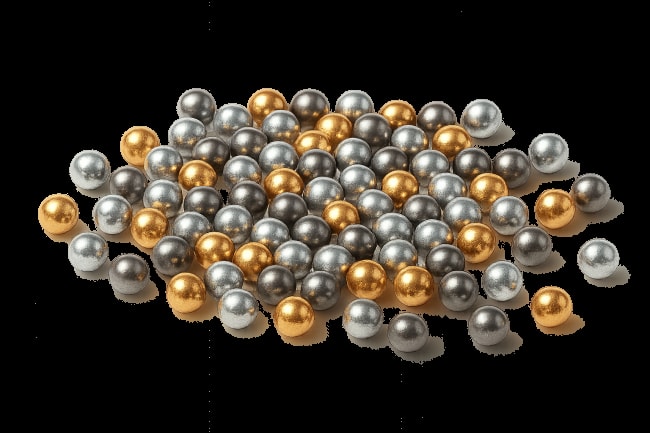
Global Market Carbon Steel Ball Sourcing Guide 2026
For buyers in the global market, carbon steel balls remain one of the most cost-effective spherical components for casters, drawer slides, ball transfer units, bicycle parts, valves, low-load bearings, grinding media, hardware, and general mechanical systems. The best sourcing choice depends on carbon content, hardness target, heat treatment method, dimensional grade, surface finish, plating requirement, and final application environment.As a practical rule, low carbon steel balls such as AISI 1010 and AISI 1015 are commonly selected when the buyer needs economical balls with good formability, optional case hardening, and strong suitability for plated hardware, casters, slides, and non-critical bearing movement. High carbon steel balls such as AISI 1085 are selected when higher hardness, improved wear resistance, and through-hardened performance are required, especially for grinding, valves, bearing-related components, and more demanding mechanical contact applications.In 2026, global buyers are expected to evaluate carbon steel ball suppliers more carefully than before. Price is still important, but procurement teams in Chicago, Monterrey, São Paulo, Hamburg, Rotterdam, Istanbul, Dubai, Mumbai, Singapore, Ho Chi Minh City, and Sydney increasingly compare factories by process control, traceability, delivery stability, export documentation, environmental compliance, and flexibility in OEM packaging. A reliable carbon steel ball manufacturer should be able to explain material grades, hardness range, heat treatment, inspection method, tolerance grade, surface protection, and shipment planning clearly before the purchase order is placed.If your application is cost-sensitive and works under light to medium load, low carbon case-hardened balls are often the right choice. If the component must resist continuous friction, impact, or abrasive contact, high carbon through-hardened balls should be considered. If corrosion resistance is the core requirement, buyers may need zinc, nickel, or chrome plating, or they may need to switch to stainless steel balls depending on the operating environment.SDBALLS Industry Corp, also known as Shandong SDBALLS Industry Corp Ltd., supports global buyers with carbon steel balls, chrome steel balls, stainless steel balls, and integrated sourcing of multi-material spheres. The company’s manufacturing background since 1996, three production facilities, annual output above 5,000 tons, and export experience across more than 50 countries make it a practical supply partner for buyers who want both factory capability and procurement consolidation. Buyers can review product categories through the steel ball product center and match specifications to real industrial needs.Buying QuestionLow Carbon Steel BallHigh Carbon Steel BallBuyer DecisionMain gradesAISI 1010, AISI 1015AISI 1085 and similar gradesSelect by hardness and wear demandTypical heat treatmentCase hardened or soft conditionThrough hardenedMatch to surface wear and core strengthCost levelUsually lowerUsually higherBalance unit price with service lifeCommon usesCasters, slides, hardware, light mechanismsGrinding, valves, more demanding bearingsChoose by load and friction conditionPlating suitabilityVery common for zinc, nickel, chromePossible, but application dependentConfirm coating thickness and adhesionProcurement priorityStable bulk supply and appearanceHardness consistency and wear resistanceAsk for inspection reports and samplesThis comparison shows that no single grade is universally best. The correct choice is the one that reduces total operating cost, not just purchase price. A cheap ball that wears early, rusts during ocean freight, or fails in assembly can become more expensive than a properly specified product.Carbon content is the basic difference between low carbon and high carbon steel balls. Low carbon steel contains less carbon and is easier to form, process, and plate. High carbon steel contains more carbon and can reach higher hardness after proper heat treatment. For purchasing managers, the grade name is not just a technical label; it directly affects performance, manufacturing cost, lead time, inspection standard, and after-sales risk.AISI 1010 is widely used where economy, machinability, and general-purpose performance are required. It is often chosen for hardware, light-duty casters, sliding parts, and decorative or plated applications. AISI 1015 has slightly higher carbon content and can provide improved mechanical properties while still remaining in the low carbon category. AISI 1085, with much higher carbon content, is used when hardness and wear resistance are much more important.In global sourcing, buyers often face similar product names from different suppliers. One factory may quote “carbon steel balls” without defining the grade, while another supplier may specify AISI 1010, 1015, or 1085 with hardness data. The second approach is much safer. Buyers should require clear chemical composition, heat treatment condition, hardness range, diameter tolerance, grade, and packaging method before comparing prices.ItemAISI 1010AISI 1015AISI 1085VS SummaryCarbon levelLowLow to slightly higherHigh1085 has much stronger hardening potentialTypical hardness optionSoft or case hardenedSoft or case hardenedThrough hardened1010/1015 focus on surface hardness; 1085 on full-section hardnessWear resistanceModerate after case hardeningModerate to goodHigh1085 performs better under abrasive contactCore toughnessGood ductilityGood balanceLower ductility after hardeningLow carbon grades resist some impact betterPlating useVery commonVery commonPossibleLow carbon grades are common in plated hardwareTypical industriesFurniture, casters, light machinerySlides, transfer units, hardwareGrinding, valves, industrial mechanismsApplication severity determines gradeCost tendencyLowestLow to mediumMedium to higher1085 costs more but may last longerThe table highlights a key sourcing principle: low carbon steel balls are not inferior; they are optimized for different functions. If the ball is used mainly as a rolling element in light-duty movement and is protected by plating or grease, AISI 1010 or AISI 1015 can be more economical. If the ball is exposed to repeated friction, compression, or abrasive wear, AISI 1085 may reduce replacement frequency.For international buyers importing through ports such as Los Angeles, Houston, Santos, Antwerp, Rotterdam, Jebel Ali, Nhava Sheva, Singapore, or Busan, specification clarity also reduces customs and quality disputes. A purchase order should include steel grade, diameter, grade tolerance, hardness, finish, packing weight, and test documentation. Ambiguous descriptions like “standard steel balls” are not sufficient for repeatable procurement.Future trends in 2026 will likely push buyers toward more documented material control. Automotive, industrial equipment, and hardware brands are asking for better traceability even on low-cost components. Carbon steel ball suppliers that can provide chemical composition reports, heat treatment records, and dimensional inspection data will have an advantage over purely price-driven traders.Hardness is one of the most important performance indicators for carbon steel balls. However, hardness must be understood together with heat treatment method. A case-hardened ball has a hardened outer layer and a softer core. A through-hardened ball has hardness distributed more deeply throughout the section. Each option has advantages and limitations.Case hardening is commonly used for low carbon steel balls. Because low carbon steel cannot achieve very high full-section hardness by ordinary hardening, carbon is introduced into the surface layer, followed by heat treatment. The result is a ball with a wear-resistant surface and a tougher, more ductile core. This is useful for casters, slides, and hardware where the surface needs to resist friction, but the part should not become too brittle.Through hardening is more suitable for high carbon steel balls. AISI 1085 can achieve higher hardness throughout the ball after heat treatment. This improves wear resistance in grinding media, valves, and more demanding mechanical systems. However, higher hardness also means the ball may be less forgiving under severe impact or misalignment. Buyers must avoid over-specifying hardness when toughness and impact absorption are more important.Heat Treatment FactorCase-Hardened Low Carbon BallThrough-Hardened High Carbon BallProcurement NoteHardness distributionHard surface, softer coreMore uniform hardnessAsk for surface and core performance expectationsSuitable steelAISI 1010, AISI 1015AISI 1085Grade must match treatment methodWear resistanceGood at surfaceHigh throughoutChoose through hardening for heavy wearImpact behaviorGenerally more forgivingCan be more brittle if too hardDo not specify unnecessary hardnessCostUsually economicalUsually higherCompare total life-cycle costCommon applicationsCasters, drawer slides, transfer unitsGrinding media, valves, bearing componentsApplication data should guide the decisionQC focusCase depth, surface hardness, finishHardness uniformity, microstructure, roundnessInspection items differ by processWhen negotiating with a supplier, buyers should not ask only “How hard is the ball?” They should ask: What is the hardness scale? Where is hardness measured? Is it surface hardness only? What is the heat treatment process? Is the ball case hardened or through hardened? What is the acceptable hardness range? Can the factory provide batch inspection reports?Hardness testing may involve Rockwell, Vickers, or other methods depending on ball size and specification. Small balls require careful testing because improper preparation can produce misleading results. Large balls may allow more direct hardness verification. For high-volume orders, hardness consistency across batches matters more than a single sample result.From a technology capability perspective, SDBALLS controls production through material selection, heading, flashing, heat treatment, grinding, lapping or polishing, inspection, and packing. Its experience with multiple grades from G10 to G1000 allows the company to support both precision requirements and general industrial needs. Buyers can learn more about process and inspection standards through the quality and technical information section.In 2026, heat treatment efficiency and sustainability will become more visible in supplier evaluation. Factories that improve furnace control, reduce energy waste, and maintain stable hardness curves will be better positioned for global buyers. Carbon reduction policies in Europe, North America, and major Asian manufacturing hubs may gradually affect supplier documentation, production planning, and customer audits.Carbon steel balls are used in a wide range of industries because they combine low cost, sufficient mechanical strength, and flexible surface treatment. However, applications differ greatly. A ball used in a furniture slide does not face the same load as a ball used in grinding media. A ball used in a valve has different sealing and surface requirements from one used inside a caster wheel. Understanding application conditions helps buyers avoid both under-specification and over-specification.Casters and wheels often use carbon steel balls as rolling elements in swivel assemblies or wheel bearings. These applications need stable movement, reasonable hardness, and economical bulk supply. Zinc-plated or oil-protected low carbon balls are common when corrosion exposure is limited. For heavy-duty industrial casters used in warehouses in Dallas, Toronto, Milan, or Kuala Lumpur, buyers may request tighter tolerance and higher hardness.Drawer slides and sliding systems require smooth movement, consistent diameter, and good surface finish. Noise, friction, and long-term smoothness are important. Low carbon steel balls, often plated or lubricated, are widely used in furniture, cabinet hardware, office equipment, and appliance tracks. For premium slides, dimensional consistency becomes more important because small variations can cause uneven movement.Bearings can involve different quality levels. Carbon steel balls may be used in low-load or non-critical bearing applications where cost is more important than maximum fatigue life. For high-speed precision bearings, chrome steel balls or stainless steel balls may be more suitable. Buyers should be careful not to substitute low-grade carbon steel balls in safety-critical or high-speed bearing systems unless the engineering team approves.Valves may use carbon steel balls as flow-control elements, check valve components, or mechanical sealing parts. Hardness, roundness, surface finish, and plating can affect sealing performance. If the valve handles moisture or corrosive media, stainless steel or plated carbon steel may be required. Buyers should provide fluid type, pressure, temperature, and operating cycle to the supplier.Grinding media is a more severe application. High carbon steel balls such as AISI 1085 may be used where wear resistance is required. In mining, cement, pigment, and material processing, grinding balls face abrasive contact and impact. Hardness must be balanced with toughness to prevent cracking. Export buyers serving mining regions in Chile, Peru, South Africa, Australia, and Indonesia should request wear data and batch consistency.ApplicationCommon Grade ChoiceKey RequirementRecommended OptionRisk if Mis-SpecifiedLight castersAISI 1010Economy and smooth rotationCase hardened or plated low carbon ballPremature wear or rustDrawer slidesAISI 1010 or 1015Low noise and consistent diameterPolished and plated ballRough sliding and customer complaintsBall transfer unitsAISI 1015 or higherLoad distribution and rolling performanceCase hardened with controlled finishFlat spots and unstable movementLow-load bearings1015 or selected carbon gradeRoundness and hardness controlSpecified grade and inspection reportShort service lifeValves1015, 1085, or plated optionSurface finish and sealing behaviorHardness plus coating reviewLeakage or corrosionGrinding mediaAISI 1085Wear resistance and toughnessThrough-hardened high carbon ballHigh consumption or crackingGeneral hardwareAISI 1010Low cost and appearanceZinc or nickel plated ballAppearance defects and rust claimsCase examples help clarify the decision. A European furniture hardware importer selling through warehouses near Hamburg and Rotterdam may choose AISI 1010 zinc-plated balls for drawer slides because the application needs smooth motion and corrosion protection during storage. A mining consumables distributor in Western Australia may choose through-hardened AISI 1085 because wear life matters more than surface appearance. A valve assembler in Istanbul may test both plated low carbon and high carbon balls before deciding, because sealing condition and media exposure determine the result.SDBALLS supports these application decisions by supplying steel balls for mechanical systems such as caster wheels, sliding systems, ball transfer units, bearing-related uses, automotive components, and outdoor equipment. Buyers can explore more end-use scenarios through the industrial application guide and then define specifications with sales and engineering support.Quality control is the difference between a one-time cheap purchase and a stable long-term supply chain. Carbon steel balls may look simple, but their performance depends on chemistry, forming quality, heat treatment, grinding accuracy, surface condition, cleaning, rust prevention, and packaging. A reliable manufacturer must control each step instead of relying only on final visual inspection.Chemical composition confirms that the correct steel grade has been used. Without chemical control, a buyer may receive balls labeled as AISI 1015 but produced from a different material. This can cause hardness variation, plating problems, or early wear. For repeat orders, buyers should request material certificates or chemical composition reports according to agreed standards.Hardness testing verifies heat treatment. For case-hardened balls, surface hardness and case depth are relevant. For through-hardened balls, uniform hardness and microstructure become important. If the application is demanding, the buyer may ask for sample testing before mass shipment. In high-volume programs, periodic testing by batch helps prevent hidden variation.Dimensional accuracy includes diameter tolerance, roundness, surface roughness, and grade. The grade system, such as G10 to G1000, indicates precision level. Not every application needs high precision. A grinding media ball does not require the same dimensional grade as a precision bearing ball. However, the selected grade must be consistent. In slides and casters, inconsistent diameter can create vibration, noise, or uneven load distribution.Surface quality also matters. Scratches, pits, seams, scale, discoloration, rust, or plating defects can lead to assembly issues. For plated balls, coating adhesion and coverage should be checked. For export shipments, anti-rust oil, vacuum packaging, plastic bags, drums, cartons, or wooden cases may be chosen according to transit time and destination climate. Shipments crossing humid routes through Southeast Asia, the Indian Ocean, or tropical Latin America require stronger moisture control.QC ItemWhat It ChecksLow Carbon Ball FocusHigh Carbon Ball FocusBuyer ActionChemical compositionSteel grade correctness1010/1015 confirmation1085 confirmationRequest material reportHardnessHeat treatment resultSurface hardness and case conditionThrough hardness consistencyDefine hardness range in PODiameter toleranceSize accuracyAssembly fitWear and contact behaviorSpecify grade and toleranceRoundnessRolling smoothnessSlides and castersBearings and valvesUse application-based standardSurface finishPolish and defect levelAppearance and platingFriction and wearApprove samples before mass orderPlating inspectionCoating qualityZinc, nickel, chrome coverageAdhesion under useConfirm thickness and salt-spray targetPacking inspectionTransport protectionRust preventionImpact and moisture protectionMatch packing to route and storageA supplier’s quality system should be supported by documented procedures. Certifications such as ISO 9001, ISO 14001, and IATF 16949 indicate that the manufacturer has formal management systems for quality, environment, and automotive-related process discipline. Certifications do not replace product inspection, but they provide a stronger foundation for repeatable supply.SDBALLS maintains rigorous quality standards supported by these certifications and applies inspection across production and shipment. This is especially important for buyers who consolidate orders across several product types, because quality variation in one small component can affect the reputation of the final assembled product.For 2026, digital quality records and traceability will become more common. Buyers may request batch photos, video inspections, electronic certificates, QR-code traceability, and cloud-based documentation. This trend is driven by global supply chain transparency, customer audits, and the need to reduce disputes after goods arrive at destination warehouses.Bulk pricing for carbon steel balls is influenced by steel grade, diameter, grade tolerance, heat treatment, polishing level, plating, packaging, order quantity, production schedule, and freight terms. The lowest unit price is not always the lowest total cost. Buyers should evaluate material cost, inspection reliability, defect rate, payment terms, logistics, and inventory risk.MOQ, or minimum order quantity, varies by size and specification. Standard sizes often have lower MOQ because the factory may run them frequently or keep semi-finished stock. Custom sizes, special plating, non-standard hardness, or private packaging usually require higher MOQ. Buyers who need multiple sizes can sometimes negotiate better terms by combining them into one production plan.For distributors in global trade hubs such as Dubai, Singapore, Rotterdam, Los Angeles, and Panama City, mixed-container purchasing may be useful. A supplier with multiple product lines can help combine carbon steel balls, stainless steel balls, chrome steel balls, or other spheres in one shipment. This reduces administrative cost and may improve freight efficiency.Pricing is also affected by Incoterms. EXW may appear cheaper but leaves more logistics responsibility to the buyer. FOB Qingdao, FOB Shanghai, or FOB Ningbo may be common for exports from China. CIF or DDP can simplify budgeting but may include higher supplier-managed logistics charges. Buyers should compare total landed cost, not only factory price.During negotiations, buyers should provide annual forecast, first order quantity, target delivery schedule, packaging requirements, inspection requirements, and destination port. A serious supplier can then recommend cost-saving options. For example, changing from an unnecessarily high precision grade to a suitable industrial grade can reduce cost without affecting performance. Choosing standard carton or drum packaging instead of custom retail boxes can also reduce unit cost.Pricing FactorLower-Cost ChoiceHigher-Cost ChoiceWhen to Pay MoreNegotiation TipMaterial gradeAISI 1010AISI 1085When wear resistance is criticalDo not over-specify high carbon steelPrecision gradeG500 or G1000G10, G16, G25When assembly requires tight toleranceMatch grade to applicationHeat treatmentSoft or standard case hardenedControlled through hardeningWhen load and wear are severeDefine hardness range clearlyPlatingOiled plain finishNickel or chrome platingWhen corrosion or appearance mattersConfirm salt-spray requirementPackagingBulk drums or cartonsCustom boxes and labelsWhen retail or OEM line supply needs itSeparate product cost from packing costOrder quantitySmall trial orderAnnual contract volumeWhen demand is stableUse forecast for better unit priceDelivery termFOBDDP or urgent air freightWhen buyer needs simplified deliveryCompare landed cost by portA good MOQ discussion is not a battle over a number; it is a discussion about production efficiency. If a buyer explains that the first order is for qualification and larger repeat orders will follow, a manufacturer may support a smaller initial batch. If a buyer requests an unusual size with special plating and private packaging but only wants a very small quantity, the price will naturally rise.SDBALLS’ manufacturing capability includes three production facilities and annual capacity exceeding 5,000 tons. This scale helps support both regular bulk supply and flexible programs for global buyers. Its role as an integrated supply partner also helps companies consolidate procurement when they need several sphere materials or different steel ball categories in one supply chain.In 2026, pricing structures may also reflect sustainability, energy cost, and international trade policies. Carbon-related reporting, greener packaging, and more efficient container loading may become part of supplier discussions. Buyers should prepare annual forecasts earlier, because stable planning can reduce rush production and expensive emergency freight.OEM service is important when carbon steel balls are used in branded products, assembly lines, repair kits, retail hardware packs, or specialized industrial systems. OEM requirements may include custom diameter, grade, hardness, plating, marking, private label packaging, barcode labels, batch numbers, pallet configuration, and documentation format.Zinc plating is widely used because it provides economical corrosion protection and a clean appearance. It is common for hardware, casters, furniture slides, and general industrial components. Nickel plating offers better appearance, smoother surface feel, and improved corrosion resistance in some environments. Chrome plating can provide a bright finish and enhanced surface hardness, but the process must be carefully controlled to avoid defects.Plating choice should be based on operating environment. Indoor dry use may need only light oil or basic zinc plating. Humid storage or export shipping may need stronger rust prevention. Outdoor or corrosive environments may require nickel plating, chrome plating, or a switch to stainless steel. Buyers should share humidity exposure, salt exposure, temperature, and expected storage period.Custom sizes can be produced, but buyers should understand tooling and production implications. Standard inch and metric sizes are easier to source quickly. Non-standard sizes may require production planning, longer lead time, and higher MOQ. If the final assembly can accept a standard size, the buyer may reduce cost and improve delivery reliability.Packaging is more than appearance. Steel balls are dense and can damage weak cartons if not packed properly. Bulk packaging may use drums, woven bags, cartons, or wooden cases. Smaller OEM packs may use plastic bags, blister packs, labeled boxes, or kitted packaging. Export packaging should consider forklift handling, container vibration, moisture, and destination warehouse conditions.SDBALLS provides service capabilities through a global sales team, US business support, and customer-focused communication. This helps buyers clarify specifications, samples, packing details, and delivery planning before production. The company can also support sourcing for plastic, glass, ceramic, copper, and aluminum spheres when customers need multi-material procurement beyond carbon steel balls.For OEM buyers, the safest workflow is sample approval, pilot order, inspection confirmation, mass production, pre-shipment check, and repeat order review. Each stage should be documented. If plating color, brightness, or surface feel is important, buyers should keep approved samples as a reference. Photos alone may not be sufficient because lighting conditions can change appearance.In 2026, OEM service will become more digital and traceable. Buyers will expect electronic labels, shipment photos, pallet loading records, and faster communication across time zones. Packaging sustainability will also matter. Recyclable cartons, reduced plastic, optimized pallet loading, and lower-damage packaging will help suppliers compete in Europe, North America, and developed Asian markets.Choosing a carbon steel ball supplier for the global market requires more than reading a quotation. Buyers should evaluate whether the supplier is a real manufacturer, a trading company, or an integrated supply partner. Each model can work, but the buyer must understand the supplier’s control over production, inspection, and delivery.A factory audit should review equipment, raw material control, heat treatment capability, grinding and polishing lines, inspection instruments, warehouse condition, packaging area, quality records, environmental compliance, and worker training. For high-volume buyers, an on-site audit or third-party audit can reduce risk. If an in-person visit is not possible, video audits and document reviews can be used as a first step.Production capacity matters because carbon steel balls are often ordered in bulk. A small workshop may quote aggressively but struggle with repeat orders, urgent demand, or multiple sizes. A larger manufacturer with stable capacity can support annual contracts and seasonal demand. However, capacity must be matched with quality control; high output without process discipline can create inconsistent batches.Delivery reliability depends on production planning, raw material availability, export experience, packing efficiency, and logistics coordination. Buyers importing through busy ports such as Long Beach, New York, Hamburg, Rotterdam, Felixstowe, Jebel Ali, Singapore, and Melbourne should account for vessel schedules and customs clearance. A supplier should communicate realistic lead times instead of promising impossible delivery dates.Financial and communication reliability also matter. A good supplier responds clearly, confirms specifications, warns about risks, and provides alternatives. Poor communication before order placement often becomes a bigger problem after payment. Buyers should evaluate response speed, technical clarity, sample quality, and willingness to document commitments.Local suppliers and distributors can be valuable for urgent small quantities, after-sales service, and regional warehousing. For example, a US distributor may support quick delivery to Midwest manufacturers, while a European stockist near Rotterdam can serve Germany, France, and Benelux quickly. However, direct factory sourcing from China or other manufacturing bases may offer better pricing and customization for bulk orders. Many global buyers use both models: local stock for emergency demand and direct factory contracts for planned consumption.SDBALLS is headquartered in Tai’an City, Shandong Province, near important manufacturing and logistics networks in northern China. Export shipments can be coordinated through major Chinese ports such as Qingdao, Shanghai, or Ningbo depending on routing and freight conditions. This supports global delivery to North America, Europe, Latin America, the Middle East, Africa, and Asia-Pacific.For 2026, supplier evaluation will increasingly include sustainability and resilience. Buyers may ask about energy use, waste management, environmental certification, responsible sourcing, and contingency planning. Climate events, port congestion, trade policy changes, and currency fluctuations can affect delivery. The best suppliers will help customers plan inventory, not simply ship after receiving payment.SDBALLS Industry Corp, also known as Shandong SDBALLS Industry Corp Ltd., is a professional precision steel ball manufacturer and integrated supply partner serving the global market. Since 1996, the company has developed long-term manufacturing experience in steel balls for industrial, automotive, hardware, bearing-related, and outdoor applications.From a manufacturing capability perspective, SDBALLS operates three production facilities with annual capacity exceeding 5,000 tons. This scale supports stable production of carbon steel balls, chrome steel balls, stainless steel balls, and related products in grades from G10 to G1000. The company’s product range covers both high-precision applications and general industrial uses, allowing buyers to choose the most suitable grade rather than overpaying for unnecessary precision.From a technological capability perspective, the company controls key processes such as material selection, forming, heat treatment, grinding, polishing, inspection, and packaging. Its experience with low carbon and high carbon steel balls helps buyers compare case-hardened and through-hardened options for specific applications. The company also produces lead-free steel shot for hunting and outdoor markets, including annealed and plated shot solutions designed to meet CIP-compliant hardness expectations for EU and US markets.From a service capability perspective, SDBALLS supports customers in more than 50 countries with a dedicated global sales team, US business support, specification communication, sample coordination, OEM packaging, and multi-material sourcing. Beyond its own steel ball manufacturing, the company helps customers source plastic, glass, ceramic, copper, and aluminum spheres, which is useful for buyers who want to consolidate procurement through one reliable partner.Global buyers can learn more about the company background through the SDBALLS company overview. For buyers building a 2026 sourcing plan, the company can support grade selection, bulk pricing review, OEM service discussion, and long-term delivery planning.A practical cooperation process begins with application analysis. The buyer explains diameter, grade, material, hardness, surface treatment, quantity, destination, packaging, and inspection requirements. SDBALLS then reviews feasibility, recommends technical options, provides quotation, prepares samples if required, and confirms mass production after approval. This structured process helps reduce misunderstandings and improves repeat-order stability.For industries such as casters, slides, bearings, valves, grinding media, automotive parts, and hardware, SDBALLS focuses on matching product specification to real operating conditions. This is important because the best supplier is not the one that sells the most expensive grade, but the one that helps the customer choose the correct grade for performance and cost.Low carbon steel balls, such as AISI 1010 and AISI 1015, contain less carbon and are often used in economical, plated, or case-hardened applications. High carbon steel balls, such as AISI 1085, contain more carbon and can be through hardened for higher wear resistance.They may be suitable for low-load or non-critical bearing applications, but high-speed or high-fatigue precision bearings often require chrome steel or stainless steel balls. The final decision should be approved by engineering requirements and testing.Choose case-hardened low carbon balls when you need economical surface wear resistance with a tougher core. Choose through-hardened high carbon balls when the application requires stronger wear resistance throughout the ball, such as grinding media or demanding mechanical contact.Zinc plating is economical and common for hardware and casters. Nickel plating offers better appearance and corrosion resistance in some conditions. Chrome plating provides a bright surface and can improve surface performance. The best choice depends on humidity, corrosion exposure, appearance requirements, and cost target.Provide steel grade, diameter, tolerance grade, hardness requirement, heat treatment, surface finish, plating, quantity, packaging, destination port, inspection requirement, and target application. Clear information helps the supplier quote accurately and avoid later disputes.Use standard sizes when possible, avoid unnecessary high precision, provide annual forecasts, combine sizes into planned shipments, select practical packaging, and compare total landed cost instead of only unit price. Long-term cooperation often improves pricing stability.Common documents include chemical composition report, hardness test report, dimensional inspection report, plating inspection if applicable, packing list, certificate of conformity, and photos of goods before shipment. More demanding applications may require additional testing.Yes. Carbon steel can rust if moisture protection is insufficient. Buyers should specify anti-rust oil, sealed bags, desiccants, strong cartons, drums, or wooden cases depending on shipping route, storage time, and climate at destination.Key trends include stronger traceability, digital inspection records, sustainability requirements, energy-efficient heat treatment, recyclable packaging, supplier audits, regional warehousing, and more careful comparison of total landed cost.SDBALLS combines long-term manufacturing experience, three production facilities, broad steel ball grades, international quality systems, OEM support, and multi-material sourcing service. This makes it suitable for buyers seeking stable carbon steel ball supply and broader procurement support.