Global Market 20x20 Cylpebs Grinding Media Guide
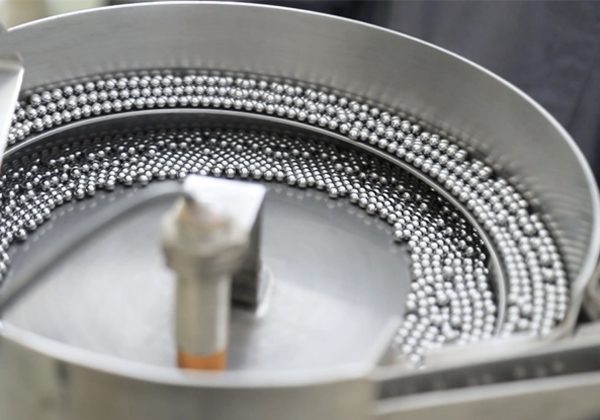
Global Market 20×20 Cylpebs Grinding Media Guide
Quick Answer

For Global Market buyers comparing grinding media for ball mills, 20×20 cylpebs are short cylindrical grinding bodies typically used where higher contact area, improved packing density, and stable fine grinding performance are required. A common 20×20 cylpeb has an approximate diameter of 20 mm, length of 20 mm, and a reference weight of about 0.048 kg per piece, depending on alloy density, casting tolerance, and heat treatment. Hyper steel cylpebs for industrial grinding commonly target a Brinell hardness range of 375-415 BHN, balancing impact resistance with abrasion resistance in cement, mining, coal grinding, slag processing, and power plant applications.
Compared with spherical balls, cylpebs create line and surface contact rather than mainly point contact. This geometry can increase grinding efficiency for certain feed sizes and mill circuits, especially in the second chamber of cement mills and fine grinding stages. However, the best media choice depends on mill diameter, liner profile, feed size distribution, target fineness, rotation speed, filling ratio, material abrasiveness, and separator performance. Buyers should not select cylpebs only by nominal size; they should review chemical composition, hardness uniformity, breakage rate, microstructure, wear rate, dimensional tolerance, and supplier quality controls.
A practical starting point for 20×20 cylpebs in a dry ball mill is a media filling ratio of roughly 25-35% of mill internal volume, with operating speed generally around 65-78% of critical speed. Cement finish mills may use cylpebs in smaller sizes for fine grinding, while mining and power plants may use them selectively where ore hardness, coal grindability, or ash content supports their use. Before large procurement, Global Market buyers in logistics hubs such as Shanghai, Qingdao, Singapore, Rotterdam, Hamburg, Jebel Ali, Los Angeles, Houston, Mumbai, and Santos should request pilot testing data, wear analysis reports, and batch traceability documents.
| Item | Typical 20×20 Cylpebs Reference | Buyer Checkpoint | Why It Matters |
|---|---|---|---|
| Nominal size | 20 mm diameter x 20 mm length | Confirm tolerance and measuring method | Affects charge packing and grinding contact |
| Reference weight | About 0.048 kg per piece | Verify batch average weight | Impacts tonnage calculation and loading plan |
| Hardness | 375-415 BHN | Check surface and core hardness | Ensures wear resistance without excessive brittleness |
| Material | Hyper steel or alloyed cast steel | Review chemistry certificate | Controls microstructure and service life |
| Main use | Fine and intermediate grinding | Match with mill chamber and feed size | Prevents inefficient energy use |
| Quality indicator | Low breakage and controlled wear | Ask for drop test and wear test results | Reduces downtime and contamination |
This table gives a fast procurement framework. It should be treated as a technical baseline, not as a universal guarantee. Actual performance must be validated in the user’s mill, because two mills with the same nominal diameter may behave differently due to liner wear, ventilation, classifier setting, feed moisture, and operating discipline.
Cylpebs Material Composition and Hyper Steel Alloy Specifications

Cylpebs material composition is one of the most important specifications for Global Market procurement. Hyper steel alloy cylpebs are generally designed to resist abrasive wear while maintaining enough toughness to survive impact inside rotating mills. In practical industrial supply, chemical composition may vary by manufacturer, but the key metallurgical objective is consistent carbide formation, controlled matrix hardness, and low internal defects. Buyers should pay attention to carbon, manganese, chromium, silicon, phosphorus, sulfur, and any additional alloying elements used to refine hardenability and wear behavior.
Carbon contributes hardness and wear resistance, but excessive carbon may increase brittleness if not properly balanced. Chromium improves hardenability and abrasion resistance, especially in cement clinker, slag, iron ore, copper ore, and coal grinding. Manganese can improve toughness and deoxidation effects, while silicon supports casting quality and strength. Phosphorus and sulfur should be controlled because excessive levels can damage impact resistance and increase breakage risk. For consistent Global Market supply, the supplier should provide a heat-wise chemical analysis certificate and maintain traceability from furnace batch to shipment lot.
Hyper steel cylpebs are different from ordinary low-carbon steel media. They are engineered for mill environments where sliding, rolling, impact, and abrasive cutting occur at the same time. A strong specification should define not only chemistry but also melting route, casting process, heat treatment, hardness range, microstructure acceptance criteria, dimensional tolerance, and inspection frequency. For high-volume buyers in cement groups, mining companies, and power utilities, it is useful to include incoming inspection requirements in the purchase contract.
| Element or Parameter | Typical Function | Specification Concern | Risk if Poorly Controlled |
|---|---|---|---|
| Carbon | Raises hardness and wear resistance | Must match heat treatment design | Too high may increase brittleness |
| Chromium | Improves abrasion resistance | Should be consistent across batches | Low chromium may shorten service life |
| Manganese | Supports toughness and deoxidation | Needs balanced addition | Improper balance may affect structure |
| Silicon | Improves strength and casting quality | Should not exceed agreed range | May reduce toughness if excessive |
| Phosphorus | Usually treated as impurity | Keep as low as practical | Can cause brittleness |
| Sulfur | Usually treated as impurity | Strict control required | May create cracking tendency |
| Heat treatment | Develops final hardness and structure | Time and temperature must be recorded | Uneven hardness and high breakage |
The table shows why a purchasing decision should go beyond the phrase “hyper steel.” Two cylpebs may look identical, yet their internal quality can differ substantially. A reliable supplier will control raw material, melting, pouring, mold conditions, heat treatment, cooling, and final inspection. Buyers should also ask whether samples can be tested by a third-party laboratory before mass shipment.
From a technological capability perspective, SDBALLS Industry Corp applies long-term metal forming and inspection experience from precision steel ball manufacturing to related grinding media sourcing and supply support. The company’s background in carbon steel, chrome steel, and stainless steel balls gives it a practical understanding of hardness control, dimensional consistency, surface condition, and batch documentation. For customers that need cylpebs together with other spherical or non-spherical metal media, this technical foundation helps improve communication, specification review, and quality alignment.
20×20 Cylpebs Dimensions, 0.048 kg Weight, and Surface Area Data

The 20×20 cylpeb is named by its approximate diameter and length. In simple terms, it is a cylinder with a diameter of 20 mm and a length of 20 mm. The reference weight of 0.048 kg is useful for estimating piece count, tonnage, charge composition, and logistics. However, actual weight may vary because alloy density, casting shrinkage, end shape, edge radius, surface finish, and production tolerance all influence the final mass.
For engineering calculation, the cylindrical surface area can be estimated using the formula for a closed cylinder: total surface area equals 2πr² plus 2πrh. With radius 10 mm and height 20 mm, the theoretical total surface area is about 1,884.96 square millimeters, or approximately 18.85 square centimeters per piece. In real production, rounded edges and manufacturing tolerances may slightly change the true surface area. Still, the calculation is valuable when comparing contact potential against spherical balls of similar weight or diameter.
Piece count is another important buying and loading factor. At 0.048 kg per piece, one metric ton contains about 20,833 pieces. A 10-ton shipment contains roughly 208,333 pieces. This helps maintenance teams plan initial mill charging and replenishment. For container shipments through Qingdao, Tianjin, Ningbo, Busan, Singapore, Rotterdam, Antwerp, Dubai, or Long Beach, buyers should also confirm bag weight, pallet design, moisture protection, and unloading method.
| Dimension or Calculation | Reference Value | Formula or Basis | Practical Use |
|---|---|---|---|
| Diameter | 20 mm | Nominal product size | Controls grinding gap and contact behavior |
| Length | 20 mm | Nominal product size | Affects packing and rolling behavior |
| Radius | 10 mm | Diameter divided by two | Used for surface area calculation |
| Reference weight | 0.048 kg | Batch average target | Used for tonnage and piece count |
| Pieces per metric ton | About 20,833 pieces | 1,000 kg divided by 0.048 kg | Helps charge planning |
| Theoretical surface area | About 18.85 cm² | Closed cylinder formula | Supports comparison with balls |
| Volume estimate | About 6.28 cm³ | πr²h | Checks density and mass consistency |
This data is especially useful for procurement teams that need a clear ball mill media size chart and replenishment plan. A mill operator can use the approximate piece count to estimate how many cylpebs enter the mill per ton, while a process engineer can compare surface area and contact behavior against spherical media. For accurate technical acceptance, the buyer should request measured data from at least several samples per batch.
Dimensional tolerance should not be ignored. If cylpebs are too long, too short, or irregularly shaped, they may pack unevenly or produce inconsistent grinding. Excessive flash, sharp defects, shrinkage cavities, or cracks can increase breakage and contaminate the ground material. In cement grinding, broken media can affect separator loading and product quality. In mining, fragmented media may increase downstream wear. In coal mills, broken pieces can create operational risks if not detected.
Hardness Standards of 375-415 BHN and Wear Resistance Properties
The hardness range of 375-415 BHN is commonly used for hyper steel cylpebs where balanced wear resistance and toughness are required. Brinell hardness testing is widely understood by industrial buyers because it provides a practical measure of indentation resistance. For grinding media, hardness alone is not enough, but it remains a key acceptance parameter. A cylpeb that is too soft may wear quickly. A cylpeb that is too hard without sufficient toughness may crack or break under repeated impact.
Wear resistance depends on alloy composition, hardness, microstructure, surface quality, heat treatment, and the grinding environment. In dry cement mills, clinker abrasiveness, gypsum content, slag proportion, mill ventilation, and temperature can affect wear. In mining, ore hardness, silica content, pulp chemistry, and slurry density influence media consumption. In power plant coal grinding, coal ash, pyrite content, and moisture affect wear patterns. Therefore, buyers should compare wear rate under relevant operating conditions instead of relying only on catalog values.
Quality assurance should include surface hardness testing and, when required, core hardness testing after cutting samples. The difference between surface and core hardness can reveal heat treatment consistency. A controlled microstructure helps avoid premature cracking. For high-duty mills, a drop test or impact fatigue test can provide additional confidence. Buyers should also track actual grams per ton of material ground as the most meaningful wear index.
| Quality Test | Purpose | Recommended Evidence | Acceptance Value or Focus |
|---|---|---|---|
| Brinell hardness test | Confirms resistance to indentation | Hardness report by batch | Typically 375-415 BHN |
| Surface inspection | Finds cracks, flash, and casting defects | Visual and sampling record | No harmful defects |
| Core hardness test | Checks heat treatment uniformity | Cut sample test | Agreed variation limit |
| Chemical analysis | Verifies alloy design | Heat-wise certificate | Within contract range |
| Drop test | Evaluates impact resistance | Test protocol and result | Low breakage rate |
| Wear test | Compares consumption rate | Lab or plant trial report | Lower cost per ton ground |
| Dimensional check | Confirms size consistency | Sampling inspection sheet | Within agreed tolerance |
The best hardness standard is the one that delivers stable plant performance. For example, a cement plant in Turkey, Vietnam, Mexico, or Egypt may prefer a slightly different grinding media strategy from an iron ore concentrator in Australia, Brazil, India, or South Africa. Global Market buyers should use a combination of specification control, sample testing, and field data to determine the best hardness range for their material.
Cylpebs vs Spherical Balls: Grinding Efficiency and Output Comparison
Cylpebs and spherical balls behave differently inside a ball mill. Spherical balls provide point contact and excellent rolling behavior, which can be advantageous for impact grinding and general-purpose milling. Cylpebs provide more line and surface contact, which may improve fine grinding efficiency and increase contact frequency. In some cement mill second chambers, cylpebs can improve output or reduce specific energy consumption when properly matched with liners, separators, and feed conditions.
However, cylpebs are not automatically better in every mill. If the feed material is too coarse or the mill requires strong impact breakage, spherical balls may perform better. If the mill has poor ventilation, incorrect liner design, or unstable feed, changing media shape alone will not solve the problem. The choice should be based on the grinding task: impact breakage, attrition, surface grinding, or final fineness control.
| Comparison Factor | 20×20 Cylpebs | Spherical Balls | Buying Interpretation |
|---|---|---|---|
| Contact mode | Line and surface contact | Mainly point contact | Cylpebs may support fine grinding |
| Packing density | Often higher in suitable chambers | Stable and predictable | Mill filling calculation must be checked |
| Impact performance | Moderate, size dependent | Strong for coarse breakage | Balls may suit first chamber duties |
| Fine grinding | Potentially efficient | Good but contact area is lower | Cylpebs may improve final product fineness |
| Wear pattern | Edges and sides wear together | Uniform diameter reduction | Monitoring method differs |
| Mill noise | May change due to packing | Common reference behavior | Use acoustic monitoring carefully |
| Best application | Fine and intermediate grinding | Coarse and general grinding | Mixed charge can be considered |
This VS comparison helps buyers avoid oversimplified claims. The correct question is not “Are cylpebs better than balls?” but “Which media geometry produces the lowest total grinding cost under my operating conditions?” Total cost includes media price, wear rate, power consumption, output, downtime, product quality, transport cost, and inventory reliability.
SDBALLS has long experience with spherical steel products, and this is helpful when customers compare cylpebs with steel balls. Through its broader industrial product portfolio, the company supports buyers who need to evaluate multiple media forms, grades, and material options for different grinding and mechanical applications. This integrated perspective is valuable for procurement teams seeking stable quality and consolidated sourcing.
Ball Mill Loading Parameters, Charge Ratio, and Optimal Mill Speed
Ball mill performance depends heavily on loading parameters. Even high-quality cylpebs will perform poorly if the charge ratio, speed, liner design, and feed rate are not controlled. For many dry grinding mills, a media charge filling ratio of 25-35% is a common working range. Some applications may operate outside this range, but any change should be based on process data. Too little media reduces grinding contact. Too much media can reduce effective movement, increase power draw, and create inefficient cushioning.
Critical speed is the theoretical speed at which grinding media would centrifuge with the mill shell. Industrial mills usually operate below critical speed, often around 65-78%, depending on mill design and process goals. Lower speeds may favor cascading and attrition. Higher speeds may increase cataracting and impact, but excessive speed can reduce effective grinding and increase liner wear. With cylpebs, operators should watch charge movement carefully because the media shape influences packing and flow.
Charge composition also matters. A mill may use a graded charge with several sizes of balls or cylpebs. For 20×20 cylpebs, the best position is often in intermediate or fine grinding duties rather than primary coarse breakage. In cement mills, they may be considered for the second chamber. In mining regrind mills, they may be tested for fine liberation. In power plants, they may be considered where coal pulverization benefits from attrition.
| Operating Parameter | Typical Starting Range | Adjustment Signal | Possible Action |
|---|---|---|---|
| Media filling ratio | 25-35% of mill volume | Low output or high residue | Optimize charge level |
| Mill speed | 65-78% of critical speed | Excessive noise or poor grinding | Review speed and liner condition |
| Feed size | Application dependent | Coarse discharge | Improve pre-crushing or media grading |
| Ventilation | Stable air flow required | High temperature or coating | Improve air flow and cooling |
| Separator setting | Based on fineness target | High circulating load | Adjust separator efficiency |
| Media replenishment | Based on wear rate | Declining mill output | Add measured quantity regularly |
| Liner condition | Profile must match charge | Slippage or poor lifting | Inspect and replace liners |
The table shows that grinding media selection is only one part of the mill system. Buyers should collect baseline data before changing from balls to cylpebs: mill power, feed rate, product fineness, separator return, temperature, noise, vibration, and media consumption. After conversion, the same indicators should be measured for at least several operating cycles.
In major industrial corridors such as the Gulf cement belt, the Indian subcontinent, Southeast Asia, North Africa, Latin America, and European clinker grinding hubs, operators often face rising electricity costs and stricter emissions pressure. Optimizing mill speed, charge ratio, and media shape is therefore not only a production issue but also a sustainability issue.
Cement Industry, Mining, and Power Plant Grinding Applications
Cylpebs are widely considered in cement, mining, and power plant grinding because these sectors consume large volumes of grinding media and continuously seek lower operating cost. In cement production, cylpebs may be used for clinker, limestone, slag, pozzolan, and blended cement grinding. The target is often higher Blaine fineness, lower residue, better particle distribution, and reduced specific power consumption. Plants near trade hubs such as Dubai, Alexandria, Istanbul, Ho Chi Minh City, Manila, Karachi, Lagos, and Lima often evaluate media not only by price but also by delivery reliability and plant trial performance.
In mining, the application depends on ore type and grinding stage. Gold, copper, iron ore, lead-zinc, phosphate, and industrial minerals all present different abrasiveness and breakage characteristics. Cylpebs may be tested in regrind or fine grinding circuits where increased contact area helps liberation. However, for large primary ball mills handling coarse ore, spherical balls may still dominate because of impact requirements.
Power plants and coal grinding facilities use media to pulverize coal or other solid fuels. Here, wear resistance, contamination control, and stable pulverized fuel fineness are important. Coal with high ash or pyrite content can be abrasive, while moisture can change grinding behavior. Operators must consider safety procedures, dust control, and mill temperature management. Media breakage should be minimized because broken fragments may create maintenance challenges.
| Industry | Typical Material | Cylpebs Advantage | Key Caution |
|---|---|---|---|
| Cement | Clinker, gypsum, slag, limestone | Fine grinding and contact efficiency | Check coating and temperature |
| Mining | Iron ore, copper ore, gold ore | Potential regrind efficiency | Validate with ore-specific tests |
| Power plant | Coal and solid fuel | Attrition grinding support | Control breakage and dust risk |
| Industrial minerals | Quartz, feldspar, phosphate | Useful for controlled fineness | Watch silica abrasiveness |
| Slag grinding | Blast furnace slag | May improve surface activation | High wear conditions possible |
| Ceramic raw materials | Clay and mineral blends | Consistent fine grinding | Contamination limits may apply |
| Construction materials | Lime, filler, additives | Stable particle size reduction | Match media to product purity |
Application success requires communication between procurement, production, maintenance, and laboratory teams. The purchasing department may focus on price per ton, but the production team needs output stability, and the laboratory needs product quality. A technically mature supplier should understand all three perspectives.
For users exploring new grinding media strategies, the application knowledge resources from SDBALLS can support early-stage selection discussions across industrial systems, bearing-related uses, mechanical transfer equipment, and grinding-related procurement scenarios.
Breakage Rate Testing, Wear Analysis, and Quality Assurance Protocols
Breakage rate testing and wear analysis are essential for reliable cylpebs procurement. A low purchase price can become expensive if the media breaks, wears quickly, reduces mill output, or contaminates product. Quality assurance should begin before production with a clear technical agreement and continue through melting, forming, heat treatment, inspection, packing, shipping, receiving, and plant trial evaluation.
A typical quality protocol includes raw material verification, chemical analysis, process control, hardness testing, dimensional inspection, visual inspection, random destructive testing, packaging inspection, and shipment documentation. For large orders, buyers may request pre-shipment inspection by their own team or by an independent inspection company. Shipment documents should connect batch number, production date, chemical certificate, hardness report, and packing list.
Wear analysis should be performed under actual mill conditions whenever possible. The most useful metric is media consumption per ton of material ground. A plant can load a known quantity of cylpebs, operate for a defined period, screen or measure remaining media, and calculate consumption. Product fineness, power draw, output, and residue should be recorded at the same time. This avoids the mistake of selecting media only by laboratory wear results.
| QA Stage | Supplier Responsibility | Buyer Responsibility | Document or Record |
|---|---|---|---|
| Specification agreement | Confirm achievable values | Define operating needs | Technical purchase specification |
| Production control | Control alloy and heat treatment | Request traceability | Batch production record |
| Testing | Perform hardness and inspection | Review sampling plan | Inspection certificate |
| Packing | Protect from moisture and damage | Confirm unloading method | Packing list and photos |
| Incoming inspection | Support claims if needed | Check quantity and quality | Receiving report |
| Plant trial | Provide technical support | Collect operating data | Trial performance report |
| Continuous improvement | Adjust supply if justified | Share wear and output data | Corrective action report |
In manufacturing capability, SDBALLS Industry Corp operates from Tai’an City in Shandong Province and has developed production and supply experience over decades. The company is known for precision steel ball manufacturing in carbon steel, chrome steel, and stainless steel grades, while also supporting customers with related industrial sourcing. Its certified management systems, including ISO 9001, ISO 14001, and IATF 16949, reinforce a disciplined approach to quality, environment, and process consistency. Buyers can learn more about its inspection approach through the quality and technical support page.
A practical quality assurance protocol should also include claim handling rules. If breakage or abnormal wear occurs, both sides should preserve samples, record operating conditions, and compare the issue with previous batches. Many apparent media problems are actually caused by mill operating changes, liner damage, feed variation, or separator malfunction. A fact-based protocol protects both buyer and supplier.
Our Company
SDBALLS Industry Corp, also known as Shandong SDBALLS Industry Corp Ltd., supports Global Market buyers with precision steel ball manufacturing experience and integrated industrial supply services. Since 1996, the company has built long-term expertise in carbon steel balls, chrome steel balls, stainless steel balls, and related spherical products for bearings, automotive components, mechanical systems, sliding units, caster wheels, ball transfer units, and grinding-related procurement needs.
The company’s manufacturing capabilities are supported by multiple production facilities in Shandong, with annual capacity exceeding 5,000 tons. Its product range includes grades from G10 to G1000, allowing customers to select precision levels for demanding or general industrial uses. While cylpebs are a different media geometry from precision balls, the company’s experience in steel material control, surface inspection, dimensional management, and batch traceability helps it communicate effectively with buyers who need reliable grinding media specifications and consolidated sourcing.
Service capability is another important advantage for international buyers. SDBALLS works with customers across more than 50 countries and provides responsive sales support for procurement teams that manage long-distance shipping, documentation, sampling, quality review, and repeat orders. For Global Market buyers moving goods through ports such as Qingdao, Shanghai, Ningbo, Singapore, Rotterdam, Hamburg, Jebel Ali, Los Angeles, New York, Santos, Durban, and Mumbai, stable communication and shipment planning can be as important as product price.
The company also acts as an integrated supply partner for multi-material spheres, including plastic, glass, ceramic, copper, and aluminum options, helping buyers consolidate purchasing across multiple categories. In outdoor and hunting markets, SDBALLS produces lead-free steel shot with annealed and plated solutions designed for compliance with relevant hardness expectations in EU and US markets. This breadth shows that the company is not only a manufacturer but also a procurement partner capable of supporting complex supply chains.
Customers can review the company background through the SDBALLS company overview. For cylpebs and grinding media buyers, the most practical next step is to prepare a technical inquiry including size, quantity, hardness requirement, target application, mill type, current media consumption, destination port, packaging preference, and any trial testing plan. This allows the supplier to respond with a more useful quotation and technical recommendation.
FAQ
What are 20×20 cylpebs?
20×20 cylpebs are cylindrical grinding media with a nominal diameter of 20 mm and length of 20 mm. They are used in ball mills and similar grinding systems where contact area and fine grinding efficiency are important.
How much does one 20×20 cylpeb weigh?
A common reference weight is about 0.048 kg per piece. Actual weight may vary slightly depending on alloy density, dimensional tolerance, end shape, and production method.
How many 20×20 cylpebs are in one metric ton?
Using 0.048 kg per piece, one metric ton contains about 20,833 pieces. This is an estimate for loading and logistics planning.
What is the surface area of a 20×20 cylpeb?
Using a closed-cylinder calculation with 20 mm diameter and 20 mm length, the theoretical total surface area is about 18.85 cm² per piece. Rounded edges and production tolerances may slightly change the actual value.
Is 375-415 BHN a suitable hardness range?
For many hyper steel grinding cylpebs, 375-415 BHN is a practical range that balances wear resistance and toughness. The best range depends on mill duty, feed material, impact level, and target wear rate.
Are cylpebs more efficient than spherical balls?
Cylpebs can be more efficient in some fine grinding duties because they provide line and surface contact. Spherical balls may be better for coarse impact grinding. The best choice should be proven by plant testing.
Where are cylpebs commonly used?
They are used in cement finish mills, slag grinding, mining regrind circuits, coal pulverizing, industrial minerals, and other applications that require particle size reduction in a rotating mill.
What should buyers request before ordering?
Buyers should request chemical composition, hardness report, dimensional tolerance, breakage test data, wear test information, packing details, shipment terms, and batch traceability documents.
How should a plant test cylpebs?
A plant should record baseline performance with existing media, load a known quantity of cylpebs, run under stable conditions, and compare output, power consumption, fineness, residue, wear rate, and breakage.
What are the key 2026 trends for grinding media?
Important 2026 trends include lower-carbon manufacturing, recycled steel use, better heat treatment control, digital batch traceability, AI-supported mill optimization, stricter sustainability audits, and procurement policies that consider total cost rather than only unit price.
How does sustainability affect Global Market procurement?
Cement, mining, and power industries are under pressure to reduce energy use, emissions, and waste. Grinding media that improves mill efficiency, lasts longer, and ships with reliable documentation can support sustainability targets.
Can one supplier provide both balls and cylpebs?
Some integrated suppliers can support both spherical steel balls and cylpebs-related sourcing. This can simplify procurement, quality communication, and logistics for buyers operating multiple grinding or mechanical systems.
What information should be included in an inquiry?
An inquiry should include cylpebs size, hardness requirement, material preference, order quantity, application, mill size, current media type, target fineness, destination port, packaging method, and inspection requirements.
Why is breakage rate important?
High breakage increases media consumption, may damage equipment, can contaminate product, and often causes unplanned downtime. Low breakage is a major indicator of stable grinding media quality.
How do Global Market logistics affect buying decisions?
Heavy grinding media has significant freight cost. Buyers should compare FOB, CFR, CIF, and local delivery options, check port access, confirm pallet or bag design, and plan inventory around shipping schedules.

About the Author
We are SD Ball, a professional manufacturer dedicated to delivering high-precision steel ball solutions worldwide. With years of expertise, we specialize in advanced production processes, strict quality control, and customized solutions to support diverse industrial applications. From material selection to final inspection, we provide reliable products and consistent performance to help our clients achieve higher efficiency, durability, and product quality.
Share
Product Category
Related Articles
-

6mm Tungsten Carbide Satellite Media for Global Market
For buyers in the Global Market, 6mm tungsten carbide satellite grinding media is a high-density, high-hardness milling option used when aggressive grinding, low wear, and tight particle-size control are required. The satellite shape, sometimes described as a multi-lobed or star-like milling body, offers more edges and contact points than a standard ball. This can improve impact, shear, and micro-cutting action in selected wet and dry milling systems, especially when the material being processed is hard, abrasive, or difficult to disperse.The short buying answer is this: choose 6mm tungsten carbide satellite media when you need stronger grinding action than spherical media, when contamination from softer media is unacceptable, and when your mill can tolerate the higher density and more complex geometry. It is commonly considered for ceramics, electronics powders, pigments, advanced materials, pharmaceutical intermediates, catalysts, and high-value mineral or chemical processing. However, it is not always the best choice for fragile products, highly viscosity-sensitive slurries, or mills designed only for smooth spherical beads.A practical specification for global procurement usually includes tungsten carbide grade, cobalt or nickel binder percentage, nominal 6mm size tolerance, density, hardness, surface finish, batch traceability, packaging, and compatibility with ball mills, attritors, stirred mills, bead mills, or laboratory mills. Buyers should also clarify whether the supplier provides standard satellite shapes only or can support customized geometry for different grinding mechanisms.Compared with ordinary steel or ceramic media, tungsten carbide offers much higher density, typically around 14.3 to 15.1 g/cm³ depending on binder content, and hardness commonly in the range of about HRA 88 to HRA 92. This means more grinding energy per media piece, strong wear resistance, and longer service life. The trade-off is higher purchase cost, greater mill lining stress, and a need for careful process control.In global supply chains serving hubs such as Shanghai, Qingdao, Singapore, Rotterdam, Hamburg, Los Angeles, Houston, Dubai, Mumbai, and São Paulo, 6mm tungsten carbide satellite grinding media is normally purchased by technical teams that compare not only unit price, but also wear rate, contamination level, production yield, shipment reliability, and supplier quality documentation. A well-selected media grade can reduce downtime and improve milling consistency, while a poorly matched shape may cause excessive heat, liner wear, or poor slurry movement.Decision PointUse 6mm Satellite Media WhenConsider Ball Media WhenConsider Cylindrical Media WhenBuying NoteGrinding intensityVery high impact and shear are requiredModerate, balanced grinding is sufficientLine-contact abrasion is desiredSatellite media can shorten milling time in suitable systemsMaterial hardnessHard ceramics, carbides, oxides, catalystsMedium-hard powders and slurriesGranular materials needing rubbing actionMatch media hardness to product sensitivityContamination controlLow wear and controlled metallic contamination are prioritiesSpherical WC or ceramic beads may be cleaner in some millsCylinders may create edge wearAsk for wear-rate test data before bulk ordersMill designMill accepts non-spherical high-density mediaMost common mills are optimized for ballsSome tumbling mills use cylinders wellConfirm with mill manufacturerSlurry viscosityLow to medium viscosity supports movementHigh-viscosity systems may prefer ballsCylinders can bridge in thick slurryRun a pilot test for viscous formulationsCost modelTotal cost favors faster grind and longer lifeLower initial cost is importantSpecific abrasion effect is neededCalculate cost per kilogram processed, not only media priceThis table shows that satellite media is a performance-driven choice rather than a universal replacement. The right decision depends on the product, mill, slurry, cleaning process, and final quality target.Tungsten carbide satellite grinding media is usually produced from tungsten carbide powder combined with a metallic binder, most often cobalt, and sometimes nickel for applications requiring improved corrosion resistance. The tungsten carbide phase provides hardness and wear resistance, while the binder phase provides toughness and helps prevent brittle failure during repeated impact. In a 6mm satellite shape, the geometry creates stress concentration at lobes and edges, so binder selection and sintering quality are especially important.Typical industrial grades include WC-Co compositions such as 94% WC with 6% Co, 92% WC with 8% Co, 90% WC with 10% Co, and tougher grades with 12% or more binder. Lower binder grades often provide higher hardness and better abrasion resistance, while higher binder grades provide improved impact toughness. For corrosive wet milling, WC-Ni or corrosion-resistant binder systems may be preferred, although buyers should verify chemical compatibility with acids, alkalis, solvents, and pharmaceutical cleaning agents.Material grade is not only a chemical formula. It includes powder grain size, binder distribution, porosity, sintering temperature control, hot isostatic pressing where used, surface finishing, inspection method, and lot traceability. For global buyers, especially those supplying regulated industries, certificates should clearly state composition, density, hardness, dimensional tolerance, and inspection standard. If the media is used in electronics or pharmaceutical processing, heavy metal leaching and cross-contamination risks should be discussed before purchase.In 2026 and beyond, the market trend is toward tighter grade control, more transparent raw material sourcing, lower-carbon sintering routes, and better recycling of tungsten-bearing scrap. Tungsten is a strategic material, and policy shifts in Europe, North America, and Asia may increase buyer interest in traceable, responsibly sourced tungsten carbide media. Procurement teams should therefore ask suppliers about recycling programs, energy efficiency, and compliance with customer sustainability requirements.Grade TypeTypical BinderApproximate DensityHardness RangeBest UseVS AlternativeFine-grain WC-6Co6% cobaltAbout 14.9 to 15.1 g/cm³HRA 90 to 92High-wear ceramic and oxide millingHarder but less tough than WC-10CoWC-8Co8% cobaltAbout 14.7 to 14.9 g/cm³HRA 89 to 91Balanced wet and dry millingMore impact-resistant than WC-6CoWC-10Co10% cobaltAbout 14.5 to 14.7 g/cm³HRA 88 to 90Attritors and higher impact millsTougher but slightly less wear-resistantWC-12Co12% cobaltAbout 14.3 to 14.6 g/cm³HRA 87 to 89Shock-prone milling conditionsBetter toughness, higher wear riskWC-NiNickel binderAbout 14.4 to 14.8 g/cm³HRA 88 to 91Corrosion-sensitive wet grindingMay resist corrosion better than cobalt gradesUltrafine WC-Co6% to 10% cobaltGrade dependentHRA 90 to 93High-value nano and precision powdersHigher cost but improved wear behaviorThe grade comparison highlights a common purchasing principle: maximum hardness is not always maximum value. A grade that is too brittle may chip, while a grade that is too soft may wear faster and contaminate the product.Shape changes the way energy is transferred from the mill to the product. A ball gives point contact, rolls smoothly, and is widely compatible with many mill types. A cylinder provides line contact and can increase abrasion under certain tumbling conditions. A satellite shape provides multiple contact points, edges, and changing orientation during movement. This can create a mix of impact, compression, shear, and localized cutting action.In a 6mm size, the difference is visible in the milling zone. Balls flow easily, pack predictably, and are easier to clean. Cylinders may align, tumble, or bridge depending on speed and slurry. Satellite media can disturb flow patterns and create stronger micro-mixing, but it can also increase torque and heat if the slurry is too thick. For this reason, satellite media is often tested first in laboratory or pilot-scale equipment before being approved for full production.For fine ceramics, satellite media may help break agglomerates faster than balls. For electronics powders, the benefit must be balanced against shape-related wear and possible contamination. For pharmaceutical intermediates, cleanability and validation matter as much as grinding performance. In all cases, the shape must be matched to mill speed, fill ratio, viscosity, target particle size, and liner material.FeatureSatellite MediaBall MediaCylinder MediaPractical ResultContact styleMulti-point and edge contactSmooth point contactLine and end contactSatellite shapes may increase shear intensityFlow behaviorDynamic but less predictableStable and predictableCan align or bridgeBalls are easiest for scale-upCleaningMore complex surface geometrySimple and efficientModerate difficultySatellite media needs stronger cleaning validationWear patternEdges and lobes may polish or wearUniform surface wearEnd wear and edge wearShape inspection should be scheduledGrinding efficiencyHigh in suitable hard materialsBalanced and versatileGood for rubbing abrasionEfficiency depends on product and millMill compatibilityMust be confirmedVery broad compatibilityModerate compatibilitySatellite media is not plug-and-play in every millThe shape comparison is useful for engineers building a process window. If the goal is predictable long-term production, balls may be safer. If the goal is faster dispersion or stronger breakage of difficult powders, satellite media may deliver measurable advantages after testing.The 6mm nominal size is popular because it is large enough to deliver meaningful impact energy, yet small enough to support fine grinding and dispersion in many laboratory and production mills. For tungsten carbide satellite media, the actual dimensional specification should define the maximum outside diameter, lobe height, central body size, tolerance, roundness or profile tolerance where applicable, and surface roughness. Unlike a simple ball, a satellite shape requires a drawing or shape standard to avoid misunderstanding between buyer and supplier.Density is one of the main performance advantages. Because tungsten carbide is much denser than zirconia, alumina, stainless steel, or glass, each 6mm piece carries more mass. This increases kinetic energy in impact and compression. However, it also increases load on the motor, bearings, shaft, agitator arms, and liner. Before switching from ceramic or steel media to tungsten carbide, the mill’s mechanical limits should be reviewed.Hardness data should be interpreted carefully. Rockwell A hardness is common for cemented carbide, while Vickers hardness may be used for more detailed engineering evaluation. A buyer should not accept hardness values without understanding the test method, sample preparation, and grade. For milling applications, fracture toughness and transverse rupture strength may be just as important as hardness.Surface finish matters because rough media may initially grind faster but also produce higher contamination, while overly polished media may reduce dispersion power in some applications. For high-value powders, a controlled finish and pre-cleaning process are often requested. Packaging should prevent chipping during ocean freight, air cargo, rail transport, and truck delivery through major logistics routes such as Qingdao to Rotterdam, Shanghai to Los Angeles, or Shenzhen to Singapore.Specification ItemTypical 6mm Satellite RangeWhy It MattersVS Poor ControlBuyer CheckNominal size6mm outside reference dimensionControls mill gap and energy transferOversize media may jam screens or separatorsRequest drawing-based dimensionsSize toleranceOften customized by applicationImproves batch consistencyWide tolerance causes uneven wearDefine tolerance before quotationDensityAbout 14.3 to 15.1 g/cm³Determines impact energyLow density may reduce grinding forceAsk for measured density per batchHardnessUsually HRA 88 to 92Supports wear resistanceSoft media increases contaminationConfirm test method and certificateSurface finishGround, polished, or application-specificAffects wear and cleanabilityRough surfaces may shed particlesSpecify finish requirementPackagingSealed bags, drums, or cratesPrevents chips and moisture exposurePoor packing causes transit damageInspect packaging for export shipmentThis specification table should be used as a purchasing checklist. In international trade, many disputes occur because the buyer asks for “6mm tungsten carbide media” but does not define shape tolerance, grade, or inspection requirements.Hardness grade and precision class are often confused. Hardness grade refers to the material’s resistance to indentation and wear, while precision class refers to dimensional consistency, shape accuracy, surface quality, and batch uniformity. In milling, both influence performance. A hard but poorly shaped satellite may wear unevenly, while a precise but low-hardness media may contaminate the product.For rough grinding of hard minerals or ceramic raw materials, a tough grade with moderate precision may be acceptable. For electronics, battery materials, medical ceramics, or pharmaceutical ingredients, higher precision and stricter cleanliness are more important. The cost difference between standard and precision classes should be evaluated against yield loss, filtration cost, rejected batches, and downtime.Buyers should also consider media classification after use. Over time, satellite lobes may become rounded, reducing the intended cutting and shearing effect. A maintenance plan can include periodic sampling, weight loss measurement, visual inspection, and replacement thresholds. In automated plants, digital tracking and predictive maintenance are expected to become more common by 2026, especially in high-value powder processing.Technological capability from a reliable supply partner includes control of raw material selection, forming, sintering, grinding, polishing, and inspection. SDBALLS Industry Corp, known for precision ball manufacturing and quality systems, applies a measurement-driven approach to spherical products and supports buyers in understanding tolerance, grade selection, and inspection logic across different grinding and precision media categories. More information about technical and quality practices can be reviewed through the company’s quality and technical resources.Mill compatibility is one of the most important questions before ordering tungsten carbide satellite grinding media. A conventional ball mill may accept satellite media if the lining, rotation speed, and discharge system are suitable. An attritor may benefit from the aggressive shape, but the agitator design and screen clearance must be checked. A bead mill may have stricter limitations because separator gaps, pumpability, and bead movement are often designed around spherical beads.In a ball mill, 6mm satellite media can increase cascading and localized grinding action, but it may also increase liner wear. In an attritor, it can improve dispersion of difficult agglomerates, but torque and heat generation must be monitored. In a bead mill, satellite media should be used only when the equipment supplier confirms that the shape will not block screens, damage rotors, or disrupt circulation. Laboratory planetary mills may use small quantities for method development, but users should check jar material and speed settings.Fill ratio is another key factor. Too little media reduces impact frequency. Too much media increases heat and restricts slurry movement. For high-density tungsten carbide, the same volume of media weighs far more than ceramic media, so motor load must be recalculated. Cooling capacity is also important, especially for temperature-sensitive materials used in pharmaceuticals, electronics, and specialty chemicals.Mill TypeCompatibility with 6mm Satellite MediaMain BenefitMain RiskVS Spherical MediaSelection AdviceTumbling ball millOften possible after reviewHigher impact and shearLiner and media edge wearBalls are smoother and saferStart with pilot loadingAttritor millGood in many robust designsFast dispersion and deagglomerationHigher torque and heatBalls offer easier flowMonitor temperature and amperageHorizontal bead millLimited and design-dependentStrong micro-shear if approvedSeparator blockageBalls are usually preferredConfirm screen clearance firstVertical stirred millPossible in selected systemsEfficient fine grindingMedia settling due to high densityLower-density beads circulate more easilyCheck agitation powerPlanetary millUseful for laboratory trialsHigh-energy small-batch testingJar damage or overheatingBalls are easier to validateUse conservative speed settingsVibratory millApplication-specificIntense impact frequencyChipping under shockBalls may last longer in shockSelect tougher binder gradesThis mill compatibility table should be reviewed with both the media supplier and the equipment manufacturer. A successful media conversion is an engineering project, not just a purchasing substitution.Grinding efficiency depends on the interaction between media, mill, material, and liquid phase. Material hardness, fracture behavior, particle shape, initial particle size, solids loading, dispersant package, pH, viscosity, and temperature all influence the result. Tungsten carbide satellite media is most effective when its high density and multi-contact geometry can be converted into useful breakage rather than wasted heat.For brittle ceramics such as alumina, zirconia precursors, silicon carbide, and certain glass-ceramic powders, satellite media can help generate faster size reduction. For ductile metals, soft polymers, or waxy pharmaceutical materials, the same intensity may smear or agglomerate the product instead of grinding it. For high-viscosity slurries, media movement may become restricted, causing dead zones and uneven milling. In low-viscosity systems, the media may move freely but may also settle quickly if agitation is insufficient.Slurry viscosity is especially important in attritors and bead mills. If viscosity rises during milling because particle surface area increases, the process may require staged addition of dispersant or solvent. Temperature control also matters because viscosity, reaction stability, and product quality can change during long runs. Engineers should measure not only final particle size but also particle-size distribution, contamination, color, morphology, and downstream filtration behavior.In 2026, digital process control is becoming a major trend. Sensors for torque, temperature, vibration, and acoustic signals can help identify inefficient grinding, media wear, or abnormal slurry behavior. Artificial intelligence tools may support process optimization by comparing media shape, fill ratio, viscosity, and energy consumption. Sustainability pressure will also push manufacturers to reduce overgrinding, save electricity, and extend media life.In ceramics, 6mm tungsten carbide satellite grinding media is used where strong grinding action and wear resistance are required. Applications may include advanced ceramic powders, structural ceramics, technical oxides, carbides, nitrides, glazes, and specialty pigments. The high density helps reduce hard particles efficiently, while the satellite geometry can break agglomerates that resist smooth ball media. However, ceramic producers must manage contamination if cobalt, nickel, or tungsten traces could affect color, sintering behavior, or electrical properties.In electronics, powder purity and particle-size control are critical. Materials for capacitors, conductive pastes, magnetic powders, thermal interface materials, semiconductor polishing compounds, and battery-related powders may require precise milling. Tungsten carbide media can be useful for hard and abrasive formulations, but suppliers and users must evaluate metal pickup, cleaning validation, and batch traceability. Electronics clusters in Shenzhen, Suzhou, Seoul, Tokyo, Taipei, Penang, Munich, and California often require strict documentation and stable repeatability.In pharmaceutical processing, grinding media selection is more conservative. Applications may include intermediates, excipients, crystalline materials, and controlled particle-size reduction in development labs. The main concerns are cleanability, extractables, heavy metal contamination, and regulatory documentation. Tungsten carbide satellite media may be considered for special cases, but pharmaceutical teams usually require risk assessments, cleaning protocols, and small-scale validation before production use.Other applications include catalysts, powder metallurgy, hard coatings, thermal spray powders, magnetic materials, chemical pigments, specialty minerals, and research laboratories. Buyers can explore broader use cases through SDBALLS’ industrial application insights, which help connect material performance with real production environments.SDBALLS Industry Corp, also known as Shandong SDBALLS Industry Corp Ltd., is a precision ball manufacturer and integrated supply partner based in Tai’an City, Shandong Province, China. With manufacturing experience built over more than three decades, the company serves customers in more than 50 countries and supports global buyers across bearing, automotive, mechanical, hardware, grinding, outdoor, and multi-material sphere procurement needs.From a manufacturing capability perspective, SDBALLS operates multiple production facilities with annual capacity exceeding 5,000 tons. Its core products include carbon steel balls, chrome steel balls, and stainless steel balls in precision grades from G10 to G1000. This background is relevant to grinding media buyers because precision forming, heat treatment, polishing, inspection, and batch consistency are central to media performance. Buyers can view available product categories through the SDBALLS product center.From a technological capability perspective, the company maintains quality systems including IATF 16949, ISO 9001, and ISO 14001. Its experience with hardness, dimensional precision, surface quality, and application-specific requirements helps buyers evaluate not only standard steel balls, but also broader sourcing needs involving ceramic, glass, plastic, copper, aluminum, and other spherical or near-spherical media. For specialized tungsten carbide satellite grinding media, SDBALLS can act as a supply coordination partner, helping buyers define specifications, compare options, and consolidate procurement with practical quality expectations.From a service capability perspective, SDBALLS supports international customers with global sales communication, US business support, export packaging coordination, and long-term supply planning. For buyers shipping through Qingdao, Shanghai, Ningbo, Busan, Singapore, Jebel Ali, Rotterdam, Antwerp, Hamburg, Long Beach, or New York, stable documentation and delivery planning are essential. The company’s background and values are introduced on the company overview page.For global procurement teams, the best way to work with a supplier is to provide material type, mill model, target particle size, slurry system, contamination limits, expected annual consumption, and testing plan. A clear technical file allows the supplier to recommend whether tungsten carbide satellite media, tungsten carbide balls, stainless steel balls, chrome steel balls, ceramic media, or another option is more suitable.It is a high-density milling media made from cemented tungsten carbide and formed into a satellite-like multi-lobed shape. The 6mm size refers to its nominal outside dimension. It is used to increase grinding intensity in selected mills.No. Satellite media can provide stronger shear and impact, but balls are more universal, easier to clean, and more predictable. The better option depends on mill design, slurry viscosity, contamination limits, and target particle size.There is no single best grade. WC-6Co may offer high hardness and wear resistance, while WC-10Co or WC-12Co may provide better toughness. WC-Ni may be preferred for some corrosion-sensitive wet milling processes.Only if the bead mill design allows it. Separator gaps, screens, rotor geometry, and circulation flow must be checked. Many bead mills are optimized for spherical beads, so confirmation is essential.Most cemented tungsten carbide media falls around 14.3 to 15.1 g/cm³, depending on binder percentage and grade. Buyers should request measured batch density rather than relying only on catalog values.Typical hardness is about HRA 88 to HRA 92, though ultrafine or special grades may vary. The certificate should state the test method and standard.High viscosity can restrict media movement, increase heat, and reduce grinding efficiency. Low to medium viscosity usually allows better movement, but very low viscosity may increase settling in some mills.Common industries include advanced ceramics, electronics, specialty chemicals, catalysts, powder metallurgy, pigments, research laboratories, and selected pharmaceutical development processes.A complete specification should include material grade, binder type, size tolerance, shape drawing, density, hardness, surface finish, packaging, inspection report, and intended mill type.Important trends include traceable tungsten sourcing, recycling of carbide materials, energy-efficient milling, digital process monitoring, AI-assisted optimization, and stricter sustainability requirements in global supply chains.Compare technical documentation, pilot testing support, export experience, batch consistency, packaging quality, lead time, and after-sales service. Local price alone may not reflect total milling cost.Yes. SDBALLS manufactures precision steel balls and supports integrated sourcing for multiple material spheres and media-related requirements. The company can help buyers clarify specifications and coordinate supply options for global projects. -
316L Valve Balls: A Global Market Guide to Leak Control
A 316L check ball seals when it makes continuous contact around the valve seat under the available closing force. Specify the ball diameter and its tolerance, the permitted deviation from spherical form, the surface roughness and measurement method, and a separate limit for scratches or pits. Then verify reverse leakage with the actual ball and seat at the lowest closing pressure or spring preload the valve will experience in service. A polished ball or a tight precision grade alone does not guarantee a leak-tight valve.If a valve leaks even though the ball meets its drawing, inspect the seat and look for assembly contamination before ordering a finer ball finish. A nick across the seat, a fiber trapped at the contact band, or a seat that distorts when installed can produce the same symptom as a defective sphere. Conversely, a passing average roughness measurement does not rule out a single scratch deep enough to cut across the sealing band.For an initial quote, provide the nominal ball diameter, expected annual quantity, seat material and geometry, fluid, operating temperature and pressure range, leakage limit, and packing requirements. If the seat design is still being finalized, say so. An engineering sample lot and a comparison of candidate seat materials are usually more useful at that stage than a production quote built around an arbitrary roughness limit.A check ball is the moving closure in a one-way valve. Forward flow lifts the ball off the seat when pressure force overcomes the forces holding it closed. Depending on the design, those forces can include spring preload, the effective weight of the ball in the fluid, and adhesion between the ball and seat. When the pressure differential reverses, the ball returns to the seat. The seat opening, profile, and alignment determine where the sphere makes contact; the guide or cage controls how far and how freely it can travel.The same nominal ball diameter can behave differently in two valve assemblies. One seat may locate the sphere cleanly with a narrow, well-defined contact band. Another may contact only part of the circumference because the seat is tilted, has a burr, or was distorted during installation. A guide can keep the ball near the center, but if there is inadequate clearance it can also stop the ball from settling onto the seat. Check the assembled dimensions, not just the ball and seat drawings in isolation.Buyers typically encounter standard catalog spheres, drawing-controlled precision balls, and balls supplied as part of a qualified ball-and-seat combination. Catalog spheres can be suitable when leakage and ball travel are not especially sensitive to dimensional variation. Precision balls are a better starting point when a valve needs predictable contact geometry or close lot-to-lot control. If a specification depends on a ball lapped to an individual seat, treat the parts as a pair until interchangeability has been demonstrated.The alloy designation does not define a ball's degree of polish, dimensional grade, cleanliness, or inspection level. Buyers evaluating 316 and 316L stainless steel balls should state the exact material required and request material documentation if alloy identity affects qualification. The useful comparison is between balls with documented material, geometry, and finish, not simply between products described as stainless or precision polished.Across the global market, the same ball size may be ordered in millimeters or inches. Keep a single controlling unit on the drawing, and treat any converted value as informational unless otherwise stated. Rounding the conversion is harmless for a catalog label but can consume a meaningful portion of the tolerance on a small metering-valve ball.Surface roughness describes small-scale texture. Scratches and pits are localized defects. Spherical form describes whether the surface follows the intended three-dimensional shape. These characteristics are related to manufacturing quality, but no single measurement captures all three. The distinction matters most in a hard seat at low closing force, where the contacting surfaces cannot deform enough to close a gap.A fine, uniform texture may help establish a consistent contact band, but the ball finish is only half of that interface. A machined seat can contain a directional tool mark that crosses the sealing band and forms a flow path. An isolated scratch on the ball can do the same. Because many check balls rotate during operation, a scratch that initially faces away from the seat can move into a critical position later.Leakage diagnosis: ball defects versus seat and assembly faultsPossible causeWhat you may observeUseful follow-upDistributed surface roughnessLeakage persists with several balls of similar finish.Measure both mating surfaces using defined settings and compare with an approved sample.Isolated ball scratch or pitThe measured average roughness is acceptable, but leakage changes when the ball is rotated.Inspect the sphere under controlled lighting and compare several orientations in the same seat.Deviation from spherical formContact shifts or becomes discontinuous when the ball is repositioned.Use multi-orientation form measurements rather than one diameter reading.Seat nick, burr, or tool markSeveral otherwise acceptable balls leak in one seat.Inspect the full seat circumference and compare with a known-good seat.Particle or fiberLeakage is intermittent, particularly after assembly or exposure to debris.Inspect the seat and assembly area, then repeat the test after controlled cleaning.Misalignment or restricted travelThe valve seals inconsistently after cycling or in different mounting positions.Check the seat installation, guide clearance, and freedom of movement.Use these as diagnostic clues, not as conclusive tests. A particle can move when the ball is rotated, making contamination look like a ball-specific defect. To separate the causes, change one variable at a time. Keep the test conditions fixed, compare the suspect ball with a known-good ball in the same seat, then repeat in a known-good seat. Record orientation and whether the valve was reseated or cycled between readings.Temperature and assembly stress deserve attention when a valve passes incoming inspection but leaks after installation. A polymer seat can change shape as temperature rises or as its mounting load relaxes. A metal insert can distort when pressed into a housing. If leakage begins only after installation, compare the seat in its free and installed states before revising the ball specification.Wear creates another useful distinction: a valve that leaks when new has a different failure history from one that leaks after thousands of cycles. Examine used and unused parts side by side. A polished contact band can be normal, but a groove, material transfer, or embedded debris suggests that changing the ball's initial roughness alone may not address the underlying problem.Start with nominal diameter and permissible deviation from that nominal. Separately define any required diameter variation within an individual ball or across a lot. Balls can each satisfy the drawing tolerance and still span enough of the allowable size range to affect lift or sealing in a tightly constrained assembly. A lot variation limit may therefore be important even when a single ball meets its own size requirement.Roundness usually concerns a circular profile measured in a particular plane. Sphericity concerns the overall three-dimensional form. Neither one diameter measurement nor one circular trace adequately characterizes the entire sphere. When the intended acceptance characteristic is deviation from spherical form, name it explicitly and agree on the measurement approach. If using a ball grade defined by a standard, specify the edition and confirm which limits it governs. Do not assume that a grade also defines allowable cosmetic defects or valve leakage.Purchase specification: similar terms that control different risksDrawing or order itemWhat to defineWhat it does not replaceNominal diameter and toleranceControlling units, nominal size, and upper and lower limits.A limit on lot spread or deviation from spherical form.Lot diameter variationPermitted lot spread, the definition of a lot, and inspection method.Acceptance of every ball against absolute size limits.Deviation from spherical formMaximum deviation, measurement method, and sampling plan.A requirement for actual seat contact or reverse leakage.Surface textureRequired parameter, limit, method, filtering, and measurement location or coverage.Separate acceptance rules for scratches, pits, or dents.Surface defectsDefect categories, viewing conditions, and agreed acceptance criteria.Quantitative roughness data or contamination control.Material conditionAlloy, required documentation, and any applicable hardness or treatment limits.Proof of compatibility with the complete fluid system.Valve leakageTest medium, differential pressure, temperature, duration, and maximum allowed rate.Component-level dimensional and finish inspection.Ra is the arithmetic average of profile deviations from the mean line over the evaluation length. Rz emphasizes profile height, although its interpretation depends on the specified standard and settings. The values are not interchangeable, and neither reliably captures isolated damage outside the measured trace. Avoid specifications such as “mirror finish” if texture affects acceptance. That phrase describes appearance, not a reproducible measurement.Measurement on a small curved sphere needs particular care. The instrument and analysis must distinguish the intended curvature from fine texture. A stylus method may face access or trace-length limitations; an optical method can be affected by steep slope or reflectivity. Ask the supplier to explain how curvature is removed, what filter and evaluation settings are applied, and how measured locations are selected. If both parties inspect, compare results on the same sample balls before setting a tight limit.For leakage specifications, write down what “closed” means in the test. State whether the assembly relies on reverse differential pressure, spring preload, gravity, or a combination. Provide units for leakage and specify the stabilization time, the measurement interval, and the minimum detectable rate. A valve can appear to pass simply because the test system cannot resolve a flow below the acceptance limit. Avoid “zero leakage” unless the detection threshold and test conditions make that claim meaningful.Leave room for engineering changes during qualification. If testing shows that a moderately tight sphere specification meets the leakage target with margin, tightening it further can add cost and reduce sourcing options without improving the valve. If leakage is sensitive to ball size or form, document that sensitivity and preserve the critical limit when the drawing moves into production.316L is a low-carbon, molybdenum-bearing austenitic stainless steel. Its molybdenum content generally improves resistance to pitting relative to 304-family stainless steels under comparable conditions, but it can still pit or corrode in demanding chloride service. The low-carbon designation is especially relevant to sensitization associated with welding or certain thermal exposures. It is not a guarantee that an unwelded ball will seal better or resist wear better than a 316 ball.For mildly corrosive service, 302, 304, and 304L stainless steel balls may be candidates if material compatibility and valve testing support the choice. Do not substitute them on diameter alone. Check the fluid composition, concentration, temperature, and presence of oxidizers or solids. Include cleaning and rinse fluids, as well as long idle periods during which residues can concentrate. For a regulatory or customer qualification, confirm the applicable requirements for the component and its intended use rather than assuming the alloy designation confers approval.Seat comparison: hard metal versus compliant polymer optionsSelection factorHard metal seatCompliant polymer seatLow-force sealingDepends strongly on seat form, surface condition, and ball alignment.May conform under light load, depending on the grade and geometry.Temperature changesCheck thermal expansion and fit within the housing.Check temperature limits, softening, and changes in stiffness.Sustained loadCheck contact stress and support at the seat edge.Assess creep or compression set as appropriate to the material.Repeated cyclingEvaluate wear, material transfer, and galling risk.Evaluate indentation, wear, and changes in reseating behavior.Particles in fluidHard particles can dent or score the sealing surface.Particles may embed and form a persistent leak path.Fluid and cleaner exposureCheck corrosion resistance of both metals and the condition of contacting surfaces.Check swelling, chemical attack, and extractables where relevant.PTFE and PEEK are not interchangeable merely because both are polymers. A PTFE seat design can use the material's ability to conform, but it must allow for creep, particularly under sustained loading. PEEK is typically stiffer, so contact geometry and the closing force needed to achieve a seal may be different. Fillers and processing can change the behavior of either material. Compare the actual seat grades in the intended geometry rather than extrapolating from generic material data.For a metal seat, assess the combination of contact stress, fluid lubricity, wear resistance, and cycle count. Similar stainless surfaces can transfer material under some loading and sliding conditions. If wear develops, inspect the pattern before changing the alloy: off-center impact, particles, or an unnecessarily long lift can be the primary cause. A useful qualification test measures both initial leakage and leakage after the number of cycles needed to represent the maintenance interval.Dosing pumps use inlet and discharge checks to direct fluid through each stroke. A check that fails to reseat can allow fluid to flow backward, reducing net delivery. The error can be especially noticeable at low feed rates or small stroke volumes. Metering accuracy, however, also depends on factors such as gas in the liquid, suction conditions, fluid viscosity, and pump timing. Reverse leakage is one measurement to compare with delivered volume, not a substitute for a pump performance test.In precision fluid-control valves, a check ball can prevent reverse flow as pressures change, retain prime between cycles, or isolate a branch while the rest of the circuit operates. A replacement ball of the same nominal diameter can still affect valve behavior if its actual size changes lift or if its mass changes closing dynamics. Buyers working across fluid valve system applications should define the assembly performance that matters most: reverse leakage, cracking pressure, delivery repeatability, or response time.Typical application areas include water treatment dosing, process sampling, industrial cleaning equipment, and analytical instruments. Each has a different reason to verify performance. A water treatment pump may need to hold prime during long off periods. An analytical instrument may be more sensitive to transient backflow or contamination from finishing residue. A cleaning system may expose the valve to fluid and temperature changes that are absent from a room-temperature bench test.Consider a diaphragm metering pump that delivers the intended flow during a short bench run but takes several strokes to recover after an overnight stop. A high-pressure reverse test can pass even though the suction check leaks slowly under the much lower differential present while the pump is idle. The practical next step is to reproduce that low-pressure condition in the installed orientation and measure leakage or prime retention over a representative idle interval.If the leak follows one ball between otherwise identical seats, compare its form and inspect for localized damage. If the leak stays with one seat, inspect the sealing edge and installed geometry. Should both pass the low-pressure test, check for suction-side air ingress or gas coming out of solution before changing the ball specification. A successful correction should improve restart performance as well as the bench reading.A compact sampling valve seals when new, then develops intermittent reverse leakage after repeated warm cleaning cycles. Qualify the ball and seat both before and after exposure to the actual cleaning sequence. Check leakage both warm and after cooling, and examine the seal track, seat dimensions, and moving clearance. A change that follows the seat points toward distortion, wear, or a material compatibility issue. A change that follows the ball warrants closer inspection for pits, transfer, or scratches.These examples are diagnostic scenarios, not reported customer outcomes. Both illustrate why incoming component inspection and end-use validation answer different questions. Testing the complete valve in conditions representative of service helps identify which component requirements are worth tightening.Precision ball finishing typically removes material in stages. Grinding brings formed blanks closer to the required size and geometry. Lapping removes smaller amounts of material to refine geometry and texture. Polishing can further improve the surface finish, but a visually bright ball is not proof of correct size or spherical form. A manufacturing route should be chosen to achieve the final combination of dimensions, surface texture, and defect limits.Process control matters because changes made for one characteristic can affect another. Removing deeper marks consumes stock and can shift the final diameter. A worn finishing plate or contaminated abrasive can introduce recurring marks. Sorting by size without checking form can put lobed balls into an otherwise consistent diameter group. A supplier and buyer should agree whether approval samples represent the actual production route, including its cleaning and packing steps.Request evidence suited to the risk instead of assuming that more polishing is always better. A useful sample report identifies the lot, shows the measured range for critical dimensions, and explains how texture and visual defects were checked. If hardness is important, define the condition and test method rather than inferring hardness from the alloy name or appearance. If passivation is required, specify it separately. It can improve surface cleanliness with respect to free iron when properly performed, but it does not repair form errors, scratches, or pits.In 2026 and beyond, buyers can expect broader use of automated optical inspection and digital lot records. These tools can improve consistency, but camera coverage, lighting, and correlation with agreed defect limits still need validation. Policy-driven material declarations and packaging requirements are also evolving by destination and end use. Ask for the documents your shipment actually needs and assign responsibility for updating them. On sustainability, consider packaging weight and waste alongside protection: a lighter pack is useful only if it prevents the scratches, contamination, and corrosion that can cause an entire lot to be rejected.Inspect component quality and sealing performance separately. Component inspection tells you whether balls meet the drawing. Ball-and-seat testing tells you whether those parts work together under defined conditions. The supplier's quality and technical information is a starting point for discussing measurements and documentation; the purchase specification should identify what must be reported for the actual order.For visual inspection, agree on illumination, magnification, coverage, and defect limits. Photographs are helpful when they have a scale, consistent lighting, and a clear indication of acceptable versus rejectable conditions. For a freely rotating check ball, do not designate only one small patch as critical unless the assembly physically limits orientation. Protect the inspected surface afterward by controlling trays, contact surfaces, and handling.Verification plan: component checks versus assembled valve testsVerification stepEvidence to requestDecision it supportsIncoming identity and traceabilityLot labels and agreed material documentation.Confirm that the delivered lot matches the qualified order.Diameter and formMeasured results, sampling details, and method.Judge fit and consistency before assembly.Texture and visual conditionTexture data and defect inspection results under agreed conditions.Distinguish regular finishing texture from damage.Cleanliness and packingCleaning and protection requirements, plus verification where specified.Reduce residues, particles, and transit damage at the seat interface.Reverse leakageRate, test medium, differential pressure, duration, and detection threshold.Confirm closure under representative service conditions.Opening and reseatingCracking pressure or flow behavior, with test orientation.Verify that the complete valve opens and closes as intended.DurabilityLeakage and inspection results after agreed cycling or exposure.Separate a good initial seal from one that lasts in service.Leak tests should control the medium and test orientation. Gas and liquid measurements are not directly interchangeable because flow behavior and the effects of wetting differ. If a production line uses a gas test as a faster alternative to a liquid service test, establish a correlation during qualification. Also distinguish a brief seating transient from sustained leakage. Set a stabilization interval and use the same timing when comparing suppliers, fixtures, or lots.Do not let cleaning introduce a new variable. State what residues are unacceptable and whether the parts must be dry, oil-free, or protected with an approved temporary preservative. Use low-shedding packaging where particles threaten a small valve. For a fine finish, agree on pack quantities and protection against ball-to-ball rubbing during transport. Define cleanliness with a suitable inspection or test method when it is critical; “clean packed” alone does not establish a measurable limit.Regional handling matters, particularly when orders are split by a distributor. A buyer receiving stock near Rotterdam, Singapore, or Houston may prioritize fast replenishment and small releases. A direct export order consolidated in Qingdao may put more emphasis on transit protection and lot separation. Compare local stock with direct supply on total landed cost, original lot traceability, and repacking controls. A local supplier is a good option when it can preserve the approved material, finish, and cleanliness through delivery, not merely match alloy and nominal size.SDBALLS Industry Corp supplies precision spheres for applications ranging from mechanical assemblies to fluid-control components. Its broader steel ball portfolio covers grades from G10 to G1000. That range describes the overall portfolio, not a claim that every 316L size is available at every grade. For a check-valve project, the productive starting point is the drawing and its acceptance criteria. Confirm the feasible combination of size, form, texture, defect control, and documentation for the specific part before placing a production order.Also known as Shandong SDBALLS Industry Corp Ltd., the company has manufactured steel balls since 1996. It is headquartered in Tai'an, Shandong Province, China, and operates three production facilities with a combined annual capacity exceeding 5,000 tons across its product lines. SDBALLS maintains IATF 16949, ISO 9001, and ISO 14001 certifications. Buyers with formal supplier approvals should confirm certificate scope and site coverage for the proposed supply route, as management system certification does not by itself qualify a specific valve component.SDBALLS serves customers in more than 50 countries, with a global sales team and US business support. Alongside stainless, carbon, and chrome steel balls, it can source alternative sphere materials such as ceramic, plastic, and glass. That can help if a design team is comparing stainless steel with another material for weight, chemical resistance, or wear. Each candidate still needs to be assessed against the seat and service conditions.For a quote, send the drawing revision, forecast quantity, inspection and packing requirements, and delivery destination. If you are troubleshooting a valve, add the seat material, operating conditions, and a short description of when the leak starts. Distinguish a trial lot from production demand and tell the supplier which reports must accompany each shipment. These details help both parties agree on a sample plan and prevent a change in finish or packaging from going unnoticed when orders scale up.There is no universal Ra for 316L check balls. Start with the seat material, available closing force, allowable leakage, and an agreed measurement method. Test representative finishes with the intended seat and set the least restrictive limit that consistently meets performance requirements. Specify scratches and pits separately.Yes. Polishing does not prove sphericity or eliminate every local defect. A polished sphere can leak against an out-of-round seat, a distorted insert, a trapped particle, or an assembly with too little closing force. Compare the suspected ball and seat independently before changing the finish specification.Not without checking the drawing and the qualification basis. The lower carbon limit is the defining distinction of 316L relative to 316 in commonly used alloy specifications. If a supplier proposes material documented as meeting both grades, verify that the certificate supports compliance with the applicable specification and that any other drawing requirements remain satisfied.Not necessarily. Cracking pressure depends on the installed closing force, effective seat area, orientation, and friction or adhesion. Better dimensional consistency can reduce variation, but it will not reliably lower the pressure needed to open the valve. Specify and test cracking pressure on the assembly.Use the service liquid or a representative liquid when wetting and viscosity affect performance. An air test may be useful as a production screen if correlated with service behavior. Record the medium, conditions, and detection limit so that people at different sites can interpret the result the same way.Order samples when the seat geometry, material pairing, or leakage requirement is new, or when a replacement supplier uses a different finish or packing method. Use representative balls and seats, then cycle and retest them if the valve must retain performance over time. Keep the approved sample identification and test conditions with the released drawing.Only if the original fault is in the ball and the seat remains within its limits. Installing a larger ball can move the contact band and change lift, cracking pressure, or flow. For a worn valve, use the manufacturer's approved replacement parts or requalify the ball-and-seat combination before returning it to service. -
Global Market Guide to Hardened 420 Valve Ball Specs
For buyers, engineers, valve assemblers, pump manufacturers, and maintenance teams in the Global Market, hardened AISI 420 stainless steel valve balls are martensitic stainless balls used where moderate corrosion resistance, good wear resistance, reliable sealing, and cost control must be balanced. They are commonly selected for ball valves, check valves, spray systems, metering pumps, dispensing devices, pneumatic components, and industrial flow-control assemblies.The most common 420 stainless valve balls are supplied in hardened and tempered condition, typically around HRC 48 to 56 depending on carbon level, diameter, heat treatment, and application requirement. Compared with austenitic 304 or 316 stainless balls, 420 can be hardened to a much higher strength and wear resistance. Compared with 440C stainless balls, 420 generally offers lower maximum hardness and lower corrosion resistance, but it is often more economical and easier to use in general valve applications where extreme bearing-grade performance is not required.A practical purchasing specification for hardened 420 valve balls should include material grade, diameter, ball grade, hardness range, surface finish, passivation requirement, magnetic condition, packaging, inspection standard, and application environment. For example, a buyer may specify: “AISI 420C stainless steel balls, 12.700 mm diameter, G100, HRC 52-56, polished and passivated, for water valve sealing service.” For higher precision sealing, G40 or G60 may be used; for general industrial valves, G100 to G500 is often acceptable; for low-cost hardware or non-critical fluid-control parts, G1000 may be sufficient.In 2026 procurement, the Global Market is increasingly shaped by traceability, stable supply, sustainability documentation, REACH and RoHS awareness, port logistics, and total landed cost. Buyers in trade hubs such as Shanghai, Qingdao, Singapore, Rotterdam, Hamburg, Los Angeles, Dubai, Mumbai, São Paulo, and Istanbul are focusing not only on unit price but also on hardness consistency, batch certificates, corrosion-prevention packaging, and supplier responsiveness.Selection PointTypical RecommendationReasonBuyer NoteMaterialAISI 420, 420B, or 420CHardenable stainless steel for valve sealing and wear resistanceConfirm chemistry before mass productionHardnessHRC 48-56Balances strength, polishability, and service lifeHigher carbon grade usually supports higher hardnessBall gradeG40 to G1000Determines diameter variation and roundness toleranceMatch grade to sealing requirementFinishPolished, bright, passivatedReduces friction and improves corrosion behaviorAsk for roughness or visual standard if criticalApplicationsValves, pumps, sprayers, flow-control devices420 gives mechanical durability at moderate costAvoid highly chloride-rich environments unless validatedAlternative440C, 316, ceramicUsed when hardness, corrosion, or chemical resistance changesCompare full system requirements, not only ball priceThis table summarizes the first decisions most buyers need to make. In practical sourcing, the correct ball is not simply “420 stainless.” It is a defined combination of grade, hardness, tolerance, finish, and service environment. When these details are written clearly into the purchase order, communication between buyer, manufacturer, valve assembly plant, and quality team becomes much more reliable.AISI 420 belongs to the martensitic stainless steel family. Its defining characteristic is that it contains enough carbon to be hardened by heat treatment while still containing chromium for stainless properties. In valve ball production, this makes 420 a practical middle-ground material. It is more wear-resistant than 304 or 316 stainless steel after hardening, but it is usually less corrosion-resistant than molybdenum-bearing or high-chromium stainless grades.The names 420, 420B, and 420C may be used differently by suppliers and regional standards. In many commercial discussions, 420B and 420C refer to higher-carbon variations of 420, with 420C typically associated with a higher hardness potential. Buyers should avoid relying only on grade names and should request chemical composition ranges or mill certificates. This is especially important for international purchasing because local standards in China, Europe, Japan, India, and North America may use different naming conventions.In the Global Market, 420 stainless steel balls may be produced under references such as AISI, ASTM, EN, JIS, or Chinese GB equivalents. For valve balls, the most important chemical elements are carbon and chromium. Carbon supports hardening; chromium supports corrosion resistance and hardenability. Manganese, silicon, phosphorus, sulfur, and sometimes nickel or molybdenum may appear in controlled ranges depending on steelmaking practice.Grade NameTypical Carbon RangeTypical Chromium RangeMaterial CharacterCommon Valve Ball UseAISI 420About 0.15-0.40%About 12.0-14.0%General martensitic stainless gradeGeneral valves, pump parts, flow-control assemblies420BAbout 0.26-0.35%About 12.0-14.0%Balanced hardness and machinabilityMedium-duty valve balls and sealing components420CAbout 0.36-0.45%About 12.0-14.5%Higher hardening potentialHardened valve balls requiring better wear resistanceEN 1.4021 typeMedium carbonAbout 12.0-14.0%European martensitic stainless equivalentIndustrial valve and pump partsJIS SUS420J1Lower to medium carbonAbout 12.0-14.0%Lower hardness version compared with J2Moderate-load valve partsJIS SUS420J2Medium to higher carbonAbout 12.0-14.0%Better hardening responseHardened balls for sealing and wear serviceThe table should be treated as a practical sourcing guide rather than a substitute for a formal standard. Exact chemical limits depend on the standard named in the contract. If a valve manufacturer in Germany, Brazil, South Korea, or the United States requires strict conformance, the purchase order should identify the standard, edition, inspection documents, and any special limits for sulfur, phosphorus, or inclusion cleanliness.Product types made from 420 stainless steel include precision balls, valve balls, pump balls, check balls, spray balls, polishing media, mechanical positioning balls, and certain locking or indexing balls. In valve applications, the ball may be free-moving, spring-loaded, seat-supported, or used as a shutoff element. The material choice must account for fluid type, temperature, seat material, pressure, frequency of movement, and cleaning method.For buyers comparing local suppliers and overseas manufacturers, the key is consistency. A single sample batch may perform well, but mass production requires stable steel wire or bar stock, controlled heading or blank forming, proper heat treatment, lapping, polishing, cleaning, and final inspection. This is where a supplier with long-term experience in steel ball manufacturing becomes important.Hardness is one of the most important performance indicators for hardened 420 stainless valve balls. A ball that is too soft may flatten, scratch, or wear quickly against the valve seat. A ball that is too hard without proper tempering may become brittle or develop grinding cracks. The ideal hardness is therefore a controlled range, not simply the maximum possible value.Typical production includes forming, flashing, heat treatment, hard grinding, lapping, polishing, cleaning, and inspection. Heat treatment usually involves austenitizing, quenching, and tempering. The exact furnace parameters depend on ball diameter, material chemistry, furnace type, atmosphere control, and required hardness. For international supply, buyers should request hardness test method, sample quantity, and certificate format.For small valve balls, hardness testing may require special handling because direct Rockwell testing on very small spheres can be difficult. In such cases, suppliers may use microhardness conversion, section testing, or batch-based process validation. The inspection agreement should be defined before shipment to avoid disputes after arrival at ports such as Long Beach, Antwerp, Jebel Ali, Klang, or Santos.Material GradeCommon Hardened RangeHeat Treatment ConditionPerformance CharacterTypical ApplicationAISI 420 lower carbonHRC 45-50Quenched and temperedModerate hardness, good toughnessGeneral water valves and light pump assembliesAISI 420 standardHRC 48-54Controlled hardening and temperingGood balance of wear and corrosion resistanceIndustrial check valves and flow-control balls420BHRC 50-55Hardened and tempered for dimensional stabilityReliable sealing and moderate wear resistanceMedium-duty valve balls and pump check balls420CHRC 52-56Higher-carbon hardening processHigher wear resistance than standard 420More demanding valve and pump applicationsAnnealed 420Below HRC 30Softened conditionEasy forming or secondary processingSpecial parts before final hardeningSpecial tempered 420Customer-definedTempered for toughness or corrosion behaviorApplication-specific compromiseCustom valves, dispensers, and mechanical devicesThis hardness table helps buyers understand why “harder” is not always “better.” A beverage valve, a hydraulic check valve, and a chemical dosing pump may all use spherical sealing elements, but their ideal hardness, finish, and material grade can differ. Seat material is especially important. A hardened stainless ball running against a soft polymer seat behaves differently from a ball sealing against metal, ceramic, or reinforced engineering plastic.In 2026, more valve producers are using automated inspection and data-driven quality control. Batch hardness mapping, digital traceability, and process records are becoming more common. Customers supplying regulated sectors such as medical devices, food processing, energy, and automotive often require better documentation than general hardware distributors. Buyers should consider whether the supplier can support these future requirements before approving a long-term source.Heat treatment also affects corrosion performance. Improper heat treatment can reduce corrosion resistance through carbide precipitation, retained scale, surface decarburization, or incomplete cleaning. Therefore, passivation and surface finishing are not cosmetic extras; they are part of the complete performance package for hardened 420 stainless valve balls.Steel ball grade defines dimensional precision. The lower the grade number, the tighter the tolerance. For valve balls, grade selection depends on sealing accuracy, seat design, pressure, assembly tolerance, and cost target. ISO 3290 and ABMA grade systems are commonly referenced in the Global Market, although buyers should confirm which standard and interpretation the supplier uses.G40 and G60 are relatively precise grades for valve balls requiring stable sealing and smooth operation. G100 and G200 are common for many industrial valves. G500 and G1000 are used where cost is more important than tight precision, such as general mechanical hardware, low-pressure flow control, or non-critical assemblies. However, even lower precision balls must remain clean, round enough for the application, and free from harmful defects.When importing balls through global logistics routes, grade tolerance should be linked to inspection reports. A buyer in Mexico assembling agricultural sprayers, a valve distributor in the Netherlands, and a pump manufacturer in Thailand may all request “420 stainless balls,” but the correct grade may differ significantly. A clear tolerance chart helps the purchasing and engineering teams align expectations.Ball GradeRelative PrecisionTypical Use in Valve BallsCost LevelBuying AdviceG40High precisionHigh-quality valves, precision pump check ballsHigherUse when sealing accuracy and low leakage are criticalG60PrecisionBetter industrial valves and metering systemsMedium-highGood choice for upgraded valve assembliesG100Common precisionGeneral check valves, pump balls, flow-control partsMediumOften the best cost-performance balanceG200Commercial precisionIndustrial valves with moderate toleranceMedium-lowSuitable where seat design can absorb variationG500General gradeLow-pressure valves, hardware, basic mechanical partsLowConfirm leakage requirement before selectionG1000Basic gradeNon-critical balls, simple flow or mechanical useLowestNot recommended for demanding sealing applicationsThe table explains the practical meaning of G40 to G1000 for valve ball purchasing. A lower grade can reduce cost, but it may increase leakage, noise, vibration, or assembly rejection. A higher grade can improve consistency, but it may be unnecessary if the valve seat, spring, or housing tolerance is already the limiting factor. The most efficient approach is to test several grades under real operating conditions, then lock the specification for production.For quality control, suppliers may inspect diameter variation, spherical form, surface defect level, roughness, hardness, and appearance. For higher grades, lapping and polishing processes must be more controlled. For larger balls, roundness and surface finish become more visible in sealing performance. For small balls, cleaning and packaging become more important because tiny particles can affect valve movement.Global buyers should also consider measurement correlation. If the supplier measures according to one method and the buyer checks with another, minor differences may appear. Before approving mass production, agree on instruments, sampling plan, acceptance criteria, and dispute resolution procedure. This is particularly important for automotive, medical, and high-volume pump applications.420 and 440C are both martensitic stainless steels, but they are not interchangeable in all applications. 440C contains higher carbon and chromium, allowing higher hardness and better wear resistance. It is widely used for bearing balls, high-grade valve balls, and applications where long wear life is needed. 420 is often selected when moderate corrosion resistance and good hardness are sufficient at a more economical price.The comparison is not only technical; it is commercial. In many regions, including North America, the European Union, Southeast Asia, the Middle East, and Latin America, buyers are under pressure to reduce procurement cost while maintaining reliability. If the valve design does not require 440C performance, 420 or 420C can be a rational choice. If the valve operates under high pressure, high cycle frequency, abrasive media, or strict leakage limits, 440C may justify its higher cost.Comparison Item420 Stainless Valve Ball440C Stainless Valve BallWhich Is Better?Hardness potentialUsually HRC 48-56Often HRC 58-64440C for maximum wear resistanceCorrosion resistanceModerate stainless performanceGenerally better than 420 in many conditions440C, but both need proper passivationCostMore economicalHigher material and processing cost420 for cost-sensitive valve applicationsPolishabilityGood for valve sealing useExcellent when produced as precision ballsDepends on grade and process qualityMagnetismMagneticMagneticNo major differenceTypical useGeneral valves, pump balls, industrial flow controlBearings, high-wear valves, precision equipmentSelect by pressure, cycle life, and mediaThis VS comparison shows that the right choice depends on the operating conditions. A water dispenser check valve, for example, may not require 440C. A high-cycle pump handling slightly abrasive fluid may benefit from 440C. A low-cost agricultural sprayer sold in large quantities may need 420 because landed cost matters. A premium industrial metering pump may justify 440C to reduce service failures.Buyers should also compare 420 and 440C against 316 stainless steel and ceramic. 316 cannot be hardened like 420 or 440C, but it offers better corrosion resistance in many chloride environments. Ceramic balls offer excellent hardness and chemical resistance, but they may be more brittle and more expensive. For food, marine, chemical, or medical applications, material selection should be validated through testing rather than assumption.In 2026, the trend is toward application-specific material selection. Digital product data sheets, online procurement portals, and AI-assisted sourcing tools make it easier to compare materials, but they do not replace engineering validation. A reliable supplier should help buyers compare grade, hardness, surface finish, cost, and delivery risk in a structured way.420 stainless valve balls are available in a wide range of diameters, from very small balls used in miniature valves and dispensing systems to larger balls used in industrial check valves and pump assemblies. Common sizes include metric diameters such as 1.000 mm, 2.000 mm, 3.000 mm, 4.000 mm, 5.000 mm, 6.000 mm, 8.000 mm, 10.000 mm, 12.000 mm, 15.000 mm, 20.000 mm, and 25.000 mm, as well as inch sizes such as 1/16 inch, 3/32 inch, 1/8 inch, 5/32 inch, 3/16 inch, 1/4 inch, 5/16 inch, 3/8 inch, 1/2 inch, and 1 inch.Availability depends on production tooling, raw material stock, grade requirement, and order volume. Standard sizes are easier to source quickly, while non-standard diameters may require custom production and higher minimum order quantities. For global buyers, using standard diameters can shorten lead time and reduce cost. However, valve design sometimes requires a specific ball-to-seat relationship, so changing diameter to match stock availability should be done carefully.For high-volume valve manufacturers in locations such as Ningbo, Suzhou, Pune, Ho Chi Minh City, Monterrey, Bursa, Milan, or Chicago, the most important factors are consistent supply, batch traceability, and stable packaging. For distributors and maintenance suppliers, mixed-size inventory and flexible shipment may be more important. This is why the purchasing strategy for 420 valve balls should be matched to the customer’s business model.Diameter RangeCommon Size ExamplesTypical GradeApplication TypeSupply NoteBelow 2 mm1.000 mm, 1.500 mmG40-G200Miniature valves, instruments, dispensersRequires careful cleaning and precision packaging2-5 mm2.381 mm, 3.000 mm, 4.000 mmG60-G500Small check valves, spray nozzles, pneumatic partsCommon in high-volume assemblies5-10 mm6.000 mm, 6.350 mm, 8.000 mmG40-G500General pump and valve ballsWidely available in metric and inch sizes10-20 mm12.700 mm, 15.875 mm, 19.050 mmG60-G1000Industrial valves, chemical dosing pumpsHardness and roundness control become important20-40 mm25.400 mm, 30.000 mm, 38.100 mmG100-G1000Larger check valves and mechanical assembliesLead time may depend on raw material availabilityAbove 40 mm50.000 mm and custom sizesApplication-definedSpecial valves, heavy equipment, custom projectsUsually requires project-based quotationThis size table helps purchasing teams plan inventory. If a product line uses many similar diameters, it may be possible to standardize around fewer ball sizes, reducing warehouse complexity. If leakage or flow response is sensitive, each diameter must be validated. A minor diameter difference can change spring compression, opening pressure, flow rate, and sealing behavior.When requesting a quotation, buyers should include diameter, tolerance grade, material, hardness, quantity, annual forecast, packaging, destination port, and required certificates. Providing an annual forecast helps the manufacturer plan raw material and production capacity. For urgent orders, ask whether stock exists for standard sizes. For custom sizes, confirm tooling and sample lead time.Packaging also matters. Precision valve balls are usually packed in oil-resistant, moisture-resistant, or vacuum-sealed packaging depending on finish and transport route. Sea freight from Qingdao, Shanghai, Tianjin, Busan, Kaohsiung, or Shenzhen to Europe, North America, South America, Africa, and the Middle East can expose cargo to humidity. Anti-rust protection and strong cartons reduce arrival risk.Passivation is a chemical cleaning and surface treatment process that helps improve the stainless behavior of 420 valve balls by removing free iron and supporting chromium oxide film formation. Because 420 is martensitic stainless steel, it does not have the same corrosion resistance as 316 stainless steel. Therefore, surface finish, cleaning, passivation, drying, and packaging are especially important.Surface finish affects sealing, friction, noise, corrosion initiation, and cleanliness. A smoother ball generally seals better against soft seats and reduces wear. However, the required finish depends on valve design. A high-precision metering pump may need tighter surface roughness control than a general water valve. For critical applications, buyers should define Ra value, visual defect criteria, allowable pits or scratches, and inspection method.Passivation should be matched to applicable standards and customer requirements. Nitric or citric acid passivation may be used depending on process capability, environmental policy, and customer preference. In 2026, citric acid passivation and lower-impact cleaning processes are gaining attention because global manufacturers are under pressure to reduce hazardous chemicals, wastewater burden, and carbon footprint.Corrosion resistance is not determined by material alone. Heat treatment scale, grinding residue, embedded iron, dirty packaging, high humidity, and chloride exposure can all reduce performance. Valve balls used in seawater, brine, chlorinated cleaning systems, or aggressive chemicals should be tested carefully. In many such cases, 316, duplex stainless, 440C, ceramic, or polymer balls may be better alternatives.For buyers, the surface specification can be written in practical terms: bright polished surface, no visible rust, no harmful cracks, no deep pits, passivated after final polishing, packed with anti-rust protection, and supplied with inspection certificate. Where food or medical use is involved, additional cleaning and compliance documentation may be required.Sustainability trends are changing surface treatment. Many international buyers now ask suppliers about wastewater treatment, chemical management, RoHS and REACH awareness, recyclable packaging, and energy efficiency. A supplier with ISO 14001 environmental management and stable process control can better support customers who must report supply-chain sustainability data.Hardened 420 stainless valve balls are used across many industries because they offer useful wear resistance, stainless properties, and economic value. They are common in systems where a ball opens, closes, seals, checks reverse flow, controls dosage, or provides mechanical movement. The ball may appear simple, but it often determines whether the full valve or pump assembly functions reliably.In water treatment, 420 valve balls may be used in domestic water valves, filtration devices, pressure-control units, and dosing systems. In agriculture, they appear in sprayers, irrigation controls, fertilizer dosing pumps, and outdoor equipment. In automotive and mobility systems, small hardened balls may be used in fluid-control modules, fuel-related components, or mechanical locking systems, although material validation is essential for each design.In industrial manufacturing, 420 balls are used in pneumatic devices, lubrication systems, hydraulic check valves, air tools, and processing equipment. In consumer products, they may appear in pumps, dispensers, cleaning devices, and small appliances. In oil, gas, mining, or chemical sectors, 420 may be used only where the environment is moderate; aggressive corrosive or abrasive service may require upgraded material.Case study one: a pump manufacturer in Southeast Asia used 304 stainless balls in a small dosing pump but experienced seat wear and inconsistent sealing after repeated cycling. After testing hardened 420C balls at G100 with controlled passivation, the pump achieved better wear performance while maintaining acceptable corrosion behavior in the intended fluid. The key was not only changing material but also matching hardness and finish to the elastomer seat.Case study two: a European valve distributor wanted to reduce cost on a low-pressure water valve line previously using 440C balls. Application testing showed that 420B balls at HRC 50-54 and G200 tolerance met leakage requirements. The distributor kept 440C for premium products but adopted 420B for cost-sensitive models, improving price competitiveness without changing the valve housing.Case study three: an agricultural equipment supplier in Latin America received rust complaints after long ocean shipment and warehouse storage. The solution included improved final cleaning, passivation, vapor-phase corrosion protection, sealed inner bags, and clearer storage instructions. This reduced visible corrosion and improved customer confidence. The case shows that packaging and logistics can be as important as material grade.Future trends in valve and pump applications include smaller valve modules, higher automation, stricter leakage limits, more recyclable materials, and better digital traceability. Manufacturers are also expected to support regional supply strategies, with stock planning near ports and trade hubs to reduce delivery risk. For global buyers, the best supplier is not only a factory but a technical and supply-chain partner.SDBALLS Industry Corp, also known as Shandong SDBALLS Industry Corp Ltd., is a professional precision steel ball manufacturer and integrated supply partner serving customers across the Global Market. With manufacturing experience dating back to 1996, the company has built long-term capability in carbon steel balls, chrome steel balls, stainless steel balls, and multi-material sphere sourcing.From a technological capability perspective, SDBALLS supports customers with material selection, grade comparison, hardness planning, tolerance discussion, surface finish selection, and application-oriented purchasing advice. For hardened 420 stainless valve balls, the company can help buyers compare 420, 420B, 420C, 440C, 304, 316, ceramic, and other alternatives according to corrosion environment, seat material, pressure, and cost target. More information about inspection systems and technical standards can be found through the company’s quality and technical support resources.From a manufacturing capability perspective, SDBALLS operates multiple production facilities in Shandong, China, with annual output capacity exceeding 5,000 tons. The production range includes steel balls from precision grades such as G10 through commercial grades such as G1000. This allows the company to support bearing applications, automotive components, valve and pump balls, caster wheels, sliding systems, hardware, grinding uses, and outdoor markets. Buyers can review the broader steel ball range through the product center.From a service capability perspective, SDBALLS works with customers in more than 50 countries and supports global procurement through export experience, responsive sales communication, flexible sourcing, and coordinated shipment planning. The company’s location in Shandong offers access to major Chinese logistics channels including Qingdao Port, which is important for buyers shipping to Europe, North America, Southeast Asia, the Middle East, Africa, and Latin America. Customers looking for long-term cooperation can learn more through the company profile.In addition to its own production, SDBALLS can act as an integrated supply partner for plastic, glass, ceramic, copper, aluminum, and other spheres. This is useful for global buyers who want to consolidate multiple ball materials through one reliable supplier. For valve, pump, bearing, caster, sliding, automotive, and mechanical uses, application references are available on the industrial applications page.The company maintains quality systems including IATF 16949, ISO 9001, and ISO 14001 certifications, supporting customers who require consistent manufacturing, environmental awareness, and structured quality management. For 2026 and beyond, SDBALLS continues to focus on stable production, precision improvement, surface treatment control, sustainability-oriented processes, and global service responsiveness.A 420 stainless valve ball is a spherical sealing or flow-control component made from martensitic stainless steel. It can be hardened and polished for use in valves, pumps, dispensers, sprayers, and mechanical assemblies where wear resistance and moderate corrosion resistance are required.Yes, 420 is stainless and contains chromium, but its corrosion resistance is moderate. It is generally less corrosion-resistant than 304 or 316 stainless steel. Proper passivation, polishing, cleaning, and packaging are important, especially for global shipment and humid storage.Typical hardness is approximately HRC 48 to 56, depending on whether the material is standard 420, 420B, or 420C. Lower carbon versions may be softer, while 420C can usually reach a higher hardness range after proper heat treatment.440C is usually harder and more wear-resistant, while 420 is more economical and suitable for many general valve applications. The better choice depends on pressure, media, seat material, cycle life, corrosion requirement, and budget.For demanding sealing, G40 or G60 may be selected. For general industrial valves, G100 or G200 is common. For low-pressure or non-critical applications, G500 or G1000 may be acceptable. Testing in the real valve assembly is recommended.Yes. Passivation is commonly used to improve surface cleanliness and corrosion behavior. Buyers should specify passivation requirements, visual standard, packaging, and whether a certificate is needed.Yes. 420 is martensitic stainless steel and is magnetic, especially after hardening. If a non-magnetic ball is required, buyers usually consider austenitic stainless steel such as 304 or 316, depending on the application.Provide material grade, diameter, ball grade, hardness range, quantity, annual forecast, surface finish, passivation requirement, packaging, destination country or port, and certificate needs. The more complete the specification, the more accurate the quotation.They may be used only after application validation and compliance review. For many food, medical, or high-corrosion cleaning environments, 316 stainless steel or ceramic may be more suitable. Always confirm regulatory and cleaning requirements.Key trends include tighter traceability, more digital inspection records, sustainability documentation, lower-impact passivation, better anti-rust packaging, regional inventory planning, and smarter material selection based on total lifecycle cost. -
Global Market Guide to Magnetism in 304 Stainless Balls
Yes, it can. Annealed 304 stainless steel is generally weakly magnetic, with relative magnetic permeability close to 1 under appropriate test conditions. But many stainless steel balls are cold headed or otherwise deformed during production. Cold work can change some of the steel’s austenite into a magnetic phase, making a finished 304 ball noticeably attracted to a magnet. That attraction does not, by itself, mean the ball is the wrong alloy.If the ball will sit near a sensor or operate in a magnetic field, specify a maximum relative permeability for the finished ball, along with the test method and acceptance conditions. If the ball must instead leave a low residual field after handling, specify that separately. If magnetism has no effect on the assembly, focus purchasing effort on diameter, roundness, finish, corrosion resistance, and load capability. An unnecessary magnetic limit can increase lead time and inspection cost without improving the product.For comparison, 316 is often a better starting point when a design needs both low magnetic response after forming and improved resistance to chloride corrosion. Hardened martensitic grades such as 420C are more appropriate candidates when hardness and wear resistance matter more than low permeability. Neither an alloy name nor a precision grade substitutes for testing the finished ball against the property that matters.304 is an austenitic stainless steel used for balls in valve assemblies, dispensing mechanisms, guides, transfer units, and other components where a combination of corrosion resistance and mechanical performance is useful. Buyers can order polished precision balls for close fits or more economical grades for general hardware. Depending on the diameter and production route, balls can be supplied in an as-formed and finished condition or with a specified heat-treatment route. Those distinctions matter because two balls of the same nominal diameter and alloy may behave differently in a magnetic field.Start with the exact material designation. A catalog may group closely related alloys on one page, but that does not make them interchangeable on a controlled drawing. The 302, 304, and 304L stainless steel ball range is a starting point for comparing available products. On the purchase order, name the alloy and governing material specification, and say whether substitutions or dual certification are acceptable. The lower carbon content of 304L does not, by itself, guarantee a lower magnetic response in a finished sphere.Common 304 ball ordering conditions and what they do or do not tell you about magnetismOrdering conditionWhat it tells the buyerWhat to confirm before releaseCommercial cold-formed ballSome magnetic attraction is possible.Whether the assembly tolerates the normal lot-to-lot range.Ball made from annealed feedstockThe starting material was annealed; later forming can still change its response.When annealing occurred relative to forming and finishing.Ball annealed after major formingHeat treatment can reduce the effect of deformation-induced martensite.Response and dimensional conformity after all finishing steps.Ground, lapped, or polished precision ballThe finish route addresses geometry or surface quality, not magnetic acceptance.The geometry grade and any magnetic limit as separate requirements.Passivated ballThe surface treatment addresses free iron and corrosion performance, not bulk permeability.The treatment standard, verification method, and condition at delivery.Permeability-controlled finished ballA measurable limit can be specified for the supplied component.Method suitability for the diameter, field conditions, sampling, and reporting.Catalog terms such as “nonmagnetic,” “polished,” and “annealed” describe different things. If a distributor lists all three, ask whether the claim comes from the feedstock certificate, a test on a representative specimen, or an inspection of the finished balls in that lot. Only the last of these directly establishes the measured behavior of the supplied parts, and its usefulness still depends on the method and sampling plan.In its solution-annealed condition, 304 is predominantly austenitic. Austenite has a face-centered cubic crystal structure and does not respond to a magnet like a ferromagnetic steel. During plastic deformation, some austenite in 304 can transform to strain-induced martensite, which is ferromagnetic. This is why a ball made from low-permeability wire can show a stronger magnetic response after heading. Work hardening can occur alongside the phase change, but a hardness result cannot be converted directly into a permeability value.The extent of transformation depends on material chemistry, the amount and distribution of strain, and the temperature during deformation. Two heats that both meet the 304 chemistry specification need not transform to the same extent under an identical forming schedule. Likewise, balls made from one heat can differ when their diameters require different feedstock sizes or tooling routes. These differences are a reason to qualify the diameter and manufacturing route actually being purchased rather than relying on a generic grade-level value.Cold heading also does not strain a sphere uniformly. The original wire is forced into a die, and subsequent operations remove flash and finish the surface. A local test near a heavily deformed region may not give the same result as a measurement taken with a different orientation or by a method that averages more of the ball. A repeatable inspection therefore needs a defined fixture and, where the method calls for it, a consistent way to position the test piece. This matters most when readings sit close to the acceptance limit.Buyers often use “magnetic” to mean three different things: attraction to an external magnet, a measurable response to an applied field, or a residual field after the part has been exposed to magnets or magnetic tooling. The first is usually an informal observation. The second is addressed by permeability testing. The third calls for a residual-field measurement at a specified location and distance. A shop magnet is useful for sorting obvious differences, but the result changes with magnet strength, clearance, and ball size. It is not a reliable way to identify 304 or certify a numerical limit.A purchasing specification should tell the supplier which properties must be delivered on the finished part and which process choices can be left to the manufacturer. For example, if only the final magnetic result matters, a validated acceptance test may be more useful than a blanket instruction to anneal. If the manufacturing route has already been qualified in a regulated or high-volume assembly, the buyer may also need to control changes to heat treatment, forming, or finishing. In either case, ask the supplier to identify exceptions in the quotation rather than after production.Drawing and purchase-order requirements for precision 304 ballsSpecification itemWhat to stateWhy it mattersAlloy and material conditionExact alloy, governing specification, and any required condition at delivery.Controls substitutions and distinguishes the starting material from the finished component.Nominal diameterUnits, size tolerance, and any permitted size group or lot spread.Controls fit in a seat, cage, passage, or guide.Ball geometry gradeGrade and applicable standard, such as ISO 3290-1 where appropriate.Sets geometry requirements without implying anything about magnetic response.Surface conditionRoughness, defect limits, cleaning, and passivation if required.Controls contact, sealing, cleanliness, and surface-related corrosion risk.Relative permeabilityMaximum value, agreed method, applicable field conditions, and test state.Allows acceptance to be based on a repeatable measurement rather than a magnet check.Residual magnetic fieldMaximum reading, measurement distance and setup, if functionally necessary.Addresses residual magnetism separately from response in an applied field.Hardness or load performanceRequired hardness and method, or a functional load and wear criterion.Helps prevent indentation, permanent deformation, or early wear in service.Lot acceptance and recordsLot definition, sample size, retest rules, traceability, and report format.Makes acceptance decisions consistent between manufacturing and receiving sites.Relative permeability, written as µr, is dimensionless. A value close to 1 describes a weak response under the conditions of the measurement. It is not a stand-alone guarantee of assembly performance because the ball volume, surrounding material, and field at the operating position also matter. Test methods may not report directly comparable values if the applied field, specimen geometry, or measurement principle differs. Do not copy a limit from a flat sheet specification into a ball drawing without first verifying that the measurement is practical on the requested diameter.Diameter and grade need similar care. A grade such as G10, if ordered to an agreed standard, controls defined aspects of geometric precision; it does not identify the alloy or indicate hardness. Where fit is determined by the combined tolerances of the ball, seat, and bore, a dimensioned nominal size alone is not enough. Specify the allowable size group or deviation as applicable and verify the supplier is quoting the same standard and edition. Where sealing is critical, use a leakage test on the assembled valve rather than treating a polished appearance as proof of sealing performance.To set a defensible magnetic limit, start with a bench test. Measure sensor error, unwanted attraction, or another defined failure symptom using representative assemblies and balls with different measured responses. Identify the point at which performance degrades, allow for variation in the rest of the assembly, and then set the incoming limit. If the actual failure mechanism is residual field rather than permeability, a residual-field or assembly-level criterion may be the better requirement.For a conventional ball transfer unit, the most important questions are usually whether the ball carries the load, survives contamination, and rolls freely. Nearby ferrous swarf or a magnetic fixture can change that assessment, but an across-the-board low-permeability requirement may still add little value. In contrast, a ball operating next to a Hall-effect sensor, a magnetic encoder, or a magnetic coupling can alter the local field. In those devices the final distance, direction of movement, and surrounding metalwork can make the same ball acceptable in one design and unsuitable in another.Application priorities: when to control magnetism and when to test another property firstApplicationPrimary selection questionPractical qualification stepSensor-adjacent guide or detentDoes ball motion affect the signal or switching threshold?Measure error over the full stroke at the intended sensor clearance.Dispensing or check-valve assemblyWill the ball seat and release reliably in the service fluid?Test leakage, release, and cycling after fluid exposure.Ball transfer unit or casterWill repeated contact cause indentation, wear, or corrosion?Verify load capacity and cycle life under representative contamination.Optical or laboratory instrumentCould the finished ball disturb a nearby field measurement?Build an instrument error budget and test the ball in its installed position.Magnetically actuated mechanismIs the ball meant to respond to the field or avoid it?Measure actuation force, return behavior, and variation between lots.Washdown or humid serviceWill cleaners or retained liquid attack the ball or its contact area?Evaluate the full assembly after representative washdown and drying cycles.Consider an equipment maker qualifying a small ball for a detent beside a position sensor. The prototype works with a development lot, but a nominally identical production lot shifts the switching point. Instead of rejecting the new lot on the basis of a hand magnet, the buyer tests both lots in the same fixture and correlates their finished-ball response with the shift in switching position. If the relationship is repeatable, the buyer can qualify a low-permeability route, increase sensor clearance, or compare 316 samples. The right choice is the one that keeps the assembly within its error budget without imposing an unnecessarily tight component limit.Suppose a purchaser specifies 304 for a dispensing valve used in a frequently cleaned system. Slight attraction is noticed at receiving, but the valve has no magnetic actuation. A more useful investigation is to test leakage and inspect the ball and seat after repeated exposure to the actual cleaner, followed by the usual rinse and drying cycle. If the cleaner or trapped liquid causes pitting, 316 may improve service life, but the supplier change should still be validated with the mating seat and cleaning procedure. Changing alloy solely in response to a magnet test would not address the failure.304 is a practical starting point for general service when the ball is not subject to severe contact stress or a particularly aggressive environment. The 316 and 316L stainless steel ball range is worth reviewing if chloride exposure is a concern or if the finished 304 ball shows more magnetic response than the design can tolerate. 316 generally resists chloride pitting better than 304, and its austenite is often more stable against strain-induced transformation. Neither advantage makes every 316 ball suitable for seawater or guarantees a particular permeability after cold work.Martensitic stainless balls address a different set of priorities. If a hard contact surface and resistance to indentation or wear matter more than low magnetic response, compare a heat-treated grade from the 420C stainless steel ball range. Confirm the exact specification and hardness after heat treatment; do not infer these from the commercial designation alone. A ball that matches the 304 part in diameter and geometry is not necessarily a drop-in replacement because its magnetic behavior, corrosion resistance, and interaction with the mating surface can differ.304 vs 316 vs 420C stainless steel balls for procurement and design reviewSelection factor304 austenitic316 austenitic420C martensiticTypical magnetic behaviorWeak response when annealed; cold work can make attraction noticeable.Usually weak when annealed; forming can still alter the response.Ferromagnetic; not the usual choice for low-permeability service.Response to formingWork hardens and can form strain-induced martensite.Work hardens and often undergoes less strain-induced transformation in comparable conditions.Final condition depends strongly on the hardening and tempering route.Hardness and wearSuitable for many moderate-duty applications; verify contact stress.Selected mainly for corrosion or magnetic considerations rather than maximum hardness.Can provide greater hardness and wear resistance after suitable heat treatment.Chloride exposurePitting and crevice corrosion are possible.Generally better pitting resistance than 304, but not immune.Often a less suitable candidate for demanding chloride exposure.Common buying priorityAvailability and balanced general-service performance.Improved corrosion resistance or a better starting point for low-response qualification.Hardness, wear resistance, and retention of geometry under contact load.Key acceptance evidenceExact alloy, final geometry, and permeability where specified.Final permeability where specified and performance in the relevant environment.Heat-treated hardness, geometry, and any service-specific corrosion or wear results.Compare total qualified cost rather than the cost of the alloy alone. Moving from 304 to 316 may remove the need for a secondary process in one design, yet still require identical lot testing in another. Moving to 420C may address indentation but increase the importance of corrosion checks or change the wear pattern of the seat. For high-cycle service, test the ball and mating material together. The harder ball does not automatically give the longest assembly life if the damage moves from the ball to a part that is harder to replace.A common manufacturing route starts with wire or another feedstock suitable for the diameter, followed by forming, flash removal, and progressively finer finishing. Cold heading creates much of the initial deformation. Grinding and lapping establish size and geometry, while polishing can improve the surface finish where needed. Finishing may remove material from heavily worked areas, but material removal and local deformation depend on the process. It is not safe to assume that polishing will either eliminate magnetic attraction or make it stronger.Where low permeability is required, solution annealing after substantial forming may reduce the fraction of strain-induced martensite. The sequence still has to accommodate dimensional control, surface condition, and mechanical requirements. Annealing can soften work-hardened material, and operations performed after annealing can change the response again. It is therefore more informative to ask which forming and finishing steps occur after the final heat treatment, and whether the final lot is tested, than simply to ask whether the ball was annealed at any stage.Passivation is a separate operation. It helps remove free iron from the surface when performed under suitable conditions, but it does not reverse martensitic transformation in the bulk steel. Likewise, demagnetization may reduce residual magnetization after exposure to a field, but it does not undo cold work or remove the ability of a ferromagnetic phase to respond to an applied field. If both requirements apply, identify when each is checked. For example, a residual-field limit at packing may be more useful than an earlier measurement if subsequent material handling can magnetize the parts again.Production changes deserve attention even when the drawing and alloy stay the same. A different starting wire size, tooling sequence, finishing site, or annealing route can alter the result. For critical applications, agree on which changes require notification and whether a new sample lot is needed. Qualifying balls from more than one heat or representative production lot provides better evidence of repeatability than a single exceptional first article. For ordinary hardware, a simpler lot traceability arrangement may be sufficient.Agree on the measuring instrument and setup before the first purchase order. ASTM A342/A342M provides test methods for the permeability of weakly magnetic materials, but the supplier and buyer should confirm that the chosen method is suitable for the size and shape of the finished ball. A method accepted on a larger specimen may not have enough resolution for a small sphere. Ask how the fixture controls placement, how the instrument is calibrated or checked, and how uncertainty is handled near the limit. If a surrogate specimen is proposed, establish how its result correlates with the finished ball before relying on it for acceptance.Receiving teams sometimes use a known-good reference ball to catch major changes quickly. This can be useful as a screening check if the reference and test ball are the same size and the fixture is consistent. It still does not replace a calibrated measurement. For two sites that will both inspect the product, exchange a small set of samples spanning the expected range before shipments begin. If the same balls receive materially different readings, resolve the difference in setup, handling, or analysis rather than allowing each site to apply its own interpretation of the drawing.Which inspection record answers each receiving question?Receiving questionEvidence to requestWhat the evidence does not establishWas the specified alloy used?Traceable material certificate or agreed positive material identification report.Finished-ball permeability, geometry, or service performance.Is this shipment linked to the approved lot?Package labels, packing list, and a traceable lot or heat identifier.Compliance unless the linked report includes the required acceptance results.Is the response to an applied field within the limit?Finished-ball permeability results with method, conditions, and sample count.Residual field or sensor error in the installed assembly.Does the ball retain an unacceptable field?Residual-field measurements at a defined distance and orientation.Bulk permeability or exact alloy chemistry.Will the ball fit and seal?Dimensional and surface inspection, plus an assembly leakage test if required.Corrosion resistance over the intended maintenance interval.Was the required surface treatment applied?A process record and any agreed surface verification results.Low magnetic response or immunity to corrosion.Alloy identification and magnetic testing should remain separate. X-ray fluorescence can often distinguish molybdenum-bearing 316 from 304 in a suitable setup, but conventional handheld X-ray fluorescence does not establish the carbon content needed to distinguish standard and low-carbon variants. Small spheres also require attention to sample positioning and instrument suitability. Use a traceable chemistry certificate or a validated analytical method when carbon content is part of acceptance. Where an EN 10204 Type 3.1 certificate is needed, specify the document and traceability chain at quotation rather than assuming it will accompany distributor stock.Set apart nonconforming or untraceable material before mixing packages. A certificate may cover a heat of feedstock while dimensional and magnetic reports cover a finished production lot. Ask the supplier to show the link between those identifiers. The SDBALLS quality and technical information page is a starting point for discussing what can be documented. For recurring orders, share the agreed report format with both the supplier and receiving team so that each report can be checked without reconstructing the inspection plan.Local distributors around Chicago, Rotterdam, or Singapore can help buyers obtain trial quantities and cover short schedule gaps. The trade-off is that stock may not carry the finished-ball magnetic data or segregated lot history needed for a controlled application. Ask the distributor whether inventory from separate heats or lots is repacked under a common catalog number. If it is, consider using that stock for noncritical assemblies and purchasing application-critical balls under a separate, traceable part number.Direct manufacturing is generally more practical when a buyer needs a reserved lot, a custom inspection plan, or a controlled forming and finishing route. For shipments from Shandong, discuss port options such as Qingdao and compare the full delivery plan into hubs such as Rotterdam, Los Angeles–Long Beach, or Singapore. The lead-time calculation should include lot inspection, export handling, and receiving clearance. Specify the delivery term, who arranges any third-party inspection, and what happens if a lot fails inspection at destination. Those details matter more to replenishment than the choice of port alone.One useful development is the growing practicality of linking dimensional readings, magnetic inspection results, and lot identity in a single digital record. For well-defined tests, fixed fixtures and automatic data capture can reduce operator variation and make it easier to investigate drift across heats. They do not solve a poor measurement setup. Before replacing sample inspection with an automated check, verify correlation with the acceptance method, establish how borderline readings are handled, and make sure the data remain tied to the physical lot through packing.Trade and environmental reporting also merit review. With the European Union’s Carbon Border Adjustment Mechanism entering its definitive period in 2026, buyers should confirm product classification and any obligations with the importer or customs specialist rather than assume all stainless balls have the same treatment. If a customer requests product-level emissions data, agree on the reporting boundary and how upstream steel, heat treatment, and transport are included. Separately, measure practical improvements such as reduced scrap, fewer rejected lots, and reusable packaging on repeat routes. Avoiding an unnecessary secondary operation may reduce cost and energy use, provided the delivered ball still meets the actual service requirement.SDBALLS Industry Corp supplies precision balls across grades from G10 to G1000, depending on the material and product. For a 304 inquiry, the useful starting point is the finished diameter, fit or geometry grade, and service conditions. If the design is field-sensitive, send the proposed permeability or residual-field limit and the intended test setup. SDBALLS can review the requested manufacturing route and discuss inspection feasibility before the buyer commits to a prototype or production lot.Based in Tai’an, Shandong Province, SDBALLS has manufactured steel balls since 1996. Its three production facilities have a combined annual capacity exceeding 5,000 tons across its product portfolio, which includes stainless, chrome, and carbon steel balls. SDBALLS maintains IATF 16949, ISO 9001, and ISO 14001 certifications. Buyers with an approved-site or certificate-scope requirement should confirm which site will make and inspect the ordered part. Site and system certifications do not replace the acceptance report for a particular lot.SDBALLS serves customers in more than 50 countries through its sales team and US business support. It can also coordinate sourcing for other sphere materials, including ceramic, plastic, and glass, when the design review shows that a stainless ball is not the best fit. For a comparable quote, provide the annual volume, order quantity, destination, packaging requirements, and documentation list. If production depends on tightly controlled magnetic behavior, request samples from a representative route and agree how replacement lots will be qualified before approving regular supply.No. Cold-worked 304 can attract a magnet because deformation can produce ferromagnetic martensite. If alloy identity matters, verify the chemistry and traceability. If attraction affects the application, measure the relevant magnetic property separately.You can request a maximum finished-ball permeability, subject to the size, manufacturing route, and available test method. Agree on the applied field or method conditions, lot definition, sample plan, and acceptance rule. A promise that the feedstock was annealed is not equivalent to that guarantee.No. Suitable annealing can change the microstructure and lower the response associated with deformation-induced martensite. Demagnetization addresses residual magnetization, not the microstructure. Test the property responsible for the problem and confirm the result after final processing or handling.No. 316 often retains a lower response under comparable forming conditions, but the final result depends on chemistry and processing. A heavily worked 316 ball and an annealed 304 ball are not comparable on alloy name alone. Test samples in the condition that will be supplied.Not necessarily. Ball grades describe geometric precision under the specified standard. A tighter grade does not establish alloy, hardness, or magnetic performance. Put each required property on the drawing or purchase order and verify it independently.Send the drawing, exact alloy, diameter and tolerance, finish, expected order volume, and delivery destination. For a magnetic requirement, also provide the measurement method and limit. If those are not yet known, describe the failure you are trying to prevent, such as sensor offset or sticking near a magnet. That gives the supplier a basis for proposing samples and a practical qualification plan.