
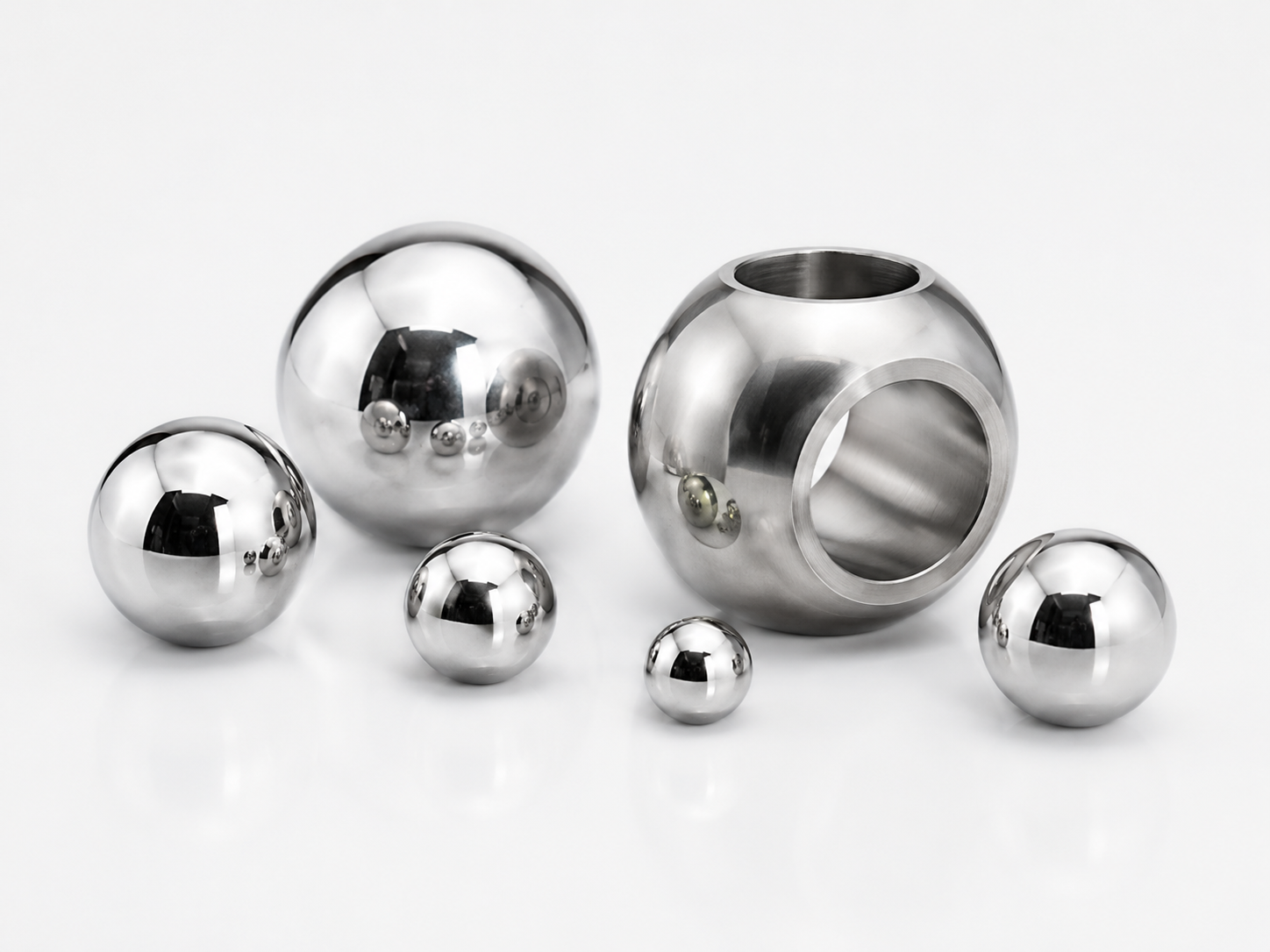


Precision Valve Balls for Industrial Valves, Pumps and Flow-Control Systems
SDBALLS Valve Balls are precision spherical components designed for sealing, flow control, and reliable operation in valve, pump, meter, and fluid-control assemblies. Compared with standard steel balls, valve balls require tighter dimensional control, higher roundness, smoother surface finish, and application-specific material selection to support sealing performance under pressure, temperature, corrosion, and wear conditions.
SDBALLS supplies customized valve balls in stainless steel, chrome steel, ceramic, tungsten carbide, brass, bronze, plastic, and other materials according to drawings or working conditions. Surface polishing, mirror finish, coating, plating, special tolerances, and inspection reports can be discussed for OEM projects, replacement parts, and industrial valve system requirements.
| غرض | Recommended Page Content |
| Product Type | Precision valve balls / sealing balls / flow-control balls |
| خيارات المواد | Stainless steel, chrome steel, ceramic, tungsten carbide, brass, bronze, plastic and custom materials |
| نطاق المقاسات | Customized according to drawing, application, valve seat design, and sealing requirement |
| Precision Requirement | High roundness, controlled diameter tolerance, smooth surface finish, low surface defects |
| التطبيقات النموذجية | Industrial valves, check valves, ball valves, pumps, flowmeters, pressure systems, water treatment, chemical processing, oil and gas, medical and instrument components |
شارك هذا المنتج
نظرة عامة على المنتج
Valve balls are critical components in valve systems. They are used to open, close, seal, restrict, or control fluid flow in mechanical, hydraulic, pneumatic, chemical, water, gas, and instrument systems. In many valve assemblies, the ball directly contacts the valve seat, so roundness, surface finish, material hardness, corrosion resistance, and dimensional consistency directly affect leakage rate, service life, and reliability.
Unlike general-purpose precision balls, valve balls must be selected based on both geometry and working environment. The correct valve ball may need corrosion resistance for chemical media, high hardness for wear resistance, a mirror surface for sealing, low weight for float or check-valve action, or ceramic performance for harsh-service conditions. SDBALLS supports material selection and custom production based on valve structure, media, pressure, temperature, and inspection requirements.
Material Selection & Technical Positioning
Valve ball selection should always start from the working condition rather than only the ball diameter. The buyer should confirm the medium, pressure, temperature, valve seat material, required sealing class, corrosion risk, wear condition, and whether the ball works as a sealing element, check ball, floating ball, or rotating component.
| Material Option | Typical Strength | Buyer Note |
| AISI 304 / 316 / 316L Stainless Steel | Good corrosion resistance and clean surface | Suitable for water systems, food-related equipment, chemical-compatible media, pumps, sprayers and general valve use. 316/316L is preferred when higher corrosion resistance is required. |
| AISI 420C / 440C Stainless Steel | Higher hardness and wear resistance with moderate corrosion resistance | Suitable for valves requiring hardness and sealing wear resistance. Not the best choice for strong chloride or severe chemical corrosion. |
| AISI 52100 Chrome Steel | صلابة عالية ومقاومة للتآكل | Suitable for controlled, non-corrosive environments where wear resistance and hardness are more important than corrosion resistance. |
| Ceramic Balls: Si3N4 / ZrO2 / Al2O3 | Non-magnetic, electrically insulating, corrosion resistant and suitable for special environments | Useful for aggressive media, high-performance valves, flowmeters, medical or instrument components. Impact and seat design must be reviewed. |
| Tungsten Carbide | Extreme hardness, high density and excellent wear resistance | Recommended for severe wear, high-pressure, abrasive service, petroleum equipment and precision valve seats where cost is secondary to life. |
| Brass / Bronze / Copper Alloy | Non-magnetic, good machinability and selected corrosion performance | Used in special valves, instruments, pumps and low-friction assemblies. Media compatibility must be confirmed. |
| Plastic Balls: PP / POM / PTFE / HDPE / Nylon | Lightweight, non-metallic, corrosion resistant in selected media | Used for floats, check valves, low-load flow control, chemical handling and medical/lab equipment. Temperature and pressure limits must be checked. |
المواصفات الفنية
| Specification Area | Recommended Content |
| القطر والتفاوت | Customized according to drawing, valve seat, pressure rating and leakage requirement. Standard ball grades may be used when appropriate, but valve projects often require application-specific tolerance control. |
| استدارة | High roundness is important for stable contact with the sealing seat and repeatable valve movement. |
| خشونة السطح | Low surface roughness reduces leakage risk, seat wear and fluid turbulence. Mirror polishing can be specified when sealing performance is critical. |
| صلابة | Material dependent. Chrome steel and 440C offer high hardness; 304/316 are lower hardness but better corrosion options; tungsten carbide and ceramic materials provide severe-duty hardness and wear resistance. |
| مقاومة التآكل | Material and surface treatment must be matched to the medium. Stainless steel, ceramic, PTFE, and selected alloy materials are considered for corrosive or wet environments. |
| Surface treatment | Polishing, mirror finish, passivation, plating, coating or other treatments can be discussed based on application. |
| Key Performance | Sealing performance, wear resistance, corrosion resistance, dimensional stability, pressure reliability |
| Inspection documents | Dimensional inspection, surface inspection, hardness report, material certificate, roughness report, and third-party testing can be discussed when required. |
Applications & Application Fit
| طلب | Fit Level | Recommended Material Direction | Buyer Note |
| أنظمة الصمامات الصناعية | Very good | Stainless steel, chrome steel, 440C, tungsten carbide, ceramic | Confirm sealing class, pressure, seat material and working medium. |
| Check valves and non-return valves | Very good | Stainless steel, ceramic, plastic, brass/bronze | Ball weight, sealing contact and media compatibility are important. |
| Pumps and fluid-control equipment | Very good | 316/316L, 440C, ceramic, tungsten carbide, PTFE, POM | Confirm wear, corrosion, flow rate and pressure cycling. |
| معدات المعالجة الكيميائية | Good with correct material | 316/316L, ceramic, PTFE, selected plastics | Chemical compatibility must be reviewed before quotation. |
| أنظمة معالجة المياه | Very good | 304/316 stainless steel, plastic, ceramic | Corrosion resistance and clean surface are usually more important than bearing hardness. |
| Oil and gas / petroleum equipment | Good with severe-duty material | Tungsten carbide, 440C, ceramic, special alloys | High pressure, abrasion and sealing life should be confirmed. |
| Flowmeters and measuring instruments | جيد | Ceramic, glass, stainless steel, plastic | Density, color, magnetism and surface finish may affect measurement behavior. |
| Medical and laboratory devices | Application-dependent | 316L, ceramic, PTFE, PP, POM | Cleanliness, chemical resistance, sterilization and regulatory needs must be clarified. |
Surface Finish, Sealing Performance & Material Compatibility
For valve balls, surface finish is not only a visual requirement. A smooth, defect-free surface helps reduce leakage risk, protect the valve seat, and improve repeatability during opening and closing cycles. Mirror-polished valve balls are often required where sealing surfaces are sensitive or where the ball must slide or rotate against a soft seat material.
Material compatibility is equally important. A high-hardness ball may fail early if used in a corrosive medium, while a corrosion-resistant material may wear quickly if the seat design or pressure is severe. For this reason, SDBALLS recommends confirming the medium, pH, temperature, pressure, mating material, and whether lubrication or dry contact is present before final material selection.
Manufacturing & Process Control
Valve ball production may include raw material selection, cold heading or blank preparation, heat treatment where required, grinding, precision lapping, polishing, cleaning, passivation or coating, sorting, final inspection and packing. For engineered or non-standard valve balls, custom machining and drawing-based production can also be discussed.
Because valve performance is sensitive to surface quality and dimensional consistency, SDBALLS focuses on process stability, controlled polishing, surface defect prevention, lot traceability and inspection before shipment.
Quality Control & Inspection
- Diameter and tolerance measurement
- Roundness and sphericity inspection
- Surface roughness inspection when required
- Visual inspection for scratches, dents, pits, stains or surface defects
- Hardness testing for metallic valve balls when applicable
- Material verification or material certificate support when required
- Passivation, plating or coating inspection when surface treatment is specified
- Sample approval, inspection report and third-party testing coordination for OEM projects
Inspection requirements should be agreed before production, especially for high-pressure valves, safety valves, chemical-service components, medical/laboratory applications or replacement parts for existing valve assemblies.
إمكانية التخصيص
- Custom ball size and tolerance based on drawings or samples
- Material selection according to working medium and pressure condition
- Mirror polishing, passivation, plating, coating or other surface treatments
- Small-batch sample production and large-volume supply planning
- Customized packing, labeling, batch number and inspection document requirements
- Support for OEM valve, pump, meter and flow-control component projects
Packing Options
Valve balls can be supplied in clean bags, cartons, bottles, pails, drums, palletized export packing, or customized OEM packaging. For precision sealing applications, individual protection, anti-rust treatment, clean packing, lot identification and moisture protection can be discussed according to the material and destination.
How to Specify for Quotation
To quote valve balls accurately, please provide the material requirement, diameter, tolerance or grade, surface finish, hardness if required, working medium, pressure, temperature, valve type, seat material, quantity, packing method, inspection document requirement, destination port and trade term. For replacement or critical projects, drawings, photos, current supplier specifications or physical samples are strongly recommended.
Technical FAQ
Q: What makes valve balls different from standard steel balls?
A: Valve balls usually require stricter control of roundness, surface finish, dimensional tolerance and material compatibility because they directly affect sealing, leakage, pressure stability and service life.
Q: Which material is best for valve balls?
A: There is no single best material. 304/316 stainless steel is common for corrosion resistance, 420C/440C for hardness and wear resistance, chrome steel for non-corrosive wear applications, ceramic for aggressive or special environments, tungsten carbide for severe wear, and plastics for lightweight or chemical-compatible low-load valves.
Q: Can SDBALLS produce custom valve ball sizes?
A: Yes. Valve balls can be supplied according to drawings, samples or application requirements. Tolerance, surface finish, material and packing should be confirmed before quotation.
Q: Can valve balls be mirror polished?
A: Yes. Polished and mirror-finish valve balls can be discussed when sealing performance, low surface roughness or clean appearance is required.
Q: Are stainless steel valve balls always the best choice?
A: Not always. Stainless steel is useful for many wet or corrosive environments, but abrasive, high-pressure or chemically aggressive applications may require 440C, ceramic, tungsten carbide, PTFE or other materials.
Q: Can valve balls be used in high-pressure systems?
A: Yes, if the material, hardness, tolerance, surface finish and valve seat design are correctly matched. High-pressure applications should be reviewed carefully before production.
Q: What inspection reports can be provided?
A: Depending on the project, SDBALLS can discuss dimensional inspection, roundness, surface appearance, hardness, roughness, material certificate, coating inspection and third-party testing support.
Q: What information is needed for a quotation?
A: Please provide material, diameter, tolerance or grade, surface finish, quantity, working medium, pressure, temperature, valve type, drawing or sample if available, packing and inspection requirements.
طلب جدولة أ
تواصل معنا اليوم لأي خدمة. (*) تشير إلى الحقول المطلوبة.