
-15.png)
-12.png)
-12.png)
-12.png)
-12.png)
Billes Revêtues de Caoutchouc
Les billes revêtues de caoutchouc sont des billes techniques composites conçues pour le contrôle des fluides, la flottabilité, l’étanchéité et les applications d’assemblage spéciales où la bille doit combiner une surface élastomère résiliente avec un noyau interne contrôlé. La couche externe en caoutchouc supporte les contacts répétés, le comportement d’étanchéité, l’absorption des chocs et les performances spécifiques au milieu, tandis que le matériau du noyau peut être choisi pour ajuster le poids, le comportement en flottaison, la résistance et la réponse du système.
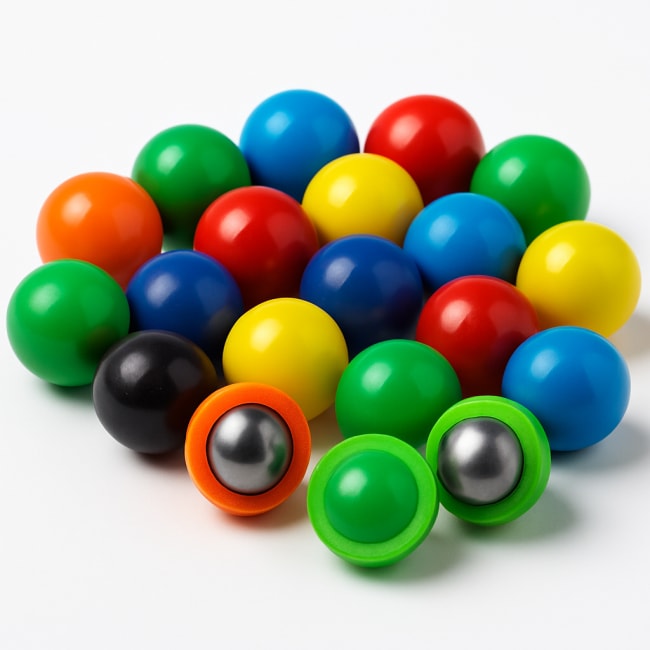
SDBALLS fournit des billes revêtues de caoutchouc avec des noyaux en acier chromé, acier inoxydable, nylon ou nylon creux, et des matériaux de revêtement incluant CR, EPDM, EPM, FKM, NBR, NR, PUR, SBR, TPV et silicone. Les diamètres standards disponibles vont de 16 mm à 260 mm, avec des couleurs noire, jaune ou personnalisées pour l’identification, l’assemblage OEM et l’adéquation à l’application.
| Article | Contenu de page recommandé |
| Type de produit | Billes composites revêtues de caoutchouc / billes revêtues d’élastomère |
| Matériau du Noyau | Acier chromé, acier inoxydable, nylon ou nylon creux ; choisi selon les exigences de poids, de flottabilité et de résistance. |
| Matériau de couverture | CR, EPDM, EPM, FKM, NBR, NR, PUR, SBR, TPV, silicone ; choisi selon le milieu, la température et les conditions d’usure. |
| Plage de diamètres | 16 mm – 260 mm |
| Couleur | Noir, jaune ou couleurs personnalisées |
| Poids / Flottabilité | Personnalisable par le matériau du noyau, la conception du noyau creux et le diamètre du noyau. |
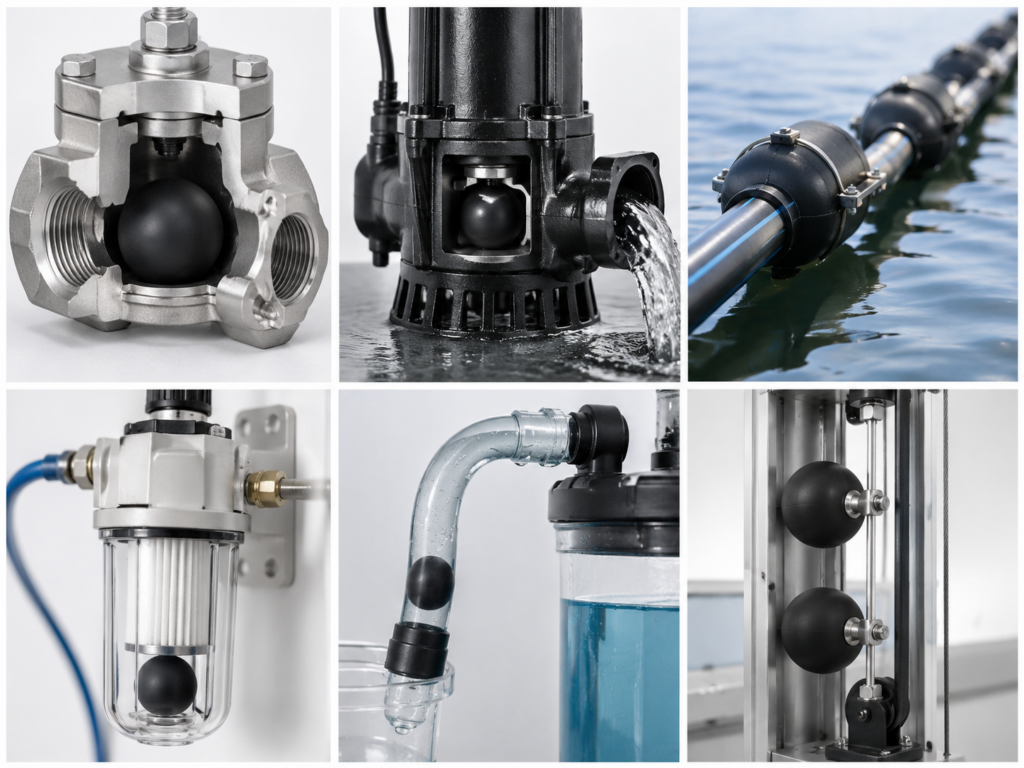
| Applications typiques | Clapets anti-retour, pompes d’effluent, lignes flottantes, systèmes de tuyauterie, systèmes de filtration d’air, siphons, contrepoids, accessoires de jouets et assemblages personnalisés de contrôle des fluides. |
| Personnalisation | Support OEM / ODM pour le type de noyau, le composé de revêtement, le diamètre, le poids, la couleur, la dureté et les performances spécifiques à l’application. |
Partager ce produit
Présentation du produit
Les billes revêtues de caoutchouc ne sont pas des billes de roulement de précision standard. Ce sont des composants sphériques composites techniques utilisés lorsque l’application exige un équilibre spécifique entre élasticité, comportement d’étanchéité, flottabilité, résistance aux chocs et poids contrôlé. Le produit consiste normalement en un noyau interne et un revêtement extérieur en élastomère. Le noyau détermine le comportement structurel et la masse, tandis que l’enveloppe en caoutchouc offre une surface de contact souple, résiliente et compatible avec le fluide.
Dans les clapets de non-retour, les pompes d’effluents, les lignes flottantes, les siphons et les systèmes fluidiques associés, la bille doit s’ouvrir, se fermer, flotter, assurer l’étanchéité ou se déplacer de manière répétée dans des conditions réelles de fonctionnement. Une bille métallique pleine peut être trop lourde, trop dure ou trop agressive pour les pièces conjuguées. Une bille entièrement en plastique peut ne pas fournir le poids ou la résilience de surface requis. Les billes revêtues de caoutchouc résolvent ce problème en combinant le choix du noyau avec celui du revêtement élastomère.
Sélection des matériaux et positionnement technique
La sélection correcte d’une bille revêtue de caoutchouc dépend de trois facteurs liés : le matériau du noyau, le composé de revêtement et le poids cible. Les noyaux en acier offrent une masse et une stabilité structurelle plus élevées. Des noyaux en acier inoxydable peuvent être utilisés lorsque la résistance à la corrosion est requise. Les noyaux en nylon plein et en nylon creux réduisent le poids spécifique et favorisent la flottabilité dans de nombreux liquides. En ajustant le diamètre et le matériau du noyau, SDBALLS peut répondre aux exigences spécifiques de poids et de flottabilité des clients.
Le choix du matériau de revêtement est tout aussi important. L’EPDM est souvent choisi pour les applications en contact avec l’eau et les expositions atmosphériques, le NBR pour les applications en présence d’huile, le FKM pour une résistance chimique et thermique plus élevée, le silicone pour sa flexibilité et sa résistance en température, le PUR pour sa résistance à l’usure, et d’autres élastomères tels que le CR, NR, SBR, EPM ou TPV selon le fluide de service et les exigences mécaniques. Le choix final du matériau doit être confirmé en fonction du liquide réel, de la température, de la pression, de la fréquence des mouvements et des conditions d’étanchéité.
Avantages Clés pour les Acheteurs
- Poids et flottabilité contrôlés par le choix d’un noyau en acier, acier inoxydable, nylon plein ou nylon creux.
- Surface en caoutchouc résiliente pour le contact d’étanchéité, le cyclage répété et la réduction des dommages sur les composants conjugués.
- Large gamme d’options d’élastomères pour différents fluides, températures et environnements d’usure.
- Capacité de grand diamètre, de 16 mm à 260 mm, pour vannes, pompes, lignes flottantes, siphons et équipements industriels.
- Personnalisation des couleurs pour l’identification des produits, le tri en maintenance et le contrôle d’assemblage OEM.
- Personnalisation OEM / ODM flexible pour le diamètre du noyau, le matériau de revêtement, la dureté, la couleur, la taille et le poids cible.
- Alternative pratique aux billes en caoutchouc plein, aux billes en plastique ou aux billes métalliques lorsque l’application nécessite à la fois une masse contrôlée et une surface de contact souple.
Options de matériaux pour noyau et revêtement
| Option | Objectif | Note typique de l'acheteur |
| Noyau en acier chromé | Masse plus élevée et structure interne stable | À utiliser lorsque la corrosion n'est pas la principale préoccupation et qu'un comportement de balle plus lourd est requis. |
| Noyau en acier inoxydable | Masse plus une meilleure résistance à la corrosion | Adapté aux systèmes aqueux ou légèrement corrosifs lorsqu'un noyau métallique est nécessaire. |
| Noyau en nylon | Poids réduit et bon comportement de noyau non métallique | Utile pour les applications de faible poids spécifique et de flottaison. |
| Noyau en nylon creux | Réduction de poids maximale et ajustement de la flottabilité | Recommandé lorsque le comportement flottant est une exigence fonctionnelle clé. |
| Revêtement en EPDM | Utilisations pour l'eau, les intempéries et de nombreux contrôles de fluides | Couramment sélectionné pour les systèmes liés à l'eau et aux eaux usées. |
| Revêtement en NBR | Environnements liés au pétrole | À considérer lorsque le fluide de travail contient de l'huile ou des liquides similaires au carburant. |
| Revêtement en FKM | Résistance chimique et à la température plus élevée | À utiliser pour des environnements chimiques ou thermiques exigeants après vérification de la compatibilité. |
| Revêtement en PUR | Résistance à l'usure et contact dynamique | Adapté lorsque la résistance à l'abrasion et les mouvements répétés sont importants. |
| Revêtement en silicone | Flexibilité et performances thermiques pour des températures spécifiques | Utile pour les exigences particulières d'étanchéité ou liées à la température. |
| Revêtement CR / NR / SBR / EPM / TPV | Options d'élastomère spécifiques à l'application | Sélectionner en fonction du fluide, de l'élasticité, de l'usure, du coût et de l'environnement de fonctionnement. |
Applications et adéquation
| Application | Niveau d'ajustement | Pourquoi c'est adapté / Note à l'acheteur |
| Clapets anti-retour | Très bon | La surface revêtue favorise l'étanchéité et les cycles répétés ; la masse du noyau peut être ajustée pour le comportement à l'ouverture et à la fermeture. |
| Pompes à effluent | Très bon | Le revêtement en caoutchouc offre une durabilité dans le mouvement dynamique des fluides ; une masse spécifique réduite peut favoriser la flottaison ou la stabilité du mouvement. |
| Lignes flottantes et systèmes de tuyauterie | Très bon | Les options de noyau en nylon ou en nylon creux aident à favoriser le comportement flottant dans de nombreux liquides. |
| Systèmes de filtration d'air | Bien | Convient lorsque la flottabilité, un contact souple ou un mouvement contrôlé sont requis. |
| Siphons et systèmes de transfert | Bien | Peut favoriser un mouvement stable et un comportement d'étanchéité lorsque le diamètre et le poids sont correctement spécifiés. |
| Contrepoids et éléments d'équilibrage | Bien | Le poids exact peut être ciblé par le choix du matériau du noyau et de son diamètre. |
| Accessoires de jouets et assemblages non industriels | Dépendant de l'application | La couleur, la souplesse et le poids peuvent être personnalisés ; confirmer séparément les exigences de sécurité et réglementaires. |
| Roulements de précision à haute vitesse | Non recommandé | Les billes revêtues de caoutchouc sont des composants composites techniques, et non des billes de roulement de précision pour applications à fatigue à haute vitesse. |
| Service avec produits chimiques agressifs | Conditionnel | Sélectionner les revêtements FKM, EPDM, NBR, silicone ou autres uniquement après avoir confirmé la compatibilité chimique et la température de fonctionnement. |
Guide de sélection concurrentielle des matériaux
| Option de matériau | Résistance typique | Limitation | Quand recommander |
| Billes revêtues de caoutchouc | Poids du noyau contrôlé, surface d'étanchéité résiliente, matériau de revêtement personnalisable | Nécessite une sélection correcte du mélange de revêtement ; ne convient pas aux applications de roulement à haute vitesse | Clapets anti-retour, pompes, lignes flottantes, siphons, contrepoids et systèmes de régulation de fluide sur mesure |
| Billes en caoutchouc plein | Construction simple en élastomère et surface souple | Moins de contrôle sur le poids interne exact et la flottabilité | Applications simples d'étanchéité ou d'amortissement où le poids du noyau n'est pas critique |
| boules en plastique | Léger, résistant à la corrosion, économique | Peut manquer de résilience d'étanchéité ou de contrôle de masse | Vannes à flotteur, vannes légères et assemblages à faible charge où une surface en caoutchouc n'est pas nécessaire |
| Billes en acier inoxydable | Option métallique dure, durable et résistante à la corrosion | Trop lourd ou trop dur pour de nombreux systèmes d'étanchéité ou de flottaison | Applications de vannes ou de pompes nécessitant la résistance du métal et à la corrosion |
| Billes en céramique | Résistant à l'usure, à la corrosion, non métallique | Surface dure ; peut ne pas fournir une étanchéité souple ou une absorption des chocs | Vannes chimiques, compteurs de précision et environnements difficiles où le revêtement élastomère n'est pas requis |
Fabrication et contrôle des processus
La production de billes revêtues de caoutchouc nécessite un contrôle coordonné du noyau, du composé de revêtement, du processus d'adhésion, des conditions de vulcanisation, du diamètre final, de la qualité de surface, de la couleur et du poids cible. Pour les applications sensibles au poids ou à la flottabilité, le diamètre et le matériau du noyau doivent être confirmés avant la production. Pour les applications sensibles aux fluides, le composé de caoutchouc doit être sélectionné en fonction de l'exposition chimique, de la température, de la pression et de la fréquence de mouvement.
SDBALLS prend en charge la personnalisation OEM et ODM, y compris le choix du matériau du noyau, du matériau de revêtement, de la couleur, du diamètre, du poids cible, de la dureté et de l'emballage. Pour les projets de remplacement, des dessins, échantillons, conception du siège de vanne, type de liquide, température de fonctionnement et comportement d'ouverture/fermeture requis sont utiles pour une correspondance précise des spécifications.
Contrôle qualité et inspection
Les éléments d'inspection typiques incluent le diamètre extérieur, la circularité, l'aspect de surface, l'état du revêtement, la couleur, l'adhérence du revêtement, le poids cible, la confirmation du matériau du noyau, l'état de l'emballage et la cohérence du lot. Pour les projets critiques, SDBALLS peut discuter de l'approbation d'échantillons, des rapports d'inspection, de la confirmation des matériaux, de l'étiquetage personnalisé et des tests par des tiers si nécessaire.
Étant donné que les billes revêtues de caoutchouc fonctionnent souvent à l'intérieur de pompes, de vannes et de systèmes fluidiques, les acheteurs doivent confirmer le fluide de travail réel, la température, la pression, la fréquence de cycle et les exigences d'étanchéité avant la production en série. Cela permet d'éviter une sélection incorrecte des matériaux et améliore la stabilité des commandes répétées.
Options d'emballage
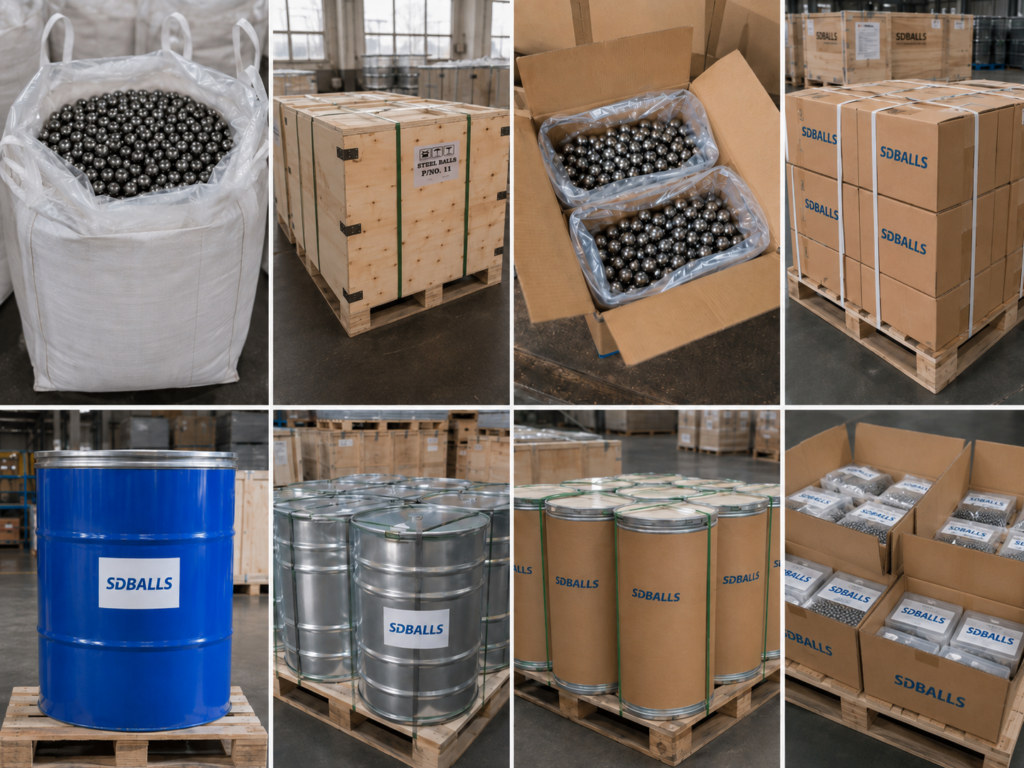
SDBALLS peut fournir des billes revêtues de caoutchouc en grands sacs, cartons, seaux, fûts, emballage d'exportation palettisé ou emballage OEM personnalisé. Les billes de grand diamètre doivent être emballées pour éviter toute déformation, dommage de surface ou compression excessive pendant le stockage et le transport. Un emballage codé par couleur ou par étiquette peut être organisé pour différentes tailles, matériaux ou numéros de pièces clients.
Comment spécifier pour un devis
Pour un devis précis, veuillez confirmer : le diamètre extérieur, le matériau du noyau, le matériau de revêtement, la couleur requise, le poids cible ou le comportement de flottabilité, la dureté du revêtement si spécifiée, le fluide ou média de travail, la température de fonctionnement, la condition de pression ou de débit, le type d'application, la quantité, la méthode d'emballage, les exigences en matière de documents d'inspection, le port de destination et le terme commercial. Si la bille est utilisée dans une vanne ou une pompe, des dessins, les dimensions du siège, des échantillons et les spécifications du fournisseur actuel sont fortement recommandés.
FAQ technique
Q : Qu'est-ce qu'une bille revêtue de caoutchouc ?
R : Une bille revêtue de caoutchouc est un composant sphérique composite avec un noyau interne et une enveloppe extérieure en caoutchouc ou élastomère. Elle est utilisée là où l'étanchéité, le comportement de flottaison, un poids contrôlé et une surface résiliente sont requis.
Q : Quels matériaux de noyau sont disponibles ?
R : Les options de noyau courantes incluent l'acier chromé, l'acier inoxydable, le nylon et le nylon creux. Le noyau est sélectionné en fonction des exigences de poids, de flottabilité, de résistance et de corrosion.
Q : Quels matériaux de revêtement SDBALLS peut-elle fournir ?
R : Les options de matériaux de revêtement incluent CR, EPDM, EPM, FKM, NBR, NR, PUR, SBR, TPV et silicone. Le matériau correct dépend du fluide de travail, de la température, de la pression et des conditions d'usure.
Q : SDBALLS peut-elle fabriquer des billes revêtues de caoutchouc à un poids spécifique ?
R : Oui. Des poids cibles particuliers peuvent être atteints en sélectionnant le matériau et le diamètre de noyau corrects. Pour les applications critiques en flottabilité, la densité du liquide et les conditions de travail doivent être fournies.
Q : Quelles tailles sont disponibles ?
R : La gamme de tailles standard est de 16 mm à 260 mm. D'autres tailles peuvent être discutées en fonction de l'outillage, du matériau de revêtement et de la quantité commandée.
Q : Les billes revêtues de caoutchouc conviennent-elles aux clapets anti-retour et aux pompes ?
R : Oui. Elles sont couramment utilisées dans les clapets anti-retour, les pompes à effluent, les conduites flottantes, les systèmes de tuyauterie, les systèmes de filtration d'air et les siphons où un mouvement contrôlé et un comportement d'étanchéité sont requis.
Q: La couleur peut-elle être personnalisée ?
R: Oui. Les couleurs standard incluent le noir et le jaune, et des couleurs personnalisées peuvent être discutées pour l'identification OEM, le tri de maintenance ou les exigences de marque.
Q : Quelles informations sont nécessaires pour un devis ?
R: Veuillez fournir le diamètre, le matériau du noyau, le matériau de couverture, la couleur, le poids cible ou l'exigence de flottabilité, le milieu de travail, la température, l'application, la quantité, l'emballage, ainsi que tout dessin ou échantillon d'information.
Produits associés
Demande de planification
Contactez-nous dès aujourd'hui pour toute demande de service. (*) Indique les champs obligatoires.