
-12.png)
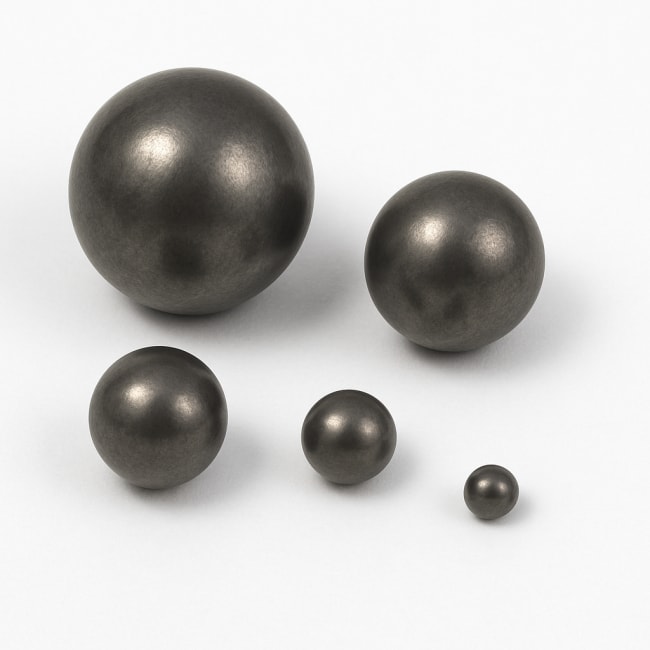
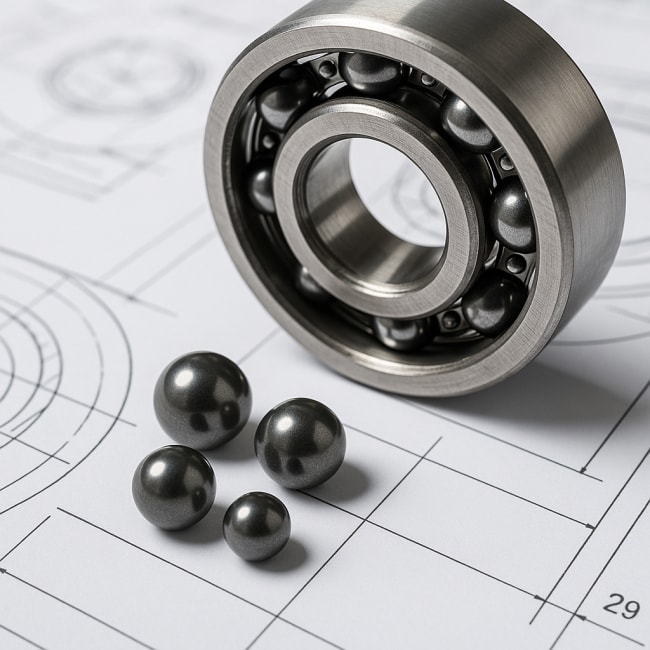
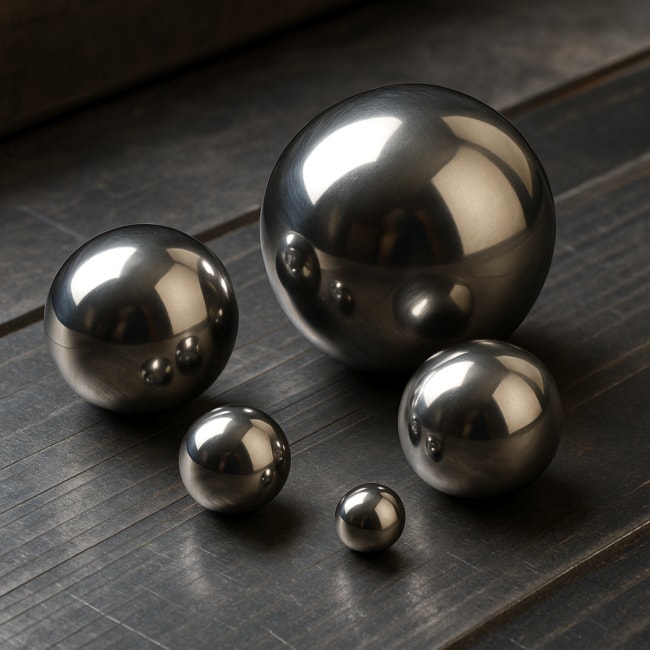
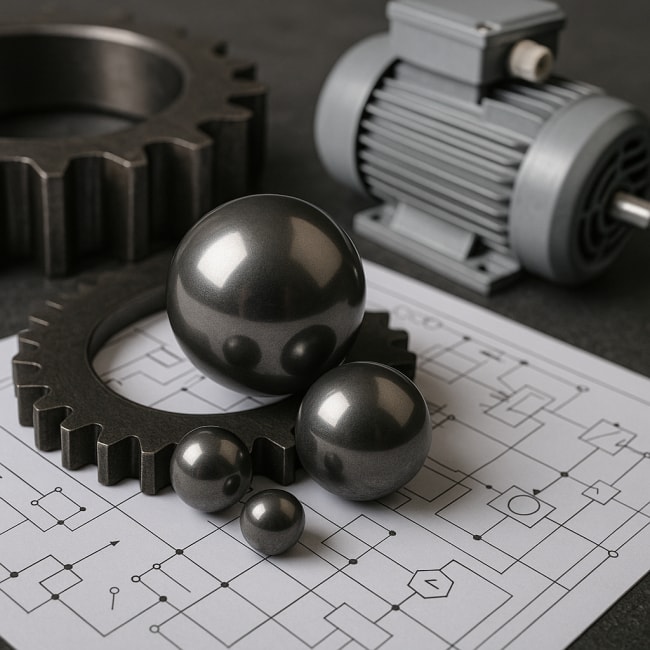
Billes en carbure de tungstène – Billes ultra-dures en carbure cémenté
Les billes en carbure de tungstène sont des billes en carbure cémenté extra-dures et haute densité, conçues pour une usure sévère, des contraintes de contact élevées, des charges de compression élevées et des conditions de service exigeantes où les billes en acier standard peuvent se déformer, s'user ou défaillir prématurément. Elles sont fabriquées en carbure de tungstène avec des systèmes de liant métallique tels que le cobalt ou le nickel, selon la résistance à l'usure, la ténacité et le comportement à la corrosion requis.
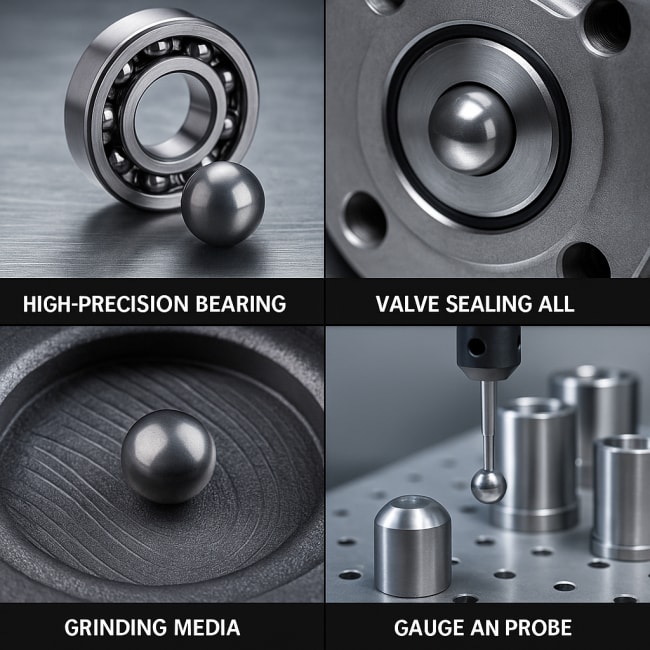
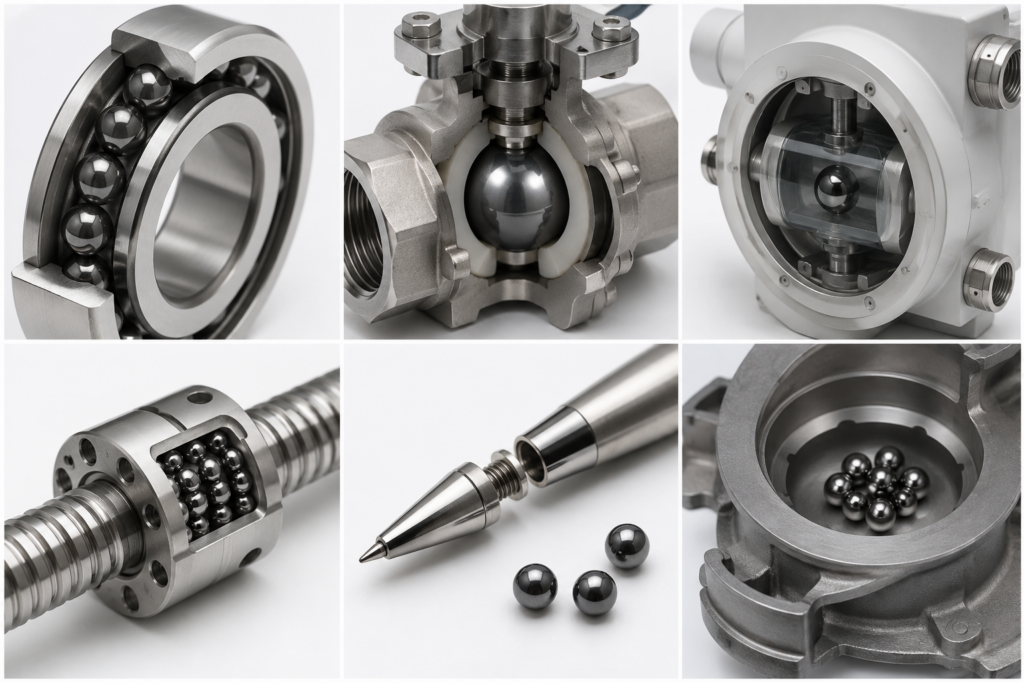
SDBALLS fournit des billes en carbure de tungstène de 1,0 mm à 120,0 mm, avec des grades de précision courants allant de G10 à G100. Elles sont largement utilisées dans les roulements pour service sévère, les vannes, les débitmètres, les vis à billes, les calibres, les traceurs, les pointes de stylo et les composants de contact de précision où la dureté, la stabilité dimensionnelle, la résistance à l'usure et une longue durée de vie sont critiques.
| Article | Contenu de page recommandé |
| Matériel | Carbure de tungstène / carbure cémenté ; les options de liant au cobalt ou au nickel peuvent être sélectionnées selon les exigences de l'application. |
| Plage de diamètres | 1,0 mm – 120,0 mm |
| Grades de précision | G10-G100 ; sélectionné selon l'application, la taille et l'exigence de tolérance. |
| Dureté | Typiquement HRA 84-95 ; la plage exacte dépend du grade de carbure et du système de liant. |
| Densité | Environ 14,6-14,95 g/cm³. |
| Module de Young | Environ 600-650 GPa, selon la composition. |
| Résistance Mécanique | Haute résistance à la compression et à la déformation ; les valeurs de résistance à la rupture transversale dépendent du grade de carbure et de la méthode d'essai. |
| Magnétisme | Peut présenter une réponse magnétique selon le système de liant ;
confirmer lorsque le comportement amagnétique est critique. |
| résistance à la corrosion | Bonne résistance dans de nombreux environnements sévères ; la sélection du liant est importante pour les milieux corrosifs. |
| Applications typiques | Roulements, vannes, débitmètres, vis à billes, calibres, traceurs, billes de stylo, pièces de contact à usure sévère. |
Partager ce produit
Présentation du produit
Les billes en carbure de tungstène sont choisies lorsque les alternatives en acier ordinaire, en acier inoxydable ou en céramique ne peuvent offrir une résistance à l'usure, une résistance à la déformation ou une stabilité de contact suffisantes. Ce matériau n'est pas un acier conventionnel et doit être décrit comme un carbure cémenté ou un métal dur au carbure de tungstène. Il combine des particules dures de carbure de tungstène avec un liant métallique, généralement du cobalt ou du nickel, pour atteindre un équilibre entre dureté, ténacité et aptitude à la fabrication.
Pour les acheteurs industriels, le principal avantage réside dans une longue durée de vie dans les zones de contact soumises à forte usure et à fortes charges. Dans les vannes, débitmètres, vis à billes, roulements et instruments de précision, les billes en carbure de tungstène contribuent à maintenir une géométrie stable et à réduire les défaillances liées à l'usure. Le matériau étant coûteux et très dense, il convient de le recommander pour les applications où le gain de performance justifie clairement le coût.
Sélection des matériaux et positionnement technique
Les billes en carbure de tungstène sont idéalement positionnées comme des billes de précision pour service sévère, destinées au contrôle de l'usure, de la charge et de la déformation. Ce produit est différent des grenailles en alliage de tungstène ou des billes en tungstène pur. Les billes en alliage de tungstène sont généralement choisies pour leur densité et leur poids, tandis que les billes en carbure de tungstène le sont principalement pour leur dureté, leur résistance à l'usure et leur durabilité au contact.
Le carbure de tungstène avec liant cobalt est couramment utilisé lorsque la ténacité et la résistance à l'usure sont requises. L'option avec liant nickel peut être envisagée lorsque la résistance à la corrosion est plus importante. Le comportement du liant pouvant influencer les performances anticorrosion, les acheteurs doivent confirmer les milieux de travail, la température et l'exposition chimique prévue avant la sélection finale du matériau.
Le carbure de tungstène peut constituer une excellente amélioration lorsque les billes d'acier échouent en raison de l'usure, de l'aplatissement, de l'abrasion ou de contraintes de contact répétées. Cependant, ce n'est pas toujours la solution la plus économique pour les applications peu exigeantes. Pour une utilisation générale dans les roulements, les billes en acier chromé AISI 52100 peuvent être plus rentables ; pour des exigences purement anticorrosion, des billes en acier inoxydable ou en céramique peuvent être plus appropriées.
Avantages Clés pour les Acheteurs
- Dureté et résistance à l'usure extrêmement élevées pour les applications de contact sévères.
- Haute densité et rigidité élevée pour une géométrie stable sous des charges exigeantes.
- Excellente résistance à la déformation par rapport à la plupart des alternatives en acier, plastique, verre ou céramique standard.
- Adapté aux milieux abrasifs, sièges de vannes haute pression, vis à billes, cales étalons et points d'usure de précision.
- Longue durée de vie dans les applications où les billes d'acier ordinaires s'usent ou tombent en panne rapidement.
- Disponible en grades de précision G10-G100 pour les exigences industrielles et OEM.
- Les options de liant peuvent être discutées pour un équilibre entre usure, ténacité et performance anticorrosion.
Applications et adéquation
| Application | Niveau d'ajustement | Remarque pour l'acheteur |
| Roulements pour service sévère | Très bon | Adapté lorsqu'une dureté, une résistance à l'usure et un contrôle de la déformation élevés sont requis ; confirmer la charge, la vitesse, la lubrification et le matériau du chemin de roulement. |
| Vannes et contrôle de débit haute pression | Très bon | Excellent pour les sièges de vannes abrasifs ou haute pression où les billes d'acier s'usent ou s'aplatissent. |
| Débitmètres et instruments de mesure | Très bon | La stabilité géométrique et la résistance à l'usure permettent des mesures répétables et une longue durée de vie. |
| Vis à billes et composants de mouvement de précision | Très bon | La rigidité élevée et la résistance à l'usure aident à maintenir la précision du contact sous un mouvement répété. |
| Cales étalons, palpeurs, crans d'arrêt, pivots et pointes | Très bon | Recommandé pour les petits points de contact où l'usure et le maintien dimensionnel sont critiques. |
| Billes de stylo à bille et composants de contact miniatures | Bien | Utile lorsqu'une surface polie et lisse ainsi qu'une longue durée de vie à l'usure sont requises. |
| Médias de broyage / dispersion | Dépendant de l'application | Peut être utilisé dans certains processus de broyage à forte usure ; confirmer les exigences en matière de contamination, de densité et de coût. |
| Applications générales à faibles charges | Limité | Souvent surspécifié ; les billes en acier chromé, acier inoxydable, céramique ou plastique peuvent être plus économiques. |
Référence de composition du matériau
Les billes en carbure de tungstène sont des produits en carbure cémenté. La composition exacte varie selon la nuance, le type de liant et le procédé de fabrication. Ce qui suit est un guide de référence pour le contenu de la page uniquement.
| Composant | Rôle typique | Remarques |
| WC – Carbure de tungstène | Phase dure primaire | Fournit une dureté extrême, une résistance à l'usure et une rigidité élevées. |
| Co – Liant cobalt | Liant métallique courant | Améliore la ténacité et caractérise les nuances courantes de billes en carbure. |
| Ni – Liant nickel | Option de liant alternative | Souvent envisagé lorsqu'une meilleure résistance à la corrosion est requise. |
| Autres éléments traces | Dépendant de la nuance | Peut varier selon les spécifications du fournisseur et les exigences de l'application. |
Remarque : La composition finale, le pourcentage de liant et la nuance de carbure doivent suivre la spécification technique, le plan, le bon de commande ou le certificat matière convenus.
Dureté, Densité & Performance Mécanique
Les billes en carbure de tungstène comptent parmi les matériaux pour billes de précision les plus durs et les plus denses fournis par SDBALLS. Leur plage de dureté typique est de HRA 84-95, et leur densité est d'environ 14,6-14,95 g/cm³. Cette densité élevée est bien supérieure à celle des billes en acier, acier inoxydable, céramique, verre ou plastique, et doit être prise en compte dans les applications dynamiques.
Le module d'élasticité élevé, souvent autour de 600-650 GPa selon la nuance, aide la bille à résister à la déformation élastique sous des charges de contact élevées. Pour la communication technique, les valeurs de résistance doivent être traitées comme des références dépendantes de la nuance de matériau plutôt que comme une affirmation universelle de « résistance à la traction ». Pour les projets critiques, SDBALLS doit confirmer avant la production la nuance de carbure, le système de liant, la dureté, la densité et la documentation de test requis.
Guide de sélection concurrentielle des matériaux
| Option de matériau | Résistance typique | Limitation | Quand recommander |
| Billes en carbure de tungstène | Dureté extrême, haute densité, haute résistance à l'usure, haute résistance à la déformation | Coût plus élevé ; très dense ; la corrosion du liant doit être examinée | Usure sévère, charges élevées, vannes, vis à billes, jauges, palpeurs, débitmètres et applications où l'acier a échoué |
| Billes en acier chromé AISI 52100 | Dureté élevée et excellente performance de roulement à moindre coût | Non résistant à la corrosion et résistance à l'usure inférieure au carbure sous abrasion sévère | Roulements de précision généraux, moteurs, galets et applications mécaniques sensibles au coût |
| Billes en acier inoxydable 440C | Bonne dureté avec résistance modérée à la corrosion inoxydable | Pas aussi dur ni résistant à l'usure que le carbure de tungstène | Applications de précision nécessitant dureté et une certaine résistance à la corrosion |
| Billes en céramique de nitrure de silicium | Faible densité, capacité à haute vitesse, isolation électrique | Coût plus élevé ; comportement à l'impact différent des métaux | Roulements hybrides à haute vitesse et systèmes de précision avancés |
| Billes en céramique d'oxyde de zirconium | Bonne ténacité céramique, résistance à la corrosion et performance amagnétique | Moins dense et généralement une rigidité inférieure au carbure | Vannes, pompes, applications médicales, instruments et applications sensibles à la corrosion |
| Billes en alliage de tungstène | Densité et poids très élevés | Non sélectionné principalement pour une dureté extrême comme le carbure | Contrepoids, applications nécessitant une densité élevée et composants lestés spéciaux |
Fabrication et contrôle des processus
Les billes en carbure de tungstène sont produites par métallurgie des poudres et des procédés de finition de précision. Les étapes typiques peuvent inclure la préparation de la poudre de carbure, la sélection du liant, le pressage ou le formage, le frittage, la rectification, le rodage, le polissage, le tri, l'inspection, le nettoyage et l'emballage. Le matériau étant extrêmement dur, la finition de précision nécessite un équipement contrôlé et une discipline de processus rigoureuse.
Pour les projets OEM, SDBALLS peut coordonner la confirmation des dimensions, la sélection de la nuance, l'examen du système de liant, l'approbation des échantillons et le contrôle des spécifications pour les commandes répétées conformément aux plans de l'acheteur, aux conditions de fonctionnement ou aux fiches techniques du fournisseur actuel.
Contrôle qualité et inspection
Les contrôles typiques incluent le diamètre, la qualité, la circularité, l'aspect de surface, la dureté, la densité, l'état de surface, la cohérence des lots et l'état de l'emballage. Pour les applications critiques, les acheteurs peuvent demander des certificats de matière, des rapports d'inspection, des enregistrements d'approbation d'échantillons ou une coordination de tests par des tiers.
Puisque les billes en carbure de tungstène sont souvent utilisées dans des assemblages de grande valeur ou sensibles aux défaillances, il est important de vérifier l'adéquation de l'application. SDBALLS recommande de confirmer la charge, les conditions d'impact, le milieu, la température, la lubrification, le matériau d'accouplement et le grade de précision avant la production en série.
Options d'emballage
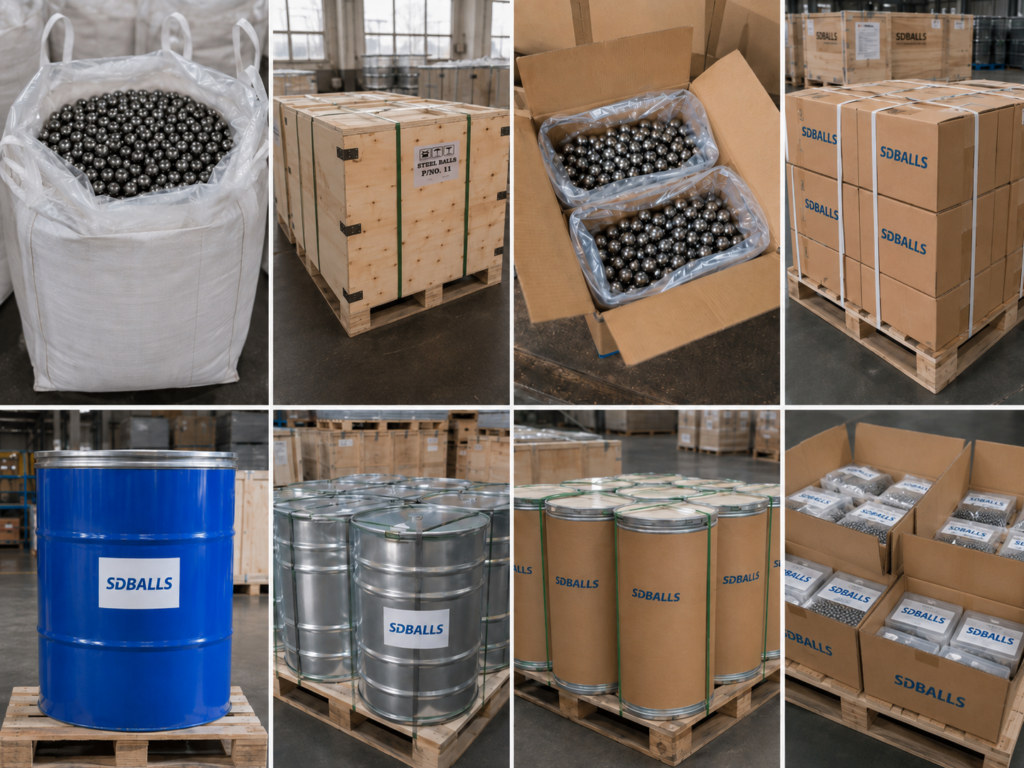
Les options d'emballage disponibles comprennent petits sacs, flacons en plastique, cartons, seaux, fûts, emballage export sur palette et étiquetage OEM personnalisé. Pour les billes en carbure de précision, un emballage propre, une séparation par taille, une identification des lots et un emballage export protecteur sont recommandés afin d'éviter les dommages superficiels pendant le transport.
Comment spécifier pour un devis
Pour établir un devis précis, veuillez confirmer : le grade de carbure de tungstène ou la préférence de liant, le diamètre en mm ou en pouces, le grade de précision, l'exigence de dureté, la quantité, l'état de surface, l'application, les conditions de charge et d'impact, le milieu de travail, la plage de température, la méthode d'emballage, les exigences en matière de documents d'inspection, le port de destination et le terme commercial.
Pour les projets de remplacement, il est conseillé aux acheteurs de fournir des plans, des échantillons, les spécifications du fournisseur actuel, des photos, des informations sur la conception du siège de vanne ou du chemin de roulement, ainsi que le mode de défaillance connu, tel que l'usure, la déformation, la corrosion ou les dommages par impact.
FAQ technique
Q: De quoi sont faites les billes en carbure de tungstène ?
R: Elles sont fabriquées à partir de particules dures de carbure de tungstène associées à un liant métallique tel que le cobalt ou le nickel. Le système de liant exact et sa composition dépendent des exigences de résistance à l'usure, de ténacité et de comportement à la corrosion.
Q : Quels sont les diamètres et les qualités que SDBALLS peut fournir ?
R: La gamme de tailles standard est de 1,0 mm à 120,0 mm, avec des grades de précision courants allant de G10 à G100. La disponibilité finale dépend de la taille, du grade, de la quantité et de la confirmation de production.
Q: Quelle dureté les billes en carbure de tungstène peuvent-elles atteindre ?
R: La dureté typique est de HRA 84-95, selon le grade de carbure et le système de liant. Pour les projets critiques, une plage de dureté spécifique doit être confirmée avant le devis et l'approbation des échantillons.
Q: Les billes en carbure de tungstène sont-elles résistantes à la corrosion ?
R: Elles présentent une bonne résistance dans de nombreux environnements sévères, mais la tenue à la corrosion dépend fortement du système de liant. Le carbure lié au nickel peut être envisagé lorsque la résistance à la corrosion est plus importante que les grades standard liés au cobalt.
Q: Les billes en carbure de tungstène peuvent-elles remplacer les billes en acier chromé ?
R: Oui, lorsque les billes en acier chromé échouent en raison d'une usure sévère, d'une déformation ou d'un contact abrasif. Cependant, le carbure de tungstène est beaucoup plus dense et plus coûteux, il doit donc être choisi pour des applications exigeantes plutôt que pour un usage ordinaire.
Q: Les billes en carbure de tungstène sont-elles magnétiques ?
R: Elles peuvent présenter une réponse magnétique selon le liant. Si une performance non magnétique est requise, veuillez confirmer cette exigence avant le devis.
Q: Quelles applications sont
A : Les applications typiques incluent les roulements pour conditions sévères, les vannes, les débitmètres, les vis à billes, les jauges, les traceurs, les arrêtoirs, les pivots et les billes de stylo.
Q : Quelles informations sont nécessaires pour un devis ?
A : Veuillez fournir le matériau ou le liant requis, le diamètre, la qualité, la dureté, la quantité, l'état de surface, l'application, l'environnement de travail, l'emballage, les documents d'inspection, la destination et les conditions commerciales.
Produits associés
Demande de planification
Contactez-nous dès aujourd'hui pour toute demande de service. (*) Indique les champs obligatoires.