
-13.png)
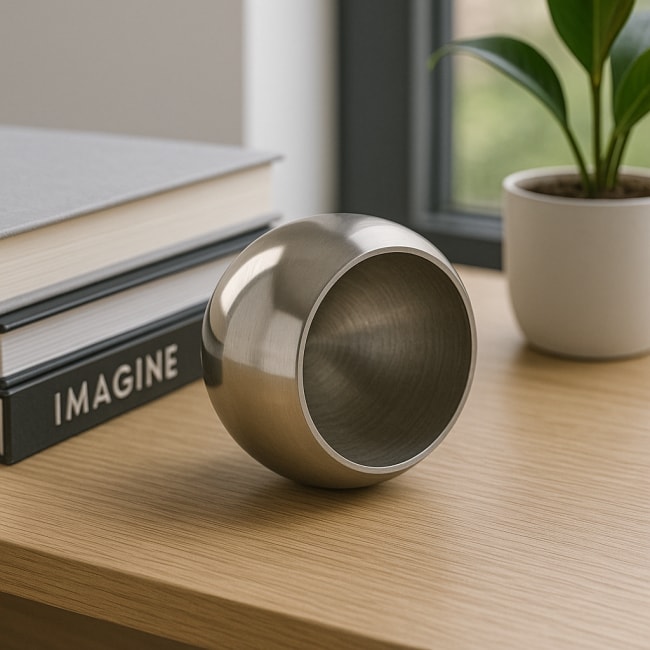
Billes creuses en acier inoxydable
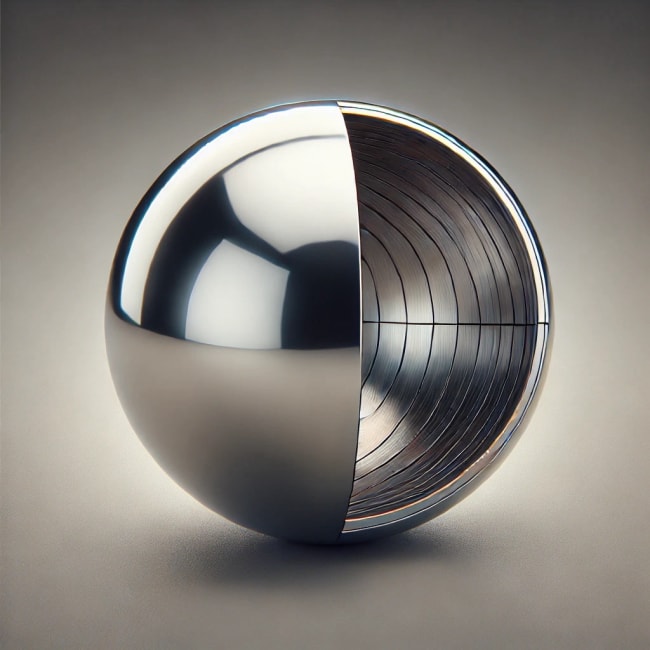
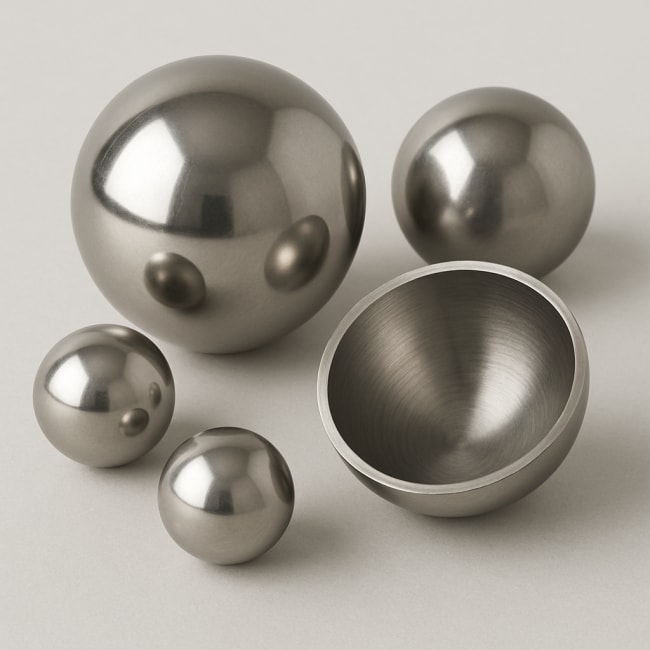
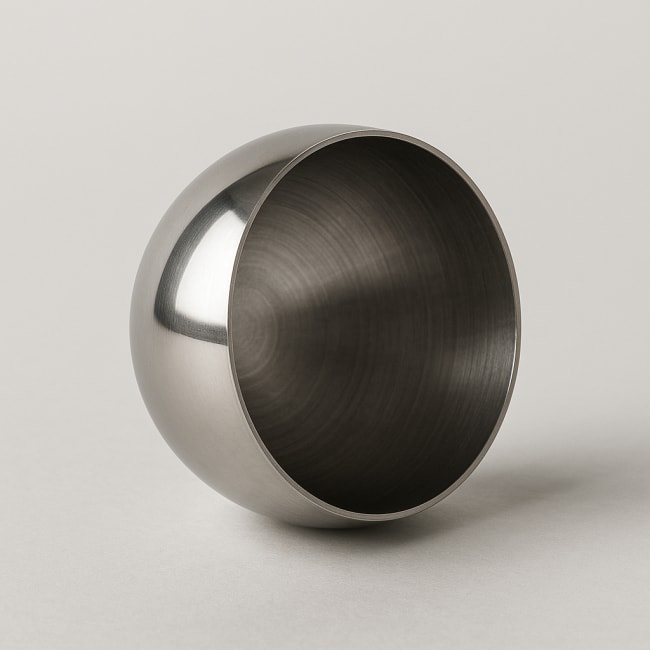
Les billes creuses en acier inoxydable sont des sphères métalliques creuses légères conçues pour les applications où un poids réduit, un aspect lisse, une résistance à la corrosion et une disponibilité en grand diamètre sont plus importants qu'une haute précision de roulement. Comparées aux billes pleines, les billes creuses peuvent réduire significativement la masse tout en conservant les caractéristiques du matériau de base telles que l'aspect inox, la résistance à la corrosion, le comportement magnétique et l'état de surface.
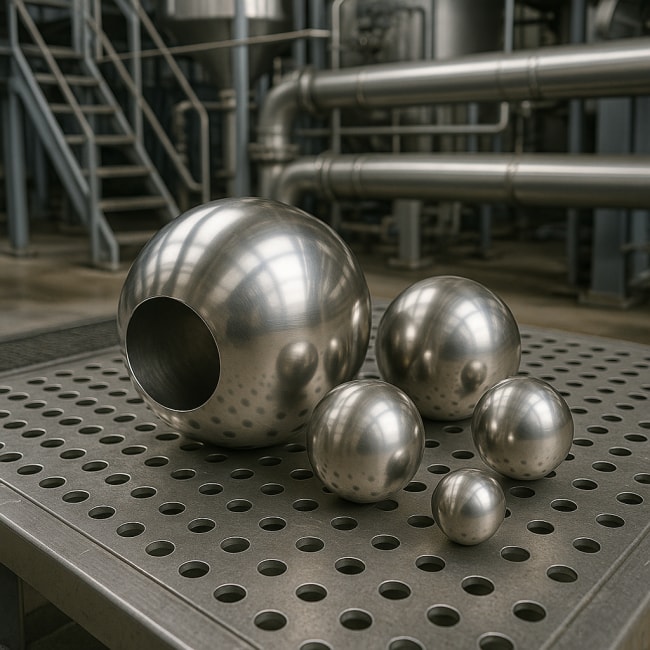
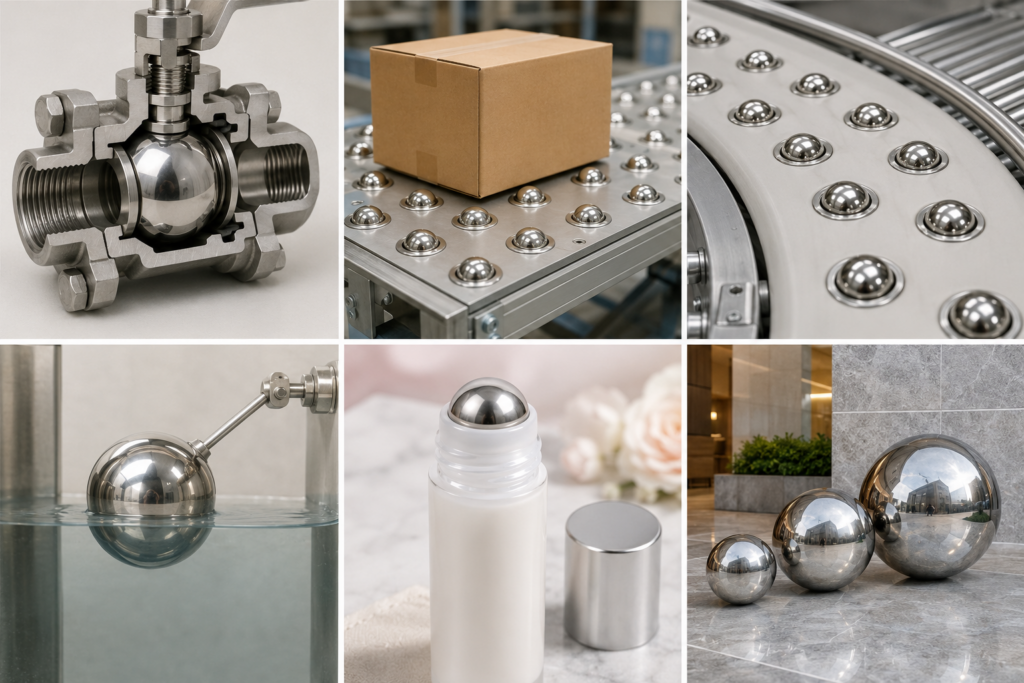
SDBALLS fournit des billes creuses en acier inoxydable, acier au carbone, aluminium, laiton et cuivre, avec des diamètres courants de 15 mm à 1000 mm et des options d'épaisseur de paroi de 0,4 mm à 5 mm. Elles sont largement utilisées dans les vannes spéciales, les unités de transfert à billes, les systèmes de convoyage, les dispositifs de flottaison, les équipements de calibration, la décoration intérieure et extérieure, les cosmétiques à bille et les grandes boules décoratives de jardin.
| Article | Contenu de page recommandé |
| Type de produit | Billes creuses métalliques soudées et polies / sphères creuses |
| Options principales de matériaux | Acier inoxydable, acier au carbone, aluminium, laiton, cuivre |
| Nuances courantes d'acier inoxydable | AISI 201, 304/304L, 316/316L, 420C, 440A, 440C |
| Plage de diamètres | Env. 15 mm – 1000 mm ;
certaines plages de petites dimensions peuvent débuter à partir de 4 mm selon le matériau et le procédé |
| Épaisseur de paroi | 0,4 mm – 5 mm, selon le matériau, le diamètre et l'application |
| Qualité de précision | Généralement G500 – G3000 |
| Finition de surface | Finition brillante, lisse, polie, polie miroir, brossée ou sur mesure sur demande |
| Applications typiques | Vannes spéciales, unités de transfert à billes, convoyeurs, dispositifs flottants, équipements d'étalonnage, décoration architecturale, boules décoratives de jardin, cosmétiques à bille |
Partager ce produit
Présentation du produit
Les billes creuses en acier inoxydable sont des sphères creuses techniques fabriquées par formage, soudage, polissage et finition de coques métalliques pour obtenir une forme sphérique. Leur objectif principal n'est pas de remplacer les billes de roulement de précision, mais de fournir une sphère légère de grand diamètre pour des applications fonctionnelles, décoratives, flottantes, de manutention ou d'emballage.
Étant donné que les billes creuses sont soudées et polies, leur qualité et leur précision dimensionnelle sont inférieures à celles des billes pleines de précision. Cela doit être clairement communiqué aux acheteurs industriels. Pour les applications telles que les roulements, la rotation à grande vitesse, les assemblages à tolérances serrées ou les éléments roulants soumis à des charges élevées, les billes en acier pleines de précision sont généralement plus adaptées. Pour les applications où le gain de poids est recherché, décoratives, flottantes, de transfert, de vannes et d'emballage, les billes creuses constituent une solution pratique et économique.
Sélection des matériaux et positionnement technique
Le matériau approprié doit être choisi en fonction de l'environnement corrosif, de l'aspect souhaité, du comportement magnétique, de l'objectif de rapport résistance/poids et du coût. L'acier inoxydable AISI 304/304L est couramment utilisé pour sa résistance générale à la corrosion et sa finition décorative. L'AISI 316/316L est privilégié lorsqu'une résistance à la corrosion améliorée est requise. L'AISI 201 peut être utilisé pour les applications décoratives ou générales sensibles au coût, lorsque les conditions de corrosion sont modérées.
Les billes creuses en acier au carbone peuvent être utilisées lorsque le coût et la forme mécanique priment sur la résistance à la rouille. Les billes creuses en aluminium conviennent aux applications légères. Les billes creuses en laiton et en cuivre sont choisies pour des exigences décoratives, conductrices ou de couleur spécifique. Pour les produits architecturaux ou de jardin extérieurs, le matériau, la finition de surface, l'épaisseur de paroi et l'exposition aux intempéries doivent être confirmés avant la production.
Données techniques et options de dimensions
Le tableau suivant résume les gammes typiques de billes creuses disponibles à titre de référence pour le site web. La disponibilité finale dépend du matériau, du diamètre, de l'épaisseur de paroi, de la méthode de soudage, des exigences de polissage et de la quantité commandée.
| Matériau / Type | Plage de diamètres | Options d'épaisseur de paroi | Aspect de surface | Nuance typique |
| Acier au carbone AISI 1010/1015 | 25 – 1000 mm | 1,5 / 2,0 / 2,5 mm | Brillant, lisse | G1000 |
| Acier inoxydable AISI 201 | 19 – 600 mm | 0,8 / 1,0 / 1,5 / 2,0 / 3,0 mm | Brillant, lisse | G1000 |
| Acier inoxydable AISI 304/304L | 4 – 15 mm | 0,6 / 0,8 / 1,0 mm | Brillant, lisse | G500 |
| Acier inoxydable AISI 304/304L | 15 – 100 mm | 0,4 / 0,6 / 0,8 / 1,0 / 1,5 / 2,0 / 3,0 / 4,0 / 5,0 mm | Brillant, lisse | G1000 |
| Acier inoxydable AISI 304/304L | 100 – 200 mm | 0,4 / 0,6 / 0,8 / 1,0 / 1,5 / 2,0 / 3,0 / 4,0 / 5,0 mm | Brillant, lisse | G2000 |
| Acier inoxydable AISI 304/304L | 200 – 400 mm | 0,4 / 0,6 / 0,8 / 1,0 / 1,5 / 2,0 / 3,0 / 4,0 / 5,0 mm | Brillant, lisse | G3000 |
| Acier inoxydable AISI 304/304L | 400 – 1200 mm | 0,8 / 1,0 / 1,5 / 2,0 / 3,0 mm | Brillant, lisse | Sur la base du projet |
| Acier inoxydable AISI 316/316L | 6 – 15 mm | 0,6 / 0,8 / 1,0 mm | Brillant, lisse | G500 |
| Acier inoxydable AISI 316/316L | 15 – 100 mm | 0,4 / 0,6 / 0,8 / 1,0 / 1,5 / 2,0 / 3,0 / 4,0 / 5,0 mm | Brillant, lisse | G1000 |
| Acier inoxydable AISI 316/316L | 100 – 200 mm | 0,4 / 0,6 / 0,8 / 1,0 / 1,5 / 2,0 / 3,0 / 4,0 / 5,0 mm | Brillant, lisse | G2000 |
| Acier inoxydable AISI 316/316L | 200 – 400 mm | 0,4 / 0,6 / 0,8 / 1,0 / 1,5 / 2,0 / 3,0 / 4,0 / 5,0 mm | Brillant, lisse | G3000 |
| Acier inoxydable AISI 420C / 440A / 440C | 15 – 50 mm | 0,4 / 0,6 / 0,8 / 1,0 / 1,5 / 2,0 / 3,0 / 4,0 / 5,0 mm | Brillant poli | G500 |
| Acier inoxydable AISI 420C / 440A / 440C | 50 – 200 mm | 0,4 / 0,6 / 0,8 / 1,0 / 1,5 / 2,0 / 3,0 / 4,0 / 5,0 mm | Brillant poli | G1000 |
| Acier inoxydable AISI 420C / 440A / 440C | 200 – 400 mm | 0,4 / 0,6 / 0,8 / 1,0 / 1,5 / 2,0 / 3,0 / 4,0 / 5,0 mm | Brillant poli | G2000 |
Remarque : Les valeurs ci-dessus sont des plages de référence pour la présentation du site Web. L'épaisseur de paroi finale, la nuance et l'aspect doivent être confirmés conformément au plan, à l'échantillon et aux exigences de la commande.
Applications et adéquation
| Application | Niveau d'ajustement | Remarque pour l'acheteur |
| Vannes spéciales et éléments de vanne à faible charge | Bien | La structure creuse réduit le poids ; confirmer la pression, la conception de l'étanchéité, l'épaisseur de paroi et la compatibilité avec les fluides. |
| Unités de transfert à billes et manutention | Bien | Une masse plus faible peut réduire l'inertie ; non destiné aux charges de roulement de haute précision. |
| Systèmes de convoyeurs et points de transfert | Bien | Utile pour les fonctions de roulement ou de transfert légères où l'aspect et le diamètre sont importants. |
| Dispositifs flottants | Très bon | La conception creuse favorise la flottabilité ; confirmer le milieu liquide, l'intégrité de l'étanchéité et l'épaisseur de paroi. |
| Équipement d'étalonnage et sphères de référence | Dépendant de l'application | Approprié lorsque de grandes sphères visibles sont nécessaires ; confirmer la tolérance et la spécification de surface. |
| Emballage cosmétique roll-on | Bien | Une surface lisse et la résistance à la corrosion sont importantes ; confirmer la taille, la finition, la propreté et l'emballage. |
| Décoration intérieure / extérieure | Très bon | La finition en acier inoxydable brillant ou poli miroir convient aux projets architecturaux et décoratifs. |
| Boules de jardin décoratives | Très bon | De grandes sphères creuses en acier inoxydable peuvent être fournies pour un usage décoratif extérieur ; le matériau et la finition doivent correspondre à l'exposition aux intempéries. |
| Roulements à grande vitesse / éléments roulants de précision | Non recommandé | Utilisez plutôt des billes de précision en acier massif, en céramique ou de qualité roulement. |
Guide de sélection des matériaux
| Option de matériau | Résistance typique | Limitation | Quand recommander |
| Billes creuses en acier inoxydable AISI 304/304L | Bonne résistance à la corrosion, aspect propre, usage décoratif et industriel courant | Moins résistant à la corrosion que le 316 dans les environnements riches en chlorures | Sphères creuses en inox général, décoration, emballage cosmétique, applications fluides légères |
| Billes creuses en acier inoxydable AISI 316/316L | Résistance à la corrosion améliorée, mieux adapté aux conditions fluides ou extérieures exigeantes | Coût plus élevé que le 304 | Extérieur, environnements chimiques ou marins, ou exigences de résistance à la corrosion plus élevées |
| Billes creuses en acier inoxydable AISI 201 | Aspect inoxydable économique | Résistance à la corrosion inférieure au 304/316 | Usage décoratif économique en environnements doux |
| Billes creuses en acier au carbone | Économique et formable | Nécessite huilage, revêtement, peinture ou placage pour la protection antirouille | Applications générales intérieures, sphères décoratives peintes, projets à coût maîtrisé |
| Billes creuses en aluminium | Très léger, non magnétique | Dureté et résistance de surface inférieures à l'acier ; la corrosion doit être évaluée | Assemblages légers et projets décoratifs |
| Billes creuses en laiton / cuivre | Couleur décorative, conductivité, comportement non magnétique | Coût de matière plus élevé et surface plus tendre | Projets décoratifs, électriques, artistiques ou de conception spéciale |
Fabrication et contrôle des processus
Les billes creuses en acier inoxydable sont généralement produites par formage de tôle ou de demi-sphères, ébavurage, soudage, meulage, polissage, nettoyage, inspection et emballage. Les grandes sphères creuses peuvent nécessiter un soudage et un polissage manuels, c'est pourquoi le produit doit être positionné comme un composant de sphère creuse plutôt qu'une bille de roulement de haute précision.
Les points clés de contrôle du processus incluent l'épaisseur du matériau, la qualité de la soudure, la circularité, le traitement du joint, le polissage de surface, l'uniformité de l'aspect et la protection de l'emballage. Pour les projets décoratifs, la finition miroir et l'aspect de surface sont particulièrement importants. Pour les applications industrielles, l'épaisseur de paroi, le risque de fuite, la compatibilité des matériaux et l'ajustement dimensionnel doivent être confirmés avant la production.
Contrôle qualité et inspection
Les éléments d'inspection typiques incluent le diamètre, l'épaisseur de paroi, la circularité, l'aspect de surface, l'état du cordon de soudure, la qualité du polissage, la nuance du matériau, l'état de l'emballage et la quantité. Pour les utilisations liées à la flottaison ou aux vannes, les clients peuvent également demander des contrôles de fuite, une inspection visuelle ou une confirmation fonctionnelle spécifique au projet.
Parce que les billes creuses ont une précision inférieure à celle des billes de précision massives, SDBALLS recommande de confirmer la tolérance acceptable, la qualité, la finition de surface et les conditions d'application avant la production en série. Pour les projets OEM, il est recommandé de fournir des dessins, des échantillons et des échantillons d'approbation.
Options d'emballage
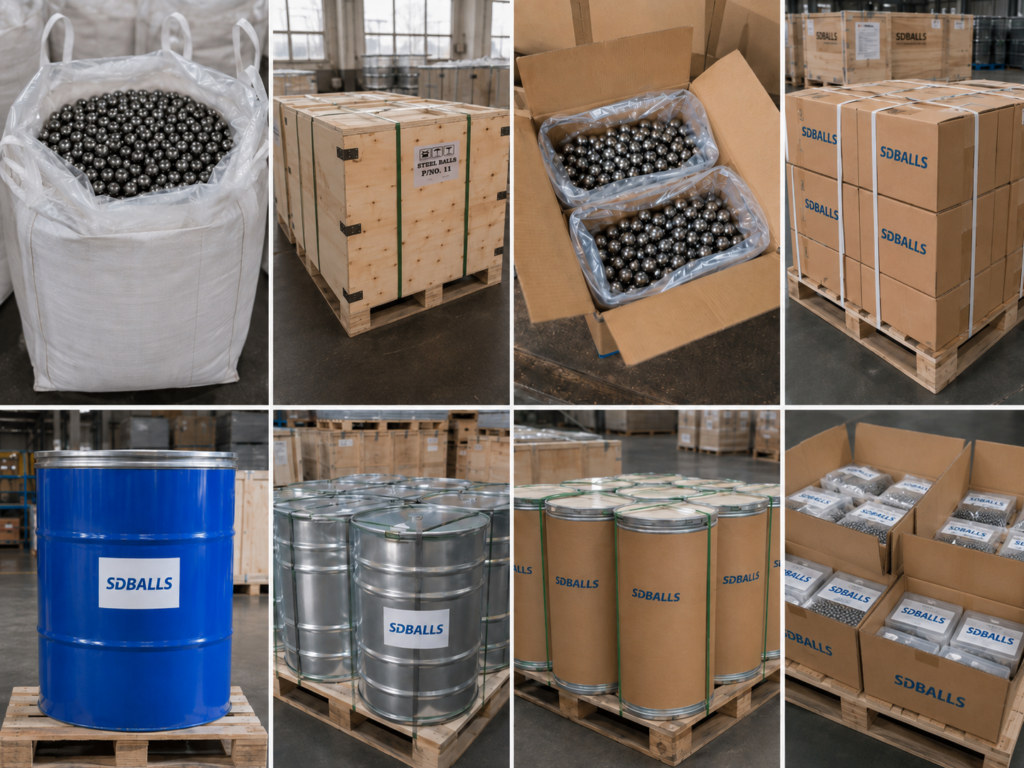
L'emballage peut être arrangé en fonction de la taille de la bille et des exigences de finition de surface. Les petites billes creuses peuvent être emballées dans des sacs, cartons, seaux ou palettes. Les grandes sphères décoratives creuses ou boules de jardin doivent être protégées individuellement avec un emballage, de la mousse, des cartons, des caisses en bois ou un emballage d'exportation palettisé pour éviter les rayures et les déformations pendant le transport.
Comment spécifier pour un devis
Pour un devis précis, veuillez confirmer : la nuance du matériau, le diamètre extérieur, l'épaisseur de paroi, la finition de surface, la tolérance ou l'exigence de qualité, l'application, si la bille doit flotter ou être étanche, la quantité, la méthode d'emballage, le dessin ou l'échantillon si disponible, le port de destination et l'incoterm. Pour les sphères creuses décoratives, veuillez également confirmer si un polissage miroir, une finition brossée, un revêtement coloré ou un emballage spécial est requis.
FAQ technique
Q : Que sont les billes creuses en acier inoxydable ?
R : Ce sont des sphères métalliques creuses fabriquées par formage, soudage, polissage et finition de coques en acier inoxydable ou autre métal. Elles sont utilisées lorsqu'un poids réduit, un grand diamètre, un aspect de surface ou une flottabilité sont requis.
Q : Les billes creuses sont-elles identiques aux billes de précision pour roulements ?
R : Non. Les billes creuses ont une précision inférieure à celle des billes pleines pour roulements en raison des étapes de soudage et de polissage. Elles ne sont pas recommandées pour les applications de roulements de précision à haute vitesse ou à forte charge.
Q : Quels matériaux SDBALLS peut-elle fournir ?
R : Les options courantes incluent les aciers inoxydables AISI 201, 304/304L, 316/316L, 420C, 440A, 440C, ainsi que l'acier au carbone, l'aluminium, le laiton et le cuivre.
Q : Quels diamètres et épaisseurs de paroi sont disponibles ?
R : Les diamètres courants vont de 15 mm à 1000 mm, avec des options d'épaisseur de paroi de 0,4 mm à 5 mm. Certaines plages peuvent varier selon le matériau.
Q : Les billes creuses peuvent-elles être utilisées en extérieur ?
R : Oui, en particulier les billes creuses en acier inoxydable et les boules décoratives de jardin. Pour les environnements extérieurs ou côtiers, l'acier inoxydable 316/316L peut être préféré au 201 ou 304, selon l'exposition.
Q : Les billes creuses peuvent-elles flotter ?
R : Elles peuvent être utilisées dans des dispositifs flottants lorsque la structure, l'épaisseur de paroi, le diamètre, la qualité de l'étanchéité et le milieu liquide sont appropriés. La performance de flottaison doit être confirmée avant la fabrication.
Q : Quelles finitions de surface sont disponibles ?
R : Les finitions courantes incluent brillant, lisse, poli, poli miroir, brossé et des finitions décoratives sur mesure. La finition finale dépend du matériau, de la taille et de l'application.
Q : Quelles informations sont nécessaires pour un devis ?
R : Veuillez fournir le matériau, le diamètre, l'épaisseur de paroi, la finition de surface, la quantité, l'application, la tolérance ou l'exigence de qualité, l'emballage, un dessin ou un échantillon si disponible, la destination et l'incoterm.
Produits associés
Demande de planification
Contactez-nous dès aujourd'hui pour toute demande de service. (*) Indique les champs obligatoires.