
-2.png)
-2.png)
-2.png)
-2.png)
-2.png)
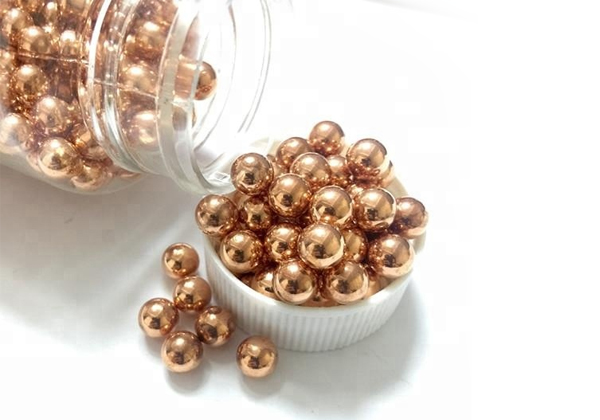
Pure Copper Balls / C11000 Copper Balls
Pure Copper Balls are high-conductivity copper spheres designed for electrical, thermal, instrumentation, valve, metering, decorative, and precision assembly applications. Compared with steel balls, copper balls are softer, non-magnetic, easier to drill or machine, and provide excellent thermal and electrical conductivity.
SDBALLS supplies high-purity copper balls, commonly specified as C11000 / CW004A / T2 copper, in metric and inch sizes for OEM production, distributor stocking, and custom component projects. Available options include polished copper balls, drilled copper balls, decorative copper balls, and application-specific packing according to buyer drawings, samples, and inspection requirements.
| Przedmiot | Recommended Page Content |
| Nazwa produktu | Pure copper balls / precision copper balls / conductive copper spheres |
| Tworzywo | High-purity copper, commonly C11000 / CW004A / T2 copper or equivalent |
| Diameter Range | Commonly 0.5 mm – 50.8 mm |
| Klasy precyzji | G100, G200, G500, G1000 |
| Twardość | Soft copper material; typical hardness depends on material temper and process condition |
| Typowe zastosowania | Electrical contacts, conductive assemblies, valves, sprayers, pressure gauges, water meters, instruments, carburetors, jewelry, decorative hardware, mobile accessories, appliances |
Udostępnij ten produkt
Przegląd produktu
Pure Copper Balls are soft, conductive, non-magnetic metal balls used when a component requires electrical conductivity, thermal conductivity, machinability, corrosion resistance in suitable environments, and an attractive copper appearance. They are commonly selected for electrical devices, instruments, metering systems, valves, pressure gauges, sprayers, carburetors, jewelry, decorative accessories, mobile accessories, and appliance components.
Unlike chrome steel or hardened stainless steel balls, copper balls are not selected for high-load bearing fatigue performance. Their value is in conductivity, workability, formability, and easy secondary processing such as drilling, polishing, and custom finishing. For applications requiring high hardness, high wear resistance, or precision bearing performance, SDBALLS should recommend chrome steel, hardened stainless steel, ceramic, or tungsten carbide alternatives.
Material Selection & Technical Positioning
Copper balls should be positioned as conductive and easily machinable precision metal balls, not as general bearing balls. High-purity copper provides excellent electrical and thermal conductivity, while the soft material structure allows easier drilling, forming, and finishing compared with hard steel or stainless steel balls.
For international buyers, the most common material references include C11000 copper, CW004A, Cu-ETP, T2 copper, and equivalent high-conductivity copper grades. Final grade selection should be confirmed by drawing, purchase specification, conductivity requirement, and material certificate request.
| Buyer Requirement | Recommended Direction | Selection Note |
| High electrical conductivity | Pure copper balls / C11000 copper balls | Best choice when conductivity is the main requirement |
| Easy drilling or machining | Pure copper balls | Soft copper reduces tool wear compared with hardened steel |
| Decorative copper appearance | Polished copper balls | Confirm finish, color consistency, and anti-oxidation packing |
| Higher strength than pure copper | Brass, bronze, phosphor bronze or aluminum bronze balls | Use alloy balls when strength and wear resistance are more important than maximum conductivity |
| Corrosion in seawater or aggressive chemicals | Stainless steel, ceramic, titanium or special alloy balls | Pure copper is not suitable for all corrosive media |
| High precision bearing load | Chrome steel / 440C stainless steel balls | Copper is too soft for high-load or high-speed bearing use |
Dane techniczne
| Parameter | Typical Content for Copper Balls |
| Tworzywo | High-purity copper; commonly C11000 / CW004A / T2 copper or equivalent, subject to order confirmation |
| Średnica | 1.5 mm – 50.8 mm commonly available; custom sizes by confirmation |
| Stopień | Common grades G100, G200, G500, G1000; selected according to application and cost target |
| Gęstość | Approx. 8.9 g/cm3 |
| Magnetyzm | Non-magnetic |
| Conductivity | Doskonała przewodność elektryczna i cieplna |
| Twardość | Soft metal; final hardness depends on copper grade, temper, and production condition |
| Powierzchnia | Natural copper color, bright polished, passivated, oiled, or customized finish |
| Documentation | Material certificate, inspection report, RoHS / third-party testing where required |
| Electrical / Thermal Conductivity | Excellent electrical and thermal conductivity compared with steel and stainless steel balls |
| Odporność na korozję | Good in many indoor, industrial, steam, alkaline, and neutral saline environments; not recommended for oxidizing acids, halogens, sulfides, ammonia, or seawater |
| Wykończenie powierzchni | Plain, polished, bright finish, oiled, passivated or customized according to application |
Chemical Composition / Material Composition
The following composition table is a reference for high-conductivity pure copper balls. Final composition should follow the agreed material standard, purchase order, drawing, and material certificate.
| Material Grade | Cu Content | Typical Notes |
| C11000 / ETP Copper | 99.90% min. Cu including Ag | High electrical conductivity copper; widely used in electrical and conductive parts |
| T2 Copper | Approx. 99.90% min. Cu | Common Chinese high-purity copper grade for conductive and mechanical parts |
| CW004A / Cu-ETP | High-purity copper | European equivalent commonly used for electrical applications |
| 99.99% Copper | Ultra-high purity option when specified | Available only when project specification and supply condition are confirmed |
International Grade Equivalents
| Region / Standard | Common Equivalent | Notes |
| USA / ASTM-UNS | C11000 | Electrolytic tough pitch copper / high conductivity copper |
| Europe / EN | CW004A / Cu-ETP | Common electrical copper designation |
| Germany | 2.0065 | Equivalent copper material designation |
| China | T2 | Widely used high-purity copper material |
| Japan | C1100 | Common Japanese equivalent for high-conductivity copper |
| Wielka Brytania | C101 | Traditional reference for high conductivity copper |
| Russia | M0 / M1 references may apply | Confirm exact project requirement before quotation |
Performance & Corrosion Resistance
Copper balls provide excellent electrical and thermal conductivity and good corrosion resistance in many practical industrial environments. They can perform well in indoor atmospheric conditions, steam, alkaline environments, and neutral saline solutions when the complete working conditions are suitable.
Copper balls should not be recommended for all corrosive media. They are generally not suitable for oxidizing acids, halogens, sulfides, ammonia exposure, or seawater. For such environments, stainless steel balls, ceramic balls, titanium balls, or other corrosion-resistant materials may be more appropriate.
| Performance Factor | Copper Ball Positioning | Buyer Note |
| Przewodność elektryczna | Doskonały | Suitable for conductive elements and electrical contact-related designs |
| Przewodność cieplna | Doskonały | Useful for heat transfer and thermal response applications |
| Machinability / drilling | Very good | Soft copper supports secondary processing |
| Odporność na zużycie | Limited compared with hardened steel | Avoid high-load rolling or abrasive wear unless application is verified |
| Magnetyzm | Non-magnetic | Useful where magnetic interference should be avoided |
| Seawater resistance | Not recommended | Consider 316/316L stainless, ceramic, or special alloy alternatives |
| Appearance | Attractive copper color | May oxidize over time; confirm finish and packing expectations |
Applications & Application Fit
Copper balls are best used where conductivity, machinability, non-magnetic behavior, soft metal contact, and copper appearance are more important than bearing-grade hardness. SDBALLS can help buyers confirm whether pure copper, brass, bronze, stainless steel, or other materials are more suitable for the actual working environment.
| Aplikacja | Fit Level | Why It Fits | Buyer Note |
| Electrical contacts / conductive assemblies | Very good | Excellent conductivity and non-magnetic behavior | Confirm conductivity, surface finish, and contact pressure |
| Pressure gauges / instruments | Very good | Stable spherical form and easy integration into precision assemblies | Confirm grade, diameter tolerance, and surface requirement |
| Water meters / metering systems | Dobry | Copper performs in many neutral water-related environments | Confirm water chemistry and corrosion exposure |
| Valves and sprayers | Dobry | Soft metal and corrosion profile can suit selected flow-control parts | Confirm media, pressure, sealing and wear condition |
| Carburetors and small mechanisms | Dobry | Easy drilling and machining supports component integration | Confirm fuel/media compatibility |
| Jewelry and decorative hardware | Very good | Natural copper appearance and polishability | Confirm oxidation expectations and packaging |
| Mobile accessories / appliances | Dobry | Conductivity and appearance can support functional and decorative roles | Confirm assembly method and finish durability |
| High-speed bearings | Limited | Copper is too soft for typical bearing fatigue service | Use chrome steel or hardened stainless steel balls |
| Seawater / ammonia / oxidizing acid environment | Not recommended | Copper has known corrosion limitations in these media | Consider 316 stainless, ceramic, or special alloys |
Material Selection Guide
| Material Option | Typical Strength | Limitation | When to Recommend |
| Pure copper balls | Best conductivity, soft, non-magnetic, easy to drill, attractive copper color | Low hardness and limited wear resistance | Electrical, thermal, decorative, instrument and metering applications |
| Brass balls | Better strength than pure copper, good corrosion resistance, conductive, non-magnetic | Lower conductivity than pure copper | Electrical devices, valves, petrochemical and consumer hardware when strength is needed |
| Phosphor bronze balls | Good wear resistance, fatigue strength and corrosion resistance | Higher cost; lower conductivity than pure copper | Special valves, pumps, check valves, special bearings, electric conductors |
| Aluminum bronze balls | Higher strength and wear resistance among copper alloys | More specialized supply and cost | Heavy-duty valve or marine-related mechanical applications after confirmation |
| Stainless steel balls | Better corrosion resistance in many wet or hygienic applications | Lower conductivity and harder to machine than copper | Food, medical, chemical, humid or corrosive environments |
| Chrome steel balls | High hardness and bearing performance | Not corrosion resistant; conductive value not the main reason to choose it | High-load, high-precision bearing and rolling applications |
Manufacturing & Process Control
Copper ball production requires careful control because copper is much softer than hardened steel. The forming, grinding, lapping, polishing, cleaning, and packing process should protect spherical accuracy, surface appearance, and material cleanliness.
- Raw material confirmation according to agreed copper grade or buyer drawing.
- Forming and sizing process controlled to support roundness and dimensional consistency.
- Grinding or lapping selected according to required grade and application tolerance.
- Polishing process controlled for bright copper appearance and smooth surface finish.
- Cleaning and packing designed to reduce stains, surface marks, and oxidation risk during storage and shipment.
- Custom drilled, polished, decorative or special-finish copper balls can be discussed according to drawing and sample approval.
Quality Control & Inspection
For copper balls used in instruments, metering assemblies, electrical devices, and decorative components, quality control should focus on diameter consistency, surface appearance, material confirmation, roundness, cleanliness, and packing protection.
| Inspection Item | Purpose |
| Średnica i tolerancja | Confirm fit with valve, instrument, meter, accessory, or assembly design |
| Roundness / grade | Support smooth movement and consistent component behavior |
| Surface appearance | Check scratches, dents, stains, oxidation marks, and polishing consistency |
| Material confirmation | Verify copper grade or equivalent material requirement |
| Hardness / temper when required | Confirm process condition for machining or functional contact |
| Conductivity testing when required | Support electrical or thermal application validation |
| Packing inspection | Protect copper surface during export handling and long-distance shipment |
| Documentation | Inspection report, material certificate, RoHS or third-party test according to project needs |
Packing Options
Copper balls are more sensitive to surface marks and oxidation than many steel balls, so packing should be selected according to finish requirement, shipment distance, storage time, and customer inspection standard.
| Packing Option | Suitable For | Notes |
| Small plastic bags / bottles | Small-size samples, distributor packs, jewelry or accessory projects | Easy counting and handling |
| Cartons with inner bags | General export supply | Common economical packing for bulk orders |
| Pails or drums | Industrial bulk supply | Suitable for larger quantity and repeated production use |
| Palletized export packing | Heavy shipments and distributor stocking | Improves handling and warehouse control |
| Anti-oxidation / protective packing | Bright polished or decorative copper balls | Recommended when appearance is critical |
| Customized OEM labeling | Brand, batch, material, size and quantity identification | Useful for distributors and OEM production lines |
How to Specify for Quotation
To quote copper balls accurately, please confirm the following information:
- Material grade or equivalent standard, such as C11000, CW004A, T2, C1100 or 99.99% copper if required.
- Diameter in mm or inch and required tolerance / precision grade.
- Required surface finish, such as plain copper, bright polished, passivated, oiled, anti-oxidation packing or decorative finish.
- Application details, including electrical, thermal, valve, meter, jewelry, decorative, instrument or machined component use.
- Working environment, including water, steam, alkali, neutral saline solution, chemical exposure, seawater, ammonia or other media.
- Whether drilling, machining, special holes, flattening, plating or secondary processing is required.
- Quantity, packing method, labeling requirement, destination port, trade term and requested lead time.
- Inspection documents, material certificate, conductivity report, RoHS, third-party testing or sample approval requirements.
Technical FAQ
Q: Are copper balls magnetic?
A: No. Pure copper balls are non-magnetic, which makes them suitable for applications where magnetic interference should be avoided.
Q: What is the main advantage of pure copper balls?
A: The main advantages are excellent electrical conductivity, excellent thermal conductivity, softness, machinability, non-magnetic behavior, and a natural copper appearance.
Q: Are copper balls suitable for bearings?
A: Copper balls are generally not suitable for high-load or high-speed bearing applications because copper is soft. For bearing use, chrome steel, 440C stainless steel, ceramic, or other harder materials are usually more suitable.
Q: Can copper balls be drilled or machined?
A: Yes. Copper balls are much easier to drill and machine than hardened steel balls. Please confirm hole size, hole type, drawing, tolerance, and surface requirements before quotation.
Q: Do copper balls resist corrosion?
A: Copper balls have good corrosion resistance in many indoor, industrial, steam, alkaline, and neutral saline environments. They are not recommended for oxidizing acids, halogens, sulfides, ammonia, or seawater.
Q: What is the difference between pure copper balls and brass balls?
A: Pure copper balls provide higher electrical and thermal conductivity and are softer. Brass balls generally offer better strength and wear resistance but lower conductivity than pure copper.
Q: Can SDBALLS supply polished copper balls?
A: Yes. SDBALLS can supply polished copper balls and appearance-focused packing when the surface finish and oxidation control requirements are confirmed in advance.
Q: What information is needed for a copper ball quotation?
A: Please provide material grade, diameter, grade or tolerance, surface finish, quantity, application, working environment, packing, inspection documents, destination and trade term.
Zaplanuj żądanie
Skontaktuj się z nami już dziś w sprawie dowolnej usługi. (*) Pola wymagane.