Plastic Balls for Level Indicators in the Global Market
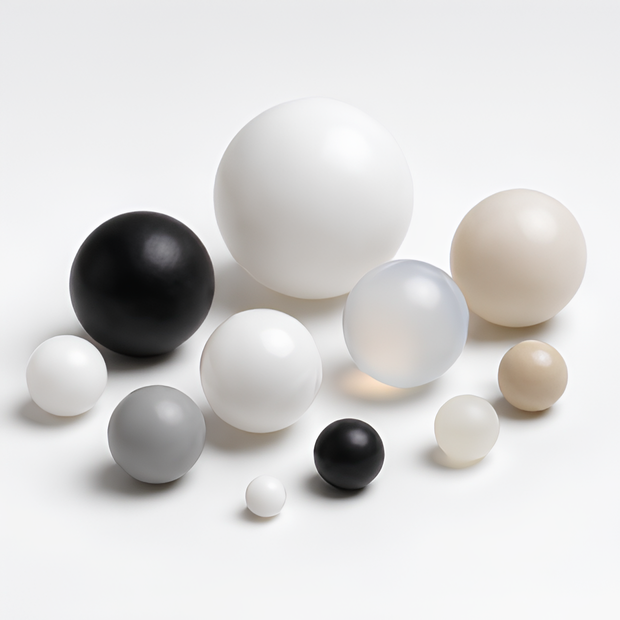
Plastic Balls for Level Indicators in the Global Market
Quick Answer

Plastic balls used in sight glass and level indicator systems are small, visible, chemically compatible spheres that float, sink, or move with liquid flow to show liquid level, flow status, interface position, or system activity. For most global buyers, the correct selection depends on five practical factors: material compatibility, density and buoyancy, temperature and pressure conditions, visibility inside the indicator body, and long-term maintenance requirements.
Polypropylene, commonly called PP, is often chosen for economical water-based and chemical tank indicators because it is lightweight and has good chemical resistance. PTFE is preferred for aggressive chemicals, high-purity applications, and elevated temperatures. Nylon offers strength and wear resistance but absorbs moisture and may not be suitable for all aqueous or dimensional-critical systems. PVC is visible, cost-effective, and chemically resistant in many low- to moderate-temperature environments, but it has lower heat capability than PTFE and some engineering plastics.
In the Global Market, procurement teams in industrial hubs such as Houston, Rotterdam, Singapore, Dubai, Mumbai, Shanghai, Busan, Hamburg, São Paulo, and Melbourne increasingly request not only plastic balls but also documentation, material traceability, consistent sizing, color options, and support for indicator housing integration. Buyers should verify the liquid’s specific gravity, operating temperature, pressure, chemical concentration, required ball diameter, housing clearance, seal material, and cleaning schedule before confirming an order.
A reliable supplier should help compare PP, PTFE, nylon, and PVC balls against the actual process medium rather than recommending a generic plastic. The best choice for a water tank in a food plant may be completely different from the right ball for an acid dosing sight glass, marine fuel indicator, chemical storage vessel, wastewater process line, or laboratory glass column. In short, the plastic ball is small, but its performance affects readability, safety, maintenance time, and process confidence.
| Selection Factor | Why It Matters | Typical Buyer Question | Risk if Ignored | Recommended Check | PP vs PTFE vs Nylon vs PVC Note |
|---|---|---|---|---|---|
| Chemical compatibility | Prevents swelling, cracking, softening, or contamination | Will the ball survive the process liquid? | False level indication or ball failure | Check chemical, concentration, and exposure time | PTFE usually leads for aggressive media; PP and PVC are economical in suitable liquids |
| Density and buoyancy | Determines whether the ball floats correctly | Will the ball float at the right level? | Ball sinks, sticks, or misreads | Compare ball density with liquid specific gravity | PP is naturally buoyant in water; PTFE often needs hollow design for floating |
| Temperature limit | Maintains shape and mechanical stability | Can it operate during cleaning or process heating? | Deformation, softening, or loss of visibility | Review normal, peak, and cleaning temperatures | PTFE has the highest temperature capability among the four |
| Visibility | Makes the level readable through glass or transparent tube | Can operators see the ball from distance? | Slow inspection and operator error | Select color, size, and surface finish | Colored PP, nylon, or PVC can be very visible; PTFE is often white unless pigmented |
| Housing and seal fit | Prevents sticking and leakage | Does the ball move freely inside the indicator? | Jamming, seal wear, or inaccurate response | Confirm ball diameter, tube ID, guide design, and seal material | All materials require correct clearance; nylon swelling must be considered |
| Maintenance plan | Controls long-term reliability | How often should balls be replaced? | Unexpected downtime | Set inspection interval based on media severity | PTFE may last longer in harsh chemistry; low-cost plastics may be replaced preventively |
The table above shows why plastic ball selection is not simply a price decision. A low-cost ball that fails early may cost more than a higher-grade material when downtime, labor, safety checks, and emergency logistics are included. For international projects, especially those crossing ports such as Los Angeles, Antwerp, Jebel Ali, Ningbo-Zhoushan, and Santos, early specification also reduces delays caused by material substitution, customs classification questions, or missing technical documentation.
How Plastic Balls Work in Sight Glass and Level Indicator Systems

Sight glass and level indicator systems are used to visually confirm the presence, level, movement, or interface of liquids in tanks, pipelines, pressure vessels, cooling circuits, lubrication systems, dosing equipment, marine machinery, and process skids. A plastic ball inside the transparent or magnetic level indicator acts as a simple mechanical signal. Because the ball contrasts with the liquid and background, operators can quickly identify where the liquid level is located.
In a basic transparent tube level indicator, the plastic ball floats on the liquid surface. As the tank level rises or falls, the ball moves with it. Operators read the level by observing the ball’s position against a scale. In another design, a ball may be used as a flow indicator, moving or spinning when liquid passes through a sight glass. In some check-style indicators, a ball may move between seats to show whether flow exists or whether a line is blocked.
The most common housing materials include borosilicate glass, acrylic, polycarbonate, stainless steel, brass, and engineered plastics. The housing protects the ball, contains the process liquid, and provides the viewing window. The ball must be small enough to move freely but large enough to be visible and not pass into restricted openings. Proper clearance is essential. If the ball is too large, it can jam. If it is too small, it may tilt, bypass, or become difficult to see.
Industrial users often underestimate the influence of liquid behavior. Foaming, viscosity, suspended solids, crystallization, oil-water interfaces, bubbles, turbulence, and surface tension can affect ball movement. A water-like liquid in a clean laboratory column behaves very differently from a viscous polymer additive, a hot alkaline cleaner, a diesel-water mixture on a vessel, or a slurry in a mining operation. For this reason, practical testing is often recommended for unusual media.
Plastic balls are used because they are lightweight, corrosion resistant, available in multiple colors, economical in volume, and adaptable to many indicator designs. Compared with metal balls, they avoid rusting and can provide better contrast. Compared with glass balls, they may offer better impact resistance and lower breakage risk. Compared with ceramic balls, they are usually lighter and more visible. However, each polymer has limits, and those limits must match the system environment.
Across the Global Market, sight glass assemblies are common in water treatment plants in Singapore, chemical dosing systems in Germany, oil service equipment in Texas, food processing lines in the Netherlands, marine engine rooms in Greece and South Korea, HVAC systems in the United Arab Emirates, and pharmaceutical utilities in India. Although these applications differ, the objective is the same: give operators a quick, reliable, visual indication without needing complex electronics.
For engineered systems, the plastic ball may be specified by diameter, material, color, surface finish, tolerance, density, and cleanliness level. Buyers may also ask for certificates, lot traceability, RoHS or food-contact information, or packaging that prevents contamination. In high-volume equipment manufacturing, even small variation in ball diameter or density can change the performance of an assembled indicator. Therefore, procurement should involve engineering, quality, and maintenance teams, not only purchasing.
| Indicator Type | Ball Function | Common Liquid | Typical Housing | Best-Fit Ball Requirement | VS Alternative Method |
|---|---|---|---|---|---|
| Transparent tube level gauge | Floats at liquid surface | Water, coolant, chemical solution | Glass or clear plastic tube | Low density, bright color, smooth finish | Ball indicator is simpler than electronic sensors but requires visual access |
| Flow sight glass | Moves, lifts, or spins with flow | Lubricant, fuel, coolant | Metal body with glass window | Wear resistance and correct weight | Less precise than flow meter but faster for local confirmation |
| Tank side level indicator | Tracks level through external column | Water, oil, process fluid | Stainless steel and glass assembly | Chemical resistance and buoyancy | Lower cost than radar level sensor but needs periodic cleaning |
| Miniature equipment indicator | Shows fill level in compact device | Reagent, ink, additive | Small transparent chamber | Tight diameter tolerance and high visibility | More intuitive than scale-only sight glass |
| Marine machinery indicator | Shows water, fuel, or oil level | Bilge water, diesel, hydraulic fluid | Metal and glass construction | Resistance to oil and vibration | Visual ball indicator supports manual inspection during vessel rounds |
| Wastewater process column | Indicates level or movement | Effluent, chemical dosing stream | PVC, glass, or stainless assembly | Low fouling surface and easy replacement | Cheaper than continuous instruments but must handle deposits |
This comparison highlights a key point: plastic balls are not universal components. The same ball that performs well in a clean water gauge may not work in a heated solvent indicator. The design of the housing, the flow path, and the operator’s viewing distance are as important as the ball material itself.
Comparing PP, PTFE, Nylon, and PVC Ball Material Options

Plastic ball materials each have distinct advantages. PP balls are lightweight, affordable, and resistant to many acids, alkalis, and aqueous chemicals. They are commonly selected for water treatment, agricultural equipment, chemical dosing, and general-purpose level indication. Because PP has a density lower than water, solid PP balls float naturally in many water-based liquids. This makes buoyancy design easier and lowers cost.
PTFE balls are selected when chemical resistance is the main concern. PTFE resists many aggressive acids, solvents, and corrosive process liquids. It also performs well at higher temperatures compared with PP, nylon, and PVC. However, PTFE is dense. A solid PTFE ball generally will not float in water. If a floating indicator is needed, designers may require a hollow PTFE ball, a composite float, or a different construction. PTFE also costs more, so it is usually chosen when performance justifies the budget.
Nylon balls offer strong mechanical properties, good abrasion resistance, and toughness. They can be suitable for moving indicators, flow sight glasses, or applications where the ball repeatedly contacts a housing or seat. However, nylon absorbs moisture, which can change dimensions, weight, and mechanical behavior. In precision level indicators, this should be considered carefully. Nylon may also be affected by strong acids and some chemical environments.
PVC balls offer good chemical resistance in many low- and moderate-temperature applications, and they can be produced in visible colors. PVC is widely recognized in piping, valves, and chemical handling components. It is often economical and useful for water treatment, pool systems, mild chemical service, and some industrial sight glass applications. Its main limitations are heat resistance and certain solvent compatibility concerns. For elevated temperatures, PTFE or another engineering polymer may be more appropriate.
When comparing materials, buyers should avoid relying on a single property. Density, chemical resistance, temperature capability, hardness, impact behavior, colorability, cost, availability, and regulatory expectations all interact. For example, a PP ball may be excellent for floating, but unsuitable if the liquid temperature exceeds its limit. A PTFE ball may resist the chemical but sink unless engineered as a float. A nylon ball may be strong but swell in humid or aqueous conditions. PVC may be visible and economical but unsuitable for hot service.
| Material | Main Advantages | Main Limitations | Typical Density Behavior | Common Applications | Material VS Material Insight |
|---|---|---|---|---|---|
| PP ball | Lightweight, economical, good resistance to many aqueous chemicals | Limited high-temperature capability and lower stiffness than some plastics | Usually floats in water | Water tanks, dosing systems, general level indicators | PP vs PTFE: PP floats more easily, PTFE resists harsher chemicals |
| PTFE ball | Excellent chemical resistance and high temperature capability | Higher cost and high density | Solid PTFE usually sinks in water | Acid service, solvent systems, high-purity chemical indicators | PTFE vs PVC: PTFE handles harsher heat and chemistry, PVC is more economical |
| Nylon ball | Tough, wear resistant, mechanically strong | Moisture absorption and limited acid resistance | May float or sink depending on liquid and grade | Flow indicators, moving visual indicators, mechanical contact systems | Nylon vs PP: nylon is tougher, PP is more stable in many wet chemical services |
| PVC ball | Cost-effective, visible, useful chemical resistance | Lower temperature range and solvent sensitivity | Often sinks in water unless modified or hollow | Water treatment, mild chemical sight glass systems | PVC vs nylon: PVC resists some chemicals better, nylon is stronger mechanically |
| Hollow plastic float | Custom buoyancy and larger visible area | More complex manufacturing and possible leakage concern | Designed to float | Low-density liquids and larger gauges | Hollow vs solid: hollow improves buoyancy, solid improves simplicity |
| Colored engineering plastic ball | Improved visibility and application coding | Pigment must be compatible with liquid and regulations | Depends on base resin | Operator-readable indicators in plants and ships | Colored vs natural: colored is easier to read, natural may suit purity needs |
The practical buying advice is straightforward: start with the liquid and operating conditions, then select the polymer. Do not start with the cheapest ball and attempt to fit it into every system. For OEMs exporting equipment to different climates and regulatory regions, it may be wise to qualify two or three materials. A water treatment skid shipped to Riyadh may face high ambient temperature, while the same design used in Vancouver or Stockholm may face different cleaning and freeze protection routines.
Chemical Compatibility and Temperature Limit Specifications
Chemical compatibility is one of the most important technical requirements for plastic balls in level indicators. A material that appears stable in pure water may fail in concentrated sodium hydroxide, hydrochloric acid, ethanol, diesel, chlorine solution, process additives, or mixed waste streams. Compatibility also depends on concentration, temperature, exposure time, pressure, and whether the liquid contains surfactants, oxidizers, abrasive particles, or cleaning chemicals.
Temperature limits must be considered in three categories: normal operating temperature, temporary peak temperature, and cleaning or sterilization temperature. A tank may normally operate at 40°C but be cleaned with hot alkaline solution at 80°C. If the plastic ball softens during cleaning, it may deform, stick, or lose buoyancy. Similarly, outdoor systems in desert regions, tropical ports, or unventilated equipment rooms may experience higher temperature than expected.
PP generally performs well in many moderate-temperature aqueous chemical services, but it should not be treated as a high-temperature material. PTFE is more suitable for high-temperature and aggressive chemical environments. Nylon is mechanically capable but must be checked against water absorption and chemical attack. PVC is useful in many chemical and water treatment applications but is limited at higher temperatures. Because actual formulations and grades vary, final selection should be verified with supplier data and field testing when consequences are significant.
For Global Market projects, documentation is increasingly important. Buyers may need material certificates, compliance statements, quality inspection records, and packaging labels in English or local languages. International supply chains through ports such as Rotterdam, Singapore, Shanghai, Long Beach, Hamburg, and Jebel Ali often involve multiple stakeholders. Clear specifications reduce misunderstanding between engineering teams, distributors, customs brokers, and maintenance contractors.
| Process Medium | Common Indicator Use | Preferred Material Direction | Temperature Concern | Compatibility Risk | VS Selection Comment |
|---|---|---|---|---|---|
| Clean water | Tank level, cooling circuit, utility service | PP often suitable | Moderate heating or outdoor exposure | Low, unless treated with chemicals | PP vs PTFE: PP is usually more economical for clean water |
| Acid solution | Chemical dosing, storage tank gauge | PTFE or carefully selected PP/PVC | Reaction heat and cleaning cycles | High if concentration is ignored | PTFE vs PP: PTFE is safer for aggressive acid uncertainty |
| Alkaline cleaner | CIP, washdown, industrial cleaning | PP or PTFE depending on heat | High during cleaning | Softening or swelling | PTFE vs PVC: PTFE has better high-temperature margin |
| Oil or fuel | Marine, generator, lubrication indicator | Nylon, PTFE, or tested PP | Engine room heat | Absorption, discoloration, density mismatch | Nylon vs PP: nylon may handle wear better but must be checked for fluid exposure |
| Solvent-containing liquid | Laboratory, coating, chemical process | PTFE usually preferred | Volatility and elevated temperature | Cracking, swelling, leaching | PTFE vs PVC: PTFE is often the safer solvent choice |
| Wastewater stream | Treatment plant, neutralization system | PP or PVC with testing | Variable ambient and process temperature | Fouling, mixed chemistry | PP vs PVC: choose by chemical profile, visibility, and cleaning method |
Temperature specifications should include a safety margin. If a ball is rated near the expected maximum, a temporary upset may create failure. For critical systems, engineers often prefer a material with additional temperature capacity or use a larger float design with better stability. In regulated industries such as pharmaceutical, food processing, and chemical manufacturing, documented compatibility may be as important as physical performance.
Float Requirements and Buoyancy Calculations
Buoyancy determines whether a plastic ball can float, sink, or remain suspended in a liquid. A floating ball must displace enough liquid to support its own weight. The basic principle is simple: if the average density of the ball is lower than the liquid density, it floats; if the ball density is higher, it sinks. However, real indicator systems add complexity because surface tension, turbulence, guide friction, ball size, and deposits can change movement.
For water at room temperature, PP balls usually float because PP density is lower than water. Solid PTFE balls generally sink because PTFE is much denser than water. Nylon is close enough to some liquids that performance may depend on grade, moisture content, and liquid density. PVC often has density above water, so solid PVC balls may sink unless used in a design where sinking is desired or the ball is hollow.
A simplified buoyancy check can be stated as follows: compare the ball’s average density with the liquid’s specific gravity. If the liquid specific gravity is 1.00 and the ball density is 0.90, the ball floats. If the ball density is 1.40, it sinks. If the liquid is a dense brine or acid solution, a ball that sinks in water may float in that liquid. If the liquid is a hydrocarbon with specific gravity 0.80, even PP may have limited buoyancy depending on grade and conditions.
Designers should also decide how much of the ball should remain visible above the liquid surface. A ball that barely floats may sit too low and be difficult to read. A ball that floats too high may respond poorly in turbulent systems or contact the top of a chamber. The best design balances visibility and stability. In narrow tubes, clearance must allow free vertical movement while preventing the ball from rotating into a jammed position.
For interface detection, such as oil-water separation, the ball may be selected to float on one liquid and sink in another. This is more demanding because the ball density must sit between the densities of two fluids. For example, a ball may sink through light oil but float on water, marking the interface. In such applications, density tolerance, temperature effects, and fluid composition must be tightly controlled.
| Buoyancy Scenario | Liquid Specific Gravity | Ball Density Requirement | Suitable Direction | Potential Problem | VS Design Choice |
|---|---|---|---|---|---|
| Water level float | Around 1.00 | Below 1.00 | Solid PP ball often works | Foam or deposits may reduce readability | Solid PP vs hollow float: PP is simpler; hollow float is larger and easier to see |
| Light oil indicator | Below 1.00 | Lower than oil density | Special low-density or hollow ball | Many solid plastics may sink | Hollow float vs solid ball: hollow design improves flotation in low-density liquids |
| Dense acid solution | Above 1.00 | May allow denser plastics | PTFE may be possible depending on density | Chemical attack on non-PTFE materials | PTFE vs PP: PTFE may resist acid better but still needs buoyancy check |
| Oil-water interface | Oil below water | Between oil and water density | Custom density ball | Temperature changes shift density | Custom ball vs standard ball: custom improves accuracy but increases cost |
| Flow movement indicator | Varies | Matched to flow velocity | Nylon or PP depending on wear and density | Too light may flutter; too heavy may not move | Nylon vs PP: nylon withstands impact better; PP responds faster in water |
| High-viscosity liquid | Varies | Extra buoyancy often needed | Larger or hollow ball | Slow response and sticking | Large float vs small ball: large float reads better but needs larger housing |
In procurement documents, buyers should specify liquid density at operating temperature, not only at room temperature. Liquids expand when heated, and density can change enough to affect marginal float designs. For export equipment, it is also useful to define test liquids and acceptance criteria. A manufacturer in China, an OEM in Germany, and an end user in Brazil should all be able to verify the same performance using the same standard method.
System Integration with Indicator Housing and Seals
The plastic ball is only one part of the level indicator system. Housing geometry, transparent window quality, sealing materials, end stops, guides, scale markings, mounting angle, pressure rating, and cleaning access all influence performance. A well-selected ball can still fail if the housing clearance is poor, the seals are incompatible, or the viewing window becomes cloudy.
Ball diameter should be matched to the internal diameter of the indicator chamber. A common design approach is to provide enough clearance for free movement while preventing excessive side play. Too little clearance causes sticking, especially when scale deposits or swelling occur. Too much clearance makes the ball difficult to locate visually and may allow bypass into fittings. For small indicators, even minor tolerance variation can matter.
Seals are another critical factor. EPDM, FKM, silicone, NBR, PTFE, and other seal materials each respond differently to chemicals and temperature. A PP ball in a chemically compatible liquid may perform well, but if the seal swells and narrows the passage, the ball may jam. Similarly, if the housing is acrylic and the liquid contains solvents, window crazing may occur even though the ball remains intact.
In pressure systems, the ball should not be allowed to damage seats, windows, or retainers. Flow velocity can accelerate impact. Some flow sight glasses use cages, springs, or guide ribs to control ball movement. Others use a simple chamber where the ball rises with flow. If the ball repeatedly strikes hard metal surfaces, nylon may offer better wear resistance than softer plastics, while PTFE may reduce friction but may deform under certain loads.
Installation angle is important. A level indicator designed for vertical mounting may not work properly if installed at an angle. A ball may rest against the wall, creating friction and a false reading. In marine, mining, and mobile equipment, vibration and movement should be considered. A larger, brighter ball may improve readability, but excessive movement can cause noise or wear.
Manufacturers and maintenance teams should also think about cleaning. Can the ball be removed without dismantling the whole line? Is there a drain valve? Can deposits be flushed? Are replacement balls stocked locally in Dubai, Rotterdam, Houston, Singapore, or Johannesburg? A low-cost part can create high downtime if it is difficult to access.
Engineering teams looking for broader application examples can review industrial use cases through ball application guidance for mechanical and process systems. Although each sight glass design is unique, application thinking helps buyers connect ball properties with real operating conditions, not only catalog dimensions.
Visibility Enhancement and Color Coding Options
Visibility is the reason many level indicators use plastic balls in the first place. A ball that floats correctly but cannot be seen easily does not solve the operator’s problem. Visibility depends on color, contrast, ball diameter, lighting, liquid clarity, housing transparency, scale design, viewing distance, and background. In a clean laboratory, a white PTFE ball may be easy to see. In a cloudy wastewater gauge, a bright red, orange, yellow, or black ball may be better.
Color coding can also reduce operator error. A plant may use red balls for acid service, blue for water, yellow for oil, green for alkaline solution, and white for high-purity chemical lines. On ships, color coding can support fast identification during engine room rounds. In water treatment plants, operators may distinguish chemical dosing lines at a glance. In OEM equipment, consistent color design can improve customer experience and reduce training time.
However, pigments and additives must be compatible with the liquid and regulatory requirements. A bright color is not useful if the pigment leaches, fades, or reacts with the process medium. For food, beverage, pharmaceutical, and high-purity applications, natural or approved materials may be required. In aggressive chemical applications, PTFE may be preferred even if color options are more limited or require special formulation.
Surface finish also matters. A glossy ball may reflect light and stand out in a clear tube, while a matte surface may be easier to read under strong lighting. Smooth surfaces reduce fouling and help the ball move freely. Rough or damaged balls collect deposits and can become harder to read. In transparent housings, scale markings should contrast with both the liquid and the ball. Some users add back plates or colored strips behind the tube to improve readability.
Lighting and camera monitoring are emerging considerations. Many modern facilities use remote visual inspection, low-cost cameras, or machine vision to monitor gauges. In these cases, color contrast and consistent ball shape become even more important. A ball selected for human eyes may not be ideal for a camera under LED lighting. For 2026 and beyond, more buyers are expected to request color repeatability, digital-readiness, and machine-vision-friendly materials.
| Visibility Option | Benefit | Best Use | Possible Limitation | Maintenance Impact | VS Alternative |
|---|---|---|---|---|---|
| Red or orange ball | High contrast in clear or pale liquids | Water, chemicals, general plant gauges | May fade if pigment is unsuitable | Easy inspection during rounds | Red vs white: red is more visible in clear water, white may suit purity use |
| White PTFE ball | Chemical resistance and clean appearance | Acid, solvent, high-purity systems | Harder to see in milky liquids | Long service in harsh chemistry | White PTFE vs colored PP: PTFE resists more chemicals, PP may be easier to see |
| Black ball | Strong contrast in light-colored liquids | Transparent tubes with bright backgrounds | Poor visibility in dark liquids | Simple visual confirmation | Black vs yellow: black works on light background; yellow works in darker chambers |
| Larger diameter ball | Improves visibility from distance | Large tanks and outdoor indicators | Requires larger housing clearance | Easier for operators to read | Large vs small: large improves reading, small fits compact designs |
| Fluorescent color | Excellent visual impact | Low-light areas and camera viewing | Additive compatibility must be verified | Faster inspection | Fluorescent vs standard: brighter but may cost more and require approval |
| Background scale plate | Improves contrast without changing ball | Existing gauges and retrofits | Does not solve ball compatibility | Low-cost readability upgrade | Scale plate vs colored ball: scale plate helps viewing; colored ball helps tracking |
Visibility decisions should involve operators, not only design engineers. The person reading the gauge during a night shift, in a noisy plant, on a moving vessel, or in direct sunlight may have different needs from the person approving a drawing. A short field trial using sample balls can prevent long-term dissatisfaction.
Maintenance Schedules and Replacement Interval Guidelines
Plastic balls in level indicators are small components, but they should be included in preventive maintenance schedules. Inspection frequency depends on liquid severity, temperature, cleanliness, cycling, vibration, and safety importance. In clean water systems, inspection may be simple and infrequent. In chemical, wastewater, marine, or high-temperature service, inspections should be more frequent.
Maintenance teams should look for discoloration, swelling, cracking, flattening, surface scratches, deposits, reduced movement, loss of buoyancy, and poor visibility. If the ball no longer moves freely, the cause may be ball wear, fouling, housing deposits, seal swelling, or guide damage. Replacing only the ball may not solve the problem if the chamber is dirty or the seal has expanded.
A practical maintenance plan includes visual inspection, movement test, cleaning, seal check, replacement criteria, and spare stock management. For critical processes, the ball should be replaced before failure. For low-risk systems, replacement may be done during scheduled shutdowns. In global operations, spare parts should be standardized where possible so that plants in Mexico, Poland, Vietnam, South Africa, and Australia do not each use incompatible dimensions.
Cleaning methods should match the material. A solvent that cleans deposits from a housing may damage a PVC ball. Hot alkaline cleaning may be acceptable for one polymer but not another. Mechanical scraping should be avoided because scratches increase fouling and reduce visibility. If deposits are frequent, the system design may need a larger chamber, smoother material, different ball color, or flushing connection.
For buyers, replacement interval is not only a technical issue but also a supply chain issue. Low-cost standard PP balls may be stocked in large quantities. Custom hollow PTFE floats may have longer lead times. Colored balls with special pigments may require minimum order quantities. International customers should consider shipping time, customs clearance, and local distributor availability.
| Service Condition | Suggested Inspection Interval | Replacement Trigger | Common Failure Sign | Spare Strategy | Preventive VS Reactive Maintenance |
|---|---|---|---|---|---|
| Clean water utility | Every 6 to 12 months | Discoloration, sticking, or scheduled overhaul | Light scale deposit | Keep standard PP balls in stock | Preventive replacement is low cost and avoids nuisance downtime |
| Chemical dosing | Every 1 to 3 months | Swelling, cracking, or reduced visibility | Chemical staining or surface attack | Stock approved material only | Preventive approach is safer than waiting for misreading |
| High-temperature service | Monthly or during shutdown | Softening, deformation, or float change | Oval shape or sticking | Use higher-temperature material where possible | Reactive replacement may occur after damage to housing |
| Wastewater or slurry | Weekly to monthly | Fouling, heavy deposits, or slow movement | Ball hidden by coating | Keep cleaning kit and replacement balls | Frequent cleaning beats emergency shutdown |
| Marine engine room | During routine engine checks | Oil staining, vibration wear, or unreadability | Scratches and darkened ball | Carry spare sets onboard | Preventive spares are essential when far from port |
| Pharmaceutical or laboratory | Per validation schedule | Any contamination concern or documentation expiry | Surface change or traceability issue | Use lot-controlled packaging | Preventive replacement supports compliance and audit readiness |
Maintenance data should feed back into purchasing. If a plant replaces PP balls too often because of heat, a move to PTFE or another engineering plastic may reduce lifecycle cost. If PTFE balls sink in a liquid where floating is required, a hollow design or different polymer should be evaluated. If nylon balls swell after exposure, PP, PVC, or PTFE may be better depending on chemistry.
Our Company
SDBALLS Industry Corp, also known as Shandong SDBALLS Industry Corp Ltd., supports global buyers who need reliable spherical components for mechanical, industrial, and process-related applications. The company is headquartered in Tai’an City, Shandong Province, China, an important industrial region with access to major logistics channels through Qingdao Port, Shanghai, Tianjin, and other Asian trade routes. Since 1996, the organization has built long-term manufacturing experience and a global service approach.
From a technological capability perspective, SDBALLS focuses on precision sphere know-how, dimensional control, inspection methods, surface quality management, and application-based selection. Its core expertise is built around carbon steel balls, chrome steel balls, and stainless steel balls, with grades from G10 to G1000 for bearing, automotive, hardware, grinding, sliding, and transfer systems. This technical background helps the team understand why roundness, size consistency, surface finish, material behavior, and application conditions matter even when the requested product is a plastic, glass, ceramic, copper, or aluminum sphere.
From a manufacturing capability perspective, SDBALLS operates multiple production facilities with annual capacity exceeding 5,000 tons. Its established production management, quality control, and certification systems support customers who need stable supply and repeatable performance. Buyers can learn more about the company’s product scope through the industrial ball product portfolio, which shows how different materials and grades serve different market needs.
From a service capability perspective, SDBALLS acts not only as a manufacturer but also as an integrated supply partner. For buyers sourcing plastic balls for sight glasses and level indicators, this means the team can help consolidate procurement, compare material directions, discuss tolerances and packaging, and coordinate multi-material sphere requirements. Global customers in equipment manufacturing, maintenance, distribution, outdoor markets, and industrial processing often value a single reliable partner that understands both production realities and international trade expectations.
Quality systems are also central to the company’s market position. SDBALLS maintains quality management supported by certifications including IATF 16949, ISO 9001, and ISO 14001. For customers requiring stable inspection procedures, supplier evaluation, or environmental management awareness, the quality and technical support information provides a useful starting point. In the level indicator sector, quality thinking can help reduce batch variation and improve assembly consistency.
The company’s global sales team and customer-oriented support model are particularly relevant for the Global Market. A buyer in Chicago may need fast engineering discussion, a distributor in Rotterdam may need consolidated shipment planning, and an OEM in Singapore may need repeatable packaging for assembly line feeding. SDBALLS’ experience across more than 50 countries helps it communicate with different purchasing cultures, shipping requirements, and documentation expectations.
Customers interested in the company’s background, development path, and cooperation model can visit SDBALLS company information. For plastic balls used in sight glass and level indicator systems, the most effective cooperation begins with complete application details: liquid name, concentration, temperature, pressure, indicator design, ball size, visibility requirement, order quantity, packaging need, and target delivery destination.
Global Market Buying Advice, Industries, Applications, and Local Supplier Considerations
The Global Market for plastic balls in sight glass and level indicator systems is fragmented. Some buyers purchase from component distributors, some from plastic ball specialists, some from valve and gauge manufacturers, and some from integrated sphere suppliers. The best source depends on order volume, customization level, documentation needs, delivery location, and technical risk.
In North America, buyers around Houston, Chicago, Los Angeles, Toronto, and Monterrey often focus on chemical processing, oil and gas service, water treatment, automotive plants, and OEM equipment. In Europe, industrial regions around Rotterdam, Antwerp, Hamburg, Milan, Lyon, Birmingham, and Katowice may require strong documentation, material compliance, and stable logistics. In Asia, Shanghai, Shenzhen, Ningbo, Singapore, Busan, Yokohama, Pune, and Ho Chi Minh City connect manufacturing scale with export-oriented assembly. In the Middle East, Dubai, Abu Dhabi, Dammam, and Doha often require durable components for water, petrochemical, HVAC, and marine environments. In Latin America and Africa, São Paulo, Santos, Buenos Aires, Johannesburg, Durban, and Casablanca may prioritize availability, robust performance, and distributor support.
Industries using these components include water and wastewater treatment, chemical processing, food and beverage equipment, pharmaceutical utilities, oil and gas support, marine engineering, HVAC, laboratory instruments, agricultural dosing, mining process systems, and industrial machinery. Applications include tank level gauges, external sight columns, flow sight glasses, dosing pump indicators, coolant reservoirs, lubrication units, fuel systems, reagent vessels, filtration skids, and mobile equipment reservoirs.
When evaluating local suppliers, buyers should ask whether the supplier understands the difference between a decorative plastic ball and an industrial indicator ball. Decorative balls may look similar but lack material traceability, dimensional consistency, chemical resistance data, or suitable packaging. For industrial use, especially in process systems, low-grade substitutes can create safety and maintenance problems.
Good buying practice includes sending a drawing or sample, specifying tolerance, defining material grade, confirming color and pigment requirements, asking for density information, and validating performance in the real liquid. If the application is safety-critical, the buyer should require formal approval before changing material or supplier. For OEMs, a production part approval process may be useful even for small plastic balls because assembly performance depends on consistency.
Case study one: a water treatment equipment manufacturer exporting skids from Southeast Asia to the Middle East used orange PP balls in transparent dosing indicators. Initial visibility was excellent, but some units installed outdoors experienced accelerated aging under heat and sunlight. The solution was to improve housing shielding, verify UV exposure, and set a preventive replacement interval. The lesson was that environmental exposure outside the liquid also matters.
Case study two: a chemical plant in Europe used a standard PVC ball in an acid level indicator. The ball became discolored and movement slowed. After reviewing concentration and temperature, the plant tested PTFE. Chemical resistance improved, but the solid PTFE ball sank. A hollow PTFE float was then evaluated. The lesson was that chemical compatibility and buoyancy must be solved together, not separately.
Case study three: a marine maintenance team in Singapore needed a visible ball for an oil-related sight glass. A low-density ball floated well in water but not in the lighter oil. A larger hollow float with oil-compatible material solved the readability issue. The lesson was that water float tests are not enough for fuel or oil systems.
Case study four: an OEM in Germany assembled compact laboratory instruments with small clear chambers. Tiny dimensional variation caused occasional sticking. The supplier tightened diameter tolerance and improved packaging to prevent surface scratches. The lesson was that miniature indicators require precision similar to larger mechanical assemblies.
Looking toward 2026, several trends will shape plastic balls for level indicators. First, sustainability policies will push buyers to consider longer service life, recyclable packaging, and reduced emergency replacement. Second, digital maintenance systems will require component traceability, QR-coded packaging, and clearer maintenance data. Third, machine vision and remote inspection will increase demand for consistent color, high contrast, and camera-readable indicators. Fourth, stricter chemical and environmental regulations will make material declarations more important. Fifth, supply chain resilience will encourage buyers to qualify reliable partners rather than relying on one low-cost spot supplier.
These trends do not eliminate simple visual indicators. Instead, they make them more valuable when correctly specified. A plastic ball in a sight glass is a low-energy, easy-to-understand, operator-friendly component. When combined with good material selection, documentation, and maintenance planning, it supports safe and efficient operation across many industries.
FAQ
1. What is the best plastic ball material for a level indicator?
There is no single best material for every level indicator. PP is often best for economical floating in water-based liquids. PTFE is best for aggressive chemicals and higher temperatures. Nylon is useful where toughness and wear resistance matter. PVC is suitable for many moderate chemical and water treatment applications. The best choice depends on liquid, temperature, density, visibility, and housing design.
2. Will a solid PTFE ball float in water?
Usually no. Solid PTFE is much denser than water, so it normally sinks. If PTFE chemical resistance is required and the ball must float, buyers should consider a hollow PTFE float, composite float design, or another compatible low-density material.
3. Why are PP balls commonly used in water level indicators?
PP has a density lower than water, so it floats naturally in many water-based systems. It is also economical and resistant to many aqueous chemicals. However, buyers must still verify temperature, chemical additives, UV exposure, and cleaning conditions.
4. Can nylon balls be used in wet systems?
Nylon can be used in some wet systems, but it absorbs moisture. Moisture absorption may change dimensions and weight, which can affect precision level indication. Nylon should be tested in the actual liquid, especially when clearance is tight.
5. Are colored plastic balls safe for chemical indicators?
Colored balls can be safe if the base resin and pigment are compatible with the process liquid and temperature. Buyers should not assume all pigments are suitable. For aggressive, food, pharmaceutical, or high-purity applications, approved materials or natural colors may be required.
6. How do I calculate whether a ball will float?
Compare the average density of the ball with the density of the liquid at operating temperature. If the ball density is lower, it should float. If it is higher, it will sink. For borderline cases, test the ball in the actual liquid and housing because surface tension, deposits, and friction can affect movement.
7. How much clearance should there be between the ball and sight glass tube?
Clearance depends on ball diameter, tube diameter, liquid viscosity, deposits, and indicator orientation. The ball must move freely without excessive side play. For compact indicators, engineering drawings and sample testing are recommended to prevent sticking or misreading.
8. How often should plastic balls be replaced?
Replacement intervals vary. Clean water systems may only need inspection every 6 to 12 months. Chemical, wastewater, marine, or high-temperature systems may need monthly or even weekly checks. Replace the ball if it is swollen, cracked, discolored, scratched, fouled, deformed, or no longer moves freely.
9. Can one supplier provide PP, PTFE, nylon, and PVC balls?
Some integrated supply partners can help source multiple plastic ball materials and compare them with application requirements. This can simplify procurement for OEMs and distributors that also purchase steel, glass, ceramic, copper, or aluminum spheres.
10. What information should I provide when requesting a quote?
Provide ball diameter, material preference, quantity, color, tolerance, surface finish, liquid name, concentration, operating temperature, pressure, housing type, application purpose, packaging requirement, destination country, and any compliance or documentation needs. A sample or drawing is also helpful.
11. Can plastic balls be used in food or pharmaceutical level indicators?
They can be used if the material, pigment, cleanliness, and documentation meet the required standard for the application. Buyers should confirm food-contact or pharmaceutical suitability with the supplier and validate cleaning procedures before use.
12. What is the main mistake buyers make?
The most common mistake is selecting by price or color only. A plastic ball must match chemical exposure, temperature, buoyancy, housing clearance, visibility, and maintenance strategy. Proper selection at the beginning prevents inaccurate readings, downtime, and unnecessary replacement cost.

About the Author
We are SD Ball, a professional manufacturer dedicated to delivering high-precision steel ball solutions worldwide. With years of expertise, we specialize in advanced production processes, strict quality control, and customized solutions to support diverse industrial applications. From material selection to final inspection, we provide reliable products and consistent performance to help our clients achieve higher efficiency, durability, and product quality.
Share
Product Category
Related Articles
-

Rubber Coated Ball Supply Guide for Global Market
For industrial buyers in the Global Market, a reliable rubber coated ball supplier should be evaluated by core material accuracy, rubber compound selection, bonding strength, dimensional tolerance, surface finish, testing documentation, production capacity, export experience, and application-specific engineering support. The most common constructions are steel core with NBR, EPDM, FKM, silicone, polyurethane, or other elastomer coatings; nylon or plastic cores are also used when lightweight, corrosion resistance, or low inertia is required.Rubber coated balls are used when a standard metal or plastic ball cannot provide enough impact absorption, sealing contact, noise reduction, or surface protection. They appear in valve systems, check valves, conveyors, transfer equipment, vibration control assemblies, ball seats, anti-impact mechanisms, sorting equipment, pump components, and custom OEM devices. In global sourcing, the key challenge is not simply finding a low unit price. The larger challenge is verifying whether the coating stays bonded under repeated compression, chemical exposure, temperature cycling, and mechanical shock.A practical buying process begins with a drawing or clear specification. Buyers should define ball diameter, core material, coating material, coating thickness, hardness in Shore A or Shore D, color, surface texture, tolerance, working temperature, chemical exposure, load, cycle life, and inspection criteria. For example, a valve OEM in Houston may require FKM-coated stainless steel balls for fuel or chemical resistance, while a conveyor system integrator in Rotterdam may prefer NBR or polyurethane-coated steel balls for abrasion resistance and quiet handling. A vibration control OEM in Stuttgart may focus on repeatable rebound, compression set, and long-term elasticity.SDBALLS Industry Corp supports global buyers as a precision ball manufacturer and integrated supply partner. With long experience in steel ball production and multi-material sourcing, the company helps buyers consolidate procurement for steel, plastic, ceramic, glass, copper, aluminum, and coated spherical components. Buyers can review the company background through the SDBALLS company overview and use the technical conversation to define whether a rubber coated ball should be manufactured directly, sourced through an audited partner, or developed as a customized OEM part.Buyer QuestionQuick RecommendationWhy It MattersTypical VerificationWhich core is best?Steel for weight and strength; nylon for light duty and corrosion resistanceCore material controls load, inertia, cost, and magnetic behaviorMaterial certificate, hardness, diameter inspectionWhich rubber should I choose?NBR for oil, EPDM for weather, FKM for chemicals, silicone for temperatureWrong rubber causes swelling, cracking, or bond failureCompound data sheet and immersion testHow do I compare suppliers?Ask for bonding process, peel or pull test data, and sample historyAppearance alone does not prove durabilityAdhesion test, compression cycling, aging testWhat tolerance is realistic?Depends on coating thickness and molding methodRubber coating cannot always match precision steel ball gradesDiameter, roundness, and visual inspection reportCan colors be customized?Yes, but pigments may affect compound behaviorColor is useful for identification, but performance comes firstColor sample, batch control, UV stability testShould I buy samples?Always approve samples before mass productionApplication testing reduces costly production riskPrototype report and field trial feedbackThis table shows that rubber coated ball purchasing is a technical decision, not a catalog-only purchase. The best result normally comes from early communication between the buyer’s engineering, purchasing, and quality teams and the supplier’s material, molding, and inspection specialists.The performance of a rubber coated ball begins with the relationship between the core and the coating. The core provides geometry, mass, stiffness, and internal strength. The coating provides sealing, damping, friction control, impact absorption, chemical resistance, and contact protection. Selecting both materials together is essential, because a strong core with the wrong coating can fail just as quickly as a good coating applied to an unsuitable core.Steel cores are widely used for industrial rubber coated balls because they offer high density, excellent compressive strength, and stable dimensional control. Carbon steel is cost-effective for many mechanical applications. Chrome steel is commonly used when hardness and wear resistance are needed. Stainless steel is preferred for corrosive environments, food-related equipment, marine systems, and chemical applications. SDBALLS has deep manufacturing experience in carbon steel balls, chrome steel balls, and stainless steel balls, including grades from high-precision bearing use to general industrial grade, which gives buyers a strong foundation for coated ball development.Nylon cores are used when a lighter weight is required. They are useful in low-load check systems, floating mechanisms, lightweight conveyors, and equipment where metal contact must be avoided. Nylon also provides natural corrosion resistance and can reduce overall system noise. However, nylon has lower temperature resistance and strength than steel, so the application must be reviewed carefully.NBR, also known as nitrile rubber, is one of the most common coating materials for oil-contact environments. It performs well with petroleum oils, greases, and many hydraulic fluids. It is often used in valve balls, pump parts, fuel handling accessories, and industrial machinery components. EPDM is better for outdoor aging, ozone resistance, water, steam, and weather exposure. It is often selected for water valves, HVAC equipment, outdoor vibration control, and general environmental sealing.FKM is used when the buyer needs high chemical resistance, fuel resistance, and elevated temperature capability. It is more expensive than NBR or EPDM, but it can reduce lifecycle cost in aggressive environments. Silicone rubber is valued for wide temperature performance, softness, and clean appearance. It is used in medical-related handling equipment, food-grade systems when proper compliance is specified, delicate surface protection, and temperature cycling applications. For abrasion-heavy applications, polyurethane may also be considered, although it was not listed in the original material group; many buyers compare it with NBR when wear resistance is critical.Material OptionStrengthsLimitationsTypical ApplicationsVS AlternativeSteel coreHigh strength, weight, stable diameterCan corrode without proper material or coatingValves, conveyors, vibration devicesVS nylon: stronger but heavierNylon coreLightweight, corrosion resistant, quietLower load and temperature capacityLight check valves, handling systemsVS steel: lighter but less rigidNBR coatingGood oil and grease resistanceLimited ozone and weather resistanceHydraulic and fuel-contact partsVS EPDM: better oil resistanceEPDM coatingWeather, ozone, water, steam resistancePoor petroleum oil resistanceWater systems, outdoor equipmentVS NBR: better outdoor agingFKM coatingHigh chemical and heat resistanceHigher cost and longer lead timeChemical valves, fuel systemsVS NBR: more durable in harsh mediaSilicone coatingSoft, temperature-flexible, clean surfaceLower tear and abrasion resistanceDelicate contact, thermal cyclingVS polyurethane: softer but less wear-resistantThe comparison demonstrates why material choice must match the working environment. In ports such as Shanghai, Singapore, Hamburg, Los Angeles, and Jebel Ali, buyers often consolidate orders for multiple regions. A ball designed for dry European automation may not survive oil exposure in a Gulf Coast petrochemical plant. Similarly, a coating used in a cold warehouse in Toronto may behave differently in a high-temperature facility in Dubai.Rubber-to-metal bonding quality is the central factor separating a dependable rubber coated ball from a short-life component. A coated ball may look perfect after molding, but hidden bond weakness can appear after compression, fluid exposure, thermal cycling, or impact. Therefore, the bonding method, surface preparation, adhesive chemistry, molding control, and post-curing process should be discussed before purchase.For steel core products, surface preparation usually includes cleaning, degreasing, blasting or roughening, and applying bonding agents. The purpose is to remove contaminants and create a surface that allows mechanical and chemical adhesion. If the steel ball surface contains oil, oxide, plating residue, or polishing compound, the rubber layer may separate during use. A reliable supplier should control the surface preparation process instead of treating it as a simple subcontracted step.The bonding system must be compatible with both the core and the rubber compound. NBR, EPDM, FKM, and silicone may require different primers and adhesives. In some cases, two-coat adhesive systems are used. In other cases, direct bonding may be possible through specialized compounds or surface treatments. The buyer does not need to know every chemical detail, but should expect the supplier to explain the chosen bonding route and provide test evidence.Durability standards can include adhesion testing, compression set testing, hardness testing, aging testing, salt spray testing for the core, media immersion, thermal cycling, abrasion testing, and impact testing. There is no single universal standard for every rubber coated ball because applications vary widely. A check valve ball used in water service needs different proof than a ball used in a high-speed conveyor or an aggressive chemical dosing system. The correct approach is to define application-based acceptance criteria.For example, a buyer in the automotive supply chain near Detroit may request IATF-oriented documentation and production traceability. A buyer in the German machinery sector may require PPAP-like sample approval, material declarations, and long-term consistency. A buyer supplying equipment through Rotterdam or Antwerp may focus on REACH-related material screening and packaging suitable for ocean freight. In Asia-Pacific trade hubs such as Shenzhen, Busan, and Singapore, buyers often need rapid sampling and flexible batch sizes for OEM program development.Durability TestPurposeUseful ForPass/Fail ConsiderationVS Visual InspectionAdhesion testChecks rubber-to-core bond strengthAll coated ballsNo peeling or bond separation under defined forceFar more reliable than appearance onlyCompression setMeasures recovery after compressionSealing and vibration partsLow permanent deformation after testShows long-term functional stabilityImmersion testChecks swelling and chemical attackOil, fuel, water, chemical systemsControlled change in mass, hardness, and sizeReveals hidden compound mismatchThermal cyclingTests cold and hot exposureOutdoor and engine-area applicationsNo cracking, debonding, or major hardness shiftBetter reflects real service than room testingImpact testEvaluates shock resistanceConveyors and protective componentsNo coating rupture or core exposureConfirms protective performanceAbrasion testMeasures wear under contactMaterial handling systemsAcceptable volume loss or surface wearPredicts service life in motionThe table highlights that a supplier’s quality promise must be supported by practical evidence. SDBALLS maintains certified quality management systems for its precision ball production, including ISO 9001, ISO 14001, and IATF 16949-related capability. For coated ball projects, this discipline helps buyers establish inspection logic, traceability, and quality communication even when the final coating process requires custom development.Supplier evaluation should go beyond price comparison. Rubber coated balls are often small components, but their failure can stop a machine, create leakage, damage customer products, or increase warranty claims. A disciplined supplier evaluation process should include technical review, sample validation, process audit, quality documentation, packaging review, logistics capability, and long-term responsiveness.First, evaluate whether the supplier understands both ball manufacturing and elastomer processing. Some rubber molders do not control the precision core. Some ball suppliers do not understand compound behavior. A strong partner should be able to discuss diameter tolerance, roundness, surface roughness, coating thickness, hardness, and bonding risks in one conversation. SDBALLS’ experience with precision steel balls and integrated sourcing helps bridge this gap for global OEM buyers.Second, review sample consistency. Ask for at least two sample groups if the project is critical: first prototype samples for functional testing, and pre-production samples made under intended mass production conditions. Prototype samples can prove concept, but pre-production samples prove process repeatability. Buyers should record test results carefully, including installation notes, operating conditions, number of cycles, media exposure, temperature, and failure modes if any.Third, ask about inspection equipment and reporting. A good supplier should measure diameter, coating thickness where applicable, hardness, appearance, weight, and packaging condition. If the ball is used in sealing, roundness and surface defects are important. If it is used for impact protection, coating integrity and bond strength are more important. If it is used in conveyors, wear and noise performance may matter most.Fourth, compare communication quality. A supplier that immediately promises every material, every tolerance, and every color at the lowest price may not be reliable. A professional supplier will ask questions. It may explain trade-offs, such as tighter tolerance increasing cost, FKM extending lead time, or bright pigment affecting outdoor stability. This type of technical honesty is valuable for long-term cooperation.Fifth, evaluate export and service capability. Global Market buyers ship through ports, air hubs, bonded warehouses, and regional distribution centers. Packaging must protect coated balls from deformation, contamination, sunlight, and oil migration. For high-volume orders, cartons, inner bags, pallets, and labeling must match the buyer’s warehouse rules. For urgent samples, courier-friendly packaging and clear customs descriptions reduce delay.Evaluation AreaStrong Supplier SignalWeak Supplier SignalBuyer ActionTechnical discussionAsks about media, load, temperature, and cyclesQuotes only from diameter and colorPrefer the supplier that asks engineering questionsBonding knowledgeExplains cleaning, primer, molding, and curingCannot describe adhesion controlRequest process summary and sample testCore controlProvides steel ball grade and material optionsUnknown source of coresAsk for material certificate and inspection reportQuality recordsOffers dimensional, hardness, and visual recordsNo batch traceabilityDefine inspection plan before orderSample supportProvides prototype and pre-production samplesPushes mass order before validationApprove samples before productionExport serviceUnderstands packaging, labels, and IncotermsLimited global shipping experienceConfirm logistics terms and documentsThis supplier evaluation table is especially useful for buyers working across continents. A purchasing team in Milan may focus on EU documentation. An engineering team in Chicago may focus on performance testing. A sourcing office in Hong Kong may focus on cost, lead time, and shipment consolidation. The best supplier can support all three perspectives without losing technical accuracy.Custom hardness, commonly measured by durometer, is one of the most important design choices for rubber coated balls. A soft coating provides better cushioning, sealing contact, and noise reduction. A harder coating provides better shape stability, abrasion resistance, and load-bearing capability. The correct hardness depends on the application, not on preference alone.Typical rubber coated balls may range from very soft Shore A levels to harder elastomer compounds. For sealing balls, a softer compound can help conform to the seat and reduce leakage, but too much softness can create sticking, deformation, or poor rebound. For conveyor contact, medium hardness is often selected to balance grip, wear, and shock absorption. For vibration control, the hardness must match the expected load and frequency. For protective contact against painted, polished, or glass surfaces, a softer silicone or EPDM coating may prevent scratches.Color customization is useful for identification, branding, sorting, safety, and assembly control. Black is common because carbon black can improve some rubber properties and offers practical industrial appearance. Red, blue, green, yellow, white, and custom colors can be produced depending on compound compatibility and minimum order quantity. However, color should not be chosen without considering performance. Some pigments may affect UV stability, heat resistance, or compound cost. White and light-colored compounds may show contamination more easily and may require cleaner production handling.For buyers selling globally, color can also support regional inventory management. For example, a European water valve program may use blue EPDM-coated balls, while a North American oil-resistant program may use black NBR-coated balls. A Japanese automation customer may request gray silicone-coated balls to avoid visible marking on finished goods. In large OEM systems, color coding reduces assembly mistakes and improves after-sales identification.Custom design should include coating thickness as well as hardness. A thin coating may protect the surface but provide limited damping. A thick coating may improve cushioning but reduce dimensional stability or increase molding cost. The supplier should help the buyer define whether the finished diameter is controlled by the core size plus coating thickness, or whether the molded product must be ground, trimmed, or inspected to a tighter final tolerance.SDBALLS can support buyers by helping define the precision core and coordinating with suitable coating solutions for custom requirements. Its broader industrial ball product range gives buyers a starting point for selecting steel, stainless steel, plastic, or other spherical materials before adding coating requirements.Rubber coated balls are often selected because they solve problems that bare steel balls cannot solve. A steel ball offers hardness, weight, and precision, but it can create noise, dent mating surfaces, damage fragile products, and transmit shock. A rubber coating changes the contact behavior. It spreads impact energy, softens contact, reduces vibration transmission, and protects surfaces from direct metal-to-metal contact.Impact resistance is important in conveyors, ball transfer units, sorting machines, check mechanisms, and protective stop systems. When a moving part repeatedly hits a ball, the coating must resist tearing and separation. The core must not shift inside the rubber. The coating surface must not crack after repeated shock. For heavy impact, steel core construction is usually better than lightweight plastic core construction because the steel core resists deformation and maintains geometry. However, the coating must be thick and tough enough for the load.Noise reduction is increasingly important in modern factories and distribution centers. Warehouses in markets such as Germany, the United States, Japan, and South Korea are paying more attention to worker comfort and occupational noise exposure. Rubber coated balls can reduce rattling, rolling noise, and collision noise in handling systems. In automated logistics hubs near Memphis, Leipzig, Shenzhen, and Singapore, quieter components can support safer and more comfortable operations.Surface protection is another major reason to use coated balls. Painted panels, polished metal parts, glass sheets, electronics housings, and medical device components can be damaged by hard contact. A rubber or silicone coating reduces scratching and indentation. In some cases, the coating must also be non-marking. Non-marking compounds should be tested on the actual customer surface because real-world marking depends on pressure, movement, temperature, and surface chemistry.Rubber coated balls can also improve grip. In some conveyor systems, the coating increases friction and helps move products more reliably. However, too much friction may create drag or sticking. The best solution often requires balancing coefficient of friction, hardness, surface texture, and ball spacing. Buyers should test complete assemblies rather than judging ball samples in isolation.For severe applications, buyers may request comparative testing between coated and uncoated balls. A simple VS test can measure noise level, product surface marks, impact rebound, or wear after a defined number of cycles. This makes the performance benefit visible to engineering and purchasing teams.Performance GoalPreferred Design DirectionCommon RiskRecommended TestCoated Ball VS Bare BallImpact absorptionSteel core with medium-to-thick rubber coatingCoating tear or debondingDrop or repeated impact testCoated ball reduces shock transferNoise reductionSofter elastomer coatingExcess wear if too softDecibel comparison under operationCoated ball is usually quieterSurface protectionNon-marking EPDM or siliconeColor transfer or contaminationContact test on actual surfaceCoated ball reduces scratchingOil resistanceNBR or FKM coatingSwelling with wrong compoundOil immersion testCoated ball can seal and resist oilOutdoor agingEPDM coatingWrong compound cracking in ozoneUV and ozone exposure testCoated ball protects core and contact surfaceChemical serviceFKM coating and stainless coreHigh cost and longer lead timeChemical compatibility testingCoated ball survives harsher mediaThe explanation is straightforward: performance must be proven in the final environment. Rubber coated balls are not universal parts. They are engineered contact components. When buyers define the actual performance target, the supplier can recommend a practical combination of core, compound, hardness, and tolerance.Minimum order quantity, pricing tiers, and sample availability depend on diameter, material, tooling, coating compound, color, tolerance, inspection level, and whether the core is standard or custom. Buyers should expect standard-size steel cores to be more cost-effective than unusual diameters. Standard black NBR or EPDM compounds are usually easier to source than custom-colored FKM or silicone compounds. Tight tolerance, special packaging, and additional testing also affect price.For new projects, samples are essential. A supplier may provide existing similar samples for material evaluation, but true validation requires samples made to the buyer’s design. If tooling is needed, the buyer should clarify tooling ownership, maintenance, lifetime, and modification cost. If the ball has a simple coating over a standard core, sample lead time may be shorter. If the project requires custom mold design, special adhesive systems, or imported compound, the lead time will be longer.Pricing tiers normally improve with volume because setup time, compound preparation, inspection, and packaging can be spread across more units. However, extremely large orders may require raw material planning, production scheduling, and batch control. For global customers shipping through major ports such as Qingdao, Shanghai, Ningbo, Hamburg, Rotterdam, Long Beach, New York, Dubai, and Singapore, freight mode also affects landed cost. Small sample shipments often move by courier or air freight, while production orders usually move by sea or consolidated logistics.Buyers should compare total cost rather than unit price only. A lower unit price may become expensive if the supplier has poor bonding, inconsistent hardness, weak packaging, or slow response. A slightly higher price from a supplier with better quality control can reduce downtime, claims, and reinspection cost. For OEM buyers, the cost of one field failure may exceed the savings from a cheaper batch.A practical RFQ should include annual demand, first order quantity, target price range if available, drawings, material requirements, working conditions, testing requirements, packaging needs, and destination port or delivery address. This helps the supplier provide realistic pricing instead of a vague estimate. SDBALLS’ global sales experience and US business support can help international buyers communicate requirements clearly and coordinate samples, production, and delivery schedules.Rubber coated balls serve many industries, but valve systems, conveyors, and vibration control OEMs are among the most common and technically important segments. Each industry values a different aspect of performance. Valve systems prioritize sealing, chemical compatibility, and compression recovery. Conveyors prioritize wear, noise reduction, grip, and surface protection. Vibration control OEMs prioritize damping, resilience, fatigue resistance, and repeatable mechanical behavior.In valve systems, coated balls can act as check balls, shut-off elements, flow control components, or sealing contacts. A water system may use EPDM because of its water and weather resistance. An oil or fuel system may use NBR or FKM. Chemical process equipment may require FKM and stainless steel cores. Buyers in Houston, Rotterdam, Antwerp, Singapore, and Jubail often evaluate chemical compatibility carefully because their equipment may operate in petrochemical or industrial fluid environments.In conveyor and material handling applications, rubber coated balls can reduce damage to products and improve worker comfort. They are used in transfer points, sorting lines, light load movement, and specialty handling systems. E-commerce warehouses, airport baggage systems, packaging lines, and electronics assembly plants may all benefit from quieter, gentler contact components. In trade hubs such as Chicago, Los Angeles, Leipzig, Shenzhen, and Osaka, automation growth continues to increase demand for components that protect goods while maintaining throughput.In vibration control, rubber coated balls may be used in isolators, dampers, mounts, suspension devices, or custom motion-control assemblies. The design must account for compression load, frequency, temperature, aging, and rebound. A compound that performs well in a static seal may not perform well in dynamic vibration. For this reason, OEM testing is especially important. Hardness, compression set, and fatigue behavior should be verified over the expected operating range.Other applications include anti-collision stops, pump components, marine equipment, agricultural machinery, mining machinery, construction equipment, medical handling devices, food processing equipment, and protective fixtures. In each case, buyers should define whether the ball’s primary job is sealing, damping, protecting, gripping, floating, or bearing load. This single question often guides the material selection process.Case study one: a European conveyor integrator needed to reduce noise when metal parts moved across a transfer table. Bare steel balls created unacceptable sound and occasional scratches. A medium-hard rubber coated steel ball was tested against the standard steel ball. The coated version reduced contact noise and visible marking while maintaining enough load capacity. The buyer accepted a slightly higher unit cost because rework and customer complaints decreased.Case study two: a North American valve buyer used a rubber coated ball in a fluid check assembly. Initial samples from a low-cost supplier swelled after oil exposure. After switching from an unsuitable general rubber to NBR, and later to FKM for a more aggressive fluid, the application passed immersion and cycle testing. The lesson was clear: compound compatibility must be verified before price negotiation is finalized.Case study three: an Asian vibration control OEM required consistent rebound across batches. The issue was not diameter but hardness variation. By tightening compound control, curing parameters, and hardness inspection, the supplier improved consistency. This shows that for dynamic applications, durometer control can be as important as dimensional control.SDBALLS Industry Corp, also known as Shandong SDBALLS Industry Corp Ltd., supports global buyers with a combination of precision ball manufacturing capability, multi-material sourcing integration, and export-oriented service. The company is headquartered in Tai’an City, Shandong Province, China, close to the manufacturing and logistics networks of North China and within practical reach of Qingdao Port, one of the important export gateways for industrial goods.From a technological capability perspective, SDBALLS has long experience in steel ball production, including carbon steel balls, chrome steel balls, and stainless steel balls across a broad grade range. This background matters for rubber coated ball projects because the core quality influences final performance. A poor core can create eccentricity, imbalance, inconsistent coating thickness, or premature corrosion. Buyers can explore the company’s quality approach through the SDBALLS quality and technical resources, which reflect a structured attitude toward inspection and manufacturing control.From a manufacturing capability perspective, SDBALLS operates multiple production facilities and has served customers in more than 50 countries. Its core steel ball capacity supports applications from bearings and automotive components to hardware, grinding, caster wheels, sliding systems, and ball transfer units. For coated ball projects, this manufacturing foundation allows buyers to start with a reliable spherical core and then develop coating specifications according to the intended application. The company’s understanding of precision, material grades, and bulk production helps reduce uncertainty in custom programs.From a service capability perspective, SDBALLS acts not only as a manufacturer but also as an integrated supply partner. Many global buyers need more than one type of sphere. They may require steel balls, stainless balls, plastic balls, ceramic balls, glass balls, copper balls, aluminum balls, or rubber coated versions for different assemblies. A single coordinated supplier can reduce communication cost, supplier qualification workload, and shipment complexity. Buyers can review common application areas through the industrial ball application guide and discuss whether a rubber coated solution fits the mechanical function.The company’s certifications and export experience are relevant for international procurement teams that need consistent documentation, stable supply, and responsive communication. With a dedicated global sales team and business support for overseas customers, SDBALLS can help buyers clarify drawings, define test requirements, arrange samples, compare material options, and plan production schedules. For OEMs in the Global Market, this service model is especially valuable when projects move from prototype to repeat production.Sustainability and future trends are also shaping the coated ball market for 2026 and beyond. Buyers are paying more attention to restricted substances, recyclable packaging, lower-waste production, longer-life components, and supplier environmental management. Policy pressure in the European Union, North America, and parts of Asia is increasing demand for traceable materials and responsible manufacturing. At the same time, automation, electric mobility, smart warehouses, and advanced fluid systems are increasing demand for quieter, more durable, and application-specific coated components. Future rubber coated balls may use improved bonding chemistry, low-VOC processing, smarter quality tracking, and data-based performance validation.Digital procurement is another trend. Buyers increasingly expect fast technical feedback, electronic inspection reports, batch traceability, online meetings, and clear logistics updates. A supplier that combines manufacturing knowledge with responsive communication will be better positioned than a supplier that only offers commodity quotations. SDBALLS’ role as a global supply partner aligns with this direction by helping customers consolidate technical and purchasing communication.A rubber coated ball is a spherical component with a solid core, often steel or nylon, covered by an elastomer layer such as NBR, EPDM, FKM, silicone, or another rubber compound. It is used to provide sealing, cushioning, noise reduction, impact absorption, grip, or surface protection.No. A full rubber ball is made entirely or mostly from rubber, while a rubber coated ball has a separate internal core. The core gives strength, weight, or dimensional structure, while the coating provides the contact performance.NBR is commonly used for oil and grease resistance. FKM is preferred for more demanding fuel, chemical, and high-temperature environments. The final choice should be confirmed by immersion testing in the actual fluid.EPDM is usually a strong choice for outdoor exposure because it resists ozone, weathering, water, and many environmental conditions. NBR is not usually the first choice for long-term outdoor ozone exposure.Yes. Stainless steel cores can be coated when corrosion resistance is required. Surface preparation and adhesive selection are important because stainless steel bonding requires proper process control.Yes, many colors are possible, including black, red, blue, green, yellow, white, and custom shades. However, color must be checked against compound performance, UV exposure, marking risk, and MOQ.The correct hardness depends on the function. Softer coatings are better for sealing, cushioning, and surface protection. Harder coatings are better for wear resistance, shape stability, and load support. Application testing is recommended.Provide diameter, core material, coating material, hardness, color, tolerance, quantity, working temperature, contact media, load, application description, inspection requirements, packaging needs, and destination.Many custom designs require tooling, especially when the size, coating thickness, or surface geometry is not standard. Tooling cost, ownership, and lead time should be confirmed before ordering.Bonding quality can be tested through adhesion checks, cutting inspection, compression cycling, impact testing, aging, and media immersion. The right test depends on the actual application.They may be used in related handling systems only when the compound, colorant, core, and production process meet the required compliance standards. Buyers must specify regulatory requirements clearly before sampling.SDBALLS combines precision steel ball manufacturing experience, multi-material sphere sourcing, certified quality management, export service, and global customer support. This helps buyers develop coated ball solutions with reliable cores, practical specifications, and coordinated supply. -
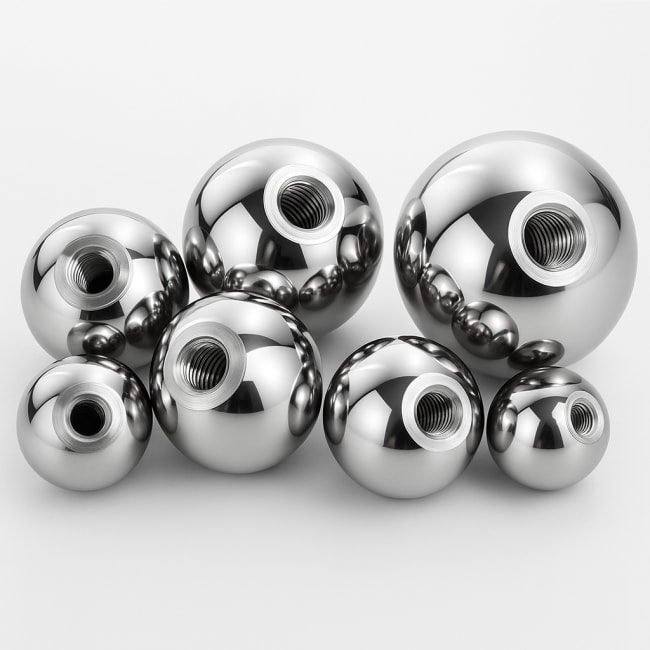
Global Market Guide to Industrial Threaded Ball Sourcing
For buyers in the Global Market, the best threaded ball supplier is not simply the lowest-priced seller of drilled spheres. A reliable partner should understand thread standards from M3 to M20, ball diameter tolerances, concentricity, surface finish, hardness, corrosion resistance, packaging protection, inspection documentation, and the way threaded balls are used in fixture, mounting, automation, positioning, and mechanical assembly systems. The correct supplier should also support both standard and custom production, including internal threads, external threaded studs, blind holes, through holes, tapped holes, cross drilling, special plating, polishing, heat treatment, and multi-material sourcing.Threaded balls are used where a spherical contact surface, pivot point, locating feature, handle end, clamping element, or adjustable mount must be combined with a mechanical thread. In industrial fixtures, they are often selected for modular tooling, welding jigs, inspection gauges, robotic end-of-arm tooling, transfer systems, and machine positioning assemblies. A procurement team should evaluate four factors first: thread specification, ball material, precision grade, and supplier process control.In global trade hubs such as Shanghai, Qingdao, Ningbo, Singapore, Rotterdam, Hamburg, Dubai, Los Angeles, Chicago, and Mumbai, buyers commonly compare suppliers based on repeatability, engineering communication, export experience, quality certification, and the ability to consolidate multiple spherical components. SDBALLS Industry Corp supports this type of sourcing need by combining more than 30 years of precision steel ball manufacturing experience with integrated supply capability for steel, stainless steel, chrome steel, carbon steel, and other sphere materials. Buyers can review the company background through the SDBALLS company profile and evaluate product families through its industrial ball product range.In short, when sourcing threaded balls for industrial fixture and mounting systems, ask the supplier for a clear drawing review, material certificate, thread gauge confirmation, tolerance plan, sample approval process, production capacity statement, packaging method, and realistic lead time. For custom threaded ball orders, also confirm whether the supplier can control drilling depth, thread perpendicularity, thread engagement length, burr removal, plating thickness, and final surface appearance.Thread specification is the foundation of a successful threaded ball assembly. A ball can meet the correct diameter and material requirement, but if the thread is inaccurate, shallow, misaligned, oversized, undersized, or damaged by burrs, the complete fixture may fail during installation. For Global Market buyers, the most common metric thread sizes range from M3 to M20, while inch thread options such as UNC, UNF, and special customer-defined profiles are also used in North America and international machinery projects.M3 to M6 threaded balls are often used in small fixtures, miniature adjustment assemblies, measuring devices, camera mounts, electronics test fixtures, and light-duty handles. M8 to M12 sizes are widely used in industrial clamps, positioning balls, modular jigs, automotive checking fixtures, and machine guards. M16 to M20 threaded balls are selected for heavier load applications, structural mounting, lifting-related positioning components, and large industrial equipment where the connection must resist vibration and repeated adjustment.The choice between a blind tapped hole and a through threaded hole depends on assembly design. A blind hole gives a clean external appearance and prevents the mating screw from passing through the ball. A through hole may be easier to clean, inspect, and assemble, especially where longer bolts are used. For fixture systems, thread engagement length is critical because many failures occur when the thread depth is too short for the applied torque or vibration environment.Thread SizeTypical Ball Diameter RangeCommon UseStandard OptionCustom OptionKey Buying CheckM36 mm to 12 mmMiniature locating and adjustment partsBlind tapped holeMicro through holeCheck thread depth and burr controlM48 mm to 16 mmLight fixture componentsMetric coarse threadFine pitch threadConfirm perpendicularityM510 mm to 20 mmSmall knobs and positioning pointsInternal threadThreaded stud insertedCheck pull-out strengthM612 mm to 25 mmAutomation mounts and clampsBlind or through tapped holeCross-drilled configurationConfirm thread gauge resultM8 to M1218 mm to 40 mmIndustrial fixtures and toolingMetric ISO threadUNC or UNF equivalentReview torque requirementM16 to M2035 mm to 80 mm or largerHeavy-duty positioning assembliesDeep internal threadSpecial pitch or dual threadCheck concentricity and loadThis table shows that thread selection cannot be separated from ball diameter, material strength, and application load. A small ball with a large thread may not leave enough wall thickness after drilling, while a large ball with a shallow thread may fail to provide adequate engagement. For OEM projects, buyers should send 2D drawings or 3D models that identify thread size, pitch, tolerance, hole type, thread depth, chamfer, surface finish, and inspection method.Compared with standard threaded ball items, custom thread options allow better design integration but require stricter engineering review. A standard M8 stainless steel threaded ball may be available faster, but a custom M8 x 1.0 fine pitch ball with passivation, special polishing, and controlled concentricity will need sample production and approval. For buyers serving multiple plants across Europe, the United States, Southeast Asia, and the Middle East, standardization of thread families can reduce inventory complexity and shorten maintenance response time.Material selection affects load capacity, corrosion resistance, machinability, cost, magnetic behavior, wear resistance, surface appearance, and long-term reliability. Threaded balls for fixture applications are commonly produced from carbon steel, chrome steel, stainless steel, brass, aluminum, plastic, and sometimes ceramic or specialty alloys. For industrial buyers, the best material is the one that matches the working environment, not necessarily the hardest or most expensive material.Carbon steel balls are cost-effective and suitable for general fixtures, hardware, knobs, and indoor mounting systems. They can be zinc plated, nickel plated, black oxidized, or otherwise surface treated to improve appearance and corrosion resistance. Chrome steel provides high hardness and wear performance and is often selected where strength and dimensional stability matter. Stainless steel is preferred for food equipment, medical fixtures, marine environments, chemical plants, outdoor systems, and clean assembly areas.Different stainless grades should not be treated as identical. AISI 304 stainless steel offers general corrosion resistance and good availability. AISI 316 stainless steel is better for coastal, marine, chemical, and high-humidity environments because of its molybdenum content. AISI 420 or 440C stainless steel can provide higher hardness, but corrosion resistance and machining behavior differ from 304 and 316. For threaded balls, the drilling and tapping process must also be considered, because very hard materials may require special tooling or pre-machining strategy.MaterialStrengthCorrosion ResistanceMachinabilityBest ForVS AlternativeCarbon steelMedium to highLow without platingGoodCost-sensitive fixturesLower corrosion resistance vs stainless steelChrome steelHighModerate with protectionModerate after hardeningWear-resistant locating partsHarder than carbon steel but less corrosion-resistant than 316304 stainless steelMediumGoodGoodGeneral industrial and clean environmentsLower marine resistance vs 316316 stainless steelMediumVery goodModerateMarine, chemical, outdoor applicationsHigher cost vs 304BrassLow to mediumGood in many environmentsExcellentDecorative, electrical, low-friction componentsSofter than steelAluminumLow to mediumGood with anodizingExcellentLightweight assembliesLower thread strength vs steelPlastic or polymerLowExcellent against many chemicalsGoodLight-duty, non-marring fixturesMuch lower load capacity vs metalThe table highlights a common sourcing decision: carbon steel vs stainless steel. Carbon steel is economical for large fixture fleets in dry workshops, but stainless steel is usually better for environments near ports, food plants, pharmaceutical factories, and outdoor installations. In cities such as Rotterdam, Hamburg, Houston, Singapore, Busan, and Dubai, salt air, humidity, and chemical exposure often justify stainless steel even when the initial price is higher.SDBALLS has long-term experience producing carbon steel balls, chrome steel balls, and stainless steel balls in multiple grades. This manufacturing knowledge is important for threaded ball projects because the base sphere quality affects drilling stability, finished appearance, and final assembly consistency. In addition, SDBALLS can help global buyers consolidate sourcing for other spherical materials when a fixture project needs plastic, glass, ceramic, copper, or aluminum balls together with steel components.Tolerance is not only a drawing number; it is the difference between a fixture that repeats accurately and one that causes alignment problems. For threaded ball assemblies, buyers should define ball diameter tolerance, sphericity, surface roughness, thread tolerance class, hole position, thread depth, perpendicularity, concentricity, and visual acceptance criteria. If the threaded ball is used as a locating element, pivot point, ball transfer contact, or measuring fixture component, the precision level becomes especially important.Steel balls are often described by precision grades such as G10, G16, G25, G40, G100, G200, G500, and G1000, depending on the required dimensional accuracy and surface condition. High precision grades are used in bearing, automotive, and measuring applications. General industrial fixture balls may not require the same grade as bearing balls, but they still need consistent diameter, clean thread formation, and stable surface finish. A very precise ball can lose functional value if the drilled thread is off-center or if a burr remains at the hole entrance.For threaded ball assemblies, the production route usually includes blank ball selection, heat treatment if required, grinding or polishing, drilling, tapping, deburring, cleaning, surface treatment, final inspection, and packaging. Each operation can influence final tolerance. For example, plating can slightly change thread dimensions, so suppliers must decide whether thread inspection is performed before or after plating. For high-value OEM projects, final inspection after all surface processes is preferred.RequirementGeneral GradePrecision GradeInspection MethodRisk If IgnoredRecommended Buyer ActionBall diameterModerate toleranceTight toleranceMicrometer or gaugeLoose fit or assembly interferenceDefine tolerance on drawingSphericityAcceptable for handlesCritical for locatingRoundness measurementPoor contact repeatabilitySelect suitable ball gradeThread accuracyStandard gauge passControlled class fitGo/no-go thread gaugeAssembly failureRequire gauge reportHole concentricityVisual and basic checkMeasured runoutFixture or CMMMisalignment in mountingState datum referenceSurface finishPolished or platedRa-controlled finishVisual or profilometerWear or poor appearanceAgree sample standardBurr controlDeburred edgeControlled chamferVisual magnificationThread jamming and injurySpecify chamfer sizeHardnessMaterial-basedHeat-treatment controlledHardness testerPremature wear or crackingRequest material and hardness recordThis table explains why precision is a system-level issue. A supplier may quote a low price for a standard ball, but if no thread gauge inspection, burr control, or packaging protection is included, the total cost can rise through rework, production stoppages, and field complaints. Buyers should compare standard tolerance vs precision tolerance based on application risk. A ball used as a decorative handle end does not need the same control as a ball used in a robotic positioning fixture.SDBALLS supports precision manufacturing from G10 to G1000 across different steel ball categories. Its quality system, supported by IATF 16949, ISO 9001, and ISO 14001 certifications, gives buyers a structured base for discussing inspection requirements. More detail on quality control and technical standards can be reviewed through the quality and technical capability page.OEM threaded ball projects often require more than a single tapped hole. Custom requirements may include double-ended threaded balls, partial through holes, angled holes, cross holes, combined threaded and smooth bores, press-fit inserts, welded studs, special chamfers, anti-rotation flats, laser marking, color coding, plating, passivation, black oxide, electropolishing, or special packaging for automated assembly lines. Leading suppliers must be able to interpret drawings and advise when a design is difficult to manufacture reliably.A strong OEM supplier will ask practical questions before quoting: What is the ball diameter? What is the thread size and pitch? Is the hole blind or through? What is the minimum thread engagement? What material and hardness are required? Is plating applied before or after tapping? Does the threaded ball need to pass salt spray testing? What is the annual quantity? Will the part be installed manually or by automation? Does the buyer require PPAP, first article inspection, or batch traceability?Technological capability matters because drilling a curved surface is different from drilling a flat plate. The drill must be accurately centered and stabilized to prevent walking. The tapping operation must avoid thread tearing, poor chip removal, or broken taps. For hardened steel balls, suppliers may need special pre-drilling, annealing, EDM, carbide tools, or modified process flow. For stainless steel balls, heat buildup and galling must be controlled during tapping.Custom FeaturePurposeManufacturing ChallengeStandard VS CustomInspection FocusTypical ApplicationBlind internal threadClean external appearanceDepth controlStandard for many sizesThread depthKnobs and fixture ballsThrough threadFlexible bolt lengthBurrs at both openingsMore custom in small ballsDeburring and gauge passMounting assembliesExternal threaded studFast installationStud strength and alignmentCustom assemblyPull-out and runoutHandles and positioning partsCross drillingPinning or lockingHole intersection burrsCustomInternal burr removalLocking fixturesFine pitch threadPrecise adjustmentTool wear and gauge controlCustomPitch accuracyMeasuring and alignment devicesSpecial coatingCorrosion or appearanceThickness on threadCustomPost-coating thread fitOutdoor equipmentLaser markingTraceabilityCurved surface markingCustomReadabilityOEM batch controlThe table shows the difference between buying catalog parts and developing engineered threaded ball components. A standard part may solve basic needs quickly, while a custom part improves design performance but requires technical communication. For Global Market OEM buyers, it is useful to approve samples under real assembly conditions before releasing mass production. Testing should include torque installation, vibration exposure, corrosion exposure where relevant, and repeated assembly cycles.SDBALLS’ manufacturing base in Shandong, China, provides stable steel ball production capacity, while its integrated supply model helps buyers coordinate secondary operations and multi-material sphere requirements. This is especially valuable for OEMs that need one supplier to manage both standard balls and custom drilled or threaded ball projects for global plants.Supplier selection should include an audit of quality systems, production capacity, process control, export documentation, and communication reliability. A threaded ball supplier may look acceptable from product photos, but a deeper audit reveals whether it can maintain repeatability over months and years. For global companies sourcing into Europe, North America, South America, the Middle East, and Asia-Pacific, supplier stability is often more important than one-time pricing.A quality audit should review incoming material control, heat treatment control, ball forming and grinding processes, drilling and tapping equipment, inspection tools, gauge calibration, nonconforming product handling, packaging standards, traceability, and corrective action procedures. If threaded balls are used in automotive, medical, food machinery, or high-reliability automation, buyers may request more formal documentation such as material certificates, dimensional reports, salt spray results, RoHS or REACH declarations where applicable, and process flow charts.Production capacity assessment should not only ask for annual tonnage. Buyers should determine whether the supplier has enough machines, skilled operators, tooling, inspection staff, and subcontractor control for secondary processes. For example, a supplier may have excellent ball grinding capacity but limited tapping capacity. If the project requires 100,000 custom M8 stainless steel threaded balls per quarter, drilling and tapping throughput may become the bottleneck rather than ball manufacturing.Audit AreaWhat to CheckGood Supplier EvidenceWarning SignBuyer BenefitGlobal Market RelevanceCertificationISO and industry systemsValid certificatesExpired or unclear documentsReduced quality riskImportant for multinational buyersMaterial controlSteel grade and sourceTraceable recordsMixed or unidentified stockConsistent performanceNeeded for customs and complianceThread inspectionGo/no-go gaugesCalibrated gaugesNo gauge recordReliable assemblyCritical for OEM programsCapacityMonthly output and bottlenecksClear production planUnrealistic promisesStable deliveryUseful for global rolloutsPackagingRust, impact, and mix protectionLabeled and protected cartonsBulk damage riskLower receiving defectsImportant for sea freightCorrective actionComplaint handlingRoot cause reportsBlame without solutionLong-term improvementSupports strategic sourcingExport experienceDocuments and logisticsShipments to many countriesLimited customs knowledgeSmoother importingEssential for cross-border buyersSDBALLS operates three production facilities with annual capacity exceeding 5,000 tons, serving customers in more than 50 countries. This manufacturing scale helps support both standard ball demand and customized supply programs. The company’s experience with bearing, automotive, hardware, grinding, outdoor, and mechanical systems gives it a broad process background for industrial buyers.When auditing suppliers in China, buyers often consider proximity to ports such as Qingdao, Shanghai, Ningbo, and Tianjin. For SDBALLS in Tai’an, Shandong Province, access to northern China industrial supply chains and Qingdao port supports export logistics to Europe, North America, Southeast Asia, Australia, and the Middle East.Lead time and minimum order quantity depend on material, diameter, thread size, precision grade, surface treatment, sample requirements, and current production schedule. Standard threaded balls may ship quickly if the supplier has stock or can machine from common ball sizes. Custom threaded balls require drawing review, tooling preparation, sample production, inspection, approval, mass production, surface treatment, final inspection, and export packing.For standard carbon steel or stainless steel threaded balls, buyers may see lead times from one to four weeks depending on quantity. For custom OEM parts, four to eight weeks is more realistic, especially when plating, passivation, black oxide, laser marking, salt spray testing, or special inspection reports are required. Very large orders or special materials may require longer planning. Sea freight adds additional transit time, while air freight can solve urgent needs at higher cost.MOQ is usually lower for standard sizes and higher for custom specifications. If a buyer requests a rare ball diameter, special thread pitch, low-volume coating, or nonstandard material, the supplier must cover setup cost, tooling cost, machine adjustment, and inspection time. A practical approach is to start with prototypes or pilot batches, then move to annual blanket orders with scheduled releases.Standard vs custom purchasing should be evaluated by total cost. Standard products reduce lead time and inventory risk, while custom products may reduce assembly labor, improve performance, and protect the buyer’s design. For multinational companies, a dual strategy often works best: use standard threaded balls for maintenance and general fixtures, and use custom threaded ball assemblies for critical production tooling.SDBALLS’ service capability includes export support, engineering communication, stable supply planning, and sourcing consolidation. Its global sales team and US business support help international buyers manage time zone communication, sample feedback, and long-term order planning. This is useful for companies with plants in Detroit, Monterrey, Stuttgart, Milan, Pune, Bangkok, Ho Chi Minh City, and São Paulo that need consistent components across regions.Threaded balls are small components, but they support many important industrial functions. In automation systems, they can be used as adjustable contact points, end stops, sensor mounts, spherical handles, pivot elements, and alignment supports. In positioning systems, they provide repeatable contact surfaces for clamps, gauges, and locating fixtures. In mechanical assembly, they serve as practical connection points where smooth spherical geometry reduces interference and improves handling.In automotive manufacturing, threaded balls may appear in checking fixtures, welding jigs, robotic tooling, inspection arms, and assembly stations. In electronics manufacturing, smaller threaded balls can support test fixtures, adjustable stops, and compact mechanical mounts. In packaging equipment, stainless threaded balls are used where cleaning and corrosion resistance matter. In medical device manufacturing, polished stainless surfaces are preferred for cleanability and appearance. In marine and outdoor equipment, 316 stainless steel or coated carbon steel can improve life in humid and salt-exposed conditions.Case study 1: An automation integrator in Germany needed M8 stainless threaded balls for adjustable stops in a packaging line. The original low-cost parts had inconsistent thread depth, causing installation delays. After switching to a supplier that provided thread gauge inspection and controlled deburring, assembly time improved and maintenance complaints decreased.Case study 2: A fixture builder in Mexico serving automotive plants required custom M10 balls with blind threaded holes and black oxide finish. The key issue was coating thickness inside the thread. The approved process included post-coating gauge checks, which reduced rejected parts at the customer’s receiving inspection.Case study 3: A marine equipment distributor near Rotterdam requested 316 stainless threaded balls for outdoor mounting systems. Although the unit price was higher than 304 stainless steel, corrosion complaints dropped significantly in coastal applications. The project demonstrated why material selection must reflect real working conditions.More examples of mechanical and industrial use can be explored through the SDBALLS application fields, which cover bearing systems, caster wheels, sliding systems, ball transfer units, automotive components, and general mechanical assemblies.SDBALLS Industry Corp, also known as Shandong SDBALLS Industry Corp Ltd., is a precision steel ball manufacturer and integrated supply partner based in Tai’an City, Shandong Province, China. Since 1996, the company has developed long-term manufacturing experience in carbon steel balls, chrome steel balls, and stainless steel balls for industrial applications worldwide.From a technological capability perspective, SDBALLS understands the relationship between ball grade, material hardness, surface finish, dimensional consistency, and downstream machining. This knowledge helps support projects involving drilled, tapped, polished, plated, or otherwise customized spherical components. The company’s product grades range from high-precision options such as G10 to general industrial grades such as G1000, allowing buyers to match accuracy with real application needs.From a manufacturing capability perspective, SDBALLS operates three production facilities with annual capacity above 5,000 tons. This scale supports stable delivery for standard steel balls and provides a strong base for customized threaded ball and drilled sphere requirements. The company serves customers in more than 50 countries and supplies industries including bearing production, automotive components, hardware, grinding, caster wheels, sliding systems, ball transfer units, and outdoor equipment.From a service capability perspective, SDBALLS helps global buyers consolidate procurement. In addition to its own steel ball manufacturing, the company can support sourcing for plastic, glass, ceramic, copper, aluminum, and other spherical products. This integrated model is valuable for distributors, OEMs, and fixture builders that want fewer suppliers, clearer communication, and more stable supply chain coordination.The company maintains quality systems supported by IATF 16949, ISO 9001, and ISO 14001 certifications. For buyers in the Global Market, this means SDBALLS can support discussions about quality documentation, environmental management, inspection procedures, and long-term cooperation. Its customer-focused sales structure, including global sales and US business support, helps international buyers communicate efficiently from sample development to repeat production.Looking ahead to 2026, threaded ball sourcing will be influenced by digital inspection, automated drilling and tapping, AI-supported quality analysis, stricter sustainability requirements, lower-carbon logistics, recyclable packaging, and greater traceability expectations. Buyers will increasingly prefer suppliers that can provide stable documentation, responsible production, and flexible customization rather than simple commodity supply. Trade policy changes, regional inventory strategies, and port congestion risks will also encourage buyers to work with experienced suppliers that understand global shipping routes through Qingdao, Shanghai, Singapore, Rotterdam, Hamburg, Los Angeles, and Jebel Ali.A threaded ball is a spherical component with an internal or external thread. It may have a blind tapped hole, through threaded hole, inserted stud, or custom drilled feature. It is used in fixtures, handles, positioning systems, mounting assemblies, and automation equipment.Metric sizes from M3 to M20 are common in industrial applications. M6, M8, M10, and M12 are especially popular for fixture and mounting systems. Inch threads such as UNC and UNF can also be produced for North American equipment or special OEM requirements.Carbon steel is cost-effective for dry indoor fixtures. Chrome steel is useful where hardness and wear resistance matter. 304 stainless steel is suitable for general corrosion resistance, while 316 stainless steel is better for marine, chemical, outdoor, and high-humidity applications.Yes. Custom options include special thread pitch, blind holes, through holes, cross drilling, threaded studs, special chamfers, polishing, plating, passivation, black oxide, laser marking, and controlled inspection requirements. Buyers should provide drawings for accurate quotation.Inspection should include ball diameter, thread gauge fit, thread depth, surface finish, burr control, material verification, hardness where required, and visual appearance. For precision applications, concentricity, perpendicularity, and roundness may also be measured.Standard threaded balls use common materials, sizes, and thread forms, so they usually have shorter lead times and lower MOQ. Custom threaded balls are made to specific drawings and may include special materials, tolerances, coatings, or inspection reports.Standard orders may take one to four weeks depending on stock and quantity. Custom OEM orders often require four to eight weeks or more because of sample approval, special machining, surface treatment, inspection, and packaging requirements.An RFQ should include ball diameter, material, thread size, pitch, thread depth, blind or through hole type, tolerance, surface finish, coating, quantity, annual demand, inspection requirements, packaging needs, destination country, and preferred delivery method.Yes. They are widely used in automation as adjustable contact points, locating elements, pivot components, end stops, sensor mounts, handles, and fixture parts. Precision requirements depend on whether the ball is used for simple support or accurate positioning.SDBALLS combines decades of steel ball manufacturing experience, large production capacity, global export service, quality certifications, and integrated sourcing capability. This makes it suitable for buyers seeking standard balls, custom drilled balls, threaded ball components, and multi-material sphere procurement. -
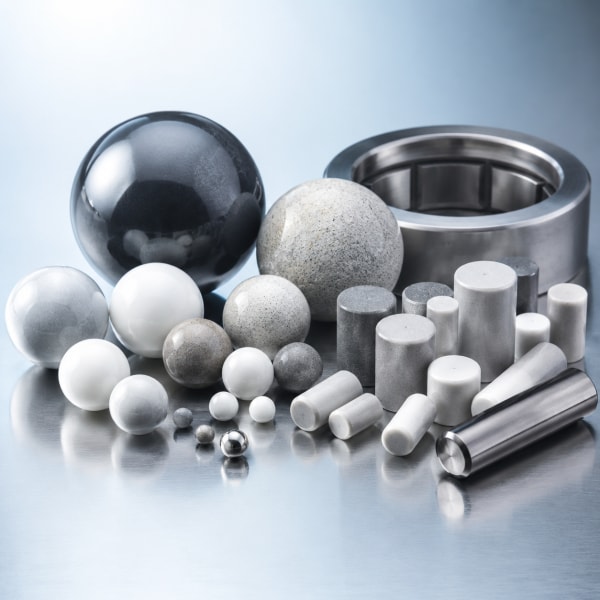
Bulk Finishing Media Selection Guide for Global Market
For bulk mass finishing operations in the Global Market, the right grinding and polishing media depends on the material of the workpiece, the desired surface finish, the machine type, the deburring intensity, and the total cost per finished part. Ceramic media is usually preferred for aggressive cutting, deburring, radiusing, and surface preparation of harder metals. Plastic media is often selected for softer metals, aluminum, zinc die castings, and applications where low-density processing reduces part impingement. Steel media, including carbon steel and stainless steel balls, pins, and satellites, is widely used for burnishing, brightening, compacting, and achieving a high-luster surface without heavy stock removal.A practical selection rule is simple: choose ceramic when you need cut, plastic when you need controlled smoothing, and steel when you need brightness, density, and long service life. Shape selection is equally important. Cones and triangles reach corners and slots, cylinders provide stable edge contact, and balls offer smooth rolling action for burnishing and low scratch risk. In global procurement, the best supplier is not only the one with the lowest media price per kilogram. Buyers should evaluate batch consistency, wear rate, size tolerance, compound compatibility, compliance documentation, packaging strength, lead time reliability, and technical support for process trials.SDBALLS Industry Corp, also known as Shandong SDBALLS Industry Corp Ltd., supports global buyers as both a precision steel ball manufacturer and an integrated supply partner for multi-material spheres and finishing-related media. With manufacturing experience dating back to 1996, three production facilities in Shandong, and supply experience across more than 50 countries, the company serves customers seeking reliable steel balls, stainless steel balls, chrome steel balls, carbon steel balls, and sourcing support for ceramic, plastic, glass, copper, and aluminum spheres. For buyers operating in trade hubs such as Shanghai, Qingdao, Singapore, Hamburg, Rotterdam, Los Angeles, Chicago, Dubai, Mumbai, and São Paulo, a dependable partner helps reduce procurement risk, simplify quality control, and improve landed cost predictability.The most effective approach is to test media under real process conditions before scaling to bulk shipments. A laboratory result is useful, but production variables such as part loading ratio, water quality, compound concentration, machine amplitude, separation efficiency, and operator handling can change actual performance. Buyers should ask for pilot samples, wear-rate data, safety and compliance documents, and packaging specifications before placing annual contracts.Selection FactorCeramic MediaPlastic MediaSteel MediaBest Use CaseCutting actionHigh to very highLow to mediumVery lowDeburring and edge breaking use ceramicSurface brightnessMatte to semi-brightSmooth satinBright and reflectiveBurnishing uses steelDensityMediumLowHighFragile parts often need plasticWear rateModerateModerate to highVery lowLong cycle reuse favors steelPart riskMediumLowMedium to high if misusedSoft alloys often need plasticTypical machineVibratory, centrifugal, barrelVibratory, barrelVibratory burnishing, barrelMatch media to machine energyThis comparison shows why media choice should be based on process goals rather than catalog names alone. A high-cut ceramic triangle can solve a burr issue but may be too aggressive for decorative aluminum. A polished stainless steel ball can create excellent brightness but cannot replace abrasive media when stock removal is required. The best finishing line often uses several stages: cut-down, smoothing, cleaning, and final burnishing.Mass finishing media is used in vibratory bowls, tub vibrators, centrifugal disc machines, centrifugal barrel systems, rotary barrels, drag finishing units, and automated finishing cells. In the Global Market, these systems are common in automotive component plants in Detroit, Stuttgart, Nagoya, Pune, and Guangzhou; aerospace supply chains around Seattle, Toulouse, Montreal, and Singapore; medical device clusters in Ireland, Switzerland, the United States, and Malaysia; and general hardware manufacturing regions in China, Vietnam, Türkiye, Mexico, Poland, and Brazil.Ceramic media is made from abrasive grains bonded in a ceramic matrix. Its cutting strength depends on abrasive type, grain size, firing method, porosity, density, and shape. High-cut ceramic media removes burrs quickly and creates consistent edge radii on steel, cast iron, stainless steel, and hard alloys. Fine ceramic media is used for pre-polishing, smoothing, and preparing parts for plating, coating, anodizing, or painting. For large forged or machined components, ceramic media can reduce manual grinding and improve process repeatability.Plastic media is typically made with polyester, urea, or other resin systems containing abrasive grains. Because it is lighter than ceramic, it reduces impact marks on aluminum, brass, zinc, magnesium, and delicate die-cast parts. Plastic media also helps prevent lodging in certain geometries when the correct shape and size are selected. It is widely used for aerospace aluminum, consumer electronics housings, lighting hardware, plumbing parts, and decorative fittings where a smooth surface is needed without excessive rounding.Steel media is different because it usually burnishes rather than cuts. Carbon steel balls, stainless steel balls, pins, ballcones, diagonals, and satellites can compact the surface, brighten the part, remove light discoloration, and improve the appearance of stampings, machined components, coin blanks, jewelry findings, and hardware. Stainless steel media is favored where corrosion resistance and clean processing are important. Carbon steel media can be economical, but it requires controlled compound chemistry and drying to prevent rust.As a precision steel ball manufacturer, SDBALLS has deep experience in steel sphere production, including carbon steel balls, chrome steel balls, and stainless steel balls in grades ranging from G10 to G1000. This precision background is valuable for burnishing and mechanical applications because diameter control, roundness, hardness, surface finish, and material traceability all affect performance. Buyers can review product categories through the company’s steel ball and industrial sphere product range to understand available material options and related supply capabilities.Media Type VS ApplicationTypical Materials FinishedMain FunctionAdvantagesLimitationsCeramic VS steel machining burrsCarbon steel, stainless steel, cast ironCutting and deburringFast burr removal and edge controlMay be too aggressive for soft partsPlastic VS aluminum castingsAluminum, zinc, magnesiumSmoothing and light deburringLower impact and reduced part damageShorter life than steel mediaSteel VS decorative hardwareBrass, stainless steel, copper alloysBurnishing and brighteningLong life and high gloss potentialNot designed for heavy cuttingCeramic fine cut VS pre-platingMachined componentsSurface preparationStable satin finish before coatingNeeds correct compound controlPlastic cone VS aerospace aluminumPrecision aluminum partsGentle edge refinementReduces peening and distortionMay require longer cycle timeStainless steel ball VS clean burnishingMedical, food-contact, decorative partsPolishing and compactingClean, corrosion-resistant processingHigher initial media investmentThe table highlights that each media type has a different operating purpose. A buyer comparing ceramic, plastic, and steel polishing media should define whether the process target is burr removal, surface smoothing, cleaning, brightness, corrosion preparation, or dimensional edge control. Without a clear target, the lowest-cost media can create higher rework, longer cycle time, or inconsistent surface quality.Shape selection is one of the most underestimated decisions in mass finishing. The media must contact the workpiece surface, flow through the load, separate efficiently, and avoid lodging in holes, slots, threads, and recesses. If the media is too small, it may lodge inside parts and increase labor. If it is too large, it may not reach internal corners. If the shape is too sharp, it can over-cut edges; if it is too round, it may not remove burrs from difficult areas.Cone-shaped media is useful for holes, corners, recesses, and complex geometries because the tapered end can reach into tighter areas. It is common in both ceramic and plastic formulations. Triangular media provides strong edge contact and is often selected for deburring flat parts, stamped parts, machined edges, and castings. Cylindrical media gives uniform rolling and line contact, making it suitable for general finishing, smoothing, and controlled edge work. Balls are preferred for burnishing, lapping-like rolling action, and applications where low scratch risk and high surface brightness are desired.Media shape must also be matched with separation equipment. In high-volume plants, automatic screens, magnetic separators, vibratory separation decks, and drying units are used to prevent media carryout. Steel media can often be separated magnetically when carbon steel is used, but stainless steel may require mechanical separation depending on alloy and magnetic response. Plastic and ceramic media require size-based separation, so the media must remain clearly different from part openings and part dimensions.ShapeBest Contact StyleTypical StrengthRisk to WatchShape VS AlternativeConePoint and side contactReaches recesses and holesCan lodge if too smallCone VS ball: better access, less burnishCylinderLine contactStable general finishingMay bridge in narrow slotsCylinder VS triangle: smoother, less aggressiveTriangleEdge and face contactGood deburring of edgesCan over-radius delicate partsTriangle VS cone: stronger edge actionBallRolling point contactBright burnishingLimited cutting abilityBall VS ceramic: polish, not heavy deburrSatelliteMultiple curved contactsGood steel burnishing coverageGeometry must suit partsSatellite VS ball: more surface interactionAngle-cut cylinderEdge plus rolling contactVersatile cutting and finishingSize selection is criticalAngle-cut VS straight: better corner accessIn practice, buyers should request a lodging analysis before confirming bulk media. This means checking the smallest holes, blind cavities, slots, threads, and channels on the component drawing. For example, if a stamped bracket has a 6 mm slot, a 5 mm cone may lodge, while an 8 mm triangle may separate cleanly. If a machined valve body has multiple cross-holes, media testing should include pressure flushing and inspection after processing. The correct media shape reduces hidden labor, prevents customer complaints, and keeps automated finishing cells running without interruption.Supplier evaluation for mass finishing media should focus on repeatability. In global purchasing, a supplier may pass the first sample trial but fail during continuous shipments if raw material control, firing conditions, grading, packaging, or inspection systems are weak. Quality consistency is especially important for multinational manufacturers that run the same finishing process in several plants, such as facilities in Mexico, Germany, China, India, and the United States.Buyers should evaluate technical capability first. A reliable supplier should understand the relationship between media density, abrasive grade, hardness, wear rate, cutting rate, surface roughness, and compound chemistry. For steel media and precision steel balls, supplier expertise should include material selection, heat treatment, grinding, lapping, polishing, grading, and inspection. SDBALLS’ technological capabilities are supported by decades of steel ball manufacturing knowledge, quality systems, and inspection processes used for bearing, automotive, hardware, grinding, and mechanical applications. Its work with grades from G10 to G1000 reflects a manufacturing culture where dimensional consistency and surface quality matter.Manufacturing capability is the second factor. Buyers should ask whether the supplier operates its own production lines, how it controls capacity, whether it can support annual contracts, and how it handles peak-season demand. SDBALLS operates three production facilities with annual output exceeding 5,000 tons, which gives global customers a more stable supply foundation than purely trading-based sourcing. The company’s location in Tai’an City, Shandong Province, provides access to China’s mature industrial supply chain and export routes through Qingdao, Shanghai, Tianjin, and Ningbo.Service capability is the third factor. Global buyers need responsive communication, export documentation, sample coordination, after-sales analysis, and support for mixed material sourcing. SDBALLS serves customers in more than 50 countries and provides global sales support, including assistance for customers seeking consolidated procurement of steel, ceramic, plastic, glass, copper, and aluminum spheres. Buyers can learn more about the company’s background through its manufacturer profile and global supply experience.Supplier CriterionStrong SupplierWeak SupplierImpact on BuyerEvaluation MethodBatch consistencyStable size, density, cut, and finishLarge variation between lotsPredictable cycle timesCompare sample and bulk lot dataQuality certificationISO 9001, ISO 14001, automotive systems where relevantNo documented systemLower audit riskRequest valid certificatesTechnical supportHelps with shape, media, and process selectionOnly quotes priceFewer trial failuresReview response qualityManufacturing controlOwn production and inspectionUnclear subcontractingBetter traceabilityAsk for process flow and inspection planExport experienceShips to multiple regionsLimited documentation experienceFewer customs delaysCheck references and shipping recordsCorrective actionProvides root-cause analysisOffers only replacement without analysisLong-term improvementAsk for sample 8D or complaint processThis supplier comparison is important because finishing media is a process input, not a simple consumable. Inconsistent media can change roughness, brightness, cycle time, scrap rate, and labor cost. A professional supplier should help the buyer protect the entire finishing process rather than only deliver bags, drums, or pallets.Bulk finishing media should be evaluated by cost per finished part, not only by purchase price per kilogram. A cheaper media with high wear rate, high sludge generation, poor cutting efficiency, or frequent replacement can cost more in production than a higher-priced media with stable performance. Cost-per-part analysis includes media consumption, compound usage, water and wastewater cost, electricity, machine depreciation, labor, rework, scrap, separation time, drying time, and packaging of finished parts.Media consumption rate is calculated by measuring how much media is lost or worn down during a defined number of cycles. For abrasive ceramic and plastic media, wear is expected because the media breaks down while cutting. For steel media, wear is usually much lower, but corrosion loss, carryout, and contamination can increase cost. A good production team records media level, cycle time, surface roughness, part weight, compound concentration, and wastewater condition. Over time, this data shows whether the process is stable.Optimization begins with media-to-part ratio. Too little media can cause part-on-part damage and inconsistent finishing. Too much media can reduce throughput and increase cycle time. Common ratios vary by application, but many vibratory processes use a media-heavy load to protect parts and maintain contact. Machine energy also matters. High-energy centrifugal systems may use smaller media and shorter cycles, while tub vibrators may require longer processing for heavy components.Another cost driver is wastewater and sludge. Ceramic and plastic media generate fines that enter the process solution. If the plant operates in regions with strict discharge rules, such as the European Union, California, Japan, South Korea, or Singapore, waste treatment cost can be significant. Using the correct media grade and compound can reduce foam, odor, suspended solids, and disposal burden. Steel burnishing media may reduce abrasive sludge, but it still requires cleaning compounds and rust-control management.Cost ElementLow-Cost Media RiskOptimized Media BenefitMeasurementCost VS Value LessonMedia wearFast breakdown and frequent refillLower consumption per batchKg lost per 1,000 partsCheap purchase can be costly in useCycle timeSlow cutting requires longer runsHigher output per machine hourMinutes per batchFaster process improves capacityReworkInconsistent finish creates rejectsStable surface qualityRework percentageQuality saves laborWastewaterHigh sludge and unstable chemistryCleaner process solutionSolids and treatment costSustainability affects costSeparation laborLodged media increases inspectionClean separationLabor minutes per lotShape selection affects productivityMachine wearOverly aggressive media damages linersBalanced process energyLiner replacement intervalTotal cost includes equipment lifeTo optimize media consumption, buyers should run controlled trials using the same part quantity, machine setting, compound concentration, and cycle time. Record initial and final media weight, part finish, burr removal, and wastewater condition. The winning media is the one that meets the surface specification with the lowest total process cost and acceptable lead time. In procurement negotiations, ask suppliers for annual volume pricing, stable packaging units, and technical support for process improvement.OEM customization is valuable when standard catalog media cannot meet a specific finishing target. Specialized polishing media formulations may be needed for aerospace parts requiring controlled edge radius, medical components requiring clean processing, electric vehicle parts requiring stable pre-coating surface, jewelry components requiring high brightness, or firearm and outdoor equipment parts requiring corrosion-resistant burnishing. Customization can involve material, abrasive grade, density, hardness, shape, size, color coding, packaging, and documentation.For ceramic and plastic media, OEM customization often focuses on cutting speed, surface smoothness, wear rate, and residue control. A high-cut formulation may use more aggressive abrasive grains, while a fine finishing formulation may use smaller abrasive particles and a smoother bond structure. For steel balls and steel burnishing media, customization may include carbon steel, chrome steel, stainless steel, hardness range, plating, annealing, passivation, and precision grade. SDBALLS’ background in precision steel ball manufacturing allows it to support technical discussions around steel material selection, surface finish, hardness, and grade requirements for industrial applications.OEM projects should begin with clear application data. The buyer should provide part drawings, material grade, hardness, burr description, incoming roughness, target roughness, required edge radius, machine type, batch size, compound type, water quality, and current process problems. If the buyer cannot disclose drawings, representative samples or simplified geometry information can still help. For multinational buyers, it is also useful to specify whether the same media will be used in plants across different regions, because water hardness, operator practices, and machine models may differ.SDBALLS also acts as an integrated supply partner for buyers seeking multi-material sphere sourcing beyond steel balls, including plastic, glass, ceramic, copper, and aluminum options. This is useful for global procurement teams that want fewer supplier interfaces and more consistent communication. Technical buyers can review the company’s quality and technical control approach to understand how inspection and process discipline support long-term supply.In OEM media development, timelines should include sample design, pilot production, trial shipment, customer testing, feedback, adjustment, and bulk production. Buyers should avoid approving custom media based on visual finish alone. A complete approval should include roughness measurement, burr inspection, dimensional review, corrosion testing where needed, cleanliness testing, wastewater impact, and separation performance. Once approved, specifications should be written into a purchasing document so every shipment follows the same standard.Compliance expectations are rising across the Global Market. Buyers increasingly ask whether grinding media, polishing media, steel balls, and related process materials align with environmental management systems and restricted substance requirements. ISO 14001 demonstrates that a manufacturer has an environmental management framework for monitoring impacts, improving processes, and maintaining compliance obligations. RoHS relates to restrictions on hazardous substances commonly associated with electrical and electronic equipment supply chains, but many industrial buyers request RoHS statements as part of broader responsible sourcing programs.SDBALLS maintains ISO 14001 certification together with ISO 9001 and IATF 16949, supporting customers that require structured quality and environmental systems. For buyers serving automotive, electronics, medical, and export-oriented hardware markets, these certifications can simplify supplier qualification. Compliance does not replace product testing, but it shows that the supplier understands controlled documentation, audits, corrective actions, and process management.Environmental requirements are becoming more important in 2026 and beyond. The European Union continues to strengthen sustainability expectations through carbon reporting, chemical control, and circular economy policies. North American buyers are asking more questions about supply chain transparency and responsible manufacturing. Asian manufacturing hubs such as Japan, South Korea, Singapore, and China are improving wastewater and emissions controls. Global brands are also pushing suppliers to reduce sludge, improve packaging recyclability, and provide clearer material declarations.For mass finishing operations, sustainability is not only a certificate. It includes lower media consumption, longer service life, reduced wastewater contamination, efficient logistics, recyclable packaging, and safer compounds. Steel burnishing media can offer long life in the right application, while optimized ceramic or plastic formulations can reduce rework and energy use by shortening cycle times. Buyers should request safety data sheets, RoHS declarations where applicable, material composition statements, and information about packaging waste.The 2026 trend is toward data-backed sustainability. More buyers will expect suppliers to provide measurable indicators such as batch traceability, media wear rate, packaging material details, and transport efficiency. Digital quality records, QR-code traceability, automated inspection, and AI-supported process optimization will become more common in finishing supply chains. Suppliers that combine manufacturing stability with documentation readiness will be better positioned to serve global OEMs.Lead time and logistics can determine whether a finishing line runs smoothly or faces costly downtime. Bulk media shipments are heavy, and freight decisions affect landed cost. Buyers importing into North America may use ports such as Los Angeles, Long Beach, Houston, New York, Savannah, or Vancouver. European buyers may route through Rotterdam, Hamburg, Antwerp, Gdańsk, or Valencia. Middle East and Africa shipments may move through Jebel Ali, Dammam, Durban, or Mombasa. Asia-Pacific buyers often use Singapore, Busan, Yokohama, Port Klang, Laem Chabang, Manila, and Sydney. South American customers may receive through Santos, Buenos Aires, Callao, or Cartagena.Packaging must protect the media from moisture, breakage, contamination, and handling damage. Ceramic and plastic media are often packed in woven bags, cartons, drums, or palletized bulk units. Steel balls and steel media may require oiling, anti-rust paper, sealed bags, drums, cartons, or wooden cases depending on material and route. Stainless steel media is less rust-sensitive than carbon steel, but clean packaging is still important. For ocean freight, humidity control and pallet strength should be considered, especially for long routes crossing tropical climates.Buyers should confirm packaging unit weight before ordering. Operators must be able to lift, pour, and store media safely. A 25 kg bag may be practical for manual handling, while drums or big bags may suit automated plants with forklifts and cranes. Labels should include product name, size, batch number, net weight, gross weight, country of origin, and handling instructions. For customs clearance, documents may include commercial invoice, packing list, bill of lading, certificate of origin, compliance declaration, and insurance documents.SDBALLS’ service capabilities include export coordination for global customers, support for bulk shipments, and communication around packaging and delivery requirements. Its Shandong manufacturing base is well positioned for container shipping through major Chinese ports. For urgent requirements, buyers should discuss available stock, partial shipments, air freight for samples, and production scheduling. For annual demand, forecast sharing helps stabilize production and reduce emergency freight cost.A good logistics plan includes safety stock. Finishing media consumption may increase when part mix changes, machine settings change, or operators extend cycle time. International shipping can also be affected by port congestion, weather, geopolitical disruptions, container shortages, customs inspections, and holiday periods such as Chinese New Year, Golden Week, Christmas, Ramadan, and regional public holidays. Global buyers should maintain a reorder point based on actual consumption and shipping lead time.SDBALLS Industry Corp, also known as Shandong SDBALLS Industry Corp Ltd., is a professional precision steel ball manufacturer and integrated supply partner based in Tai’an City, Shandong Province, China. Since 1996, the company has built manufacturing experience in carbon steel balls, chrome steel balls, stainless steel balls, and related industrial sphere products. Its products serve bearing systems, automotive components, caster wheels, sliding systems, ball transfer units, hardware, grinding applications, and outdoor markets.From a technological perspective, SDBALLS focuses on precision, material control, and application suitability. Steel ball performance depends on roundness, surface finish, hardness, size tolerance, and cleanliness. These details affect noise, wear, rolling performance, burnishing results, and mechanical reliability. The company’s experience with grades from G10 to G1000 allows buyers to select products for high-precision and general industrial uses. For customers requiring finishing media or polishing-related spheres, this technical foundation supports better conversations about application fit.From a manufacturing perspective, SDBALLS operates three production facilities with annual capacity exceeding 5,000 tons. This scale supports stable supply for distributors, OEMs, and industrial users buying in bulk. The company manufactures core steel ball products while also supporting integrated sourcing for plastic, glass, ceramic, copper, and aluminum spheres. This combined model is useful for purchasing teams that need reliable steel ball production and flexible sourcing of complementary materials.From a service perspective, SDBALLS supports customers across more than 50 countries with a dedicated global sales team and customer-focused communication. The company provides assistance for product selection, export packaging, documentation, and long-term cooperation. It also offers lead-free steel shot solutions for hunting and outdoor markets, including annealed and plated options designed for CIP-compliant hardness requirements in EU and US markets. For application ideas across industries, buyers can explore industrial applications for steel balls and spheres.Global buyers choose SDBALLS when they need a supplier that understands both manufacturing discipline and international procurement. Whether the requirement is stainless steel balls for corrosion-resistant burnishing, chrome steel balls for mechanical assemblies, carbon steel balls for hardware, or sourcing support for multi-material spheres, the company aims to provide consistent quality, reliable delivery, and practical support.Start with the process goal. If you need burr removal or edge breaking, test ceramic media. If you need gentle smoothing on aluminum, zinc, or soft alloys, test plastic media. If you need brightness, compacting, and long media life rather than cutting, test steel media. Always confirm through production trials before bulk purchasing.There is no universal shape that prevents lodging in every part. The safest choice depends on the holes, slots, recesses, and part geometry. Select media larger than critical openings or shaped so it cannot become trapped. A lodging review should be part of every media approval process.Steel media and ceramic media serve different purposes. Steel media is excellent for burnishing and brightening, while ceramic media is better for cutting and deburring. Steel media usually lasts much longer, but it cannot replace abrasive media when significant burr removal is required.Weigh the media before a defined production period, run a known number of cycles or parts, remove contamination and moisture as much as practical, then weigh the remaining media. Divide the loss by the number of finished parts or machine hours. Track this over time to identify process changes.Price per kilogram ignores cycle time, wear rate, rework, wastewater, labor, separation efficiency, and machine utilization. A higher-priced media may produce a lower cost per part if it finishes faster, lasts longer, and reduces rejects.Common documents include quotation, product specification, safety data sheet where applicable, quality certificate, ISO certificates, RoHS declaration if needed, packing list format, certificate of origin, and batch traceability information. Regulated industries may require additional documentation.Usually not. A factory producing different materials and geometries often needs several media types and sizes. For example, machined steel parts may need ceramic cutting media, aluminum housings may need plastic media, and decorative stainless parts may need stainless steel burnishing balls.Key trends include lower sludge processes, longer-life media, improved RoHS and environmental documentation, digital batch traceability, automated finishing cells, AI-supported process optimization, recyclable packaging, and stronger supplier audits focused on sustainability and supply chain resilience.Plan lead time by combining production time, packaging time, export customs, ocean or air freight, import clearance, inland transport, and safety stock. For ocean freight, buyers should consider port congestion and holiday periods. Annual forecasts help suppliers reserve capacity and reduce emergency shipping.SDBALLS combines more than 30 years of manufacturing experience, three production facilities, quality certifications, global export service, and broad steel ball capabilities. It also supports integrated sourcing for multi-material spheres, helping global buyers simplify procurement and improve supply consistency. -
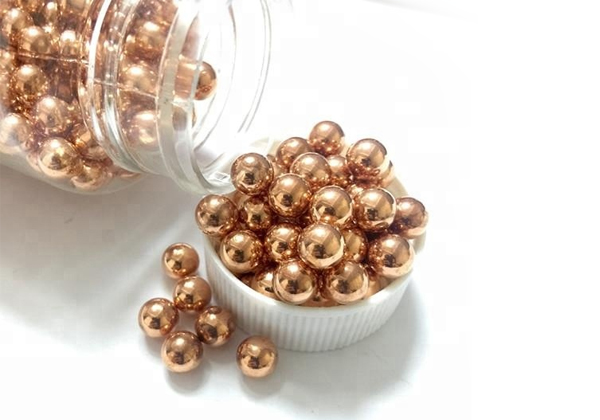
Copper Ball Supplier Guide for Global Market OEM Buyers
For industrial OEM buyers in the global market, the best copper ball supplier is not simply the company with the lowest unit price. The right partner must match material grade, conductivity requirement, size tolerance, surface finish, batch traceability, packaging, export capability, and long-term supply stability. Copper balls are used in electrical contacts, switchgear components, conductive assemblies, grounding systems, thermal transfer devices, valves, instrumentation parts, decorative hardware, and some chemical or plating applications. Because these uses differ sharply, a single “standard copper ball” specification is rarely enough for serious procurement.If your application requires high electrical conductivity, C11000 electrolytic tough pitch copper is often the first grade to evaluate. If machinability, cost control, or corrosion behavior in a less conductivity-critical application is more important, brass alloy balls may be considered. If the product operates in high-current assemblies, EV systems, battery packs, distribution cabinets, or telecom grounding systems, the supplier should provide conductivity testing, chemical composition reports, and dimensional inspection records. For valve seats, flow control, and mechanical contact parts, sphericity, hardness, surface roughness, and corrosion resistance may be more important than the highest IACS conductivity value.A practical short list for OEM sourcing should include three categories of suppliers: direct copper ball manufacturers, precision ball manufacturers with multi-material sourcing capability, and integrated industrial supply partners. Direct manufacturers can be attractive for repeated high-volume orders. Precision ball specialists understand grading, tolerance, lapping, inspection, and packaging disciplines. Integrated supply partners are valuable when global buyers need copper, steel, stainless steel, ceramic, plastic, glass, or aluminum balls under one procurement program. This is especially relevant for buyers in Chicago, Stuttgart, São Paulo, Singapore, Dubai, Rotterdam, Mumbai, and Shenzhen who coordinate multiple plants across regions.When time is limited, use this decision rule: choose C11000 copper balls for conductivity-driven OEM parts; choose brass balls for moderate conductivity with better cost balance or mechanical convenience; choose a supplier that can document material origin, test results, and dimensional capability; and avoid any quotation that does not define grade, diameter tolerance, surface finish, inspection method, packaging, lead time, and Incoterms. A low price without these details can create expensive line stoppages, failed incoming inspection, and customer warranty claims.Buying QuestionPreferred ChoiceAlternative ChoiceVS Decision PointRisk if IgnoredOEM RecommendationNeed maximum conductivity?C11000 pure copper ballBrass alloy ballCopper VS brassHigher resistance and heat buildupSpecify conductivity and test reportNeed lowest stable cost?Brass alloy ballC11000 copper ballCost VS performanceOverpaying for unused conductivityMatch material to actual loadNeed tight diameter control?Precision ball manufacturerGeneral metal parts traderPrecision VS commodityPoor fit or leakageRequest tolerance capability dataNeed global delivery?Export-experienced supplierLocal small workshopGlobal logistics VS local availabilityCustoms delay and missed launchConfirm HS code, packing, and documentsNeed long-term traceability?Certified manufacturer or supply partnerSpot market resellerTraceability VS one-time purchaseUncontrolled material variationAudit batch control before approvalNeed multiple sphere materials?Integrated sourcing partnerSingle-material supplierConsolidation VS specializationFragmented purchasing workloadUse one qualified partner for familiesThe table shows why copper ball sourcing is a technical purchasing decision rather than a simple catalog purchase. A correct supplier comparison should connect application, grade, tolerance, inspection, and logistics. In the global market, ports such as Shanghai, Qingdao, Ningbo, Rotterdam, Los Angeles, Hamburg, Jebel Ali, Busan, and Singapore influence freight time and landed cost. Buyers should ask whether the supplier can support both sea freight for bulk orders and air freight for urgent pilot runs.Copper ball material selection begins with the distinction between commercially pure copper and copper alloy. C11000, often called electrolytic tough pitch copper, is widely recognized for high electrical and thermal conductivity. It is commonly used where current transfer, heat dissipation, and stable conductive performance are critical. Brass, typically a copper-zinc alloy, offers different advantages: improved machinability, attractive color, moderate corrosion resistance, and often better cost control depending on metal prices. However, brass is not a direct substitute for pure copper when a drawing or standard requires high conductivity.For OEM engineers, the question is not “which material is better?” but “which material is correct for the duty cycle?” A copper ball used as a current-carrying contact in a battery connector has different requirements from a brass ball used in a valve, decorative knob, or low-load positioning mechanism. In high-current electrical assemblies, contact resistance can cause temperature rise. Even small variations in material composition, oxidation level, and surface cleanliness can affect performance. In valves or mechanical assemblies, wear behavior, sealing surface, and dimensional repeatability may dominate.C11000 copper balls usually require careful handling because pure copper is softer than many steels and some brass compositions. During production, polishing, storage, and packaging must prevent dents, contamination, and surface oxidation. Brass alloy balls may tolerate handling slightly better in some cases, but alloy composition must still be controlled. Lead-containing brass may be restricted for some markets and applications. With tightening environmental rules in the European Union, California, and many electronics supply chains, buyers should confirm RoHS, REACH, and customer-specific substance requirements.Material FactorC11000 Pure Copper BallBrass Alloy BallC11000 VS BrassBest Application FitProcurement NoteElectrical conductivityVery highModerate to low depending on alloyPure copper winsElectrical contacts, grounding, busbar partsAsk for IACS value or conductivity testThermal conductivityHighLower than pure copperPure copper winsHeat transfer and thermal managementConfirm operating temperature and surface finishMachinabilityLowerOften betterBrass winsValve parts and mechanical assembliesCheck lead-free requirementMaterial costUsually higherOften lowerBrass may winCost-sensitive noncritical conductive partsCompare total landed cost, not only unit priceSoftness and dent riskHigher dent sensitivityGenerally more robustBrass may winBulk handling or nonprecision partsSpecify packaging density and separatorsCompliance riskUsually simpler if pure gradeDepends on alloying elementsC11000 may be simplerElectronics and regulated export marketsRequest RoHS and REACH declarationsAppearanceReddish copper toneYellow-gold toneApplication dependentDecorative and visible hardwareDefine acceptable oxidation and color rangeThis comparison is important because many RFQs use the phrase “copper ball” casually while the drawing may allow brass, bronze, or another copper alloy. Suppliers should not guess. A professional response will ask for the drawing, grade, applicable standard, diameter, tolerance, hardness, conductivity, surface finish, quantity forecast, and end-use environment. If the buyer cannot disclose the final product, at least the operating condition should be shared: dry or wet environment, current load, repeated contact cycles, chemical exposure, and assembly method.Global buyers also need to watch regional terminology. In North America, UNS designations such as C11000 are common. In Europe, EN material numbers or CW designations may appear. In China, GB/T copper grades may be referenced. Japanese, Korean, and Indian specifications may also appear in multinational programs. A competent supplier should help cross-reference standards but should not replace engineering approval. For safety-critical or electrical-certified assemblies, the final material approval should remain with the OEM engineering team.Electrical OEMs have stricter supplier expectations than general hardware buyers. Their components may enter switchgear, energy storage systems, industrial sensors, power tools, charging infrastructure, telecom cabinets, smart meters, medical devices, railway equipment, or automation platforms. Failures can cause heat, signal instability, corrosion, arcing, warranty returns, or certification problems. Therefore, supplier evaluation should focus on five critical factors: material control, precision capability, testing discipline, production stability, and commercial responsiveness.The first factor is material control. A supplier should know whether the balls are made from certified copper wire, rod, slug, or other input forms. Material certificates should be linked to production batches. The second factor is dimensional capability. Diameter tolerance, roundness, surface defects, and sorting method all influence assembly performance. The third factor is testing discipline. Conductivity, hardness, chemical composition, visual inspection, and sample retention may be needed depending on application. The fourth factor is production stability. OEMs need repeatability across months and years, not just a good first sample. The fifth factor is communication and service. Fast quoting, drawing review, export documentation, and corrective action response can determine whether a supplier is suitable for a global supply chain.For buyers in major industrial regions such as the U.S. Midwest, Germany’s Baden-Württemberg and Bavaria, Northern Italy, Mexico’s Bajío region, Guangdong, Jiangsu, Tamil Nadu, Ontario, and the ASEAN electronics corridor, dual sourcing is common. A supplier that can provide stable samples, production PPAP-like documents when required, and clear shipment schedules will be preferred over a low-cost factory that cannot communicate risk. Electrical OEM purchasing teams should also involve quality engineers early. Copper balls may look simple, but their failure modes often appear only after assembly, cycling, or environmental exposure.Supplier FactorStrong Supplier BehaviorWeak Supplier BehaviorStrong VS WeakAudit EvidenceBuyer ActionMaterial controlProvides grade certificates and batch linksOnly states “red copper” or “brass”Traceable VS vagueIncoming material recordsReject unclear material descriptionsDimensional precisionDefines tolerance and measurement toolsQuotes size without toleranceControlled VS approximateInspection reports and gauge calibrationInclude tolerance in POConductivity testingCan test or outsource verified testingAssumes conductivity from gradeVerified VS assumedTest reports and equipment recordsSet test frequency by riskSurface protectionUses clean packing and anti-oxidation controlShips loose in unsuitable bagsProtected VS damagedPacking photos and trial shipmentApprove packaging before bulk orderExport serviceHandles invoices, packing list, origin dataDelays documents after shipmentPrepared VS reactivePast export recordsConfirm documents before dispatchCorrective actionUses root cause and containmentOffers discount onlySystem improvement VS price excuse8D or corrective action examplesEvaluate response during sample stageThe explanation behind this table is simple: copper ball supplier selection should reduce technical and supply-chain uncertainty. A strong supplier behaves like a manufacturing partner, not just a seller. For electrical OEMs, it is reasonable to request samples from multiple lots, inspect incoming parts under real assembly conditions, and run thermal or contact-resistance testing before releasing a mass-production order.Future trends in 2026 will make these five factors even more important. Electrification, AI data centers, renewable energy, and high-density power electronics are increasing demand for reliable conductive components. At the same time, regulations on restricted substances, carbon reporting, and responsible sourcing are expanding. OEMs may ask suppliers to provide not only material certificates but also energy-use data, packaging reduction plans, recycled content information, and evidence of ethical metal sourcing. Suppliers that prepare for digital traceability and sustainability reporting will have an advantage in global programs.Conductivity testing verifies whether a copper ball can meet electrical performance expectations. For C11000 copper, conductivity is commonly discussed as a percentage of IACS, the International Annealed Copper Standard. Exact requirements depend on the end-use and the applicable engineering standard. In some cases, chemical composition certification is enough. In higher-risk programs, buyers may require direct conductivity measurement, contact resistance testing after assembly, salt spray testing, thermal cycling, or accelerated aging. The right level of testing should match the cost of failure.Quality control for copper balls also includes dimensional inspection. Diameter can be measured by micrometer, comparator, air gauge, optical system, or specialized ball gauges depending on precision level. Roundness and surface defects require additional control. Since copper is softer than steel, visual inspection is important for dents, flats, scratches, embedded particles, staining, and oxidation. Surface contamination can affect electrical contact and plating behavior. If copper balls will be plated with silver, tin, nickel, or another finish, the base ball surface condition becomes even more critical.Quality documentation may include material certificate, chemical analysis, conductivity report, hardness test, dimensional inspection report, surface inspection record, packaging approval, and certificate of conformity. For automotive or high-reliability electrical applications, customers may ask for control plans, process flow charts, PFMEA, sample submission documents, and lot traceability. Not every copper ball application needs automotive-level documentation, but the supplier should be able to scale quality support according to buyer risk.SDBALLS Industry Corp has built its reputation in precision steel balls, with quality systems including IATF 16949, ISO 9001, and ISO 14001. While copper balls may be supplied through integrated sourcing depending on specification, the same disciplined mindset is relevant: clear grade definition, inspection planning, controlled packaging, and long-term supplier cooperation. Buyers can review the company’s quality philosophy through its quality and technical capability information when evaluating whether a procurement partner understands precision ball requirements beyond simple trading.Quality ItemTypical MethodHigh-Risk RequirementBasic VS Advanced ControlWhy It MattersBuyer TipChemical compositionMaterial certificate or lab analysisLot-specific verificationCertificate VS verified chemistryConfirms C11000 or brass alloyRequire grade on quotation and invoiceConductivityIACS measurement or approved testBatch conductivity reportAssumed VS measuredPrevents overheating and resistance issuesDefine minimum acceptable conductivityDiameterMicrometer or gauge inspectionStatistical inspection and capability dataSpot check VS process controlEnsures fit and functionState tolerance and sampling planRoundnessRoundness tester or precision comparatorControlled by grade and applicationGeneral VS precision gradeAffects sealing, rolling, and contactRequest roundness if assembly is sensitiveSurface finishVisual inspection or roughness testDefined roughness and defect limitsVisual VS measurableInfluences contact and platingUse approved samples as referenceHardnessMicrohardness or suitable scaleLot control after forming or treatmentOptional VS controlledIndicates deformation resistanceSpecify only when function requires itPackaging integrityPacking inspectionDrop test or transport simulationStandard VS validatedPrevents dents and oxidationApprove labels, bags, and cartonsThe table highlights a common sourcing mistake: buyers often over-focus on diameter and under-specify conductivity or surface cleanliness. For conductive applications, a ball with correct size but poor surface condition may still fail. Conversely, for mechanical valve use, conductivity may be irrelevant while roundness and corrosion behavior are essential. A helpful supplier will challenge incomplete specifications and help the buyer select appropriate inspection items.Custom size capability is one of the main reasons OEMs search beyond standard catalog suppliers. Copper balls may be needed in small diameters for electrical contacts or sensors, medium diameters for valves and assemblies, or larger diameters for thermal mass, decorative hardware, or specialized industrial systems. Diameter is only one part of customization. Buyers may also request tolerance class, surface polish, hardness range, cleaning, plating preparation, special packaging, mixed-size kits, or private labeling.In precision ball manufacturing, tighter tolerances usually require more process control, sorting, and inspection. This increases cost and lead time. For a low-speed noncritical application, an overly tight tolerance may waste money. For a sealing valve, electrical contact nest, or automated assembly feeder, loose tolerance may create jams, leakage, or inconsistent performance. Buyers should discuss the functional tolerance, not just copy a generic tight number. If the application has a mating seat, spring, contact cup, or guide track, sharing the related drawing can help the supplier recommend a realistic specification.Custom orders also require clear agreement on sample approval. A good approach is to request an engineering sample batch, inspect it internally, perform assembly trials, and then freeze the specification before mass production. If color, surface brightness, or oxidation appearance matters, the buyer should approve visual standards under defined lighting. Copper naturally oxidizes, so packaging and storage conditions should be controlled. Vacuum packaging, anti-tarnish paper, sealed bags, desiccants, or oil-free protective packing may be considered depending on downstream use.Leading manufacturers and sourcing partners also support export labeling. For global programs, labels may need customer part number, supplier lot number, material grade, diameter, quantity, net weight, gross weight, country of origin, and date code. Plants in Monterrey, Detroit, Prague, Pune, Penang, and Ho Chi Minh City may use the same part number but require different label formats. Early alignment prevents receiving delays at warehouses and bonded logistics zones.Customization AreaStandard OptionCustom OptionStandard VS CustomCost ImpactBest PracticeDiameterCatalog sizesDrawing-specific sizeFast VS engineeredCustom tooling or sorting may add costConfirm annual forecast before toolingToleranceGeneral commercial toleranceTight precision toleranceEconomy VS performanceTighter tolerance raises inspection costSpecify only what function needsSurface finishGeneral polished surfaceDefined roughness or visual gradeBasic VS controlled appearanceAdditional finishing may be neededUse approved limit samplesMaterial gradeCommon copper or brassC11000 or specified alloyAvailable VS certifiedCertified material may cost moreState UNS or equivalent standardPackagingBulk bags or cartonsSmall packs, trays, anti-tarnish packingBulk VS protectedPackaging can significantly affect landed costBalance protection with logistics efficiencyDocumentationInvoice and packing listFull inspection and traceability packageCommercial VS quality-controlledDocumentation adds time and laborDefine documents before quotationPlating preparationNo special cleaningCleaned surface for downstream platingGeneral VS process-readyCleaning and handling add costCoordinate with plating supplierThis table shows that customization should be treated as value engineering. The cheapest ball may not be the lowest-cost solution if it causes assembly rejects. At the same time, the most precise ball may not be economically justified for a simple weight, decorative insert, or low-stress valve component. Good supplier communication helps find the middle point.A factory audit for copper ball production should be practical, not ceremonial. Buyers should verify whether the supplier can consistently produce or source the required material, maintain clean handling, inspect key characteristics, protect the product during transport, and trace each shipment to a defined batch. The audit may be on site, remote by video, or document-based depending on order size and risk. For strategic programs, an on-site visit is ideal. For smaller global orders, a structured remote audit may be enough.The audit should begin with company legitimacy and production scope. Does the supplier actually manufacture copper balls, outsource them, or act as an integrated procurement partner? All three models can be acceptable if transparent. Problems begin when a trader presents itself as a factory but cannot control material or inspection. The audit should then review incoming material control, production flow, forming or machining process, polishing or finishing, sorting, inspection, nonconforming product control, packaging, warehouse conditions, and shipment documents.Material traceability is especially important for electrical OEMs and regulated industries. Each lot should have a record of material source, production date, inspection data, quantity, and shipment destination. If a quality issue occurs in Hamburg, Houston, Dubai, or Melbourne, the supplier must identify affected batches quickly. Without traceability, a small defect can turn into a global recall or broad containment action. Buyers should also ask how long records are retained and whether sample retention is available.SDBALLS’ manufacturing experience is rooted in more than three decades of precision ball production in Shandong, with multiple production facilities and high annual capacity for its core steel ball portfolio. This manufacturing background matters because ball products require repeatable forming, grading, polishing, inspection, and packing routines. Buyers looking for copper balls, copper alloy balls, or multi-material sphere packages can also explore the company’s broader industrial ball product range to understand how procurement programs may be consolidated.Audit AreaWhat to CheckAcceptable EvidenceFactory VS Trader IssueRed FlagRecommended ActionBusiness scopeManufacturing or sourcing modelLicense, website, references, facility photosTransparent VS hidden outsourcingRefuses to explain production sourceRequire written supply modelMaterial receivingGrade verification and supplier approvalCertificates, incoming inspection recordsControlled VS uncontrolled inputNo grade recordMake material certificate mandatoryProcess controlForming, polishing, cleaning, sortingProcess flow and work instructionsStable process VS ad hoc productionNo documented processAudit process before bulk orderInspection systemTools, calibration, samplingCalibration certificates and reportsMeasured VS guessedUncalibrated toolsRequest third-party inspection if neededTraceabilityLot number and record retentionBatch card, label, shipment recordTraceable VS mixed lotsMixed material binsUse lot-based packagingWarehouse controlCleanliness, humidity, separationStorage photos and proceduresProtected VS exposedOxidized or dented stockDefine storage and packing rulesExport readinessDocumentation and logistics experiencePast bill of lading, commercial documentsExport-capable VS domestic-onlyIncorrect customs dataConfirm Incoterms and HS code earlyThe audit table provides a simple roadmap. Buyers do not need to demand unnecessary paperwork from every small order, but they should never ignore traceability for electrical, automotive, energy, or safety-related components. A supplier that welcomes reasonable audit questions usually has better internal discipline than one that treats questions as a nuisance.Minimum order quantity and pricing are influenced by material grade, diameter, tolerance, finishing, inspection, packaging, and market metal prices. Copper is a globally traded commodity, so quotations may change with copper price movement on major exchanges and regional premiums. Brass alloy pricing also depends on copper and zinc markets. Buyers should understand whether a quotation is valid for a fixed period, tied to a metal index, or based on spot inventory.MOQ negotiation is easiest when the buyer can share realistic annual volume, release schedule, and forecast confidence. Suppliers may accept a lower trial MOQ if there is credible future demand. For custom sizes, tooling, special sorting, or strict documentation, suppliers need enough volume to justify setup. A common strategy is to place a pilot order at a slightly higher unit price, then negotiate tiered pricing after approval. Another method is blanket order with scheduled releases, allowing the supplier to plan material and production while the buyer avoids excessive inventory.Bulk pricing should be compared on total landed cost rather than unit price alone. Freight, customs duty, insurance, packaging, inspection fees, bank charges, local trucking, and inventory carrying cost can change the real cost dramatically. A buyer in Los Angeles may prefer ocean freight through Long Beach for high-volume shipments. A buyer in Central Europe may compare Hamburg, Rotterdam, Koper, and rail routes from China. A buyer in the Middle East may use Jebel Ali as a redistribution hub. A buyer in South America may compare Santos, Callao, and Cartagena depending on final plant location.Packaging affects MOQ and freight cost. Copper balls are dense, and excessive small packaging raises labor and carton volume. However, insufficient packaging can cause dents and oxidation. For precision or visible-surface balls, the cost of protective packing is often justified. For robust nonappearance applications, bulk packing may be acceptable. The buyer should request both options during quotation and test packaging through a sample shipment.Negotiation should also cover payment terms, lead time, inspection responsibility, quality claim window, replacement policy, and currency. Some suppliers quote EXW, while global OEMs may prefer FOB Qingdao, FOB Shanghai, CIF Rotterdam, DAP warehouse, or other Incoterms. The cheapest EXW price may become expensive if the buyer lacks reliable freight consolidation. Integrated suppliers can sometimes combine copper balls with other industrial balls, reducing administrative and logistics burden.Copper balls and brass balls appear in many industries, but each application has a different performance logic. In electrical contacts, the key concerns are conductivity, contact resistance, surface cleanliness, oxidation, and mechanical stability under repeated engagement. In valves, the concerns may be roundness, corrosion, sealing, hardness, and compatibility with fluid. In thermal management, the focus may be thermal conductivity, surface area, heat transfer efficiency, and compatibility with the surrounding structure. Using one generic specification across these applications is a common mistake.Electrical contact applications may include switches, relays, connectors, battery modules, grounding devices, test fixtures, and conductive transfer systems. C11000 copper is often considered because of its strong conductivity. However, pure copper can oxidize, so some designs use plating or controlled contact pressure. Brass may be used in less demanding electrical functions or where mechanical characteristics and cost matter more than conductivity. The supplier should understand whether the ball is a primary current path or a secondary positioning/contact element.Valve applications may use brass or copper alloy balls depending on fluid, pressure, and sealing design. Brass is common in plumbing and fluid control components, but alloy compliance is important for potable water and environmental regulations. Lead-free brass may be required in many markets. For chemical equipment, compatibility must be reviewed carefully. A copper ball may not be suitable for every fluid environment. Buyers should confirm standards for water, gas, oil, refrigerant, or specialty chemicals.Thermal management uses may include heat transfer media, thermal interface assemblies, heat exchangers, experimental cooling systems, and electronics-related heat spreading. Copper’s thermal conductivity is valuable, but surface condition and oxidation still matter. In 2026 and beyond, demand for thermal materials will continue to grow because EV charging, power electronics, data centers, and high-performance industrial automation generate increasing heat density. Copper ball suppliers that can support clean, consistent, and well-documented products will be better positioned for these emerging applications.For industry selection examples, buyers can review how precision balls support different mechanical and industrial systems through SDBALLS’ application overview for industrial balls. Although every copper ball program should be validated by the buyer’s engineering team, application-based thinking helps avoid over-specification and under-specification.Case study one: an electrical equipment OEM in Germany needed conductive balls for a spring-loaded contact assembly. The original supplier provided low-cost copper-colored alloy balls without conductivity documentation. During thermal testing, several assemblies exceeded the allowed temperature rise. The buyer revised the specification to C11000, added conductivity reporting, and required sealed anti-oxidation packaging. The unit price increased, but assembly rejects dropped and certification testing stabilized.Case study two: a valve component buyer in Mexico used pure copper balls because the internal purchasing description said “copper.” The engineering team later found that brass alloy balls provided better machinability and sufficient corrosion behavior for the actual medium. After changing to a controlled brass specification, the buyer reduced cost and improved handling durability. This case shows why copper VS brass comparison should be application-based.Case study three: a thermal equipment developer in Singapore needed small batches of copper balls for prototype heat transfer experiments. MOQ was a problem with direct factories. An integrated supply partner helped source pilot quantities, then supported larger production once the design was approved. The value was not only product supply, but also flexible procurement during development.SDBALLS Industry Corp, also known as Shandong SDBALLS Industry Corp Ltd., is a precision ball manufacturer and integrated supply partner headquartered in Tai’an City, Shandong Province, China. Since 1996, the company has developed strong manufacturing experience in carbon steel balls, chrome steel balls, stainless steel balls, and related spherical products. Its core production grades range from high-precision bearing applications to general industrial and grinding uses. For global buyers, this background provides a practical foundation for understanding tolerance, surface quality, inspection, packaging, and export expectations.From a technological capability perspective, SDBALLS works with precision ball standards, grading requirements, dimensional inspection, and quality system thinking. Copper balls are different from steel balls in material behavior, but the discipline of ball procurement remains similar: clear grade, controlled dimension, reliable surface, correct packaging, and documented batch information. When customers need copper, brass, aluminum, glass, ceramic, or plastic balls alongside steel balls, SDBALLS can act as an integrated sourcing partner, helping reduce the number of suppliers that purchasing teams must manage.From a manufacturing capability perspective, SDBALLS operates multiple production facilities and has built stable capacity in its core steel ball categories. This manufacturing culture supports practical communication with factories and subcontracted material partners when multi-material spheres are required. Buyers benefit because the team understands production constraints, inspection realities, and packaging risks. Instead of treating copper balls as simple merchandise, the company can support specification review, sample coordination, and supply chain planning.From a service capability perspective, SDBALLS serves customers in more than 50 countries and supports international purchasing teams with export communication, documentation, and consolidated procurement options. For buyers in North America, Europe, the Middle East, Southeast Asia, and Latin America, the company can help evaluate whether direct production, integrated sourcing, or combined shipment is the best approach. Its global sales support and customer-focused model are particularly useful when OEMs need repeated communication across engineering, purchasing, quality, and logistics departments.Buyers who want to understand the company’s background can visit the SDBALLS company profile. For procurement teams, the best next step is to send a drawing or specification, expected annual volume, target application, required documents, and destination port or delivery address. With this information, the supplier can advise whether C11000 copper balls, brass alloy balls, or another sphere material is the most suitable option.In the global market, SDBALLS is not positioned merely as a catalog seller. Its value is strongest when customers require stable communication, multi-material sourcing, technical discussion, and long-term cooperation. This is important for OEMs that manage complex bills of materials and need one partner to coordinate precision balls for bearings, automotive parts, caster wheels, sliding systems, ball transfer units, outdoor applications, and special conductive or nonconductive sphere requirements.If the ball is part of a primary electrical or thermal path, start with C11000 copper and verify conductivity. If the ball is mainly mechanical, decorative, or used in a moderate-conductivity role, brass may be suitable. Always confirm the application environment and compliance requirements before approval.Not always. Low-risk or non-electrical applications may only need material certification. Electrical OEMs, high-current systems, and safety-related assemblies should consider batch conductivity testing or at least periodic verification. The test frequency should reflect risk, volume, and customer requirements.Copper naturally oxidizes when exposed to air, humidity, and handling contamination. Color variation does not always mean functional failure, but it can matter for electrical contact, plating, or visible parts. Buyers should define acceptable appearance, storage condition, and packaging method.Sometimes, but not automatically. Brass has lower conductivity than pure copper. It may work in low-current or mechanical-contact roles, but it should not replace C11000 copper where high conductivity is specified unless engineering approves the change after testing.A strong RFQ should include material grade, diameter, tolerance, quantity, annual forecast, application, required test reports, surface requirement, packaging, destination, Incoterms, and target lead time. If possible, attach a drawing and approved standard.MOQ depends on size, material, stock availability, tolerance, and documentation. Standard or available sizes may allow lower MOQ. Custom grades, tight tolerances, and special packaging normally require higher MOQ. Trial orders can often be negotiated before mass production.China, Europe, India, Japan, Korea, North America, and Southeast Asia all have relevant industrial supply bases. For export logistics, ports and hubs such as Qingdao, Shanghai, Ningbo, Singapore, Busan, Rotterdam, Hamburg, Los Angeles, Jebel Ali, and Santos can affect delivery time and landed cost.Buyers should ask suppliers about recyclable packaging, restricted substance compliance, responsible metal sourcing, energy management, and carbon reporting readiness. Sustainability is becoming part of supplier approval, especially for electronics, automotive, energy, and European market programs.SDBALLS is primarily a precision steel ball manufacturer and also acts as an integrated supply partner for multi-material spheres, including copper and brass balls depending on specification. Buyers should submit drawings and requirements so the team can confirm the best supply route.Buyers can begin by reviewing SDBALLS’ product and quality information, then sending a detailed RFQ. The most efficient inquiry includes application, grade, tolerance, quantity, destination, and required documents. This allows the supplier to respond with a technically meaningful quotation.Choosing copper ball suppliers for the global market requires a balance of engineering judgment and purchasing discipline. The most reliable result comes from defining the material correctly, comparing C11000 pure copper with brass alloy based on function, verifying conductivity and quality controls, approving realistic tolerances, auditing traceability, negotiating MOQ with forecast data, and matching the product to the actual application. With global electrification, sustainability expectations, and supply chain complexity increasing through 2026, OEMs should favor suppliers and integrated partners that communicate clearly, document consistently, and support long-term cooperation.