Steel Ball Grades Explained: G10, G100, G1000 and What They Mean
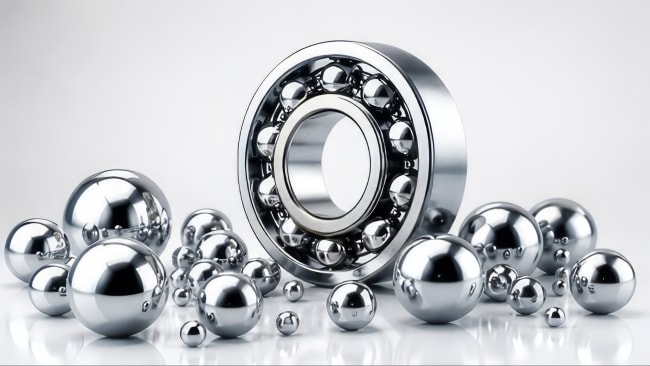
When purchasing steel balls, buyers often see grade descriptions such as G10, G100, G500, or G1000. These grade numbers are important because they indicate the precision level of the ball.
However, many buyers are not sure what these grades mean or how to choose the right one. Selecting a grade that is too low may affect product performance, while selecting a grade that is too high may increase cost unnecessarily.
This article explains steel ball grades in a practical way for industrial buyers.
1. What Does Steel Ball Grade Mean?
Steel ball grade is related to dimensional accuracy, roundness, surface quality, and variation within a batch. In general, the lower the grade number, the higher the precision.
For example:
G10 is more precise than G100
G100 is more precise than G500
G500 is more precise than G1000
A high-precision grade means the balls have tighter diameter variation, better roundness, and more consistent quality.
2. Why Grade Matters
Steel balls are used in many applications, but not every application requires the same precision.
In high-speed bearings, precision machinery, and automotive systems, tight tolerance and good roundness are very important. Poor precision may cause noise, vibration, wear, or performance failure.
In general hardware, wheels, sliding systems, toys, or basic mechanical applications, a lower precision grade may be sufficient and more cost-effective.
For grinding media or polishing applications, size consistency and surface condition may be more important than ultra-high precision grade.
Choosing the right grade helps balance performance and cost.
3. Common Steel Ball Grades
G10 and G16
These are high-precision grades commonly used in precision bearings, high-performance mechanical systems, and applications requiring very tight tolerance and excellent roundness.
They are typically used when performance, noise control, and fatigue life are critical.
G25 and G40
These grades are also used in bearing and precision applications, especially where stable performance is required but the application does not require the highest precision level.
G100
G100 is commonly used for many industrial applications. It offers a good balance between precision and cost. It may be suitable for mechanical components, automotive parts, hardware, and general bearing-related uses depending on the application.
G200 to G500
These grades are often used in general industrial components, caster wheels, sliding systems, bicycles, and other hardware applications. They provide stable performance at a more economical cost.
G1000 and Above
G1000 and higher grades are generally used for less precision-critical applications. They may be suitable for low-speed, non-bearing, bulk industrial, or general-purpose applications where cost efficiency is more important than tight tolerance.
4. Grade Is Not the Only Specification
A common mistake is to focus only on grade while ignoring other key specifications.
For example, a G100 chrome steel ball and a G100 stainless steel ball may have very different hardness and corrosion resistance. A G1000 carbon steel ball may still be suitable for a certain application if the material and hardness meet the requirement.
Buyers should consider:
Material
Grade
Diameter tolerance
Hardness
Surface finish
Corrosion resistance
Load and working environment
Quantity and cost target
Grade is important, but it must be considered together with the whole specification.
5. How to Choose the Right Grade
For bearings and precision machinery, choose high-precision grades such as G10, G16, G25, or G40 depending on performance requirements.
For automotive components, mechanical parts, and industrial hardware, G100 to G500 may be suitable depending on the design.
For caster wheels, bicycle components, sliding systems, and general hardware, G200 to G1000 may offer a good cost-performance balance.
For grinding, polishing, or bulk media applications, discuss the required size tolerance, hardness, and surface condition with the supplier.
6. What Information Should Buyers Provide?
When requesting a quote, buyers should provide:
Ball diameter
Material grade
Required precision grade
Hardness requirement
Application
Quantity
Packing requirement
Inspection or certificate requirements
If the exact grade is not known, sharing the application can help the supplier recommend a suitable option.
Conclusion
Steel ball grade is a key indicator of precision. Lower grade numbers such as G10 and G25 represent higher precision, while grades such as G500 and G1000 are used for more general applications.
The best grade is not always the highest grade. The right choice depends on the application, required performance, and cost target.
SDBALLS supplies steel balls across a wide grade range, supporting bearing, automotive, hardware, grinding, hunting, and customized industrial applications.
Not sure which steel ball grade is right for your application?
Send your specifications to SDBALLS for technical support and quotation.

About the Author
We are SD Ball, a professional manufacturer dedicated to delivering high-precision steel ball solutions worldwide. With years of expertise, we specialize in advanced production processes, strict quality control, and customized solutions to support diverse industrial applications. From material selection to final inspection, we provide reliable products and consistent performance to help our clients achieve higher efficiency, durability, and product quality.
Share