
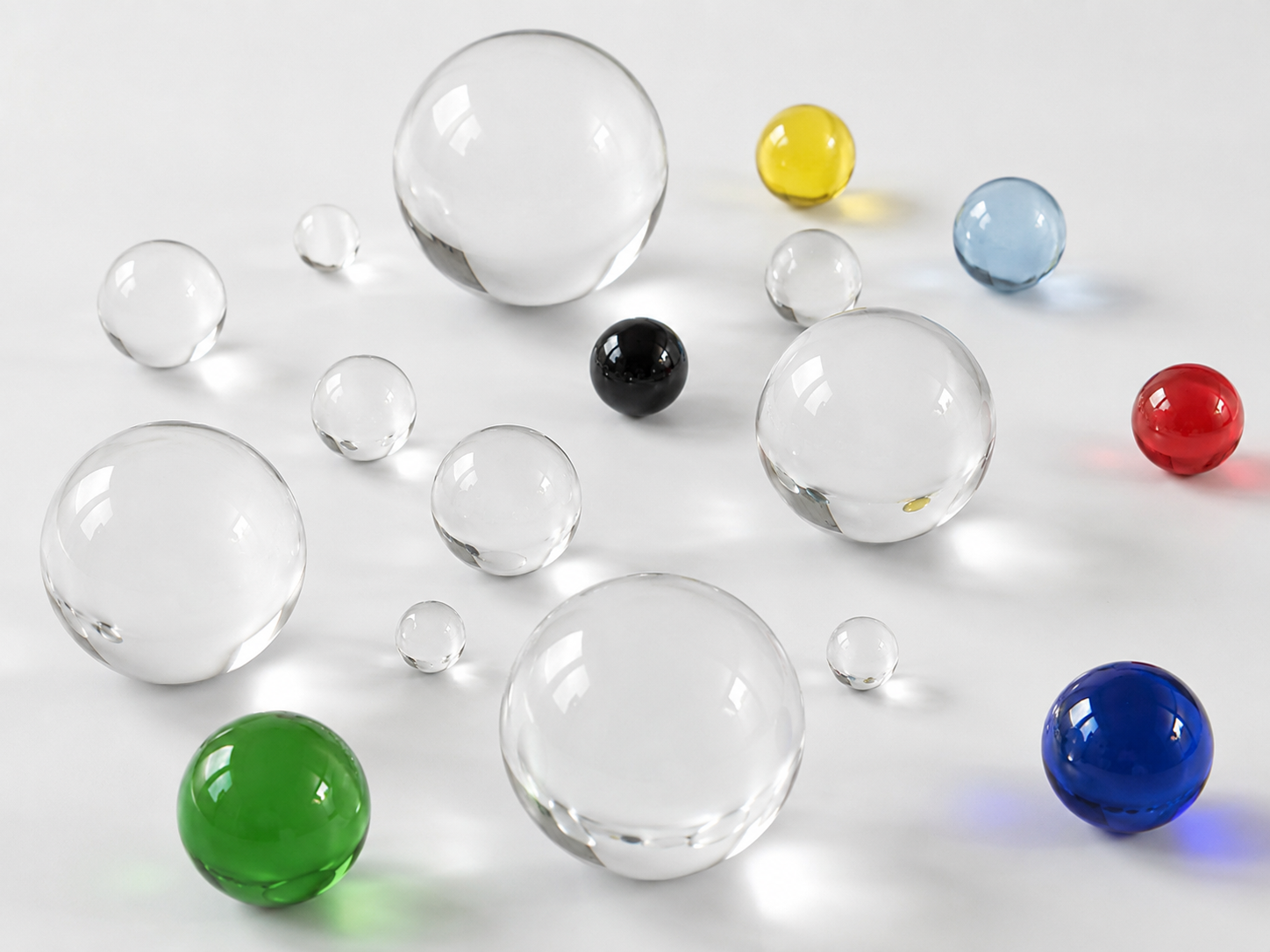
-8.png)
-9.png)
-9.png)
-9.png)
-9.png)
Kalknatronglas-Kugeln – Präzisions-Glaskugeln für Ventile, Durchflussmesser und Industriekomponenten
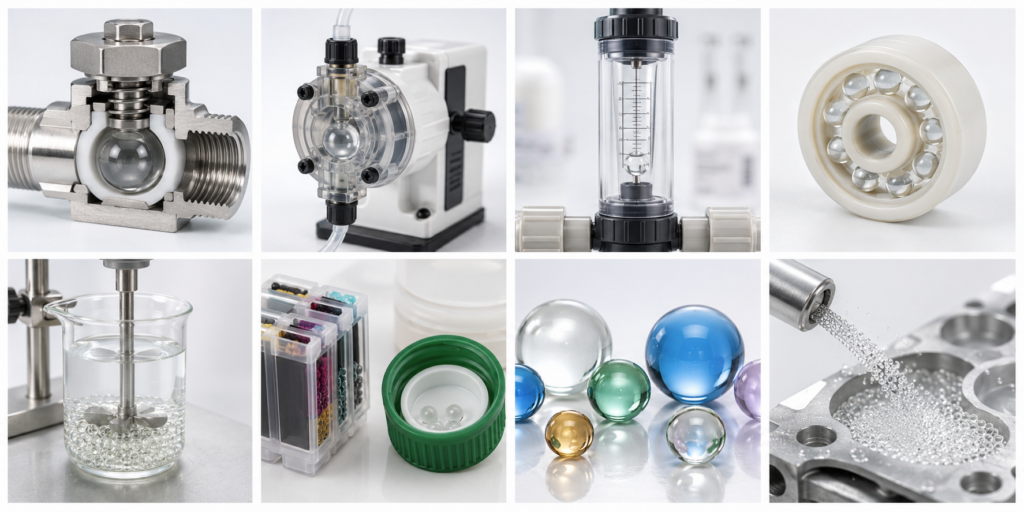
Kalk-Natron-Glaskugeln sind leichte, nicht magnetische und elektrisch isolierende Glaskugeln, die in preiswerten Rückschlagventilen, Dosierpumpen, Messgeräten, Durchflusskontrollkomponenten, Kunststofflagern, Rührwerken, Tintenpatronen, Flaschenverschlüssen, Schleif- und Dekorationsanwendungen verwendet werden. Sie bieten eine gute chemische Beständigkeit, geringe Flüssigkeitsaufnahme und ausgezeichnete Korrosionsbeständigkeit in vielen verträglichen Medien.
SDBALLS liefert Kalk-Natron-Glaskugeln in klaren und farbigen Ausführungen, mit einem Durchmesserbereich von 2,0 mm bis 100,00 mm und üblichen Präzisionsgraden wie G100, G200, G500 und G1000. Sie sind eine kostengünstige Glaskugeloption, wenn die Anwendung chemische Inertheit, elektrische Isolierung und visuelles Erscheinungsbild erfordert, aber keine starken mechanischen Stöße oder schweren Temperaturschock beinhaltet.
| Artikel | Website-Content |
| Produktname | Präzisionsglaskugeln / farbige Glaskugeln / industrielle Glas- Sphären |
| Material | Kalk-Natron-Glas / Kalk-Natron-Silikatglas |
| Durchmesserbereich | 2,0 mm – 100,00 mm |
| Präzisionssorten | G100, G200, G500, G1000 |
| Härte | Mohs 6 typische Referenz |
| Typische Anwendungen | Rückschlagventile, Dosierpumpen, Durchflussmesser, Messgeräte, Kunststofflager, Rührwerke, Tintenpatronen, Flaschenverschlüsse, Schleifen und Dekoration |
Dieses Produkt teilen
Produktübersicht
Kalk-Natron-Glaskugeln sind wirtschaftliche Präzisionsglaskugeln, die aus Kalk-Natron-Silikatglas hergestellt werden, der am häufigsten verwendeten Glasfamilie in industriellen und verbrauchernahen Komponenten. Sie werden gewählt, wenn der Anwender eine harte, saubere, nicht magnetische und elektrisch isolierende Kugelkomponente mit guter Korrosionsbeständigkeit und stabiler Optik benötigt.
Im Vergleich zu Metallkugeln sind Kalk-Natron-Glaskugeln in vielen verträglichen Umgebungen nicht leitfähig, nicht magnetisch und korrosionsbeständig. Im Vergleich zu Kunststoffkugeln bieten sie eine höhere Härte, bessere Dimensionsstabilität und eine glatte Glasoberfläche. Im Vergleich zu Borosilikatglaskugeln sind Kalk-Natron-Glaskugeln in der Regel die wirtschaftlichere Option, weisen jedoch eine geringere Temperaturwechselbeständigkeit auf und sollten nicht für starke Temperaturwechsel oder Hochtemperatur-Laborbedingungen ausgewählt werden.
Werkstoffauswahl & technische Positionierung
Die korrekte Branchenterminologie umfasst Kalk-Natron-Glaskugeln, Kalk-Natron-Glassphären, Kalk-Natron-Silikatglaskugeln, Präzisionsglaskugeln, farbige Glaskugeln und Glaskugeln für Rückschlagventile oder Durchflussmesser. Dieses Produkt sollte nicht als lagerfähige Stahlkugeln, Keramikkugeln oder Hochtemperatur-Borosilikatkugeln positioniert werden.
Kalk-Natron-Glas eignet sich für kostensensible Ventil-, Pumpen-, Instrumenten-, Verpackungs- und Dekorationsanwendungen, bei denen Korrosionsbeständigkeit, Isolation und eine glatte Oberflächenqualität wichtig sind. Bei hohen Temperaturschocks, hohen Betriebstemperaturen, starkem Chemikalienkontakt, hohen Lasten oder starker Abrasion sollte SDBALLS entsprechend der Arbeitsumgebung Borosilikatglas, Keramikkugeln, Edelstahlkugeln oder andere Werkstoffe empfehlen.
Technische Spezifikationen
| Technischer Artikel | Empfohlener Seiteninhalt |
| Durchmesser | 2,0 mm – 100,00 mm; andere Größen vorbehaltlich der Produktionsbestätigung |
| Präzisionsklasse | G100 / G200 / G500 / G1000; Auswahl je nach Anwendung und Kostenziel |
| Härte | Mohs 6 typische Referenz |
| Dichte | ca. 2,4–2,6 g/cm³ |
| Elastizitätsmodul (E-Modul) | ca. 70 GPa, Referenzwert für Kalk-Natron-Glas |
| Oberflächenbeschaffenheit | Polierte, glänzende, matte oder farbige Oberfläche je nach Projektanforderung |
| Farboptionen | Klar, Grün, Dunkelblau, Himmelblau, Rot, Schwarz, Gelb und kundenspezifische Farben |
| Elektrisches Verhalten | Isolierend; nicht leitfähig |
| Magnetismus | Nicht magnetisch |
| Korrosionsverhalten | Hervorragende Korrosionsbeständigkeit in vielen verträglichen Medien; Anwendungsumgebung sollte bestätigt werden |
| Nutzungsbeschränkung | Nicht empfohlen für starke mechanische Stöße, hohe Temperaturschockbelastungen oder stark abrasive Bedingungen |
Chemische Zusammensetzung – Referenz
| Bestandteil | Typischer / Referenzbereich |
| SiO2 | 63.00-81.00% |
| Na2O | 9.00-15.00% |
| CaO | 7.00-14.00% |
| MgO | Max. 6,00 % |
| Al2O3 | Max. 2,00 % |
| Li2O | Max. 2,00 % |
| K2O | Max. 1,50 % |
| TiO2 | max. 0,80 % |
| Fe2O3 | max. 0,80 % |
| PbO | max. 0,010 % |
Hinweis: Die Zusammensetzungsbereiche dienen als Referenzwerte für die Produktseite. Die endgültige Materialspezifikation sollte der vereinbarten Bestellung, Zeichnung oder Lieferantenspezifikation folgen.
Mechanische, elektrische und chemische Eigenschaften
Kalk-Natron-Glaskugeln vereinen eine harte Glasoberfläche, geringe Flüssigkeitsaufnahme und hervorragende elektrische Isolierung. Die Mohshärte von etwa 6 unterstützt den Einsatz in vielen leichten mechanischen und Instrumentenbaugruppen, während die nicht-magnetische und nicht-leitfähige Beschaffenheit sie für Mess- und Steuergeräte geeignet macht, bei denen Stahlkugeln die elektrische oder magnetische Leistung beeinträchtigen könnten.
Das Produkt ist in vielen kompatiblen Medien chemisch stabil und wird häufig in Ventilen, Dosiersystemen und Verpackungskomponenten eingesetzt. Kalk-Natron-Glas ist jedoch ein sprödes Material und sollte nicht verwendet werden, wenn hohe Stoßbelastungen, starke Schlagbeanspruchung, extreme Temperaturwechsel oder stark abrasive Medien vorliegen. Die Anwendungsbedingungen sollten vor der Auswahl bestätigt werden.
Anwendungen & Anwendungseignung
| Anwendung | Eignungsstufe | Warum es passt | Hinweis für den Käufer |
| Kostengünstige Rückschlagventile | Sehr gut | Nicht-magnetisch, korrosionsbeständig und reaktionsschnell in leichten Ventilbaugruppen | Medienverträglichkeit, Dichtungsdesign und Kugelqualität bestätigen |
| Dosierpumpen und Dosiersysteme | Sehr gut | Glatte Glasoberfläche und stabile Geometrie unterstützen wiederholbare Durchflussregelbewegungen | Flüssigkeitschemie und Betriebstemperatur bestätigen |
| Durchflussmesser und Messinstrumente | Sehr gut | Klares oder farbiges Glas, Isolierung und stabile Abmessungen unterstützen visuelle und instrumentelle Anwendungen | Farbe, Größentoleranz und optische Anforderungen bestätigen |
| Kunststofflager und leichte Rollenbaugruppen | Gut | Glas bietet Härte und Korrosionsbeständigkeit in Baugruppen mit geringer Last | Nicht für Schwerlast- oder stoßbelastete Lagernutzung geeignet |
| Rührwerke und Mischkomponenten | Gut | Chemisch stabil und geringe Absorption in kompatiblen Medien | Abrieb- und Bruchrisiko bestätigen |
| Tintenpatronen und Flaschenverschlüsse | Gut | Saubere, inerte und farbige Optionen unterstützen Verpackungs- und Verbrauchsteile | Sauberkeit und Farbkonsistenz bestätigen |
| Kunst, Dekoration und Ausstellung | Sehr gut | Mehrere Farben und polierte Oberfläche bieten attraktive visuelle Effekte | Farbe, Oberflächengüte und Verpackungsschutz bestätigen |
| Schleif- oder Kugelstrahlmittel | Anwendungsabhängig | Glasmedien können für ausgewählte leichte Schleif- oder Oberflächenbearbeitungen verwendet werden | Nicht für stark abrasive oder schwere Fräsbedingungen |
Leitfaden zur Werkstoffauswahl
| Materialoption | Typische Festigkeit | Einschränkung | Wann zu empfehlen |
| Kalk-Natron-Glaskugeln | Wirtschaftlich, nicht magnetisch, isolierend, gute Korrosionsbeständigkeit, klares oder farbiges Erscheinungsbild | Geringere Temperaturwechselbeständigkeit als Borosilikatglas; spröde unter Schlagbelastung | Rückschlagventile, Durchflussmesser, Flaschenverschlüsse, Instrumente, Dekoration und leichte Industriekomponenten |
| Borosilikatglaskugeln | Bessere Temperaturwechsel- und Chemikalienbeständigkeit als Kalk-Natron-Glas | Höhere Kosten und nicht immer erforderlich für einfache Anwendungen | Labor, thermische Zyklen, höhere chemische Beständigkeit und anspruchsvollere Fluidsysteme |
| Plastikkugeln | Leicht, kostengünstig, geräuscharm und flexible Materialoptionen | Geringere Härte und manchmal geringere Formstabilität als Glas | Schwimmerventile, Leichtbaukomponenten, nichtmetallische Anwendungen mit geringer Belastung |
| Edelstahlkugeln | Höhere mechanische Festigkeit und breite industrielle Nutzung | Leitend und magnetisch oder nicht magnetisch je nach Güteklasse; höhere Kosten für korrosionsbeständige Sorten | Anwendungen mit höherer Belastung, mechanischer Festigkeit oder metallischer Abdichtung |
| Keramikkugeln | Hohe Härte, ausgezeichnete Verschleiß- und Korrosionsbeständigkeit | Höhere Kosten und spröde unter Schlagbelastung je nach Keramiktyp | Starke Abnutzung, chemische Beanspruchung, elektrische Isolierung oder Hochleistungsumgebungen |
Fertigung & Prozesskontrolle
SDBALLS kontrolliert die Lieferung von Glaskugeln durch Materialauswahl, Formung oder Beschaffungssteuerung, Größenbestimmung, Schleifen oder Polieren bei Bedarf, Bestätigung von Farbe und Oberfläche, Reinigung, Sortierung, Inspektion und schützende Verpackung. Bei farbigen Glaskugeln sollte die Farbkonsistenz und das Erscheinungsbild der Oberfläche gemäß Musterfreigabe oder Käuferspezifikation bestätigt werden.
Da Glaskugeln empfindlich gegenüber Stößen und Kantenbeschädigungen während der Handhabung sind, sollte sich die Prozesskontrolle nicht nur auf Größe und Güteklasse konzentrieren, sondern auch auf die Oberflächenintegrität, Sauberkeit, Verpackungsschutz und Chargenkonsistenz.
Qualitätskontrolle & Prüfung
Typische Prüfpunkte umfassen Durchmesser, Güteklasse, Rundheit, Oberflächenerscheinung, Farbe, Transparenz wo erforderlich, sichtbare Mängel, Abplatzungen, Risse, Kratzer, Verunreinigungen und Verpackungszustand. Für OEM-Projekte kann SDBALLS Prüfberichte, Musterfreigabe, Drittanbieterprüfungen, RoHS-Anfragen und kundenspezifische Etikettierung besprechen.
| Prüfmerkmal | Zweck |
| Durchmesser und Güteklasse | Sicherstellung von Montagepassung und Bewegungskonsistenz |
| Rundheit und Oberflächenerscheinung | Unterstützung der Abdichtung, Roll- und Sichtleistung |
| Farbe und Transparenz | Aufrechterhaltung der visuellen Identifikation und dekorativen Konsistenz |
| Abplatzungen, Risse und Kratzer | Verringerung des Bruch- und Feldausfallrisikos |
| Sauberkeit | Unterstützt den Einsatz in Ventilen, Pumpen, Instrumenten und Verpackungskomponenten |
| Verpackungsinspektion | Verhindert Schäden während des Exporttransports und der Lagerung |
Verpackungsoptionen
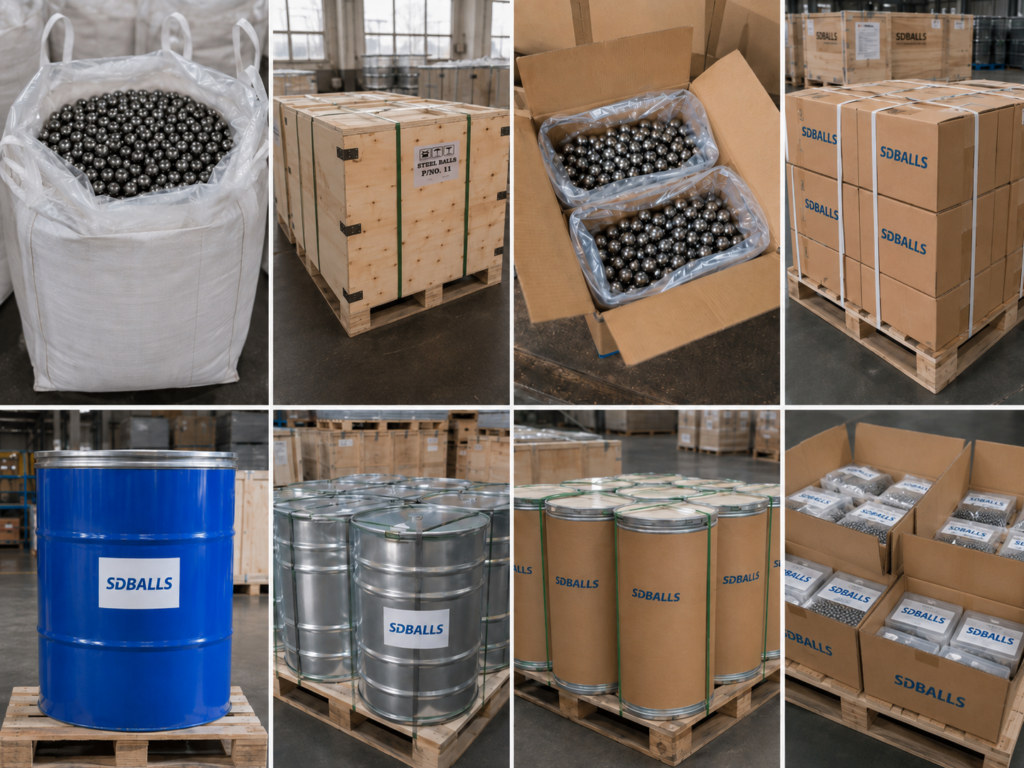
Kalknatronglas-Kugeln können in Großsäcken, Kartons, Flaschen, Trommeln, Eimern, Paletten oder kundenspezifischen OEM-Verpackungen geliefert werden. Bei Kugeln mit kleinem Durchmesser oder polierten Kugeln werden Schutzbeutel und Kartondämpfung empfohlen, um Oberflächenschäden und Bruch während des Transports zu reduzieren.
Für Distributoren und OEM-Kunden können die Etiketten je nach Auftragsanforderung Material, Durchmesser, Gütegrad, Farbe, Chargennummer, Menge, Nettogewicht, Bruttogewicht und Kundenteilenummer enthalten.
Hinweise zur Angebotsanfrage
Für eine genaue Angebotserstellung bestätigen Sie bitte: Materialart, Durchmesser in mm oder Zoll, Präzisionsgrad, Farbe, Oberflächenbeschaffenheit, Menge, Verpackungsart, Anwendung, Arbeitsmedium, Betriebstemperatur, Sauberkeitsanforderung, Prüfdokumente, Bestimmungshafen und Lieferbedingung.
Bei Austauschprojekten werden Käufer gebeten, Zeichnungen, aktuelle Spezifikationsblätter des Lieferanten, Fotos, Muster, Toleranzanforderungen und Details der Arbeitsumgebung, insbesondere Flüssigkeitschemie, Temperaturänderung, Belastungs- und Stoßbedingungen, bereitzustellen.
Technische FAQ
Wofür werden Kalk-Natron-Glaskugeln verwendet?
Kalknatronglas-Kugeln werden in wirtschaftlichen Rückschlagventilen, Dosierpumpen, Durchflussmessern, Messgeräten, Kunststofflagern, Rührwerken, Tintenpatronen, Flaschenverschlüssen, leichten Schleifanwendungen und dekorativen Produkten verwendet.
Welchen Durchmesserbereich kann SDBALLS liefern?
Der Standardproduktseitenbereich beträgt 2,0 mm bis 100,00 mm. Andere Größen können je nach Produktionsmachbarkeit und Auftragsmenge besprochen werden.
Welche Präzisionssorten sind erhältlich?
Zu den üblichen Präzisionsgraden gehören G100, G200, G500 und G1000. Der beste Grad hängt von der Anwendung, der Dichtungsanforderung, der Bewegungsstabilität und der Kostenvorgabe ab.
Sind Kalk-Natron-Glaskugeln magnetisch oder leitfähig?
Nein. Kalknatronglas-Kugeln sind nicht magnetisch und elektrisch isolierend, was sie in Mess- und Steuergeräten nützlich macht, wo Metallkugeln möglicherweise nicht geeignet sind.
Sind Kalk-Natron-Glaskugeln für hohe Temperaturen oder Temperaturschocks geeignet?
Kalknatronglas-Kugeln werden nicht für starke Thermoschocks oder starke Temperaturwechsel empfohlen. Für eine höhere Thermoschockbeständigkeit sind Borosilikatglaskugeln in der Regel die bessere Wahl.
Können Kalk-Natron-Glaskugeln in chemischen Flüssigkeiten eingesetzt werden?
Sie bieten eine gute chemische Stabilität in vielen kompatiblen Medien und werden häufig in Ventilen und Dosiersystemen eingesetzt. Die genaue Chemikalie, Konzentration, Temperatur und Einwirkzeit sollte vor der Auswahl bestätigt werden.
Welche Farben sind verfügbar?
Zu den gängigen Farben gehören klar, grün, dunkelblau, himmelblau, rot, schwarz und gelb. Kundenspezifische Farben können je nach Menge und Anwendungsanforderungen besprochen werden.
Können Kalk-Natron-Glaskugeln Stahlkugeln ersetzen?
Nur in geeigneten Anwendungen mit geringer Belastung und Korrosionsbeständigkeit. Sie sind nicht magnetisch und isolierend, aber spröde und können Stahlkugeln in Anwendungen mit hoher Belastung, Stoßbeanspruchung oder hoher Ermüdung in Lagern nicht ersetzen.
Verwandte Produkte
- Glaskugeln
- Borosilikatglaskugeln für bessere Temperaturwechselbeständigkeit
- schwarze Glaskugeln
- Kunststoffkugeln für leichte nichtmetallische Anwendungen
- Keramikkugeln für hohe Verschleiß- und Korrosionsbeständigkeit
- Glaskugeln für Ventile und Fluidsysteme
- Glaskugeln für Verpackungs- und Dekorationsanwendungen
- SDBALLS Qualitätskontrolle
Antrag auf Anlage A
Nehmen Sie noch heute Kontakt mit uns auf, wenn Sie eine unserer Dienstleistungen benötigen. (*) Kennzeichnet Pflichtfelder.