
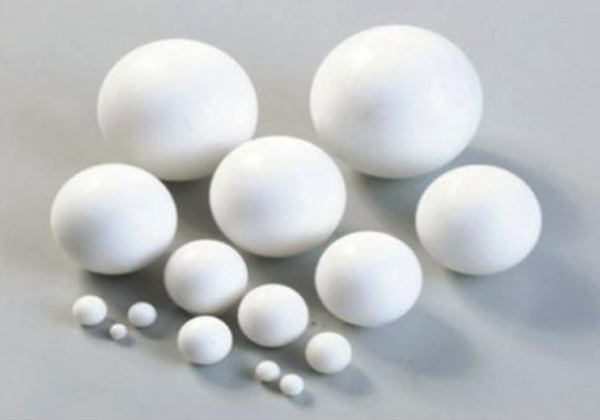
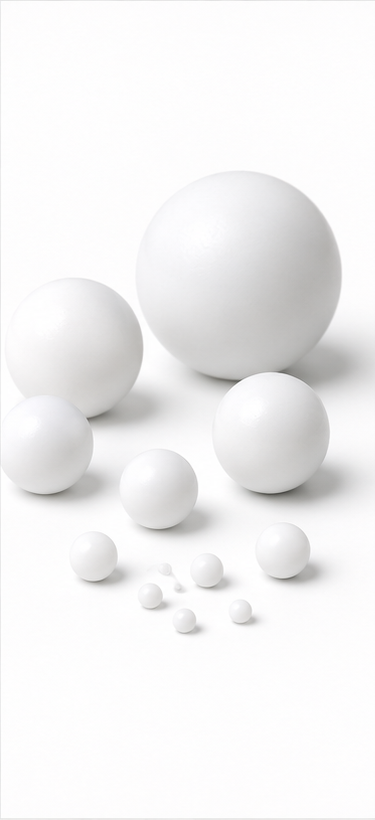
Teflon Balls / PTFE Balls – Low-Friction Chemical-Resistant Plastic Balls
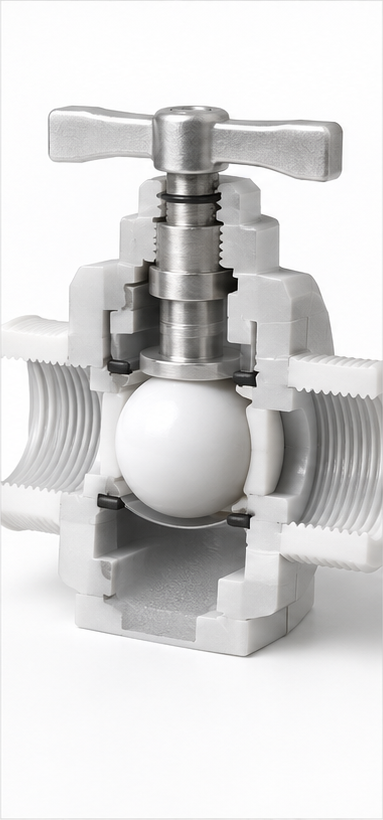
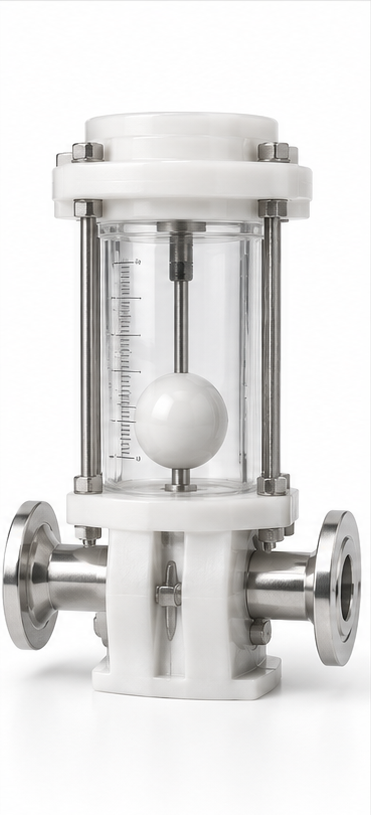
Teflon Balls, also known as PTFE balls, are high-performance fluoropolymer balls designed for applications requiring excellent chemical resistance, very low friction, non-stick surface behavior, electrical insulation, and wide temperature capability. They are commonly used in chemical valves, pumps, flow-control systems, measuring equipment, medical and laboratory devices, appliances, and low-load bearing or sliding components.
SDBALLS supplies PTFE balls in standard and custom sizes for OEM, distributor, and project-based purchasing. Compared with nylon, POM, PP, or HDPE balls, PTFE balls offer superior chemical resistance and low friction, but they have lower mechanical strength, lower wear resistance, and higher creep under load. For demanding wear or compression applications, filled PTFE or alternative engineering plastics may be considered according to the working environment.
| Artikel | Recommended Page Content |
| Commercial Name | PTFE Ball / Teflon Ball |
| Material | PTFE / Polytetrafluoroethylene |
| Diameter Range | 1.5 mm – 160 mm |
| Präzisionsklasse | Grade I, II, III |
| Härte | Shore D 50-65 |
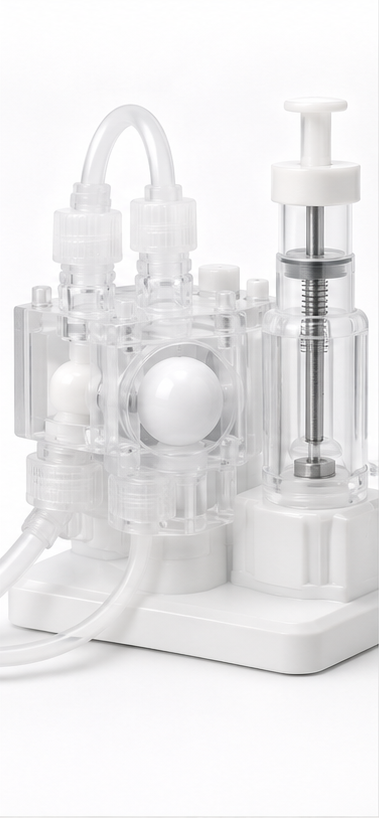
| Typische Anwendungen | Chemical valves, check valves, relief valves, float valves, pumps, flow meters, measuring equipment, medical devices, laboratory apparatus, appliances, low-load bearings, sliding elements |
Dieses Produkt teilen
Produktübersicht
PTFE balls are precision plastic balls made from polytetrafluoroethylene, a fluorinated semicrystalline polymer known for its non-stick surface, extremely low friction, excellent chemical inertness, and wide temperature capability. They are selected when metal balls may corrode, when conventional plastics may not resist the chemical environment, or when a self-lubricating plastic ball is required in a low-load assembly.
For industrial buyers, the key value of PTFE balls is material stability in aggressive media. They are widely used in valves, pumps, chemical handling equipment, instruments, medical and laboratory assemblies, appliances, and flow-control systems where chemical resistance and low friction are more important than high mechanical load capacity.
Material Selection & Technical Positioning
PTFE is not a general-purpose high-strength plastic. It should be selected for chemical resistance, low friction, non-stick behavior, electrical insulation, and temperature capability. Compared with POM, nylon, or glass-filled engineering plastics, virgin PTFE has lower mechanical strength, lower wear resistance, and more tendency to creep under sustained load. This limitation should be clearly considered when the ball is used under pressure, repeated impact, or abrasive contact.
The correct industry terminology includes: PTFE balls, Teflon balls, polytetrafluoroethylene balls, fluoropolymer balls, chemical-resistant plastic balls, low-friction plastic balls, and non-stick plastic balls. Because Teflon is a trade name, PTFE should be used as the primary material term for technical specifications and SEO consistency.
Technical Specifications & Material Properties
| Eigentum | Typical Reference Value / Description |
| Product Type | Low-friction, chemical-resistant fluoropolymer plastic balls |
| Diameter Range | 1.5 mm – 160 mm; custom sizes subject to production confirmation |
| Präzisionssorten | Precision Grade I, II, III; selected according to valve, flow-control, bearing, or assembly requirements |
| Härte | Typical Shore D 50-65, depending on material grade and production condition |
| Dichte | Typical approx. 2.13-2.20 g/cm³; heavier than many common plastics but much lighter than metal balls |
| Magnetismus | Non-magnetic |
| Zugfestigkeit | Typical approx. 20-35 MPa depending on grade |
| Electrical Property | Excellent electrical insulation |
| Coefficient of Friction | Very low; self-lubricating behavior |
| Water Absorption | Very low |
| Service Temperature | Approx. -200°C to +260°C typical material reference |
| Color / Appearance | Natural white; appearance may vary |
| Temperature Capability | Typical service range approx. -200°C to +260°C; final suitability depends on load, media, duration, and application design |
| Chemical Resistance | Excellent resistance to most acids, alkalis, solvents, and corrosive chemicals; not suitable for molten alkali metals and certain high-temperature fluorinated media |
| Oberflächenbeschaffenheit | Natural white PTFE, smooth non-stick surface; color and appearance may vary by material batch and processing |
Chemical Resistance & Temperature Performance
PTFE offers excellent resistance to most industrial chemicals, including many acids, alkalis, and solvents. It is widely used in chemical processing, pharmaceutical, paper, food-related, and laboratory systems where corrosion resistance and non-contaminating material behavior are required.
PTFE is not universally suitable for every extreme condition. Molten alkali metals and some fluorinated chemicals at high temperature can attack PTFE. In high-load, high-temperature, abrasive, or radiation-exposed applications, SDBALLS should confirm the medium, pressure, temperature, and working cycle before recommending virgin PTFE balls.
Key Benefits for Buyers
- Excellent chemical resistance for corrosive media, aggressive fluids, and chemical handling systems.
- Very low friction and self-lubricating behavior for smooth movement in low-load assemblies.
- Non-stick surface helps reduce sticking, contamination buildup, and drag in compatible applications.
- Wide temperature capability compared with most common plastic balls.
- Non-magnetic and electrically insulating for instruments, measuring devices, and electrical assemblies.
- Low water absorption and good dimensional stability in many wet and chemical environments.
- Useful alternative to metal balls where corrosion, weight, or electrical conductivity is a concern.
- Available in standard and customized sizes for OEM and distributor sourcing.
Applications & Application Fit
PTFE balls are best used in low-load or medium-load designs where chemical resistance, low friction, non-stick behavior, and electrical insulation are the main performance requirements. They are not recommended as a direct replacement for hardened steel balls in high-load precision bearings or fatigue-critical mechanical assemblies.
| Anwendung | Fit Level | Why It Fits | Buyer Note |
| Chemical valves / dosing valves | Very good | Excellent chemical resistance and low-friction movement | Confirm chemical media, temperature, pressure, and sealing design |
| Check valves / relief valves / float valves | Very good | Non-stick surface and low friction support responsive valve operation | Confirm density and buoyancy requirements for float applications |
| Pumps and flow-control systems | Gut | Suitable where metal balls may corrode or stick | Confirm load, abrasion, and cycle frequency |
| Measuring equipment / flow meters | Gut | Non-magnetic, electrically insulating, smooth surface | Confirm dimensional tolerance and visual color requirement |
| Medical and laboratory devices | Application-dependent | Chemical resistance and clean material behavior are useful | Confirm regulatory, biocompatibility, and cleaning requirements separately |
| Food-related equipment | Application-dependent | PTFE can be useful in clean, chemically resistant assemblies | Food-contact approval and documentation must be confirmed before order |
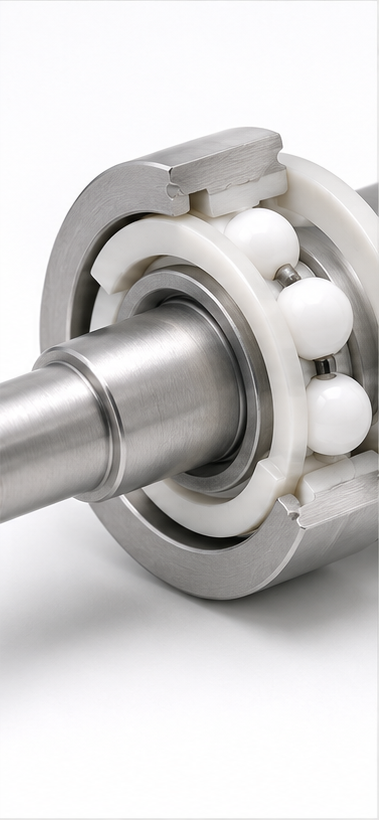
| Low-load bearings / sliding elements | Good for light duty | Very low friction and self-lubricating performance | Not suitable for high-load or high-wear bearing replacement without evaluation |
| High-load precision bearings | Limited | PTFE has lower mechanical strength and creep resistance than metal balls | Use steel, stainless steel, ceramic, or filled PTFE alternatives if required |
| Radiation-exposed environments | Limited | PTFE properties may change under radiation exposure | Confirm environment before material selection |
Material Selection Guide
| Material Option | Typical Strength | Limitation | When to Recommend |
| PTFE balls | Best chemical resistance, very low friction, non-stick surface, electrical insulation | Lower mechanical strength, wear resistance, and creep resistance than many engineering plastics | Chemical valves, pumps, low-friction assemblies, instruments, corrosive media systems |
| POM / Delrin balls | Good dimensional stability, low friction, better mechanical strength than PTFE in many applications | Lower chemical and temperature resistance than PTFE | Low-load bearings, sliding rails, check valves, general mechanical plastic ball uses |
| Nylon / Polyamide balls | Good toughness and wear resistance | Higher water absorption; less chemically inert than PTFE | Low-load bearings, mechanical assemblies, handles, rollers |
| PP / HDPE balls | Lightweight, economical, good chemical resistance for selected media | Lower temperature and mechanical limits than PTFE | Float valves, liquid level control, chemical tanks, anti-evaporation applications |
| Glass-filled PTFE balls | Improved wear, creep, and dimensional stability vs. virgin PTFE | Reduced purity/flexibility; filler compatibility must be checked | Valve seats, higher-load PTFE applications, improved dimensional performance |
| Stainless steel balls | Higher strength, precision, and wear resistance | Heavier; may corrode in some aggressive chemicals | Precision mechanical assemblies, load-bearing applications, corrosion-resistant metal systems |
| Ceramic balls | High hardness, chemical resistance, high-temperature performance | Brittleness and higher cost | Extreme wear, chemical, electrical, or high-temperature applications |
Manufacturing & Process Control
PTFE balls are usually produced from PTFE resin through forming and finishing processes suitable for fluoropolymer materials. Compared with metal balls, PTFE balls require different process control because the material is softer, more compressible, and more sensitive to load and temperature deformation.
SDBALLS controls PTFE ball production through material confirmation, size selection, forming process control, surface finishing, dimensional inspection, visual inspection, cleaning, packing, and batch traceability. For OEM projects, color, size range, grade, packing, and documentation requirements should be confirmed before mass production.
Quality Control & Inspection
Quality control focuses on diameter consistency, roundness, surface appearance, material identification, grade selection, color consistency, packing condition, and application-specific requirements. Because PTFE is softer than metal materials, inspection methods should be suitable for plastic ball deformation and the final assembly condition.
For export projects, SDBALLS can discuss inspection reports, RoHS requests, third-party testing, customized labels, OEM packing, and pre-shipment confirmation according to buyer requirements. For regulated medical, food-contact, or pharmaceutical applications, buyers should clearly specify the required compliance documents before quotation.
Packing Options
PTFE balls can be supplied in bulk bags, inner poly bags, cartons, pails, drums, pallets, or customized OEM packing. Packing should protect the balls from contamination, deformation under excessive load, dust, moisture, and transport damage.
For clean or regulated applications, the buyer should confirm if special cleaning, sealed packing, lot labeling, material certificates, or traceability documentation is required.
How to Specify for Quotation
To quote accurately, please confirm: material grade (virgin PTFE or filled PTFE if required), diameter in mm or inch, precision grade or tolerance requirement, quantity, color/appearance requirement, working temperature, chemical media, pressure/load condition, application type, packing method, inspection documents, destination port, and trade term.
For replacement projects, buyers are encouraged to provide drawings, current supplier specification sheets, samples, photos, chemical compatibility information, and assembly drawings. This helps SDBALLS confirm whether PTFE is the correct material or whether POM, nylon, PP, HDPE, ceramic, stainless steel, or filled PTFE is more suitable.
Technical FAQ
Q: What are Teflon balls made from?
A: They are made from PTFE, also known as polytetrafluoroethylene. Teflon is a common trade-name reference, while PTFE is the technical material name used for specifications.
Q: What is the main advantage of PTFE balls?
A: The main advantages are excellent chemical resistance, very low friction, non-stick surface behavior, electrical insulation, and wide temperature capability.
Q: Are PTFE balls suitable for high-load bearings?
A: Usually no. PTFE balls are best for low-load or application-specific sliding and valve assemblies. For high-load or high-fatigue bearing applications, steel, stainless steel, ceramic, or other engineered materials should be considered.
Q: What temperature range can PTFE balls handle?
A: Typical PTFE material reference range is approximately -200°C to +260°C. Actual application suitability depends on load, media, exposure time, pressure, and assembly design.
Q: Are PTFE balls chemically resistant?
A: Yes. PTFE has excellent resistance to most acids, alkalis, and solvents. However, molten alkali metals and some fluorinated media at high temperature can attack PTFE, so chemical compatibility should be confirmed for critical applications.
Q: Are PTFE balls food grade or medical grade?
A: PTFE may be used in food-related, medical, or laboratory equipment, but required approvals, resin grade, cleanliness, and documentation must be confirmed before quotation. Do not assume compliance without specifying the required standard.
Q: What is the difference between PTFE balls and POM balls?
A: PTFE balls provide better chemical resistance and lower friction, while POM balls usually offer better mechanical strength, dimensional stability, and wear resistance in many general mechanical applications.
Q: Can SDBALLS supply custom PTFE ball sizes?
A: Yes. SDBALLS can discuss standard and custom sizes, precision grades, packing, OEM labels, and documentation based on buyer drawings, samples, or application requirements.
Antrag auf Anlage A
Nehmen Sie noch heute Kontakt mit uns auf, wenn Sie eine unserer Dienstleistungen benötigen. (*) Kennzeichnet Pflichtfelder.