
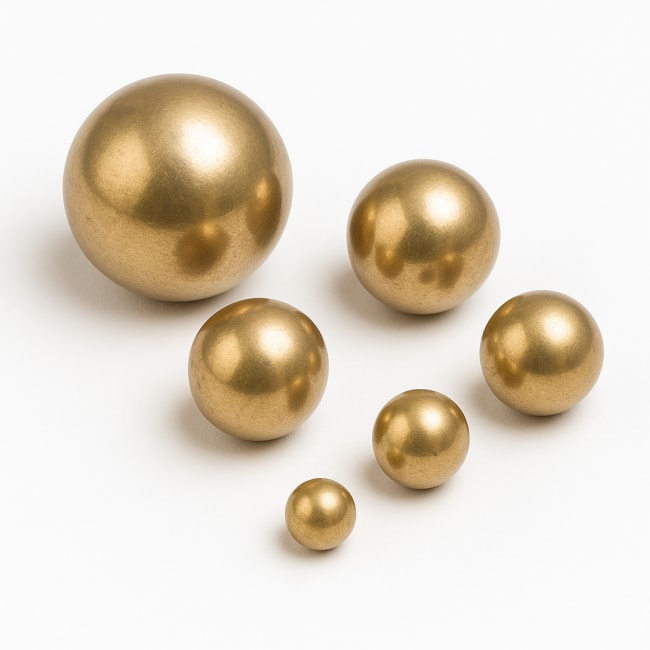


Bolas de latón / Bolas de latón C26000 y C27000
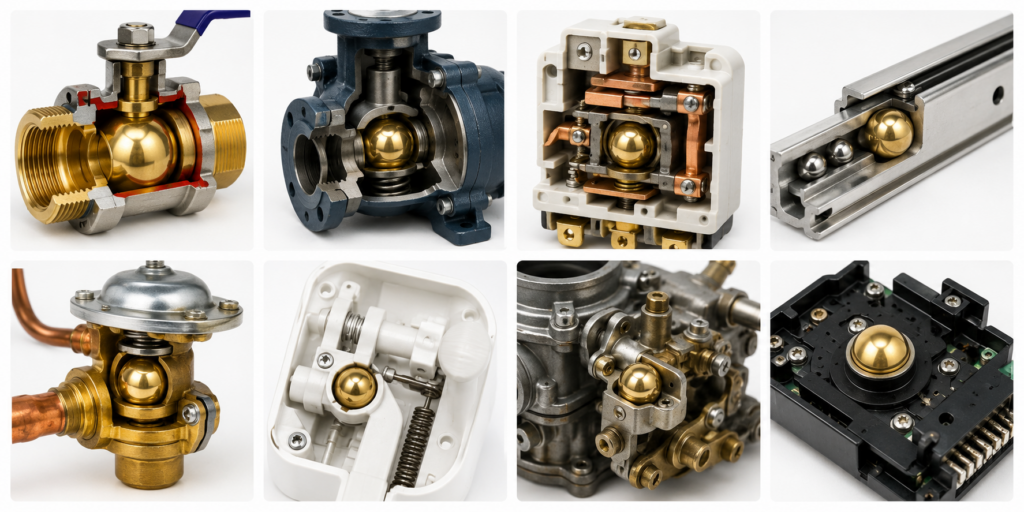
Las bolas de latón son bolas de aleación de cobre y zinc diseñadas para aplicaciones que requieren buena resistencia a la corrosión, conductividad eléctrica, rendimiento no magnético, baja fricción y mejor resistencia mecánica que el cobre puro. Se utilizan comúnmente en válvulas especiales, bombas y válvulas industriales, dispositivos electrónicos, interruptores de seguridad, unidades de calefacción, electrodomésticos, rieles para muebles, componentes automotrices y equipos petroquímicos.
SDBALLS suministra bolas de latón en calidades C26000, C27000, C28000 y grados de latón internacionales equivalentes, con diámetros comunes desde 1.0 mm hasta 150.0 mm y grados de precisión de G100 a G1000. Las opciones de superficie pueden incluir pulido, pasivado, acabado brillante, limpieza, aceitado o embalaje personalizado según los requisitos de dibujo, aplicación e inspección.
| Artículo | Contenido recomendado de la página |
| Material | Aleación de latón, típicamente 70% cobre / 30% zinc; calidades comunes C26000, C27000, C28000 o equivalente |
| Tipo de producto | Bolas de precisión de latón / bolas de aleación de latón / bolas de metales no ferrosos |
| Rango de diámetro | 1.0 mm – 150.0 mm; otras medidas sujetas a confirmación de producción |
| Grados de precisión | G100, G200, G500, G1000; seleccionado según la aplicación y el objetivo de costo |
| Dureza | Típicamente HRB 75-95, dependiendo del grado de latón y las condiciones del proceso |
| Aplicaciones típicas | Válvulas especiales, bombas y válvulas industriales, dispositivos electrónicos, interruptores de seguridad, unidades de calefacción, electrodomésticos, rieles para muebles, aplicaciones automotrices y petroquímicas |
Comparte este producto
Descripción general del producto
Las bolas de latón son esferas de precisión de aleación de cobre y zinc que se utilizan cuando los compradores necesitan un equilibrio entre resistencia a la corrosión, comportamiento eléctrico, maquinabilidad, baja fricción, rendimiento no magnético y una apariencia de latón amarillo brillante. En comparación con las bolas de cobre puro, las bolas de latón normalmente proporcionan mayor resistencia y mejor comportamiento ante el desgaste. En comparación con las bolas de acero al carbono o acero al cromo, las bolas de latón son no ferrosas, no magnéticas, más resistentes a la corrosión en muchos entornos prácticos y más fáciles de mecanizar.
Para los compradores industriales, las bolas de latón son especialmente útiles en válvulas, bombas, interruptores, dispositivos eléctricos, componentes de seguridad, unidades de calefacción, electrodomésticos, rieles para muebles, conjuntos automotrices y equipos petroquímicos. No están destinadas a reemplazar las bolas de acero templado para rodamientos en aplicaciones de rodamientos críticas de alta carga o alta velocidad sujetas a fatiga, y deben ser revisadas cuidadosamente antes de su uso en entornos químicos agresivos o de agua de mar.
Selección de Materiales y Posicionamiento Técnico
El latón es una aleación de cobre y zinc. Las bolas de latón de SDBALLS se suministran comúnmente en calidades C26000, C27000, C28000 o grados equivalentes, dependiendo del diámetro, la disponibilidad, la ruta de producción y la especificación del cliente. El posicionamiento correcto del producto no es simplemente bolas de latón decorativas; son bolas de aleación no ferrosa de precisión para aplicaciones conductoras, resistentes a la corrosión, de baja fricción y relacionadas con el ensamblaje.
Se deberían recomendar bolas de latón cuando el comprador necesite una resistencia mecánica superior a la del cobre puro, manteniendo un comportamiento no magnético, conductividad, maquinabilidad y una resistencia a la corrosión práctica. Si se requiere la máxima conductividad, las bolas de cobre puro podrían ser más adecuadas. Si la alta resistencia al desgaste o el rendimiento en agua de mar son críticos, se podrían recomendar bronce fosforoso, bronce de aluminio, acero inoxidable, cerámica u otros materiales tras revisar la aplicación.
| Requisito del Comprador | Dirección Recomendada | Nota de selección |
| Buena conductividad más mejor resistencia que el cobre | Bolas de latón | Adecuado para muchos dispositivos eléctricos, interruptores, contactos y componentes mecánicos |
| Máxima conductividad eléctrica / térmica | Bolas de cobre puro | El cobre proporciona mayor conductividad pero es más blando que el latón |
| Mayor resistencia al desgaste en la familia de aleaciones de cobre | Bolas de bronce fosforoso o bronce de aluminio | Útil cuando el desgaste, la fatiga o una mayor resistencia mecánica son más importantes |
| Rendimiento de alta precisión en rodamientos | Bolas de acero al cromo o acero inoxidable 440C | Use materiales endurecidos para aplicaciones de rodamientos de alta carga y alta velocidad |
| Alta resistencia a la corrosión en ambientes húmedos o higiénicos | Bolas de acero inoxidable 316/316L o bolas cerámicas | Recomendado cuando la compatibilidad con el latón es incierta |
| Apariencia decorativa de metal amarillo | Bolas de latón pulido | Confirmar acabado, protección contra la oxidación y requisitos de embalaje |
Especificaciones técnicas
| Parámetro | Contenido típico para bolas de latón |
| Material | Aleación de latón, comúnmente C26000 / C27000 / C28000 o equivalente |
| Diámetro | 1.0 mm – 150.0 mm; tamaños personalizados previa confirmación |
| Grado de precisión | G100, G200, G500, G1000 o grado comercial específico para la aplicación |
| Dureza | Típico HRB 75-95 dependiendo del grado del material y condiciones de procesamiento |
| Densidad | Aprox. 8.49 g/cm3 |
| Módulo de Young | Aprox. 110 GPa |
| Resistencia a la tracción | Rango de referencia aprox. 500-600 MPa; varía según grado y condición |
| Magnetismo | No magnético |
| Condición de la superficie | Pasivado, pulido, acabado brillante, limpio, aceitado o personalizado |
| Conductividad eléctrica | Buena conductividad eléctrica; inferior al cobre puro pero adecuada para muchos componentes conductivos |
| Resistencia a la corrosión | Buena resistencia en aire ambiente, agua, fueloil, gasolina, queroseno, alcohol y muchos entornos no oxidantes; la compatibilidad química debe confirmarse para ácidos, amoníaco, agua de mar, sulfuros y medios agresivos |
| Aplicaciones típicas | Válvulas especiales, bombas y válvulas industriales, dispositivos electrónicos, interruptores de seguridad, unidades de calefacción, electrodomésticos, rieles para muebles, aplicaciones automotrices y petroquímicas |
| Documentación | Certificado de material, informe de inspección, RoHS / pruebas de terceros cuando se requiera |
Composición química / Composición del material
Los siguientes rangos de composición son valores de referencia para materiales comunes de bolas de latón. La composición final debe seguir la norma de material acordada, la orden de compra, el plano y el certificado de material.
| Calificación | Cu % | Zn % | Pb % Máx | Fe % Máx | Posicionamiento Típico |
| C26000 | 68.50-71.50 | Resto | 0.07 | 0.05 | Latón de cartuchería 70/30; buena conformabilidad, resistencia a la corrosión y conductividad |
| C27000 | 63.00-68.50 | Resto | 0.09 | 0.07 | Latón amarillo 65/35; ampliamente utilizado para componentes industriales y decorativos de latón |
| C28000 | Aprox. 59.00-63.00 | Resto | Según especificación | Según especificación | Latón 60/40; confirmar especificación exacta antes de cotizar |
Equivalentes de Grado Internacional
| EE.UU | China | Alemania | Francia | Reino Unido | Italia | Rusia | Japón |
| C26000 | H70 | 2.0265 / CuZn30 | CZ106 | P-CuZn30 | L70 | L70 | C2600 |
| C27000 | H65 | 2.0335 / CuZn36 | CZ107 | P-CuZn35 | L63 | L63 | C2700 |
| C28000 | H62 | 2.0360 / CuZn40 | CZ109 | P-CuZn40 | L60 | L60 | C2800 |
Rendimiento y resistencia a la corrosión
Las bolas de latón ofrecen una buena resistencia práctica a la corrosión en aire ambiente, agua, fueloil, gasolina, queroseno, alcohol, dióxido de carbono seco y muchos entornos no oxidantes. También proporcionan buena conductividad eléctrica, baja fricción y comportamiento no magnético, lo que las hace adecuadas para dispositivos electrónicos, interruptores, componentes de válvulas y ensamblajes mecánicos.
La compatibilidad de la aplicación debe confirmarse antes de su uso. El latón puede ser sensible a algunos ácidos, amoníaco, sulfuros, productos químicos fuertemente oxidantes y ciertos entornos con cloruros o agua de mar, dependiendo de la aleación, temperatura, concentración y condiciones de servicio. Para exposición continua al agua de mar, alto nivel de cloro, equipos higiénicos o productos químicos agresivos, pueden ser más adecuados el acero inoxidable, el bronce, la cerámica, el titanio u otros materiales especiales.
| Factor de rendimiento | Posicionamiento de la bola de latón | Nota para el comprador |
| conductividad eléctrica | Bien | Adecuado para muchos componentes conductivos, inferior al cobre puro |
| Resistencia mecánica | Mejor que el cobre puro | Útil cuando el cobre es demasiado blando para el ensamblaje |
| maquinabilidad | Bien | Adecuado para algunas piezas perforadas, modificadas o con procesamiento secundario previa confirmación |
| Resistencia al desgaste | Moderado | No sustituye al acero al cromo templado en aplicaciones de rodamientos de alta carga |
| Magnetismo | No magnético | Útil para aplicaciones eléctricas y de instrumentación |
| Resistencia a la corrosión | Bueno en muchos entornos prácticos | Verificar la compatibilidad del medio para ácidos, amoníaco, sulfuros, agua de mar y productos químicos agresivos |
| Aspecto superficial | Color amarillo latón brillante | Puede oxidarse o deslustrarse; especificar pulido y embalaje protector si la apariencia es crítica |
Aplicaciones y Adecuación
Las bolas de latón se utilizan mejor cuando los compradores necesitan una bola de metal no ferroso con buena resistencia a la corrosión, comportamiento conductor, movimiento suave y resistencia mecánica práctica. Son especialmente adecuadas para aplicaciones en válvulas, bombas, electrónica, interruptores, electrodomésticos, ferretería de muebles, automoción y petroquímica cuando el entorno es compatible con el latón.
| Solicitud | Nivel de ajuste | Por qué encaja | Nota para el comprador |
| Válvulas especiales / bolas de retención | Muy bueno | Material metálico no magnético, de baja fricción y resistente a la corrosión | Confirmar el medio, la presión, las condiciones de sellado y desgaste |
| Bombas y válvulas industriales | Muy bueno | Buena resistencia en muchos entornos de agua, combustible y no oxidantes | Confirmar compatibilidad química antes de la producción |
| Dispositivos electrónicos / piezas conductoras | Muy bueno | Buena conductividad y rendimiento no magnético | Confirmar la presión de contacto, el acabado y el requisito de conductividad |
| Interruptores de seguridad / interruptores basculantes | Muy bueno | Movimiento estable, conductividad y baja fricción | Confirmar el grado, la limpieza de la superficie y el diseño del interruptor |
| Unidades de calefacción y electrodomésticos | Bien | Buena resistencia a la corrosión en ambientes normales y húmedos | Confirmar la temperatura y la exposición a los medios |
| Rieles para muebles / mecanismos deslizantes | Bien | Movimiento suave y baja fricción con una atractiva apariencia de latón | Confirmar la carga, el ruido y las expectativas de desgaste |
| Componentes automotrices | Bien | Compatible con muchos conjuntos relacionados con combustible y mecánicos | Confirmar condiciones de combustible, aceite y temperatura |
| Equipo petroquímico | Depende de la aplicación | Puede ser adecuado para entornos de combustible/aceite seleccionados | Se requiere una revisión de compatibilidad química |
| Rodamientos de precisión de alta velocidad | Limitado | El latón no es acero endurecido para rodamientos | Use AISI 52100 o 440C cuando se requiera rendimiento frente a fatiga |
| Exposición a ácido agresivo / amoníaco / agua de mar incierta | No se recomienda sin revisión | El latón puede ser inestable en algunos medios | Considere alternativas de acero inoxidable, bronce, cerámica o titanio |
Guía de Selección de Materiales
| Opción de material | Resistencia típica | Limitación | Cuándo recomendar |
| Bolas de latón | Conductivo, no magnético, mejor resistencia que el cobre, buena resistencia a la corrosión, baja fricción | No tan conductor como el cobre puro; no para rodamientos de alta carga ni todos los medios químicos | Válvulas, bombas, interruptores, electrónica, electrodomésticos, rieles de muebles, usos petroquímicos |
| Bolas de cobre puro | Máxima conductividad eléctrica y térmica, blando y fácil de mecanizar | Menor resistencia y resistencia al desgaste que el latón | Componentes eléctricos, térmicos, decorativos y fácilmente mecanizables |
| Bolas de bronce fosforoso | Mejor resistencia al desgaste, a la fatiga y a la corrosión que muchas opciones de latón | Mayor coste y menor conductividad que el cobre | Válvulas especiales, bombas, accesorios para entornos marinos y mecanismos relacionados con el desgaste |
| Bolas de bronce de aluminio | Mayor resistencia y resistencia al desgaste entre las aleaciones de cobre | Material y coste más especializados | Aplicaciones mecánicas y de válvulas de servicio pesado previa confirmación |
| Bolas de acero inoxidable | Mejor resistencia a la corrosión para aplicaciones húmedas, higiénicas o químicas | Menor conductividad que el latón y el cobre | Alimentación, medicina, química, entornos húmedos o sensibles a la corrosión |
| Bolas de acero al cromo | Alta dureza y rendimiento ante la fatiga en rodamientos | Magnético y no resistente a la corrosión | Rodamientos de precisión, motores, conjuntos de rodadura de alta carga |
Fabricación y Control de Procesos
La producción de bolas de latón requiere formado controlado, calibrado, rectificado, pulido, limpieza, pasivación o protección superficial, y embalaje. Dado que el latón es más blando que el acero templado y tiene requisitos de apariencia superficial visible, el control del proceso debe proteger tanto la consistencia dimensional como la calidad superficial.
- Confirmación de la materia prima según el grado de latón acordado o el plano del comprador.
- Proceso de formado en frío y calibrado controlado para consistencia en el diámetro y la esfericidad.
- Rectificado o lapeado seleccionado según el grado requerido y la tolerancia de aplicación.
- Pulido y limpieza controlados para una apariencia brillante, movimiento suave y baja fricción.
- Condición superficial con pasivación o protección disponible cuando se requiera para estabilidad en almacenamiento y servicio.
- Se pueden discutir tamaños personalizados, acabados superficiales especiales, bolas modificadas, perforaciones o embalaje OEM según la aprobación del plano y la muestra.
Control de Calidad e Inspección
Para bolas de latón utilizadas en válvulas, interruptores, bombas, instrumentos, electrónica y electrodomésticos, el control de calidad debe centrarse en la consistencia del material, diámetro, grado, redondez, acabado superficial, limpieza, apariencia relacionada con la corrosión y protección del embalaje.
| Elemento de inspección | Propósito |
| Diámetro y tolerancia | Confirmar el ajuste con asientos de válvulas, interruptores, rieles, instrumentos y conjuntos. |
| Redondez / grado | Contribuye a una rodadura suave, una conmutación estable y una respuesta mecánica consistente. |
| Aspecto superficial | Verificar rayones, abolladuras, deslustre, manchas, consistencia del pulido y defectos visibles. |
| Confirmación de material | Verificar el grado del latón o el requisito de material equivalente |
| Dureza cuando sea requerida | Confirmar la condición del proceso y el rango de rendimiento mecánico |
| Discusión sobre compatibilidad química | Reducir el riesgo en entornos de combustibles, agua, petroquímicos y electrodomésticos |
| Inspección de embalaje | Proteger la superficie del latón durante el almacenamiento, manejo de exportación y envío a larga distancia |
| Documentación | Informe de inspección, certificado de material, RoHS o pruebas de terceros según las necesidades del proyecto |
Opciones de Embalaje
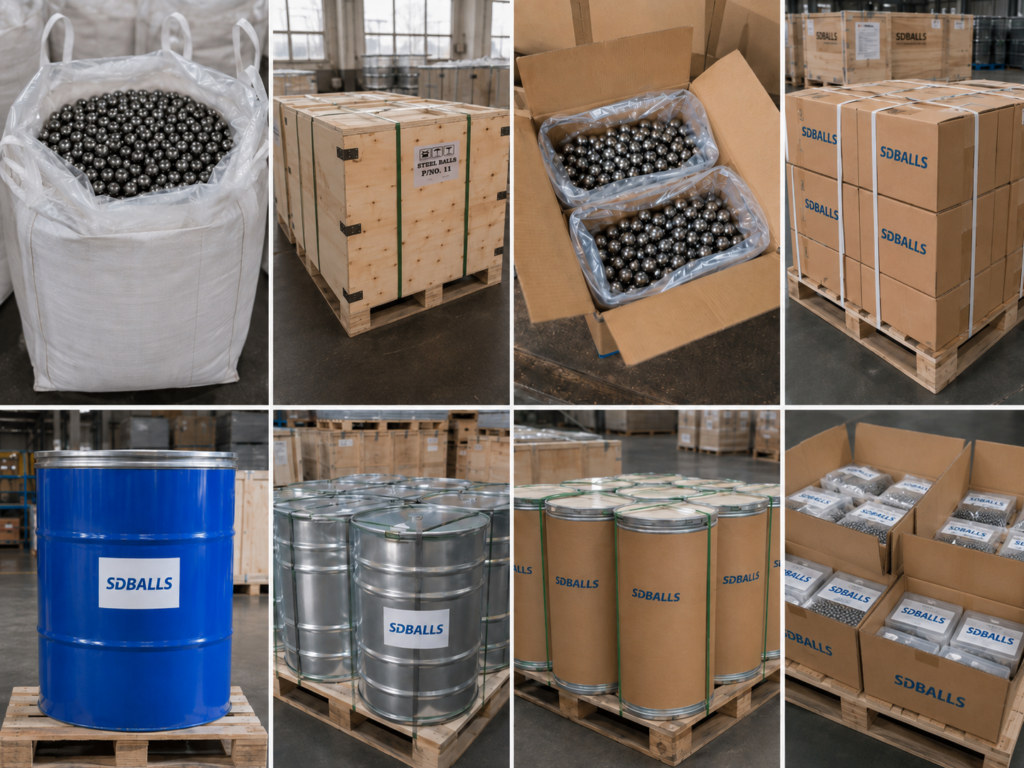
Las bolas de latón pueden solicitarse para ensamblajes funcionales o aplicaciones sensibles a la apariencia. El embalaje debe seleccionarse según el diámetro de la bola, el acabado superficial, la distancia de envío, el tiempo de almacenamiento y el estándar de inspección del cliente.
| Opción de embalaje | Adecuado para | Notas |
| Pequeñas bolsas/botellas de plástico | Muestras, bolas de tamaño pequeño, proyectos de electrónica, interruptores y accesorios | Conteo y manejo sencillos |
| Cajas de cartón con bolsas internas | Suministro general para exportación | Embalaje económico común para pedidos a granel |
| Baldes o tambores | Suministro industrial a granel | Adecuado para producción de mayor volumen y uso repetido |
| Embalaje de exportación paletizado | Envíos pesados y almacenamiento para distribuidores | Mejora la manipulación y el control de almacén |
| Embalaje protector / antioxidante | Bolas de latón con acabado brillante pulido o decorativas | Recomendado cuando la apariencia es crítica |
| Etiquetado OEM personalizado | Identificación de marca, lote, material, tamaño y cantidad | Útil para distribuidores y líneas de producción OEM |
Cómo Especificar para una Cotización
Para cotizar bolas de latón con precisión, por favor confirme la siguiente información:
- Grado del material o estándar equivalente, como C26000, C27000, C28000, H70, H65, H62, C2600, C2700 o C2800.
- Diámetro en mm o pulgadas y tolerancia / grado de precisión requerido.
- Acabado superficial requerido, como pasivado, pulido, acabado brillante, limpio, aceitado, embalaje antioxidante o acabado decorativo.
- Detalles de la aplicación, incluyendo uso en válvulas, bombas, dispositivos eléctricos, interruptores de seguridad, unidades de calefacción, electrodomésticos, rieles de muebles, automotriz o petroquímico.
- Entorno de trabajo, incluyendo agua, vapor, fueloil, gasolina, queroseno, alcohol, productos químicos, agua de mar, amoníaco u otros medios.
- Si se requiere taladrado, mecanizado, agujeros especiales, aplanado, recubrimiento o procesamiento secundario.
- Cantidad, método de embalaje, requisitos de etiquetado, puerto de destino, término comercial y plazo de entrega solicitado.
- Documentos de inspección, certificado de material, RoHS, pruebas de terceros o requisitos de aprobación de muestras.
Preguntas frecuentes técnicas
P: ¿De qué están hechas las bolas de latón?
R: Las bolas de latón están hechas de aleaciones de cobre y zinc. Los grados comunes incluyen C26000, C27000 y C28000 o grados internacionales equivalentes como H70, H65, H62, C2600, C2700 y C2800.
P: ¿Son magnéticas las bolas de latón?
R: No. El latón es una aleación no ferrosa de cobre y zinc y generalmente no es magnético, lo que hace que las bolas de latón sean adecuadas para muchas aplicaciones eléctricas, de interruptores, instrumentos y mecánicas no magnéticas.
P: ¿Cuál es la diferencia entre las bolas de latón y las bolas de cobre?
R: Las bolas de cobre puro ofrecen mayor conductividad eléctrica y térmica y son más blandas. Las bolas de latón suelen proporcionar mejor resistencia, mejor comportamiento al desgaste y una apariencia amarilla brillante, pero menor conductividad que el cobre puro.
P: ¿Son resistentes a la corrosión las bolas de latón?
R: Las bolas de latón ofrecen buena resistencia a la corrosión en aire ambiente, agua, fueloil, gasolina, queroseno, alcohol y muchos entornos no oxidantes. Debe confirmarse la compatibilidad con ácidos, amoníaco, sulfuros, agua de mar y productos químicos agresivos.
P: ¿Se pueden usar bolas de latón en válvulas y bombas?
R: Sí. Las bolas de latón se utilizan ampliamente en válvulas especiales, bombas y válvulas industriales, piezas de control de flujo y conjuntos mecánicos relacionados cuando los medios y las condiciones de operación son adecuados.
P: ¿Se pueden usar bolas de latón para contactos eléctricos o interruptores?
R: Sí. Las bolas de latón proporcionan buena conductividad eléctrica, comportamiento no magnético y baja fricción, lo que las hace adecuadas para muchos dispositivos electrónicos, interruptores de seguridad, interruptores de inclinación y componentes conductores.
P: ¿Pueden las bolas de latón reemplazar a las bolas de acero al cromo?
R: Solo en aplicaciones adecuadas. Las bolas de latón son útiles donde la resistencia a la corrosión, la conductividad, el comportamiento no magnético y la baja fricción son importantes. Para aplicaciones de alta carga, alta velocidad o fatiga en rodamientos, las bolas de acero al cromo AISI 52100 o las bolas de acero inoxidable endurecido suelen ser más apropiadas.
P: ¿Qué información se necesita para una cotización de bolas de latón?
R: Proporcione el grado del material, diámetro, grado o tolerancia, acabado superficial, cantidad, aplicación, entorno de trabajo, embalaje, requisito de documento de inspección, destino y término comercial.
Productos relacionados
- bolas de latón
- bolas de cobre puro
- bolas de bronce fosforoso
- bolas de bronce al aluminio
- bolas de acero inoxidable para resistencia a la corrosión
- bolas de acero al cromo para aplicaciones de rodamientos
- bolas de carburo de tungsteno para resistencia extrema al desgaste
- Bolas de diversos materiales
- Control de calidad SDBALLS
- Aplicaciones industriales con bolas
Solicitud de programación
Contáctanos hoy para cualquier servicio. (*) Indica campos obligatorios.