
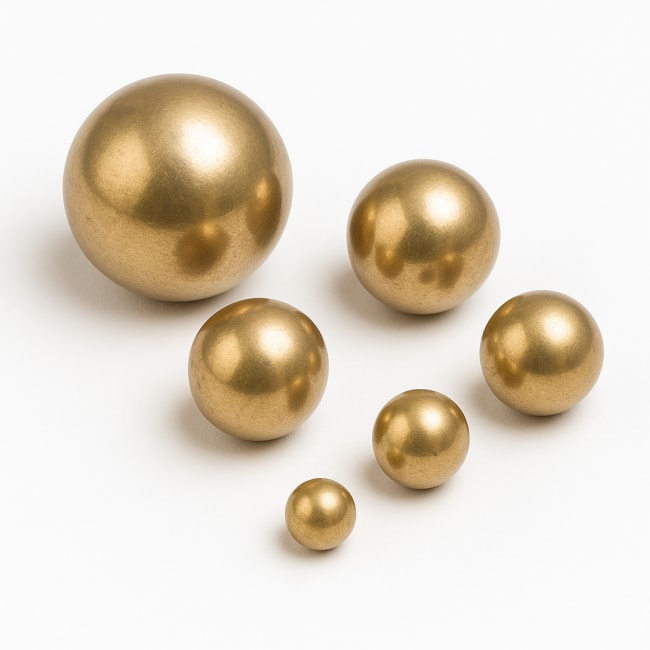


Esferas de latão / Latão C26000 e C27000
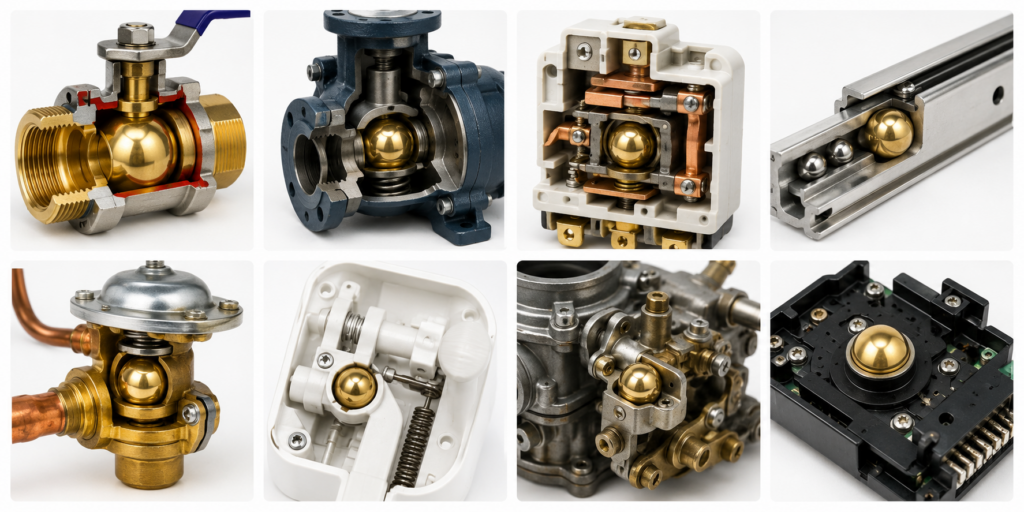
Esferas de latão são esferas de liga de cobre-zinco projetadas para aplicações que exigem boa resistência à corrosão, condutividade elétrica, desempenho não magnético, baixo atrito e melhor resistência mecânica do que o cobre puro. São comumente usadas em válvulas especiais, bombas e válvulas industriais, dispositivos eletrônicos, interruptores de segurança, unidades de aquecimento, eletrodomésticos, trilhos de móveis, componentes automotivos e equipamentos petroquímicos.
SDBALLS fornece esferas de latão nos graus C26000, C27000, C28000 e em graus internacionais equivalentes de latão, com diâmetros comuns de 1,0 mm a 150,0 mm e graus de precisão de G100 a G1000. As opções de superfície podem incluir polimento, passivação, acabamento brilhante, limpeza, oleamento, ou embalagem personalizada de acordo com o desenho, aplicação e requisitos de inspeção.
| Item | Conteúdo de Página Recomendado |
| Material | Liga de latão, tipicamente 70% cobre / 30% zinco; graus comuns C26000, C27000, C28000 ou equivalentes |
| Tipo de Produto | Esferas de precisão em latão / esferas de liga de latão / esferas de metais não ferrosos |
| Faixa de Diâmetro | 1,0 mm – 150,0 mm; outros tamanhos sujeitos a confirmação de produção |
| Graus de Precisão | G100, G200, G500, G1000; selecionados de acordo com a aplicação e objetivo de custo |
| Dureza | Típico HRB 75-95, dependendo do grau do latão e das condições de processo |
| Aplicações típicas | Válvulas especiais, bombas industriais e válvulas, dispositivos eletrônicos, interruptores de segurança, unidades de aquecimento, eletrodomésticos, corrediças para móveis, aplicações automotivas e petroquímicas |
Compartilhe este produto
Visão geral do produto
As esferas de latão são esferas de precisão em liga de cobre-zinco utilizadas quando os compradores precisam de um equilíbrio entre resistência à corrosão, comportamento elétrico, usinabilidade, baixo atrito, desempenho não magnético e uma aparência amarela brilhante de latão. Em comparação com as esferas de cobre puro, as esferas de latão normalmente oferecem maior resistência e melhor comportamento ao desgaste. Em comparação com as esferas de aço carbono ou aço cromo, as esferas de latão são não ferrosas, não magnéticas, mais resistentes à corrosão em muitos ambientes práticos e mais fáceis de usinar.
Para compradores industriais, as esferas de latão são especialmente úteis em válvulas, bombas, interruptores, dispositivos elétricos, componentes de segurança, unidades de aquecimento, eletrodomésticos, trilhos de móveis, conjuntos automotivos e equipamentos petroquímicos. Elas não se destinam a substituir esferas de aço para rolamentos endurecidas em aplicações de rolamentos críticos à fadiga com alta carga ou alta velocidade, e devem ser verificadas cuidadosamente antes do uso em ambientes químicos agressivos ou de água do mar.
Seleção de Material e Posicionamento Técnico
O latão é uma liga de cobre-zinco. As esferas de latão SDBALLS são geralmente fornecidas nos graus C26000, C27000, C28000 ou equivalentes, dependendo do diâmetro, disponibilidade, rota de produção e especificação do cliente. O posicionamento correto do produto não é simplesmente esferas de latão decorativas; são esferas de liga não ferrosa de precisão para aplicações condutivas, resistentes à corrosão, de baixo atrito e relacionadas à montagem.
As esferas de latão devem ser recomendadas quando o comprador precisa de melhor resistência mecânica do que o cobre puro, mas ainda exige comportamento não magnético, condutividade, usinabilidade e resistência prática à corrosão. Se for necessária condutividade máxima, as esferas de cobre puro podem ser mais adequadas. Se alta resistência ao desgaste ou desempenho em água do mar forem críticos, bronze fosforoso, bronze-alumínio, aço inoxidável, cerâmica ou outros materiais podem ser recomendados após análise da aplicação.
| Requisito do Comprador | Orientação Recomendada | Nota de Seleção |
| Boa condutividade e melhor resistência que o cobre | Esferas de latão | Adequado para muitos dispositivos elétricos, interruptores, contatos e componentes mecânicos |
| Condutividade elétrica/térmica máxima | Esferas de cobre puro | O cobre oferece maior condutividade, mas é mais macio que o latão |
| Maior resistência ao desgaste na família de ligas de cobre | Esferas de bronze fosforoso ou bronze-alumínio | Utilizar quando o desgaste, a fadiga ou uma maior resistência mecânica são mais importantes |
| Desempenho de rolamento de alta precisão | Esferas de aço cromado ou aço inoxidável 440C | Utilizar materiais endurecidos para aplicações de rolamentos de alta carga e alta velocidade |
| Forte resistência à corrosão em ambientes húmidos ou higiénicos | Esferas de aço inoxidável 316/316L ou cerâmicas | Recomendado quando a compatibilidade com latão é incerta |
| Aspeto decorativo de metal amarelo | Esferas de latão polido | Confirmar os requisitos de acabamento, proteção contra oxidação e embalagem |
Especificações técnicas
| Parâmetro | Conteúdo Típico para Esferas de Latão |
| Material | Liga de latão, comummente C26000 / C27000 / C28000 ou equivalente |
| Diâmetro | 1,0 mm – 150,0 mm; tamanhos personalizados sob confirmação |
| Grau de Precisão | G100, G200, G500, G1000 ou grau comercial específico da aplicação |
| Dureza | Tipicamente HRB 75-95 dependendo do grau do material e condição de processamento |
| Densidade | Aprox. 8,49 g/cm3 |
| Módulo de Young | Aprox. 110 GPa |
| Resistência à tracção | Aprox. 500-600 MPa como intervalo de referência; varia com o grau e condição |
| Magnetismo | Não magnético |
| Condição da superfície | Passivado, polido, acabamento brilhante, limpo, oleado ou personalizado |
| Condutividade Elétrica | Boa condutividade elétrica; inferior à do cobre puro, mas adequada para muitos componentes condutores |
| Resistência à corrosão | Boa resistência ao ar ambiente, água, óleo combustível, gasolina, querosene, álcool e muitos ambientes não oxidantes; a compatibilidade química deve ser confirmada para ácidos, amônia, água do mar, sulfetos e meios agressivos |
| Aplicações típicas | Válvulas especiais, bombas industriais e válvulas, dispositivos eletrônicos, interruptores de segurança, unidades de aquecimento, eletrodomésticos, corrediças para móveis, aplicações automotivas e petroquímicas |
| Documentação | Certificado de material, relatório de inspeção, RoHS / testes de terceiros quando exigido |
Composição Química / Composição do Material
As faixas de composição a seguir são valores de referência para materiais comuns de esferas de latão. A composição final deve obedecer ao padrão de material acordado, pedido de compra, desenho e certificado de material.
| Nota | Cu % | Zn % | Pb % Máx. | Fe % Máx. | Classificação Típica |
| C26000 | 68.50-71.50 | Balanço | 0.07 | 0.05 | Latão para cartuchos 70/30; boa conformabilidade, resistência à corrosão e condutividade |
| C27000 | 63.00-68.50 | Balanço | 0.09 | 0.07 | Latão amarelo 65/35; amplamente utilizado para componentes industriais e decorativos de latão |
| C28000 | Aprox. 59,00-63,00 | Balanço | Conforme especificado | Conforme especificado | Latão 60/40; confirme a especificação exata antes da cotação |
Equivalentes Internacionais de Grau
| EUA | China | Alemanha | França | Reino Unido | Itália | Rússia | Japão |
| C26000 | H70 | 2.0265 / CuZn30 | CZ106 | P-CuZn30 | L70 | L70 | C2600 |
| C27000 | H65 | 2.0335 / CuZn36 | CZ107 | P-CuZn35 | L63 | L63 | C2700 |
| C28000 | H62 | 2.0360 / CuZn40 | CZ109 | P-CuZn40 | L60 | L60 | C2800 |
Desempenho e Resistência à Corrosão
As esferas de latão oferecem boa resistência prática à corrosão em ar ambiente, água, óleo combustível, gasolina, querosene, álcool, dióxido de carbono seco e muitos ambientes não oxidantes. Também oferecem boa condutividade elétrica, baixo atrito e comportamento não magnético, tornando-as adequadas para dispositivos eletrônicos, interruptores, componentes de válvulas e conjuntos mecânicos.
A compatibilidade da aplicação ainda deve ser confirmada antes do uso. O latão pode ser sensível a alguns ácidos, amônia, sulfetos, produtos químicos fortemente oxidantes e certos ambientes com cloretos ou água do mar, dependendo da liga, temperatura, concentração e condições de serviço. Para exposição contínua à água do mar, alta exposição ao cloro, equipamentos higiênicos ou produtos químicos agressivos, aço inoxidável, bronze, cerâmica, titânio ou outros materiais especiais podem ser mais adequados.
| Fator de Desempenho | Esfera de Latão para Posicionamento | Nota para o Comprador |
| Condutividade elétrica | Bom | Adequada para muitos componentes condutores, inferior ao cobre puro |
| Resistência mecânica | Superior ao cobre puro | Útil quando o cobre é demasiado macio para a montagem |
| Usinabilidade | Bom | Adequada para algumas peças furadas, modificadas ou com processamento secundário, após confirmação |
| Resistência ao desgaste | Moderada | Não substitui o aço cromado temperado em aplicações de rolamento de alta carga |
| Magnetismo | Não magnético | Útil para aplicações elétricas e de instrumentação |
| Resistência à corrosão | Bom desempenho em muitos ambientes práticos | Verificar a compatibilidade com ácidos, amoníaco, sulfuretos, água do mar e químicos agressivos |
| Aparência superficial | Cor de latão amarelo brilhante | Pode oxidar ou manchar; especificar polimento e embalagem protetora se a aparência for crítica |
Aplicações e Adequação de Aplicação
As esferas de latão são mais indicadas onde se necessita de uma esfera de metal não ferroso com boa resistência à corrosão, comportamento condutor, movimento suave e resistência mecânica prática. São especialmente adequadas para aplicações em válvulas, bombas, dispositivos eletrónicos, interruptores, eletrodomésticos, ferragens para mobiliário, indústria automóvel e petroquímica, quando o ambiente é compatível com o latão.
| Aplicativo | Nível de Adequação | Por que se Adequa | Nota para o Comprador |
| Válvulas especiais / esferas de retenção | Muito boa | Material metálico não magnético, de baixa fricção e resistente à corrosão | Confirmar o meio, a pressão, a vedação e as condições de desgaste |
| Bombas e válvulas industriais | Muito boa | Boa resistência em muitos ambientes com água, combustível e não oxidantes | Confirmar a compatibilidade química antes da produção |
| Dispositivos eletrónicos / peças condutoras | Muito boa | Boa condutividade e desempenho não magnético | Confirmar a pressão de contato, acabamento e requisito de condutividade |
| Interruptores de segurança / interruptores basculantes | Muito boa | Movimento estável, condutividade e baixo atrito | Confirmar a qualidade, limpeza da superfície e design do interruptor |
| Unidades de aquecimento e eletrodomésticos | Bom | Boa resistência à corrosão em ambientes naturais e húmidos | Confirmar a exposição à temperatura e aos meios |
| Calhas para móveis / mecanismos deslizantes | Bom | Movimento suave e baixo atrito com atraente aparência de latão | Confirmar as expectativas de carga, ruído e desgaste |
| Componentes automotivos | Bom | Compatível com muitas montagens mecânicas e relacionadas com combustível | Confirmar as condições de combustível, óleo e temperatura |
| Equipamento petroquímico | Dependente da aplicação | Pode adequar-se a ambientes específicos de combustível/óleo | É necessária uma revisão da compatibilidade química |
| Rolamentos de precisão de alta velocidade | Limitado | O latão não é um aço de rolamento endurecido | Utilizar AISI 52100 ou 440C quando for exigido desempenho à fadiga |
| Exposição a ácido agressivo / amoníaco / água do mar incerta | Não recomendado sem revisão | O latão pode ser instável em alguns meios | Considere alternativas em aço inoxidável, bronze, cerâmica ou titânio |
Guia de Seleção de Materiais
| Opção de Material | Resistência Típica | Limitação | Quando Recomendar |
| Esferas de latão | Condutivo, não magnético, melhor resistência que o cobre, boa resistência à corrosão, baixo atrito | Não é tão condutivo quanto o cobre puro; inadequado para rolamentos de alta carga ou todos os meios químicos | Válvulas, bombas, interruptores, eletrónica, eletrodomésticos, calhas para móveis, usos petroquímicos |
| Esferas de cobre puro | Máxima condutividade elétrica e térmica, macio e fácil de maquinar | Menor resistência e resistência ao desgaste do que o latão | Componentes elétricos, térmicos, decorativos e facilmente maquinados |
| Esferas de bronze fosforoso | Melhor resistência ao desgaste, resistência à fadiga e à corrosão do que muitas opções de latão | Custo mais elevado e menor condutividade do que o cobre | Válvulas especiais, bombas, ferragens próximas ao ambiente marinho e mecanismos de desgaste |
| Esferas de bronze-alumínio | Maior resistência mecânica e ao desgaste entre as ligas de cobre | Material e custo mais especializados | Aplicações em válvulas e mecânicas de serviço pesado após confirmação |
| Esferas de aço inoxidável | Melhor resistência à corrosão para ambientes húmidos, higiénicos ou químicos | Condutividade mais baixa que o latão e o cobre | Ambientes alimentares, médicos, químicos, húmidos ou sensíveis à corrosão |
| Esferas de aço cromado | Alta dureza e desempenho em fadiga de rolamentos | Magnético e não resistente à corrosão | Rolamentos de precisão, motores, conjuntos rolantes de alta carga |
Fabricação & Controle de Processos
A produção de esferas de latão requer conformação controlada, calibração, retificação, polimento, limpeza, passivação ou proteção superficial e embalagem. Como o latão é mais macio que o aço temperado e possui requisitos visíveis de aparência superficial, o controle do processo deve proteger tanto a consistência dimensional quanto a qualidade da superfície.
- Confirmação da matéria-prima conforme o tipo de latão acordado ou desenho do comprador.
- Processo de conformação a frio e calibração controlado para consistência de diâmetro e esfericidade.
- Retificação ou lapidação selecionada de acordo com o grau requerido e a tolerância da aplicação.
- Polimento e limpeza controlados para aparência brilhante, movimento suave e baixo atrito.
- Condição superficial passivada ou protegida disponível quando necessário para estabilidade de armazenamento e serviço.
- Tamanhos personalizados, acabamentos superficiais especiais, esferas modificadas, furação ou embalagem OEM podem ser discutidos conforme desenho e aprovação de amostra.
Controlo de Qualidade e Inspeção
Para esferas de latão usadas em válvulas, interruptores, bombas, instrumentos, eletrônicos e eletrodomésticos, o controle de qualidade deve focar na consistência do material, diâmetro, grau de precisão, circularidade, acabamento superficial, limpeza, aparência relacionada à corrosão e proteção da embalagem.
| Item de Inspeção | Finalidade |
| Diâmetro e tolerância | Confirmar o ajuste com sedes de válvula, interruptores, trilhos, instrumentos e conjuntos. |
| Circularidade / grau | Suportar rolamento suave, comutação estável e resposta mecânica consistente. |
| Aparência superficial | Verificar riscos, amassados, manchas, descoloração, manchas, consistência de polimento e defeitos visíveis. |
| Confirmação do material | Verificar o tipo de latão ou requisito de material equivalente. |
| Dureza quando necessário. | Confirmar a condição do processo e a faixa de desempenho mecânico. |
| Discussão sobre compatibilidade química. | Reduzir riscos em ambientes de combustíveis, água, petroquímicos e eletrodomésticos. |
| Inspeção de embalagem | Proteger a superfície do latão durante armazenamento, manuseio para exportação e envio de longa distância. |
| Documentação | Relatório de inspeção, certificado de material, RoHS ou testes de terceiros conforme necessidade do projeto. |
Opções de Embalagem
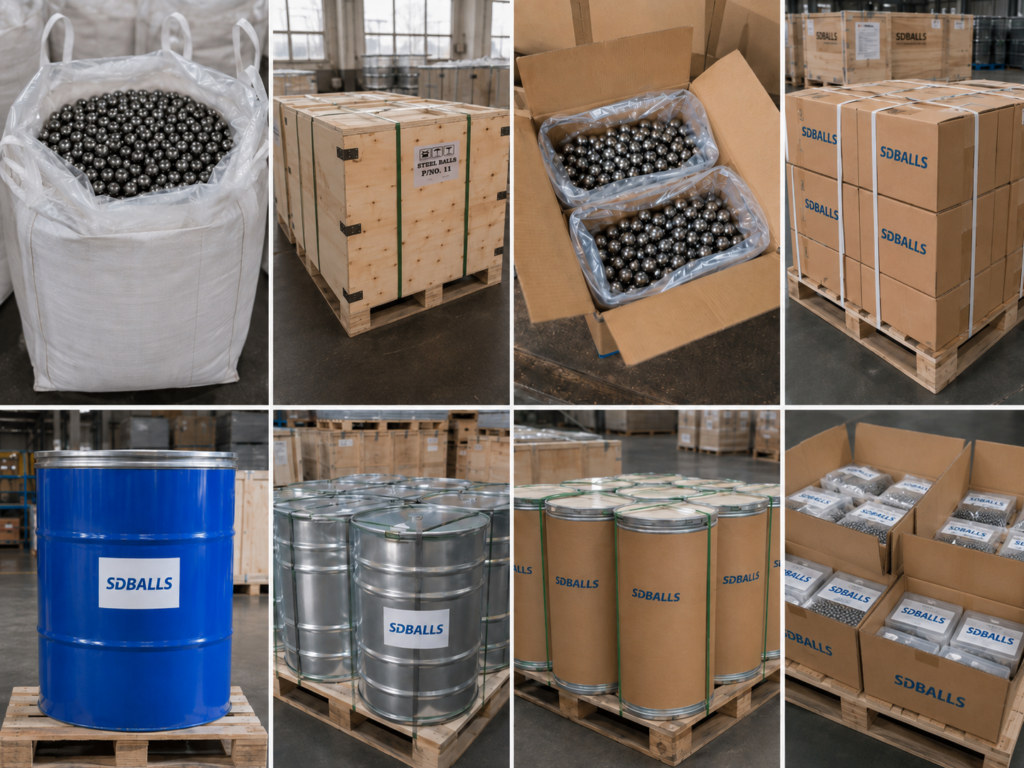
Esferas de latão podem ser encomendadas para montagens funcionais ou aplicações sensíveis à aparência. A embalagem deve ser selecionada de acordo com o diâmetro da esfera, acabamento superficial, distância de envio, tempo de armazenamento e padrão de inspeção do cliente.
| Opção de Embalagem | Adequado Para | Observações |
| Pequenos sacos plásticos / frascos | Amostras, esferas de pequeno porte, eletrônicos, interruptores e projetos de acessórios | Fácil contagem e manuseio |
| Caixas de papelão com sacos internos | Fornecimento geral para exportação | Embalagem econômica comum para pedidos a granel |
| Baldes ou tambores | Fornecimento industrial a granel | Adequado para maiores quantidades e uso repetido na produção |
| Embalagem paletizada para exportação | Remessas pesadas e estocagem para distribuidores | Melhora o manuseio e o controle de armazém |
| Embalagem protetora / anti-embaçamento | Esferas de latão com acabamento polido brilhante ou decorativo | Recomendado quando a aparência é crítica |
| Rotulagem OEM personalizada | Identificação de marca, lote, material, tamanho e quantidade | Útil para distribuidores e linhas de produção OEM |
Como Especificar para Cotação
Para cotar esferas de latão com precisão, favor confirmar as seguintes informações:
- Grau do material ou norma equivalente, como C26000, C27000, C28000, H70, H65, H62, C2600, C2700 ou C2800.
- Diâmetro em mm ou polegada e tolerância / grau de precisão exigido.
- Acabamento superficial requerido, como passivado, polido, acabamento brilhante, limpo, oleado, embalagem anti-embaçamento ou acabamento decorativo.
- Detalhes da aplicação, incluindo uso em válvulas, bombas, dispositivos elétricos, interruptores de segurança, unidades de aquecimento, eletrodomésticos, trilhos para móveis, automotivo ou petroquímico.
- Ambiente de trabalho, incluindo água, vapor, óleo combustível, gasolina, querosene, álcool, produtos químicos, água do mar, amônia ou outros meios.
- Se é necessária furação, usinagem, furos especiais, achatamento, revestimento ou processamento secundário.
- Quantidade, método de embalagem, requisito de rotulagem, porto de destino, termo de comércio e prazo de entrega solicitado.
- Documentos de inspeção, certificado de material, RoHS, testes de terceiros ou requisitos de aprovação de amostra.
FAQ Técnico
P: De que são feitas as esferas de latão?
R: As esferas de latão são feitas de ligas de cobre-zinco. Os graus comuns incluem C26000, C27000 e C28000 ou graus internacionais equivalentes como H70, H65, H62, C2600, C2700 e C2800.
P: As esferas de latão são magnéticas?
R: Não. O latão é uma liga não ferrosa de cobre-zinco e geralmente não é magnético, tornando as esferas de latão adequadas para muitas aplicações elétricas, de interruptores, instrumentos e mecânicas não magnéticas.
P: Qual a diferença entre esferas de latão e esferas de cobre?
R: As esferas de cobre puro oferecem maior condutividade elétrica e térmica e são mais macias. As esferas de latão geralmente proporcionam melhor resistência mecânica, melhor comportamento ao desgaste e uma aparência amarela brilhante, mas menor condutividade que o cobre puro.
P: As esferas de latão são resistentes à corrosão?
R: As esferas de latão oferecem boa resistência à corrosão em ar ambiente, água, óleo combustível, gasolina, querosene, álcool e muitos ambientes não oxidantes. A compatibilidade deve ser confirmada para ácidos, amônia, sulfetos, água do mar e produtos químicos agressivos.
P: As esferas de latão podem ser usadas em válvulas e bombas?
R: Sim. As esferas de latão são amplamente utilizadas em válvulas especiais, bombas industriais e válvulas, peças de controle de fluxo e conjuntos mecânicos relacionados, quando o meio e as condições de operação são adequados.
P: As esferas de latão podem ser utilizadas em contatos elétricos ou interruptores?
R: Sim. As esferas de latão oferecem boa condutividade elétrica, desempenho não magnético e baixo atrito, tornando-as adequadas para diversos dispositivos eletrónicos, interruptores de segurança, interruptores basculantes e componentes condutores.
P: As esferas de latão podem substituir as esferas de aço cromado?
R: Apenas em aplicações adequadas. As esferas de latão são úteis onde a resistência à corrosão, condutividade, comportamento não magnético e baixo atrito são importantes. Para aplicações de alta carga, alta velocidade ou fadiga em rolamentos, as esferas de aço cromado AISI 52100 ou de aço inoxidável temperado são geralmente mais apropriadas.
P: Que informações são necessárias para uma cotação de esferas de latão?
R: Por favor, forneça o grau do material, diâmetro, grau ou tolerância, acabamento superficial, quantidade, aplicação, ambiente de trabalho, embalagem, requisito de documento de inspeção, destino e termo comercial (Incoterm).
Produtos Relacionados
- esferas de latão
- esferas de cobre puro
- esferas de bronze fosforoso
- esferas de bronze-alumínio
- esferas de aço inoxidável para resistência à corrosão
- esferas de aço cromado para aplicações em rolamentos
- esferas de carboneto de tungsténio para extrema resistência ao desgaste
- Bolas de diversos materiais
- controle de qualidade SDBALLS
- aplicações industriais de esferas
Agendar uma solicitação
Entre em contato conosco hoje mesmo para qualquer serviço. (*) Indica campos obrigatórios.