
-6.png)
-7.png)
-7.png)
-7.png)
-7.png)
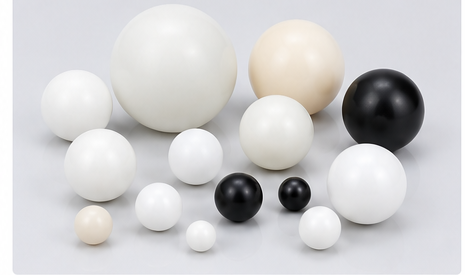
Esferas de náilon / poliamida – PA6 / PA66 Esferas plásticas
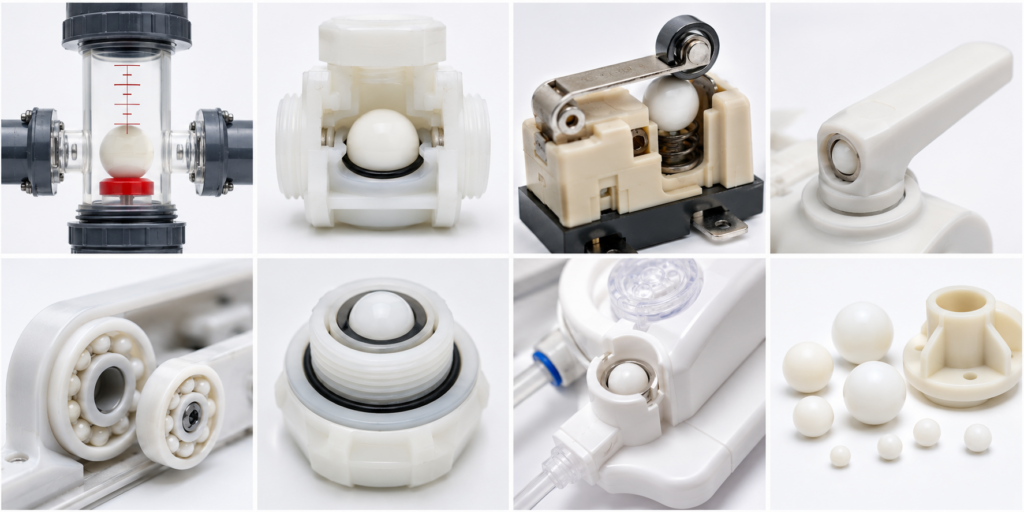
As esferas de Nylon/Poliamida são esferas plásticas leves, fabricadas em PA6 e PA66, para aplicações que exigem baixo peso, resistência à corrosão, resistência ao desgaste, isolamento elétrico e um desempenho suave de baixo atrito. São habitualmente usadas em medidores de vazão, interruptores, alças, válvulas especiais, aplicações de rolamentos e vedação, rolamentos de baixa carga, conjuntos para dispositivos médicos e componentes industriais em geral.
A SDBALLS fornece esferas de poliamida Nylon 6 e Nylon 6.6 numa ampla gama de diâmetros, de 1,5 mm a 160 mm, com opções de Grau de Precisão I, II e III, de acordo com a aplicação. Em comparação com esferas metálicas, as esferas de nylon são não metálicas, leves, silenciosas no funcionamento e adequadas para muitos conjuntos de baixa carga onde não são exigidas elevada dureza, propriedades magnéticas ou alta capacidade de carga para rolamentos pesados.
| Item | Conteúdo de Página Recomendado |
| Nome Comercial do Material | Nylon 6 / Nylon 6.6 |
| Material | Nylon 6 / Nylon 6.6; plástico de poliamida PA6 / PA66 |
| Faixa de Diâmetro | 1,5 mm – 160 mm |
| Graus de Precisão | I / II / III |
| Dureza | Aprox. Dureza Shore D 75-85 |
| Aplicações típicas | Medidores de vazão, interruptores, alças, válvulas especiais, rolamentos de baixa carga, aplicações de vedação, instrumentação, componentes médicos e industriais |
Compartilhe este produto
Visão geral do produto
As Esferas de Nylon/Polyamide são esferas plásticas de engenharia selecionadas quando os compradores necessitam de uma alternativa não metálica e leve às esferas de aço, inox, cerâmica ou vidro. O Nylon 6 e o Nylon 6.6 proporcionam um equilíbrio prático de resistência ao desgaste, tenacidade, resistência química em muitos meios comuns, isolamento elétrico e movimento de baixa fricção, tornando-os adequados para componentes de controlo de fluxo, sistemas de movimento de baixa exigência, mecanismos de interruptores, pegas e conjuntos relacionados com vedação.
Ao contrário das esferas de aço, as esferas de nylon não são projetadas para aplicações de fadiga em rolamentos de alta carga ou alta velocidade. A sua vantagem não é a alta dureza, mas sim o baixo peso, o comportamento não magnético, o desempenho livre de corrosão e o funcionamento silencioso em conjuntos adequados de baixa carga. Para aplicações que exigem maior estabilidade dimensional em ambientes húmidos, menor absorção de humidade, maior resistência química ou maior rigidez, a SDBALLS pode ajudar os compradores a comparar nylon com alternativas em POM, PP, PTFE, PEEK, vidro, cerâmica ou aço inoxidável.
Seleção de Material e Posicionamento Técnico
O Nylon 6 e o Nylon 6.6 são materiais de poliamida semicristalinos, escolhidos pela sua resistência ao desgaste, tenacidade, resistência à abrasão, comportamento de amortecimento e propriedades de isolamento elétrico. Em muitos conjuntos industriais, as esferas de nylon reduzem o peso e o ruído, evitando ao mesmo tempo a ferrugem e a interferência magnética.
O principal ponto técnico que os compradores devem compreender é a compatibilidade com humidade e produtos químicos. O nylon pode absorver humidade, o que pode influenciar o tamanho, o peso e o comportamento mecânico. Também se comporta bem em muitos óleos, combustíveis e ambientes químicos suaves comuns, mas não deve ser utilizado sem verificação em ácidos fortes, álcalis fortes ou meios químicos agressivos. Para projetos críticos, o meio de aplicação, a temperatura, a carga e os requisitos de tolerância devem ser confirmados antes da seleção do material.
Especificações técnicas
| Item de Especificação | Valor Típico / Descrição |
| Tipo de Produto | Esferas plásticas leves / esferas poliméricas não metálicas |
| Diâmetro | 1,5 mm – 160 mm; outros tamanhos sujeitos a confirmação de produção |
| Grau de Precisão | Grau I, Grau II, Grau III; selecionado de acordo com a tolerância e as necessidades da aplicação |
| Dureza | Shore D 75-85 típico, sujeito ao grau do material e confirmação de produção |
| Densidade | Aprox. 1,12-1,15 g/cm³ dependendo do tipo de PA e condição de humidade |
| Magnetismo | Não magnético |
| Resistência à tracção | Intervalo de referência aprox. 86-103 MPa |
| Módulo de Elasticidade | Intervalo de referência aprox. 2,6-3,3 GPa |
| Absorção de Água | Dependente do material |
| Temperatura de Serviço | Intervalo de trabalho típico de cerca de -30°C a +80°C para fornecimento padrão; limites superiores devem ser confirmados pelo tipo de material e condição de carga |
| Propriedade Elétrica | Material polimérico isolante elétrico |
| Resistência Química | Boa resistência a muitos óleos, combustíveis, solventes comuns e produtos químicos suaves; não recomendado para ácidos fortes, álcalis fortes ou meios químicos incompatíveis |
| Acabamento da superfície | Superfície moldada lisa ou polida para reduzir o desgaste relacionado com a fricção |
Composição do Material e Resistência Química
As esferas de nylon são esferas de polímero, pelo que não utilizam uma tabela de composição química como as esferas de aço, inox, liga de cobre ou liga de alumínio. A descrição correta do produto deve focar-se na família do polímero, tipo, comportamento à humidade, intervalo de temperatura e compatibilidade química.
| Propriedade | Desempenho da Esfera de Nylon / Poliamida | Nota de Seleção |
| Família do Polímero | Poliamida; comummente PA6 e PA66 | Confirmar o tipo de PA se o desenho especificar um grau |
| Comportamento à Corrosão | Não enferruja como as esferas metálicas | Adequado para muitos ambientes húmidos ou com produtos químicos suaves, quando compatível |
| Resistência Química Comum | Boa resistência a muitos óleos, combustíveis, hidrocarbonetos e meios industriais suaves | A concentração real do meio e a temperatura devem ser verificadas |
| Limitações Químicas | Não recomendado para ácidos fortes, álcalis fortes e produtos químicos agressivos incompatíveis | Utilizar alternativas em PTFE, PEEK, PP, cerâmica ou aço inoxidável quando necessário |
| Comportamento perante a humidade | Pode absorver humidade e alterar ligeiramente as dimensões | Crítico para montagens com tolerâncias apertadas e exposição prolongada à água |
| Comportamento elétrico | Material plástico isolante, não condutor | Útil para interruptores, dispositivos elétricos e montagens não condutoras |
Benefícios de desempenho para compradores
- Alternativa leve às esferas metálicas, reduzindo o peso total da montagem e a força de impacto.
- Material não oxidável e não magnético para aplicações onde a corrosão do aço ou o magnetismo não são aceitáveis.
- A superfície lisa ajuda a reduzir o desgaste por fricção em aplicações de movimento de baixa carga, válvulas e vedação.
- A boa tenacidade e o comportamento de amortecimento suportam um funcionamento silencioso em mecanismos móveis.
- As propriedades de isolamento elétrico tornam o nylon adequado para interruptores, dispositivos elétricos e montagens não condutoras.
- A ampla gama de diâmetros de 1,5 mm a 160 mm suporta tanto componentes miniatura como designs industriais de maior dimensão.
- A flexibilidade OEM/ODM permite aos compradores confirmar o diâmetro, grau, cor, acabamento superficial, embalagem e requisitos específicos da aplicação.
Aplicações e Adequação de Aplicação
As esferas de Nylon/Poliamida são melhor utilizadas em montagens de baixa carga, velocidade baixa a média e fluidos compatíveis não corrosivos, onde o peso leve, baixo ruído, comportamento não magnético e movimento suave são mais importantes do que a dureza do aço de qualidade para rolamentos.
| Aplicativo | Nível de Adequação | Por que se Adequa | Nota para o Comprador |
| Medidores de fluxo e indicadores de nível | Muito boa | Movimento leve da esfera e comportamento livre de corrosão em muitos fluidos compatíveis | Confirmar a compatibilidade com fluidos, densidade e tolerância dimensional |
| Válvulas especiais e válvulas de retenção | Muito boa | Superfície lisa, contacto de vedação e resistência a muitos óleos e produtos químicos suaves | Confirmar o material do assento, pressão, temperatura e meio |
| Interruptores e mecanismos atuadores | Muito boa | Isolamento elétrico, baixo peso e movimento repetido suave | Confirmar a tolerância dimensional e o requisito de desgaste |
| Puxadores e ferragens leves | Bom | Baixa densidade, tenacidade e fácil personalização de cor | Confirmar a aparência da superfície e o requisito de cor |
| Rolamentos e rolos de baixa carga | Bom | Operação silenciosa e baixo atrito sob carga leve | Não adequado para aplicações de fadiga de rolamentos com carga pesada ou alta velocidade |
| Aplicações de rolamentos e vedações | Dependente da aplicação | Superfície lisa pode suportar vedação ou contato de rolamento de baixa carga | Confirmar compressão, deformação e exposição a meios |
| Conjuntos médicos e de dispositivos | Dependente da aplicação | Comportamento não metálico, leve e livre de corrosão | Confirmar classe do material, limpeza e requisitos regulamentares |
| Ambientes com ácidos/álcalis fortes | Limitado/não recomendado | O nylon pode ser atacado ou degradado | Considerar alternativas em PTFE, PEEK, PP, cerâmica ou aço inoxidável |
Guia de Seleção de Materiais
| Opção de Material | Resistência Principal | Limitação | Quando Recomendar |
| Esferas de Nylon/Poliamida | Leve, resistente, ao desgaste, não magnético e isolante | Absorção de umidade e resistência química limitada a substâncias fortes | Medidores de fluxo, válvulas, interruptores, rolamentos de baixa carga e mecanismos leves |
| Esferas de POM/Poliacetal | Melhor estabilidade dimensional e baixa absorção de umidade em comparação com o nylon | Limites de temperatura e químicos inferiores a alguns plásticos avançados | Aplicações de esferas plásticas de precisão que exigem controle dimensional mais rigoroso |
| Esferas de PP | Leve e forte resistência química em diversos meios | Menor resistência mecânica e capacidade de temperatura | Tanques químicos, aplicações químicas de baixa carga e componentes de flutuação |
| Esferas de PTFE | Excelente resistência química e baixo atrito | Macio, custo mais elevado e menor capacidade de carga | Meios químicos agressivos e aplicações de vedação de baixo atrito |
| Esferas de PEEK | Alta resistência à temperatura, química e força mecânica | Custo mais elevado | Aplicações industriais de alto desempenho, médicas ou químicas |
| Bolas de aço inoxidável | Maior força e resistência à corrosão dependendo do grau | Mais pesadas e condutoras; podem ser magnéticas dependendo do grau | Quando se requer carga, precisão, dureza ou desempenho de vedação metálica |
| Esferas de Vidro / Cerâmica | Opções duras, limpas e resistentes à corrosão | Fragilidade e custo mais elevado dependendo do material | Aplicações laboratoriais, químicas, médicas ou de precisão não metálica |
Fabricação & Controle de Processos
As Esferas de Nylon / Poliamida são produzidas por processos de conformação e acabamento de esferas plásticas, selecionados de acordo com o tamanho, grau, acabamento superficial e quantidade. Para fornecimento industrial, a consistência do processo é mais importante do que apenas o nome do material. O controlo do diâmetro, a suavidade da superfície, a circularidade e a estabilidade do lote afetam diretamente o desempenho em caudalímetros, válvulas, interruptores e rolamentos de baixa carga.
A SDBALLS apoia requisitos OEM e ODM confirmando o grau do material, diâmetro, grau de precisão, cor, condição da superfície, método de embalagem e ambiente de aplicação antes da produção. Para aplicações especiais, recomendam-se amostras, desenhos ou especificações do fornecedor atual para que a produção e a inspeção possam ser adequadas às condições reais de montagem do comprador.
Controlo de Qualidade e Inspeção
O controlo de qualidade para Esferas de Nylon / Poliamida deve focar-se nos itens de inspeção que afetam o desempenho das esferas plásticas nas montagens. Os itens de inspeção típicos incluem diâmetro, classe de tolerância, circularidade, aparência da superfície, consistência de cor, confirmação do material, referência de peso/densidade, suavidade da superfície, condição da embalagem e rastreabilidade do lote.
Para projetos OEM, a SDBALLS pode discutir a aprovação de amostras, relatórios de inspeção, solicitações de conformidade RoHS ou outras, testes por terceiros e rotulagem personalizada. Para aplicações que envolvam ambientes médicos, de contacto com alimentos, água potável ou regulamentados, o comprador deve confirmar o certificado de material necessário, a norma de conformidade e a aprovação para o uso final antes de encomendar.
Opções de Embalagem
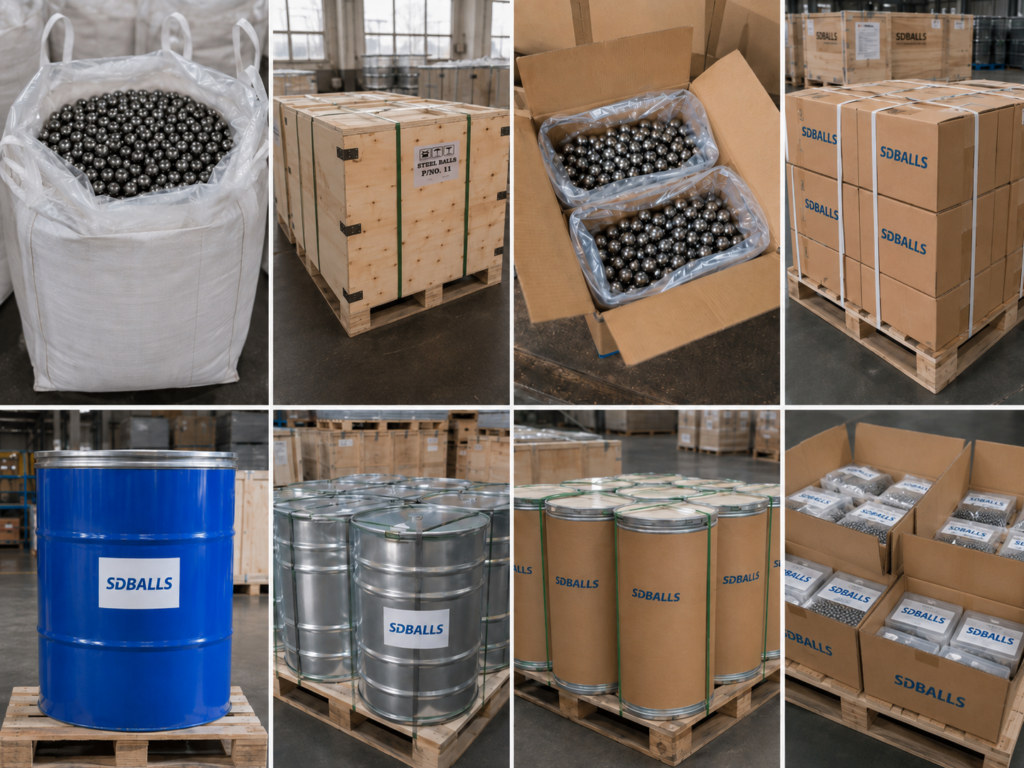
As Esferas de Nylon / Poliamida podem ser fornecidas em sacos a granel, sacos internos de PE, caixas de cartão, baldes, tambores, paletes ou embalagem OEM personalizada. Para peças de precisão menores, a rotulagem do saco interno deve incluir material, diâmetro, grau, quantidade e número do lote. Para envios industriais maiores, as caixas e paletes devem ser selecionados para evitar deformação, contaminação e erros de manuseamento por mistura de tamanhos.
Como Especificar para Cotação
Para orçamentar Esferas de Nylon / Poliamida com precisão, por favor forneça: tipo de material (PA6, PA66 ou outra poliamida), diâmetro em mm ou polegadas, grau de precisão ou tolerância, quantidade, cor, acabamento superficial, temperatura de trabalho, meio de aplicação, condição de carga, método de embalagem, requisito de documento de inspeção, porto de destino e termo de comércio (Incoterm).
Para projetos de substituição ou montagem, os compradores são encorajados a fornecer desenhos, amostras, fotos do produto existente, especificações do fornecedor atual, detalhes do ambiente de trabalho e quaisquer requisitos regulamentares ou de compatibilidade química. Isto ajuda a SDBALLS a recomendar se o nylon é adequado ou se outro material plástico, de vidro, cerâmico ou aço inoxidável deve ser considerado.
FAQ Técnico
P: De que são feitas as Esferas de Nylon / Poliamida?
R: São comummente feitas de Nylon 6 e Nylon 6.6, também denominados PA6 e PA66. Estes materiais de poliamida são selecionados pelo seu baixo peso, resistência ao desgaste, tenacidade, comportamento de amortecimento e isolamento elétrico.
P: Qual é a gama de tamanhos para as esferas de nylon da SDBALLS?
R: A gama padrão na página é de 1,5 mm a 160 mm. Outros tamanhos podem ser analisados de acordo com a disponibilidade de material, ferramentas, tolerância e quantidade da encomenda.
P: As esferas de nylon são o mesmo que esferas para rolamentos de plástico?
R: As esferas de nylon podem ser usadas em algumas aplicações de rolamento ou rolantes de baixa carga, mas não substituem as esferas de aço para rolamentos de alta velocidade ou alta carga. São melhor utilizadas onde o baixo peso, a operação silenciosa, o comportamento livre de corrosão e o isolamento elétrico são mais importantes do que a alta resistência à fadiga do rolamento.
P: As esferas de nylon são resistentes à corrosão?
R: As esferas de nylon não enferrujam como as esferas metálicas e têm boa resistência a muitos óleos, combustíveis, solventes e ambientes químicos suaves comuns. No entanto, não são recomendadas para ácidos fortes, álcalis fortes ou meios agressivos incompatíveis sem teste prévio.
P: As esferas de nylon absorvem água?
R: Sim. Os materiais de nylon podem absorver humidade, o que pode afetar as dimensões e o comportamento mecânico. Para aplicações com tolerância apertada, exposição húmida ou prolongada à água, os compradores devem confirmar as condições de humidade e considerar alternativas como POM, PP, PTFE, PEEK ou outras, se necessário.
P: As esferas de nylon são magnéticas ou eletricamente condutoras?
R: Não. As esferas de nylon não são magnéticas e são isolantes elétricas, tornando-as adequadas para interruptores, dispositivos elétricos e montagens não condutoras.
P: Quais são os graus de precisão disponíveis?
R: A SDBALLS pode fornecer esferas de nylon de Grau I, Grau II e Grau III, de acordo com os requisitos da aplicação. O melhor grau depende das exigências de tolerância, circularidade, controlo de fluxo, vedação e movimento.
P: As esferas de nylon podem ser personalizadas em cor ou tamanho?
R: Sim. Diâmetro, grau, cor, acabamento superficial, embalagem e rotulagem podem ser discutidos conforme os requisitos do projeto OEM ou ODM. A quantidade mínima e o prazo de entrega dependem da especificação.
P: Que informações são necessárias para uma cotação?
R: Por favor, indique o grau do material, diâmetro, tolerância ou grau de precisão, quantidade, cor, aplicação, temperatura de trabalho, meios químicos, condição de carga, requisito de embalagem e destino.
P: Quando devem os compradores optar por outro material em vez do nylon?
R: Se a aplicação exigir maior capacidade de carga, temperatura mais elevada, forte resistência química, menor absorção de humidade, maior rigidez ou maior estabilidade de precisão, materiais como POM, PP, PTFE, PEEK, aço inoxidável, vidro ou cerâmica podem ser mais adequados.
Produtos Relacionados
- esferas de plástico
- Esferas de acetal POM para estabilidade dimensional
- Esferas plásticas de PP para aplicações químicas
- Esferas de PTFE para resistência química
- Esferas de vidro para aplicações químicas e de precisão
- Esferas de cerâmica para aplicações de alto desempenho
- Esferas de aço inoxidável para maior resistência e resistência à corrosão
- Esferas para válvulas e sistemas de controlo de fluxo
- controle de qualidade SDBALLS
Agendar uma solicitação
Entre em contato conosco hoje mesmo para qualquer serviço. (*) Indica campos obrigatórios.