-15.png)
-12.png)
-12.png)
-12.png)
-12.png)
Esferas com Revestimento de Borracha
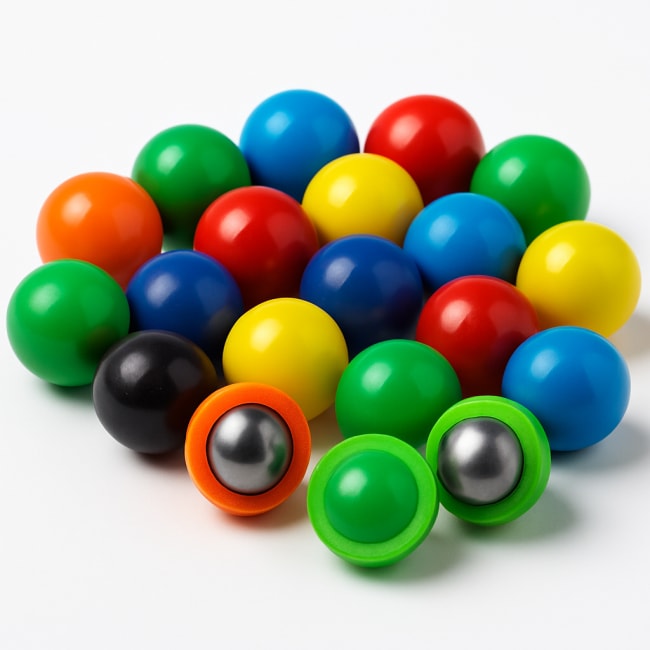
As Esferas Revestidas de Borracha são esferas de engenharia compostas, projetadas para aplicações de controle de fluidos, flutuabilidade, vedação e montagem especial, onde a esfera deve combinar uma superfície de elastómero resiliente com um núcleo interno controlado. A camada externa de borracha suporta contacto repetido, comportamento de vedação, absorção de impacto e desempenho específico ao meio, enquanto o material do núcleo pode ser selecionado para ajustar peso, comportamento de flutuação, resistência e resposta do sistema.
A SDBALLS fornece esferas revestidas de borracha com núcleos de aço cromado, aço inoxidável, nylon ou nylon oco, e materiais de cobertura incluindo CR, EPDM, EPM, FKM, NBR, NR, PUR, SBR, TPV e silicone. Os diâmetros padrão disponíveis são de 16 mm a 260 mm, com cores preta, amarela ou personalizadas para identificação, montagem OEM e adequação à aplicação.
| Item | Conteúdo de Página Recomendado |
| Tipo de Produto | Esferas compostas revestidas de borracha / esferas revestidas de elastómero |
| Material do Núcleo | Aço cromado, aço inoxidável, nylon ou nylon oco; selecionado de acordo com requisitos de peso, flutuabilidade e resistência |
| Material de cobertura | CR, EPDM, EPM, FKM, NBR, NR, PUR, SBR, TPV, silicone; selecionado de acordo com o meio, temperatura e condições de desgaste |
| Faixa de Diâmetro | 16 mm – 260 mm |
| Cor | Preto, amarelo ou cores personalizadas |
| Peso / Flutuabilidade | Personalizável por material do núcleo, design de núcleo oco e diâmetro do núcleo |
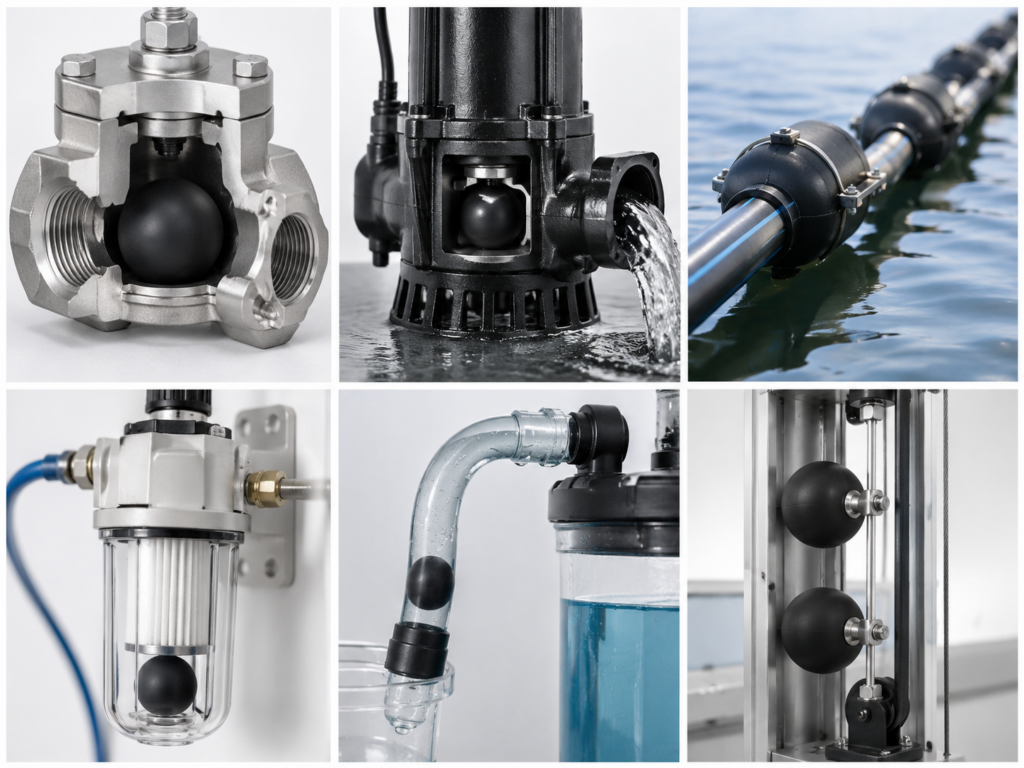
| Aplicações típicas | Válvulas de retenção, bombas de efluentes, linhas flutuantes, sistemas de tubulação, sistemas de filtragem de ar, sifões, contrapesos, acessórios para brinquedos e conjuntos de controle de fluidos personalizados |
| Personalização | Suporte OEM / ODM para tipo de núcleo, composto de cobertura, diâmetro, peso, cor, dureza e desempenho específico da aplicação |
Compartilhe este produto
Visão geral do produto
As Esferas Revestidas de Borracha não são esferas de precisão padrão para rolamentos. São componentes esféricos compostos projetados quando a aplicação requer um equilíbrio específico de elasticidade, comportamento de vedação, flutuação, resistência ao impacto e peso controlado. O produto consiste normalmente num núcleo interno e num revestimento externo de elastómero. O núcleo controla a massa e o comportamento estrutural, enquanto a cobertura de borracha proporciona uma superfície de contacto macia, resiliente e compatível com o meio.
Em válvulas de retenção, bombas de efluentes, linhas de flutuação, sifões e sistemas de fluidos relacionados, a esfera deve abrir, fechar, flutuar, vedar ou mover-se repetidamente sob condições reais de operação. Uma esfera metálica maciça pode ser demasiado pesada, demasiado dura ou demasiado danosa para as peças adjacentes. Uma esfera totalmente plástica pode não fornecer o peso ou a resiliência superficial necessários. As esferas revestidas de borracha resolvem isto ao combinar a seleção do núcleo com a seleção do revestimento elastomérico.
Seleção de Material e Posicionamento Técnico
A seleção correta de uma esfera revestida de borracha depende de três fatores interligados: material do núcleo, composto de revestimento e peso pretendido. Núcleos de aço proporcionam maior massa e estabilidade estrutural. Núcleos de aço inoxidável podem ser usados onde é exigida resistência à corrosão. Núcleos de nylon e nylon oco reduzem o peso específico e favorecem o comportamento de flutuação em muitos líquidos. Ao ajustar o diâmetro e o material do núcleo, a SDBALLS pode atender aos requisitos específicos de peso e flutuabilidade do cliente.
A seleção do material de revestimento é igualmente importante. O EPDM é frequentemente selecionado para aplicações em contacto com água e exposição climática, o NBR para serviço em contacto com óleo, o FKM para maior resistência química e térmica, o silicone para flexibilidade e desempenho térmico, o PUR para resistência ao desgaste, e outros elastómeros como CR, NR, SBR, EPM ou TPV de acordo com os meios de trabalho e requisitos mecânicos. A escolha final do material deve ser confirmada face ao líquido real, temperatura, pressão, frequência de movimento e condição de vedação.
Principais Vantagens para Compradores
- Peso e flutuabilidade controlados através da seleção de núcleo de aço, aço inoxidável, nylon ou nylon oco.
- Superfície de borracha resiliente para contacto de vedação, ciclos repetidos e redução de danos nos componentes adjacentes.
- Ampla gama de opções de materiais elastoméricos para diferentes meios, temperaturas e ambientes de desgaste.
- Capacidade de grande diâmetro, de 16 mm a 260 mm, para válvulas, bombas, linhas de flutuação, sifões e equipamento industrial.
- Personalização de cor para identificação do produto, triagem na manutenção e controlo de montagem OEM.
- Personalização flexível OEM/ODM para diâmetro do núcleo, material de revestimento, dureza, cor, tamanho e peso pretendido.
- Alternativa prática a esferas de borracha maciça, esferas plásticas ou esferas metálicas quando a aplicação necessita simultaneamente de massa controlada e de uma superfície de contacto macia.
Opções de Material de Núcleo e Cobertura
| Opção | Finalidade | Nota Típica do Comprador |
| Núcleo de aço cromado | Maior massa e estrutura interna estável | Usar onde a corrosão não é a principal preocupação e é exigido um comportamento de esfera mais pesado. |
| Núcleo de aço inoxidável | Massa mais melhor resistência à corrosão | Adequado para sistemas aquosos ou ligeiramente corrosivos quando é necessário um núcleo metálico. |
| Núcleo de nylon | Peso reduzido e bom comportamento de núcleo não metálico | Útil para aplicações de menor peso específico e flutuação. |
| Núcleo oco de nylon | Máxima redução de peso e ajuste de flutuabilidade | Recomendado quando o comportamento de flutuação é um requisito funcional chave. |
| Cobertura de EPDM | Utilizações com água, exposição climática e controlo de diversos fluidos | Comummente selecionada para sistemas relacionados com água e águas residuais. |
| Cobertura de NBR | Ambientes relacionados com óleo | Considere quando o meio de trabalho contém óleo ou fluidos semelhantes a combustível. |
| Cobertura de FKM | Maior resistência química e térmica | Use para ambientes químicos ou térmicos mais exigentes após confirmação de compatibilidade. |
| Cobertura de PUR | Resistência ao desgaste e contacto dinâmico | Adequado quando a resistência à abrasão e o movimento repetido são importantes. |
| Cobertura de silicone | Flexibilidade e desempenho de temperatura selecionado | Útil para requisitos especiais de vedação ou relacionados à temperatura. |
| Cobertura em CR / NR / SBR / EPM / TPV | Opções de elastómeros específicos para cada aplicação | Selecione de acordo com o meio, elasticidade, desgaste, custo e ambiente de operação. |
Aplicações e Adequação de Aplicação
| Aplicativo | Nível de Adequação | Porque se adequa / Nota ao comprador |
| Válvulas de retenção | Muito boa | A superfície revestida suporta a vedação e os ciclos repetidos; o peso do núcleo pode ser ajustado para o comportamento de abertura e fecho. |
| Bombas de efluentes | Muito boa | O revestimento em borracha proporciona durabilidade no movimento dinâmico de fluidos; o peso específico reduzido pode apoiar a flutuabilidade ou a estabilidade do movimento. |
| Linhas flutuantes e sistemas de tubagem | Muito boa | As opções de núcleo em nylon ou nylon oco ajudam a favorecer o comportamento flutuante em muitos líquidos. |
| Sistemas de filtragem de ar | Bom | Adequado onde a flutuabilidade, o contacto suave ou o movimento controlado são necessários. |
| Sifões e sistemas de transferência | Bom | Pode apoiar um movimento estável e o comportamento de vedação quando o diâmetro e o peso são corretamente especificados. |
| Contrapesos e elementos de equilíbrio | Bom | O peso exato pode ser visado através da seleção do material e do diâmetro do núcleo. |
| Acessórios para brinquedos e conjuntos não industriais | Dependente da aplicação | A cor, a suavidade e o peso podem ser personalizados; confirme os requisitos de segurança e regulamentares separadamente. |
| Rolamentos de precisão de alta velocidade | Não recomendada | Esferas revestidas de borracha são componentes compostos projetados, não esferas de rolamento de precisão para aplicações de alta velocidade e fadiga. |
| Serviço químico agressivo | Condicional | Selecione coberturas de FKM, EPDM, NBR, silicone ou outras somente após confirmar a compatibilidade química e a temperatura de operação. |
Guia Competitivo de Seleção de Materiais
| Opção de Material | Resistência Típica | Limitação | Quando Recomendar |
| Esferas revestidas de borracha | Peso do núcleo controlado, superfície de vedação resiliente, material de cobertura personalizável | Requer seleção correta do composto de revestimento; não para uso em rolamentos de alta velocidade | Válvulas de retenção, bombas, linhas flutuantes, sifões, contrapesos e sistemas personalizados de controle de fluidos |
| Esferas de borracha maciça | Construção simples em elastômero e superfície macia | Menor controle sobre o peso interno exato e a flutuabilidade | Aplicações simples de vedação ou amortecimento onde o peso do núcleo não é crítico |
| Bolas de plástico | Leve, resistente à corrosão e econômico | Pode carecer de resiliência de vedação ou controle de massa | Válvulas de boia, válvulas leves e conjuntos de baixa carga onde a superfície de borracha não é necessária |
| Esferas de aço inoxidável | Opção metálica dura, durável e resistente à corrosão | Pesado ou duro demais para muitos sistemas de vedação ou flutuação | Aplicações em válvulas ou bombas que exigem resistência mecânica do metal e resistência à corrosão |
| Esferas cerâmicas | Resistente ao desgaste, resistente à corrosão, não metálico | Superfície dura; pode não fornecer vedação suave ou absorção de impacto | Válvulas químicas, medidores de precisão e ambientes agressivos onde não é necessário revestimento elastomérico |
Fabricação & Controle de Processos
A produção de bolas revestidas de borracha requer controle coordenado do núcleo, composto de revestimento, processo de colagem, condições de cura, diâmetro final, qualidade superficial, cor e peso alvo. Para aplicações sensíveis ao peso ou à flutuabilidade, o diâmetro do núcleo e o material devem ser confirmados antes da produção. Para aplicações sensíveis ao meio, o composto de borracha deve ser selecionado de acordo com a exposição química, temperatura, pressão e frequência de movimento.
A SDBALLS oferece personalização OEM e ODM, incluindo seleção do material do núcleo, seleção do material da cobertura, cor, diâmetro, peso alvo, dureza e embalagem. Para projetos de reposição, desenhos, amostras, design do assento da válvula, tipo de líquido, temperatura de operação e comportamento de abertura/fechamento necessário são úteis para uma correspondência precisa das especificações.
Controlo de Qualidade e Inspeção
Itens típicos de inspeção incluem diâmetro externo, circularidade, aparência superficial, condição do revestimento, cor, aderência do revestimento, peso alvo, confirmação do material do núcleo, condição da embalagem e consistência do lote. Para projetos críticos, a SDBALLS pode discutir aprovação de amostras, relatórios de inspeção, confirmação de materiais, rotulagem personalizada e testes de terceiros, quando necessário.
Como as bolas revestidas de borracha frequentemente operam no interior de bombas, válvulas e sistemas de fluidos, os compradores devem confirmar o meio de trabalho real, temperatura, pressão, frequência de ciclos e requisitos de vedação antes da produção em massa. Isso ajuda a evitar a seleção incorreta de material e melhora a estabilidade de pedidos repetidos.
Opções de Embalagem
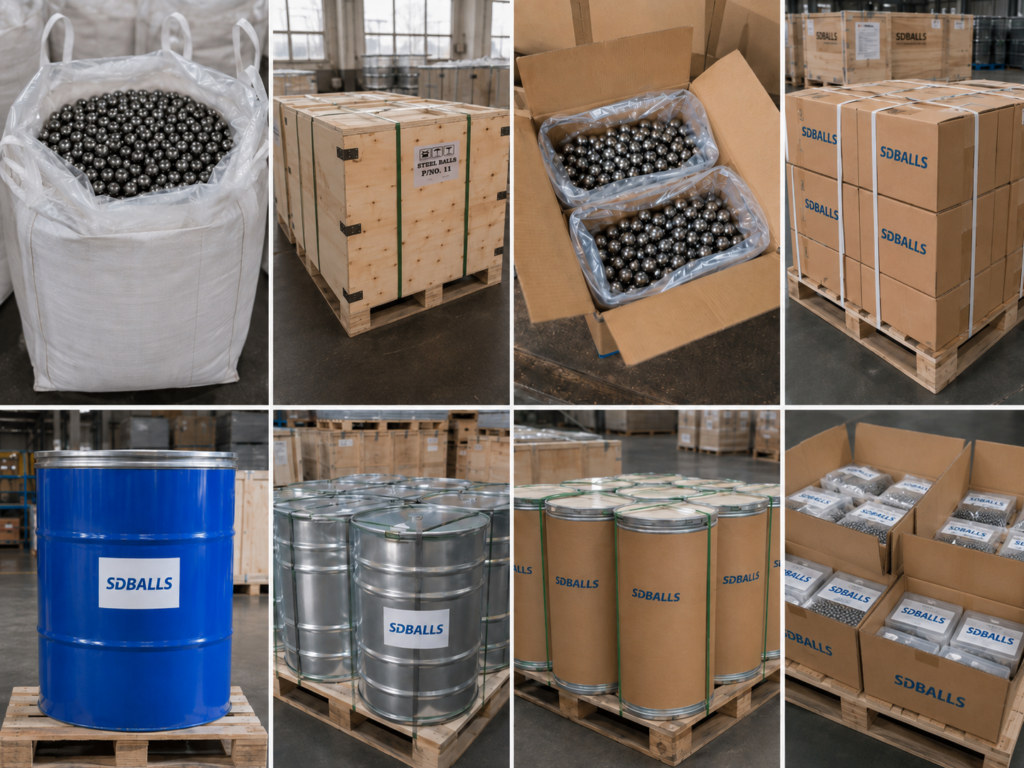
A SDBALLS pode fornecer bolas revestidas de borracha em sacos a granel, caixas de papelão, baldes, tambores, embalagem paletizada para exportação ou embalagem OEM personalizada. Bolas de grande diâmetro devem ser embaladas para evitar deformação, danos superficiais ou compressão excessiva durante o armazenamento e transporte. Embalagens codificadas por cores ou baseadas em etiquetas podem ser organizadas para diferentes tamanhos, materiais ou números de peça do cliente.
Como Especificar para Cotação
Para cotar com precisão, confirme: diâmetro externo, material do núcleo, material da cobertura, cor desejada, peso alvo ou comportamento de flutuabilidade, dureza do revestimento se especificada, líquido ou meio de trabalho, temperatura de operação, condição de pressão ou fluxo, tipo de aplicação, quantidade, método de embalagem, requisito de documentos de inspeção, porto de destino e termo de comércio. Se a bola for usada em uma válvula ou bomba, desenhos, dimensões do assento, amostras e especificações atuais do fornecedor são altamente recomendados.
FAQ Técnico
P: O que é uma bola revestida de borracha?
R: Uma bola revestida de borracha é um componente esférico composto com um núcleo interno e uma cobertura externa de borracha ou elastômero. É usada onde são necessários vedação, comportamento de flutuação, peso controlado e uma superfície resiliente.
P: Quais materiais de núcleo estão disponíveis?
R: As opções comuns de núcleo incluem aço cromo, aço inoxidável, nylon e nylon oco. O núcleo é selecionado de acordo com os requisitos de peso, flutuabilidade, resistência e corrosão.
P: Quais materiais de cobertura a SDBALLS pode fornecer?
R: As opções de material de cobertura incluem CR, EPDM, EPM, FKM, NBR, NR, PUR, SBR, TPV e silicone. O material correto depende do meio de trabalho, temperatura, pressão e condição de desgaste.
P: A SDBALLS pode fabricar bolas revestidas de borracha com um peso específico?
R: Sim. Pesos alvo específicos podem ser alcançados selecionando o material e o diâmetro do núcleo corretos. Para aplicações críticas de flutuabilidade, a densidade do líquido e as condições de trabalho devem ser fornecidas.
P: Que tamanhos estão disponíveis?
R: A faixa padrão de tamanho é de 16 mm a 260 mm. Outros tamanhos podem ser discutidos dependendo do ferramental, material de revestimento e quantidade do pedido.
P: As bolas revestidas de borracha são adequadas para válvulas de retenção e bombas?
R: Sim. Elas são comumente usadas em válvulas de retenção, bombas de efluentes, linhas flutuantes, sistemas de tubulação, sistemas de filtragem de ar e sifões, onde são necessários movimento controlado e comportamento de vedação.
P: A cor pode ser personalizada?
R: Sim. As cores padrão incluem preto e amarelo, e cores personalizadas podem ser discutidas para identificação OEM, triagem de manutenção ou requisitos de marca.
Q: Que informações são necessárias para uma cotação?
R: Por favor, forneça diâmetro, material do núcleo, material da cobertura, cor, peso alvo ou requisito de flutuabilidade, meio de trabalho, temperatura, aplicação, quantidade, embalagem, além de qualquer desenho ou informação de amostra.
Produtos Relacionados
Agendar uma solicitação
Entre em contato conosco hoje mesmo para qualquer serviço. (*) Indica campos obrigatórios.