
-2.png)
-2.png)
-2.png)
-2.png)
-2.png)
Esferas Acrílicas (Esferas PMMA) – Esferas de Plástico Leves e Transparentes para Medidores de Fluxo Visuais, Válvulas de Retenção e Aplicações Laboratoriais
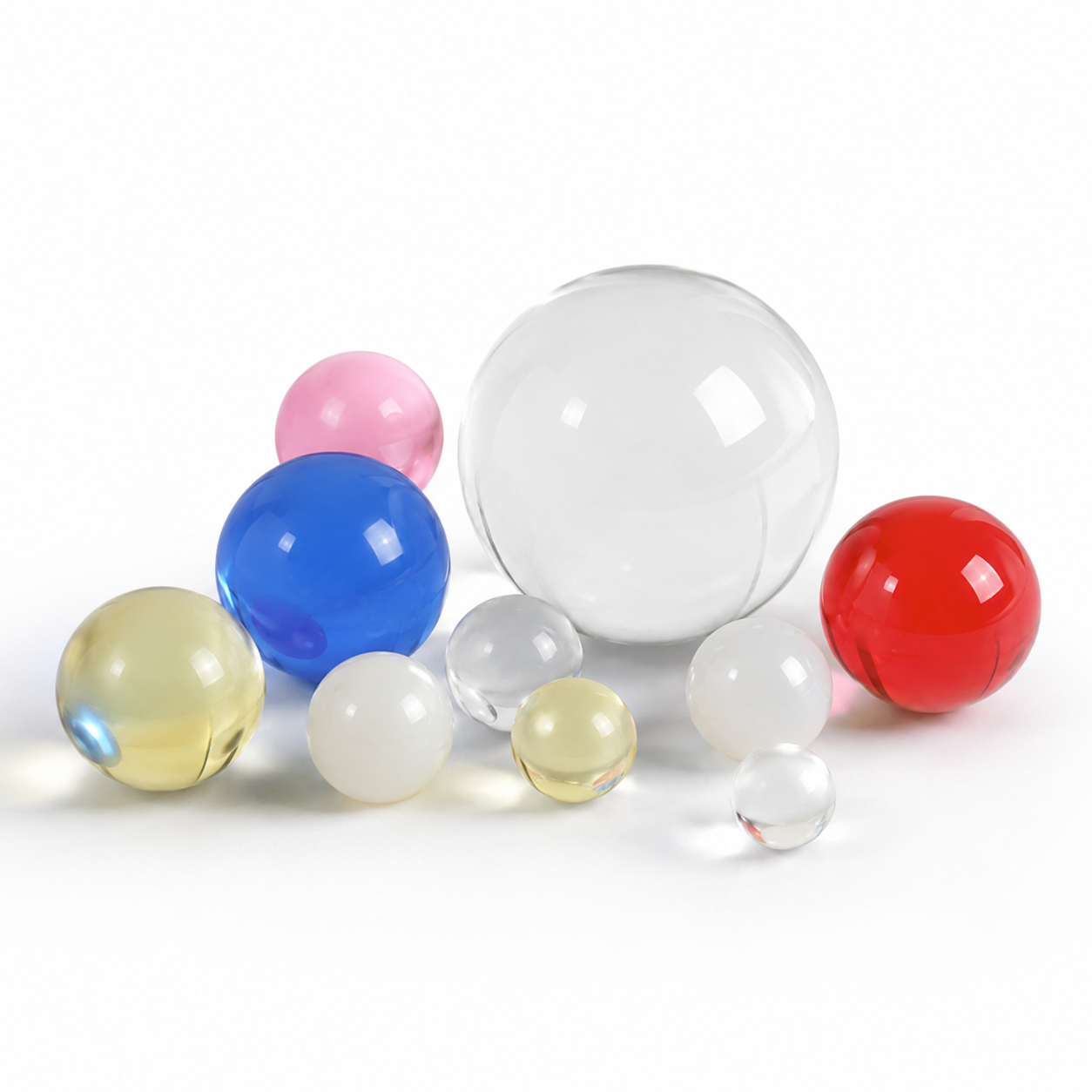
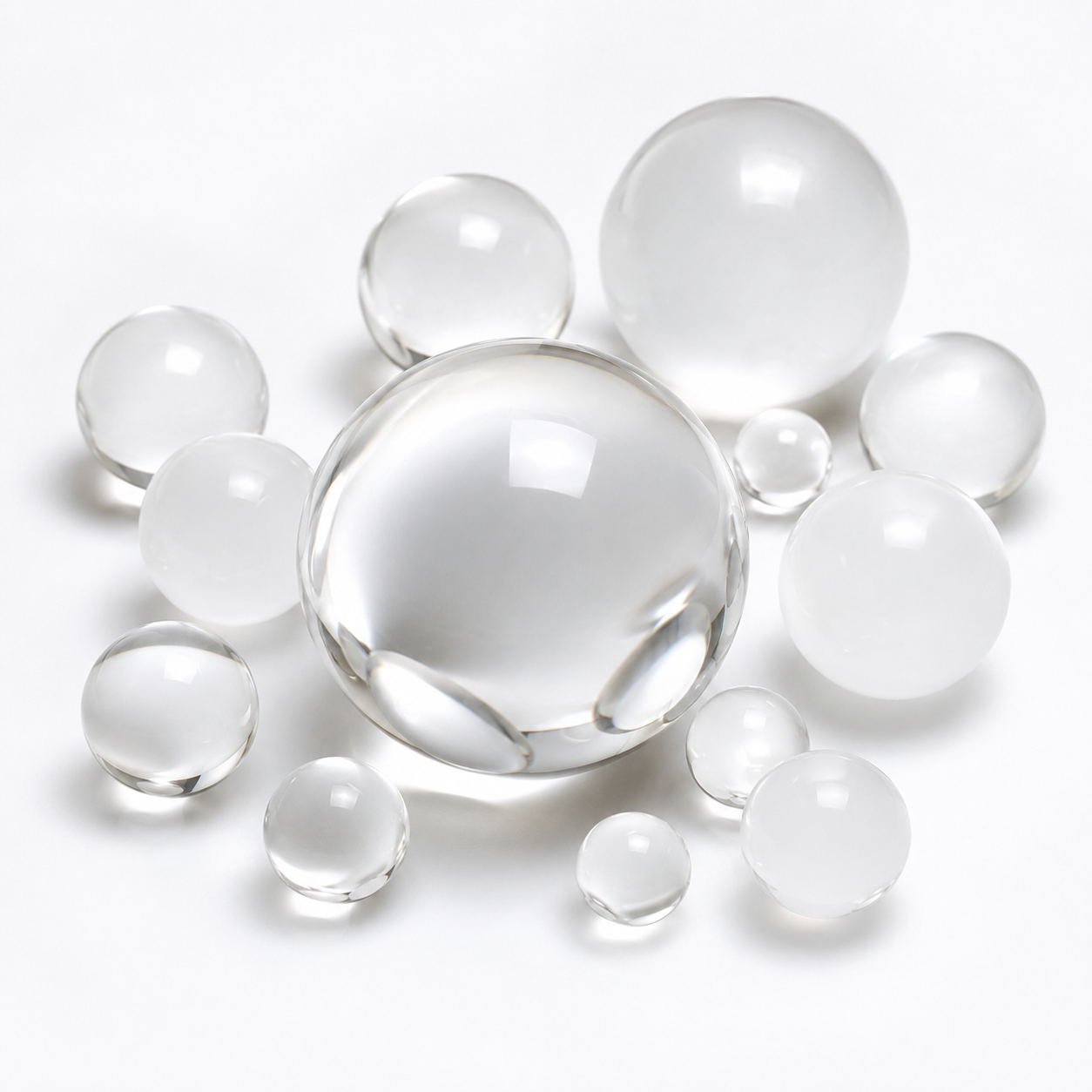
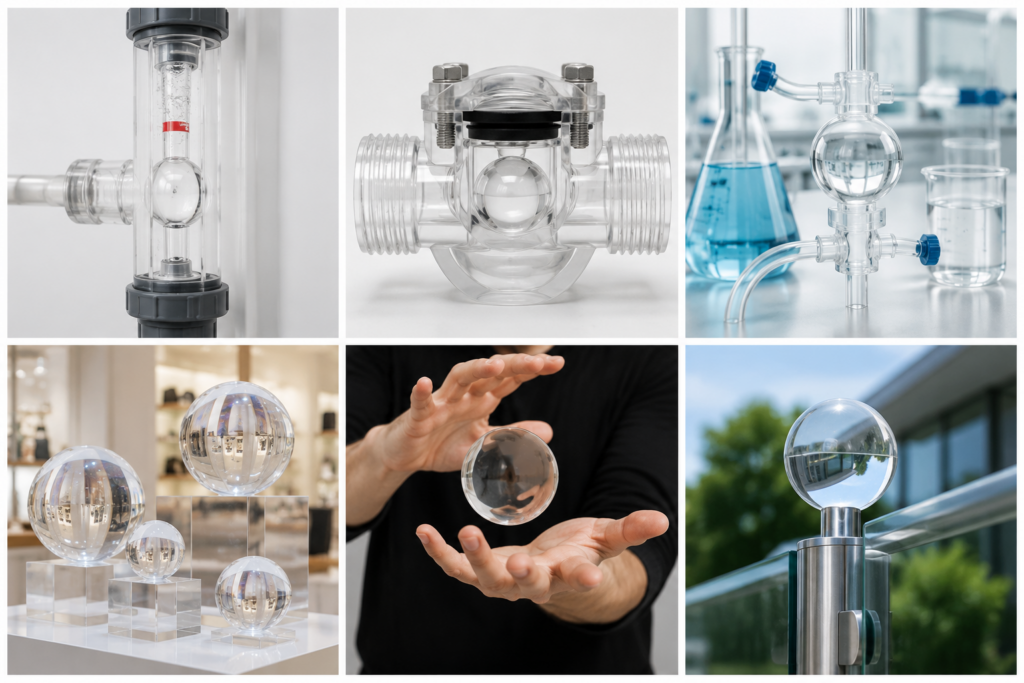
As Esferas de Acrílico, também conhecidas como Esferas de PMMA, são esferas de plástico termoplástico transparente projetadas para aplicações que exigem transparência, baixo peso, resistência a ambientes externos e boa dureza superficial. São comumente usadas em medidores de fluxo visual, válvulas de retenção, aparatos de laboratório, montagens de exibição, malabarismo de contato e designs de componentes transparentes leves.
A SDBALLS fornece esferas de acrílico PMMA em diâmetros de 1,5 mm a 100 mm com opções de grau de precisão I, II e III. Em comparação com esferas de vidro, as esferas de acrílico são mais leves e fáceis de manusear. Em comparação com esferas de policarbonato, o PMMA oferece melhor resistência a riscos e aos raios UV para muitas aplicações ao ar livre ou orientadas para a visibilidade, embora as limitações químicas e de temperatura devam ser confirmadas antes do uso.
| Item | Conteúdo de Página Recomendado |
| Nome Comercial | Esferas de PMMA / Esferas de Acrílico |
| Material | PMMA / polimetilmetacrilato / plástico acrílico |
| Faixa de Diâmetro | 1,5 mm – 100 mm |
| Graus de Precisão | I – II – III |
| Dureza | Referência típica Shore D 84-87 |
| Aplicações típicas | Medidores de fluxo visual, válvulas de retenção, aparatos de laboratório, peças de exibição, malabarismo de contato, montagens decorativas externas e componentes transparentes leves |
Compartilhe este produto
Visão geral do produto
As Esferas Acrílicas são esferas de plástico PMMA selecionadas pela sua aparência clara, baixa densidade, boa dureza superficial, resistência à abrasão e estabilidade em exteriores. O PMMA é um termoplástico transparente amorfo que proporciona um efeito visual semelhante ao vidro sem o peso do vidro. Isto torna as esferas acrílicas úteis em aplicações onde a esfera tem de ser visível, leve e isenta de corrosão.
Para compradores industriais, o principal valor das esferas de PMMA é a visibilidade prática. Em medidores de fluxo visuais e montagens de válvulas de retenção transparentes, a esfera pode atuar como um elemento móvel visível, mantendo-se leve o suficiente para um movimento responsivo. Em aparelhos de laboratório, produtos de exposição e aplicações de desempenho, o PMMA oferece clareza estável e uma aparência de superfície polida.
As esferas acrílicas não devem ser apresentadas como esferas de suporte de carga elevada ou esferas de engenharia de alta temperatura. São melhor especificadas para aplicações de esferas de plástico de baixa carga, onde a transparência, redução de peso, aparência limpa e resistência química compatível são mais importantes do que a dureza do metal, alta resistência ao impacto ou alta resistência ao calor.
Seleção de Material e Posicionamento Técnico
O PMMA é comumente selecionado quando é necessária uma esfera clara, rígida, leve e não magnética. É uma alternativa económica às esferas de vidro quando se necessita de menor peso e manuseamento mais fácil, e também pode ser uma alternativa às esferas de policarbonato quando a resistência a riscos, resistência UV e clareza a longo prazo são mais importantes do que a máxima resistência ao impacto.
A terminologia correta da indústria inclui esferas acrílicas, esferas de PMMA, esferas de polimetilmetacrilato, esferas de plástico transparente e esferas de plástico leve. Para uma seleção de engenharia precisa, os compradores devem evitar tratar o PMMA como um plástico universal resistente a químicos ou de alto impacto. O policarbonato pode ser melhor para impactos severos, o POM pode ser melhor para desgaste e estabilidade dimensional, o PTFE pode ser melhor para resistência química, e o vidro pode ser melhor para maior dureza e resistência a riscos.
Especificações técnicas
| Propriedade | Valor de Referência Típico / Nota de Seleção |
| Tipo de Produto | Esferas termoplásticas leves e transparentes |
| Família do Material | Plástico termoplástico acrílico |
| Diâmetro | 1,5 mm – 100 mm; outros tamanhos sujeitos a confirmação de produção |
| Grau de Precisão | Grau I, Grau II, Grau III |
| Dureza | Shore D 84-87 típico; dados de Rockwell M podem ser confirmados para projetos específicos |
| Densidade | Aprox. 1,17-1,20 g/cm³; muito mais leve que o vidro |
| Magnetismo | Não magnético |
| Resistência à tracção | Resistência à Tração |
| Módulo de Young | Aprox. 2,9 GPa valor de referência |
| Temperatura de Serviço | Gama de referência típica de cerca de -40°C a +90°C; recomenda-se teste de aplicação para exposição contínua ao calor |
| Cor / Aparência | Transparente claro como padrão; a aparência cromática pode variar ligeiramente por lote e tamanho |
| Absorção de Água | Baixa absorção de umidade em comparação com muitos plásticos; confirme se a estabilidade dimensional em água é crítica |
| Propriedades Elétricas | Material plástico isolante elétrico |
| Transparência | Alta clareza óptica e retenção de clareza a longo prazo |
| Resistência Química | Boa resistência a ácidos inorgânicos diluídos, álcalis, amônia, hidrocarbonetos alifáticos, graxas e óleos; não é adequado para hidrocarbonetos aromáticos, cetonas, ésteres, halogênios ou álcoois |
Nota: Os valores acima são referências típicas de engenharia para seleção de produtos. Os valores finais devem seguir a especificação de material acordada, aprovação de amostra e requisitos do pedido de compra. A densidade deve ser expressa em g/cm³, e o módulo deve ser expresso em GPa, não como valores de nível metálico.
Compatibilidade Química & Limites de Aplicação
As esferas acrílicas de PMMA oferecem boa resistência em muitos meios comuns não agressivos, mas suas limitações químicas devem ser respeitadas. Esta seção é importante para reduzir consultas inadequadas e evitar falhas causadas por incompatibilidade química.
| Ambiente / Meio | Orientação de Compatibilidade |
| Ácidos inorgânicos diluídos | Geralmente boa resistência; a concentração e a temperatura devem ser confirmadas |
| Álcalis e amônia | Geralmente boa resistência em condições compatíveis |
| Hidrocarbonetos alifáticos | Geralmente aceitável de acordo com referências comuns de compatibilidade de PMMA |
| Graxas e óleos | Geralmente boa resistência |
| Hidrocarbonetos aromáticos | Não recomendada |
| Halogênios | Não recomendada |
| Cetonas e ésteres | Não recomendado; pode ocorrer inchamento ou ataque ao material |
| Álcool etílico / álcool metílico | Não recomendado para uso contínuo ou crítico |
| Exposição a altas temperaturas | Teste de aplicação necessário; PMMA não é um plástico de alta temperatura |
| Alto impacto ou alta carga | Considere alternativas em policarbonato, POM, nylon, metal ou cerâmica, dependendo do projeto |
Principais Vantagens para Compradores
- A alta transparência suporta inspeção visual clara em medidores de vazão, aparelhos de laboratório e conjuntos de display
- O PMMA leve reduz a massa em comparação com esferas de vidro e ajuda a melhorar a resposta ao movimento em montagens de baixa carga.
- A boa dureza superficial e resistência à abrasão contribuem para uma aparência e qualidade de superfície estáveis.
- A boa resistência UV e a riscos torna o PMMA adequado para muitas aplicações externas ou onde a visibilidade é essencial.
- Material não magnético e eletricamente isolante para designs de componentes não metálicos.
- A faixa de diâmetro definida e as classes de precisão suportam a compra por OEM e a consistência em pedidos repetidos.
- Limites de compatibilidade química podem ser claramente especificados para reduzir o risco de aplicação.
- Embalagem OEM, seleção de tamanho e confirmação de aplicação estão disponíveis para compradores internacionais.
Aplicações e Adequação de Aplicação
| Aplicativo | Nível de Adequação | Por que se Adequa | Nota para o Comprador |
| Medidores de fluxo visuais | Muito boa | A transparência permite movimento visível e indicação de fluxo | Confirmar o meio químico e a temperatura de trabalho |
| Válvulas de retenção | Bom | Peso leve e superfície lisa facilitam o movimento da válvula em baixa carga | Confirmar o design de vedação, pressão e material do assento |
| Aparelhos de laboratório | Bom | Aparência clara e resistência química em meios compatíveis | Confirmar exposição a solventes antes da seleção |
| Montagens de exibição e decoração | Muito boa | Transparência vítrea com menor peso | Confirmar a exposição UV e os requisitos de superfície |
| Malabarismo de contato / adereços de performance | Bom | Aparência clara e polida e peso manejável | Confirmar tamanho e acabamento superficial |
| Componentes transparentes para exterior | Bom | O PMMA oferece resistência UV e a riscos | Evitar condições de alto impacto e alta temperatura |
| Rolamentos de alta carga | Não recomendada | O PMMA não foi projetado para fadiga de rolamento ou carga pesada | Usar aço cromo, aço inoxidável, cerâmica ou plásticos de engenharia |
| Ambientes com solventes agressivos | Não recomendada | O PMMA é atacado por muitos solventes | Considere alternativas em PTFE, vidro, cerâmica ou aço inoxidável |
Guia de Seleção de Materiais
| Opção de Material | Resistência Típica | Limitação | Quando Recomendar |
| Esferas acrílicas de PMMA | Alta transparência, leves, resistência a UV e a riscos | Menor resistência ao impacto que o policarbonato; resistência limitada a solventes | Medidores de fluxo visuais, válvulas de retenção, aparelhos de laboratório, aplicações de visibilidade em exteriores e mostradores |
| Esferas de policarbonato | Maior resistência ao impacto que o PMMA | Mais propensas a riscos e podem necessitar de estabilização UV | Aplicações de esferas plásticas transparentes sensíveis ao impacto |
| Esferas de vidro | Dureza muito alta, excelente claridade e estabilidade química em muitos meios | Mais pesadas e frágeis sob impacto | Aplicações ópticas, laboratoriais ou químicas que necessitam de maior dureza e onde o peso é aceitável |
| Esferas de POM / acetal | Boa resistência ao desgaste, estabilidade dimensional e desempenho mecânico | Opacas e não adequadas para indicação visual de fluxo | Aplicações de esferas plásticas com movimento mecânico, baixa fricção e resistentes ao desgaste |
| Esferas de PTFE | Excelente resistência química e baixo atrito | Macias, custo mais elevado e menor resistência mecânica | Ambientes químicos agressivos |
| Esferas de aço inoxidável | Resistência mecânica de metal, resistência à corrosão dependendo do tipo | Não transparentes e muito mais pesadas | Aplicações mecânicas de carga mais elevada e conjuntos metálicos resistentes à corrosão |
Fabricação & Controle de Processos
As esferas acrílicas são produzidas a partir de material PMMA através de processos controlados de conformação, acabamento e polimento, concebidos para alcançar uma aparência clara, condição de superfície lisa e geometria esférica repetível. Para projetos de esferas plásticas de precisão, o controlo do processo deve focar-se na estabilidade do lote de material, controlo do diâmetro, polimento da superfície, transparência, consistência de cor e limpeza.
Para projetos OEM, a SDBALLS pode confirmar a gama de tamanhos, grau de precisão, aparência da superfície, requisito de cor, método de embalagem e documentos de inspeção antes da produção em massa. Como a aparência do PMMA pode variar ligeiramente por lote, recomenda-se a aprovação de amostras para projetos onde a aparência óptica ou a consistência de cor são críticas.
Controlo de Qualidade e Inspeção
O controlo de qualidade para esferas acrílicas de PMMA deve corresponder à aplicação: medidores de fluxo visuais requerem diâmetro e claridade consistentes; válvulas de retenção requerem um ajuste fiável e suavidade de superfície; produtos de exibição e desempenho requerem transparência limpa e boa aparência polida.
- Inspeção de diâmetro e tolerância de acordo com o grau de precisão acordado.
- Inspeção de circularidade e aparência da superfície para movimento suave e qualidade visual.
- Verificação de transparência, consistência de cor e polimento da superfície para projetos sensíveis à aparência.
- Confirmação do material baseada na especificação de PMMA acordada, quando necessário.
- Revisão da compatibilidade química de acordo com o meio real antes da aprovação da produção.
- Inspeção da embalagem para evitar riscos na superfície, contaminação ou deformação durante o transporte de exportação.
- Aprovação de amostras e suporte com relatórios de inspeção para projetos OEM e distribuidores, quando necessário.
Opções de Embalagem
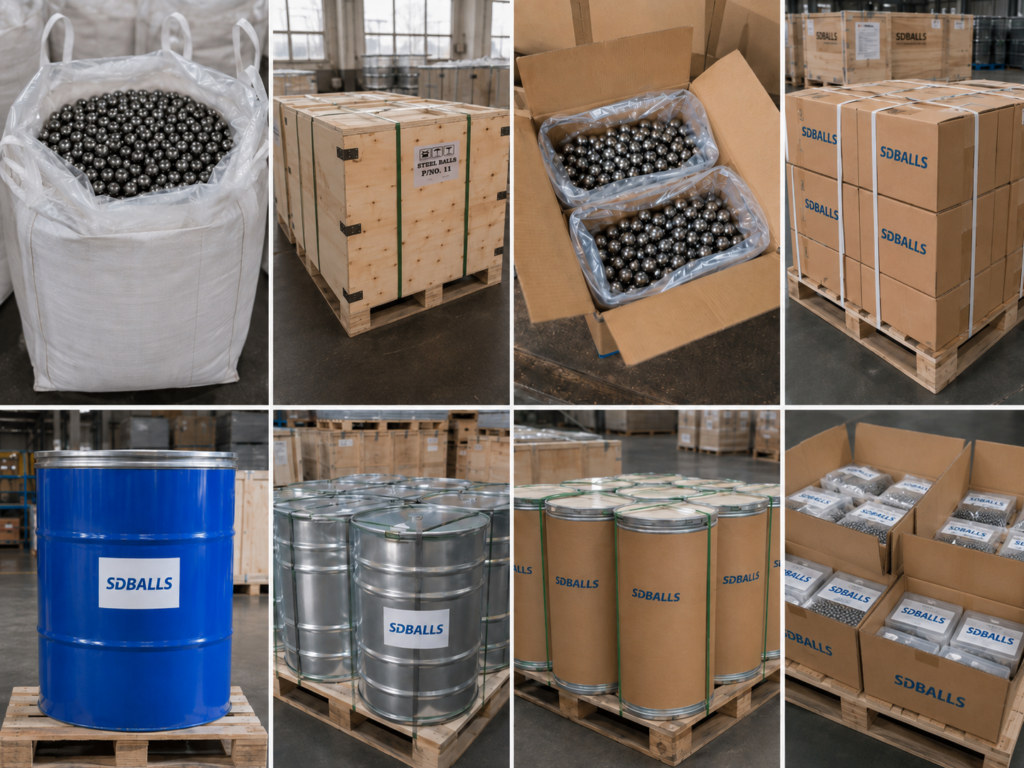
A SDBALLS pode fornecer esferas acrílicas a granel prontas para exportação ou em embalagens personalizadas, de acordo com o diâmetro, a quantidade e os requisitos de proteção da superfície. Para esferas de plástico polido transparente, a embalagem deve evitar riscos, contaminação por poeira e mistura de tamanhos.
| Tipo de embalagem | Uso recomendado |
| Saco plástico pequeno / saco interno | Amostras, pequenas quantidades e embalagem separada por tamanho |
| Embalagem em caixa de cartão | Pedidos regulares de exportação e estoque para distribuidores |
| Balde ou tambor | Fornecimento industrial a granel quando a proteção da superfície é controlada |
| Embalagem em palete | Grandes remessas de exportação que exigem manuseio estável |
| Rótulo OEM personalizado | Embalagem para distribuidor, proprietário de marca e específica para a aplicação |
| Embalagem com separação protetora | Recomendada para esferas transparentes sensíveis à aparência, para reduzir riscos |
Como Especificar para Cotação
Para cotar com precisão, por favor confirme as seguintes informações:
- Material: PMMA / requisito de esfera de plástico acrílico.
- Diâmetro em mm ou polegada e tolerância / grau de precisão exigido.
- Quantidade para cada tamanho e procura anual prevista, se disponível.
- Requisito de aparência: transparente incolor, cor, nível de polimento ou expectativa de clareza óptica.
- Aplicação: medidor de vazão visual, válvula de retenção, aparelho de laboratório, expositor, malabarismo de contato ou outro uso.
- Meio de trabalho, exposição química, temperatura e pressão de trabalho, se utilizadas em válvulas ou instrumentos.
- Método de embalagem, rotulagem, requisito de palete de exportação e porto de destino.
- Documentos de inspeção exigidos, amostras, desenhos ou ficha de especificação do fornecedor atual.
FAQ Técnico
P: O que são bolas de acrílico e o que é PMMA?
R: Esferas Acrílicas são esferas de PMMA fabricadas a partir de polimetilmetacrilato, um material termoplástico transparente. São escolhidas pela transparência, baixo peso, boa dureza superficial, resistência UV e aparência limpa.
P: Que tamanhos e qualidades a SDBALLS pode fornecer?
R: A SDBALLS fornece esferas acrílicas de PMMA de 1,5 mm a 100 mm com opções de grau de precisão I, II e III. Requisitos especiais devem ser confirmados antes da cotação.
P: As esferas acrílicas são mais leves que as esferas de vidro?
R: Sim. O PMMA tem densidade típica de cerca de 1,17-1,20 g/cm³, muito mais leve que o vidro comum. Isso torna as esferas acrílicas úteis onde são exigidos menor peso e movimento visível.
P: As esferas acrílicas são melhores que as esferas de policarbonato?
R: Depende da aplicação. As esferas acrílicas geralmente oferecem melhor resistência a riscos, resistência UV e retenção de clareza. O policarbonato geralmente é melhor quando a prioridade é maior resistência ao impacto.
P: As esferas acrílicas de PMMA são resistentes a produtos químicos?
R: Possuem boa resistência a ácidos inorgânicos diluídos, álcalis, amônia, hidrocarbonetos alifáticos, graxas e óleos. Não são recomendadas para hidrocarbonetos aromáticos, cetonas, ésteres, halogênios, álcool etílico ou álcool metílico sem testes.
P: As esferas acrílicas podem ser usadas em válvulas de retenção?
R: Sim, podem ser usadas em válvulas de retenção de baixa carga quando a pressão, o meio, o design do assento e a temperatura são compatíveis com os limites do material PMMA.
P: As esferas acrílicas podem ser usadas ao ar livre?
R: O PMMA tem boa resistência UV e a riscos, por isso é adequado para muitas aplicações de visibilidade e decoração ao ar livre. Condições de alto impacto ou alta temperatura devem ser avaliadas cuidadosamente.
P: As esferas acrílicas são adequadas para rolamentos de alta carga?
R: Não. As esferas acrílicas de PMMA não são recomendadas para aplicações em rolamentos de alta carga, alta velocidade ou fadiga crítica. Alternativas como aço cromo, aço inoxidável, cerâmica ou plásticos de engenharia devem ser consideradas.
P: Que informações são necessárias para uma cotação?
R: Por favor, forneça diâmetro, quantidade, grau de precisão, requisito de aparência, aplicação, meio de trabalho, temperatura, requisito de embalagem e quaisquer desenhos ou amostras.
P: A SDBALLS pode fornecer esferas acrílicas personalizadas?
R: Sim. A SDBALLS pode discutir tamanho, grau, cor, embalagem e rotulagem OEM personalizados de acordo com os requisitos do projeto.
Produtos Relacionados
- esferas de plástico
- esferas de nylon poliamida
- Esferas de HDPE
- esferas de vidro para aplicações transparentes e laboratoriais
- esferas de aço inoxidável para aplicações metálicas resistentes à corrosão
- controle de qualidade SDBALLS
- aplicações industriais de esferas
- solicite um orçamento para esferas acrílicas de PMMA
Agendar uma solicitação
Entre em contato conosco hoje mesmo para qualquer serviço. (*) Indica campos obrigatórios.