
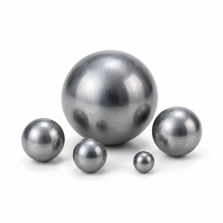
Niobium Balls – High-Purity Refractory Metal Precision Spheres
Niobium balls are high-purity refractory-metal spheres used in superconducting, cryogenic, scientific, aerospace, medical and corrosion-sensitive engineering programs. Niobium combines a high melting point, useful corrosion resistance, non-ferromagnetic behaviour and superconducting capability at cryogenic temperature. SDBALLS reviews each project by purity, metallurgical condition, diameter, tolerance, finish, cleanliness and documentation.
| Item | Conteúdo de Página Recomendado |
| Nome do produto | High-purity niobium balls and spheres |
| Material | Niobium Nb, 99.9% typical |
| Faixa de Diâmetro | 0.5-100 mm; material and production-route dependent |
| Tolerância | +/-0.01 mm typical project reference; final value by drawing |
| Densidade | Approximately 8.57 g/cm3 |
| Aplicações típicas | Superconducting systems, MRI and accelerator programs, aerospace, medical and research |
Compartilhe este produto
Visão geral do produto
Niobium is a refractory metal known for superconducting behaviour, a high melting point, corrosion resistance and compatibility with selected biomedical environments. The performance of a niobium sphere depends strongly on purity, metallurgical state, geometry, surface, cleanliness and the complete system design.
MRI, accelerator, cryogenic and medical programs can require qualification evidence beyond a standard dimensional report. Certificate, sampling, analytical method and cleanliness requirements should therefore be established before quotation.
Material Selection and Technical Positioning
- Choose niobium when superconducting potential, cryogenic performance, refractory-metal stability, corrosion behaviour or biocompatibility matters more than commodity-metal cost.
- Compared with tantalum, niobium is substantially lighter and better known for superconducting applications, while tantalum is often selected for high density and exceptional chemical resistance.
- Compared with titanium, niobium is denser and serves more specialized superconducting and research uses.
- Niobium becomes superconducting only under cryogenic conditions. Ball geometry alone does not establish system performance.
Especificações técnicas
The values below are product-family references. The quotation, drawing, agreed standard and inspection plan control the final supply specification.
| Parâmetro | Typical SDBALLS Supply Range or Note |
| Material | Niobium Nb |
| Purity | 99.9% typical; higher-purity or controlled chemistry by review |
| Diâmetro | 0.5-100 mm; purity and production-route dependent |
| Tolerância de diâmetro | +/-0.01 mm typical reference; final tolerance by drawing |
| Redondeza | Application-specific; confirm before quotation |
| Dureza | Condition dependent; confirm metallurgical state and test method |
| Densidade | Approximately 8.57 g/cm3 |
| Melting Point | Approximately 2477 C |
| Magnetic Behaviour | Non-ferromagnetic; superconducting below the critical temperature under suitable conditions |
| Acabamento da superfície | Machined, ground, lapped or polished; clean packing by agreement |
| Resistência à corrosão | Excellent in selected environments; verify exact chemical and service conditions |
| Biocompatibility | Useful reference characteristic; medical use requires device-specific validation |
| Embalagem | Clean vials, trays, sealed bags, cartons or qualification-specific packs |
Applications and Application Fit
Application names are selection guides, not universal approval. Confirm the actual load, media, temperature, pressure, service life and compliance requirements.
| Aplicativo | Por que se Adequa | Nota para o Comprador |
| Superconducting systems | Cryogenic components and scientific programs | Define purity, metallurgical condition and operating field |
| MRI systems | Specialized superconducting and medical-equipment programs | Equipment-specific qualification required |
| Particle accelerators | Research and high-energy systems using niobium | Define surface, cleanliness and traceability |
| Aerospace and high-temperature research | Advanced alloy, thermal and experimental assemblies | Validate load, temperature and atmosphere |
| Dispositivos médicos | Biocompatibility-led components | Device-specific testing and regulatory approval required |
Guia de Seleção de Materiais
| Opção de Material | Primary Advantage | Limitação | Typical Fit |
| Niobium | Superconducting capability, refractory stability and moderate density | Specialty sourcing and qualification cost | MRI, accelerators and scientific systems |
| Tantalum | Higher density and exceptional resistance in selected aggressive media | Heavier and generally more costly | Chemical, semiconductor and electronic duty |
| Titanium | Low density, strength and corrosion resistance | Not selected for the same superconducting function | Marine, aerospace and medical systems |
| Silicon nitride | Low density, electrical insulation and high hardness | Brittle ceramic with different joining and thermal behaviour | High-speed bearings and electrically sensitive systems |
Manufacturing and Process Control
The selected route may include high-purity stock preparation, precision machining, grinding, lapping, polishing, controlled cleaning and inspection. Separate handling, lot control and clean protective packing are important when superconducting, vacuum or medical qualification requirements apply.
Quality Control and Inspection
- Purity and material-certificate verification
- Diameter, tolerance and sphericity inspection
- Surface finish and cleanliness inspection
- Metallurgical condition verification when required
- Batch identification and traceability
- Chemical or third-party analytical support by agreement
- Qualification-specific packing inspection
Opções de Embalagem
Use clean vials, trays, sealed bags, cartons or qualification-specific protective packs. Packing materials, cleanliness level and piece separation must be confirmed for vacuum, cryogenic, superconducting or medical programs.
Como Especificar para Cotação
Ask the buyer to provide the following information so the sales and engineering teams can confirm the correct material and production route.
- Niobium purity and governing specification
- Metallurgical condition
- Diameter, tolerance and roundness
- Surface finish, roughness and cleanliness
- Quantity and annual forecast
- Cryogenic, magnetic, vacuum or chemical service conditions
- Inspection and analytical methods
- Certificates, packing and destination
FAQ Técnico
Q What purity is available for niobium balls?
A Niobium at 99.9% purity is a typical reference. Higher-purity or chemistry-controlled requirements must include the requested analysis and certificate format.
Q Are niobium balls superconducting?
A Niobium becomes superconducting below its critical temperature, approximately 9.2 K for pure niobium. System performance also depends on purity, metallurgical state, magnetic field, geometry and cryogenic design.
Q Can niobium balls be used in MRI or accelerator systems?
A They can be considered for specialized programs, but the component must be qualified to the equipment design, surface, cleanliness, traceability and documentation requirements.
Q Are niobium balls suitable for medical applications?
A Niobium has useful biocompatibility characteristics, but medical suitability requires device-specific validation, regulatory review and traceable material evidence.
Q What size and tolerance are available?
A The reference range is 0.5-100 mm with +/-0.01 mm as a typical project tolerance. Actual capability depends on purity, size, surface, quantity and inspection method.
Q Are small qualification lots available?
A Small-quantity, R&D and qualification enquiries can be reviewed subject to material and size availability.
Produtos Relacionados
Agendar uma solicitação
Entre em contato conosco hoje mesmo para qualquer serviço. (*) Indica campos obrigatórios.