Precision Glass Balls: Materials, Grades and Industrial Applications
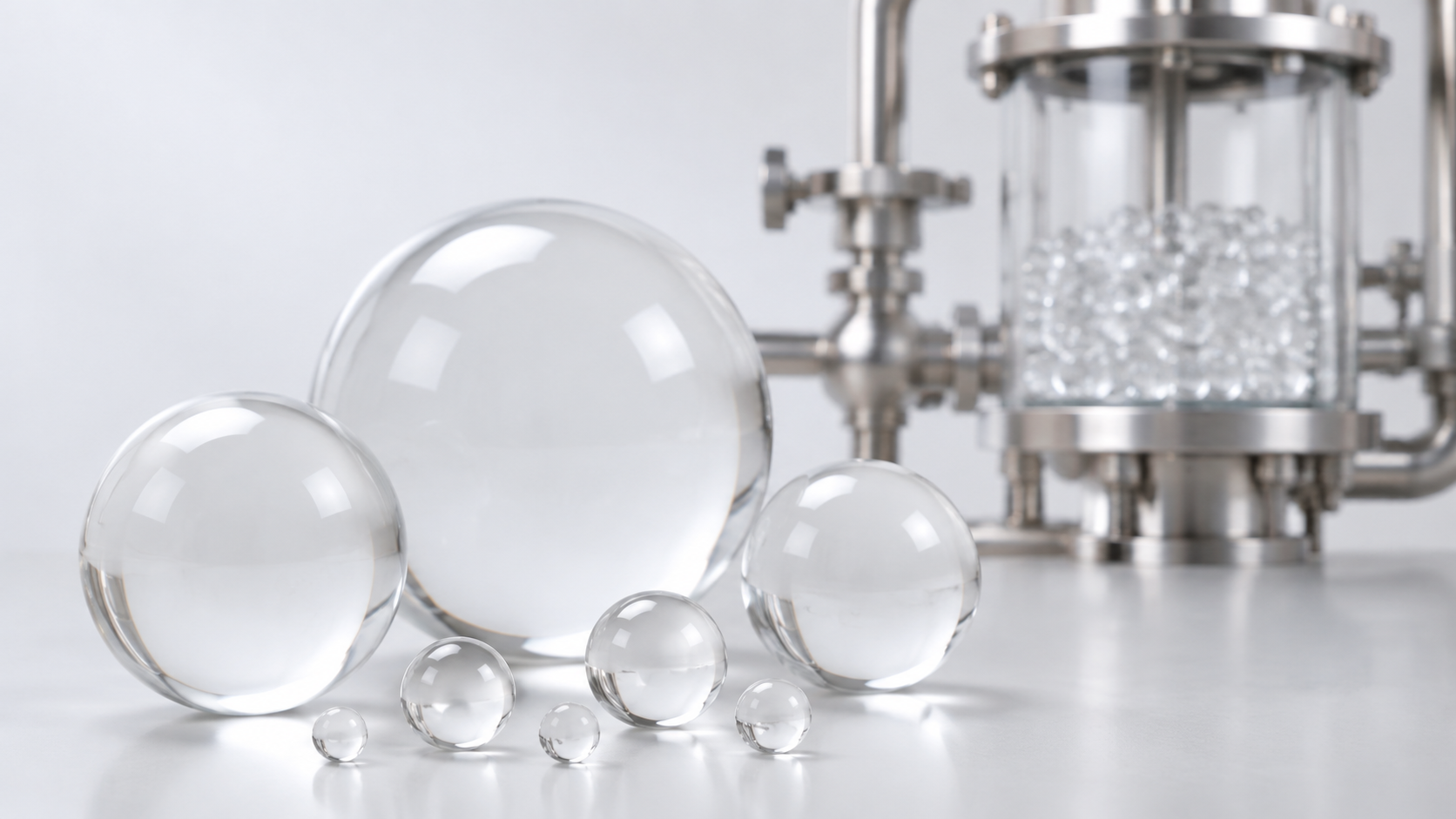
Precision glass balls are widely used in industrial components where non-magnetic properties, electrical insulation, chemical resistance and consistent spherical geometry are important. They can be found in check valves, metering pumps, flow meters, laboratory equipment and various fluid-control systems.
However, not all glass balls are suitable for the same applications. Material composition, diameter, precision grade, surface finish and operating conditions all influence product selection.
For engineers, OEM manufacturers and industrial buyers, understanding these differences is essential when specifying precision glass balls for a new project or replacing existing components.
1. What Are Precision Glass Balls?
Precision glass balls are spherical components manufactured for applications requiring controlled dimensions, consistent shape and suitable surface quality.
Unlike ordinary decorative glass marbles, industrial precision glass balls are selected according to specific technical requirements. Their dimensional consistency and surface condition can influence sealing, movement, flow control and measurement performance.
Common characteristics include:
- Non-magnetic properties
- Isolamento elettrico
- Good chemical resistance in compatible environments
- Smooth glass surfaces
- Available transparent or opaque appearances
- Different material and precision-grade options
Glass balls are particularly useful when metal components are unsuitable because of magnetic interference, corrosion concerns or electrical conductivity.
However, glass is brittle compared with steel. It should not automatically be considered a replacement for steel balls in high-impact or heavy-load mechanical applications.
2. Main Types of Precision Glass Balls
Different glass materials provide different combinations of chemical resistance, thermal performance and cost.
The three main options for industrial applications are soda-lime glass, borosilicate glass and black glass.
2.1 Soda-Lime Glass Balls
Soda-lime glass is a widely used and economical glass material.
Its main advantages include:
- Good chemical stability in many compatible environments
- Non-magnetic and electrically insulating properties
- Smooth surface characteristics
- Cost-effective supply
- Transparent and colored options
Soda-lime glass balls are commonly used in:
- Controllare le valvole
- Metering pumps
- Flow meters
- Measuring instruments
- Cuscinetti in plastica e assemblaggi a rotolamento leggero
- Bottle caps and dispensing components
- Selected industrial mixing applications
SDBALLS lists diameters from 2.0 mm to 100.0 mm, with common precision grades G100, G200, G500 and G1000.
Soda-lime glass is generally more economical than borosilicate glass, but it has lower thermal shock resistance. It is therefore better suited to applications with relatively stable operating temperatures.
2.2 Borosilicate Glass Balls
Borosilicate glass is designed for applications requiring better thermal shock resistance and chemical stability.
Its main characteristics include:
- Improved resistance to temperature changes
- Good resistance to many chemicals and acids
- Non-magnetic properties
- Isolamento elettrico
- Transparent appearance
- Suitability for demanding fluid-control applications
Typical applications include:
- Chemical metering pumps
- Valvole di ritegno e valvole a sfera
- Dosing systems
- Attrezzatura da laboratorio
- Componenti per erogazione in ambito farmaceutico e cosmetico
- Selected industrial process equipment
SDBALLS lists diameters from 2.0 mm to 100.0 mm, with precision grades including G20, G40, G100, G200, G500 and G1000.
Borosilicate glass is often preferred when the application involves temperature variation or more demanding chemical environments.
Nevertheless, chemical compatibility must be evaluated for the actual working medium. Hydrofluoric acid and strong hot alkalis require particular attention.
2.3 Black Glass Balls
Black glass balls are used when an opaque appearance and visual contrast are important.
Their characteristics include:
- Non-magnetic performance
- Isolamento elettrico
- Stable spherical geometry
- Opaque black appearance
- Good resistance to corrosion in compatible media
Typical applications include:
- Flow meters
- Rotameters
- Sight indicators
- Measuring instruments
- Selected medical and industrial instrumentation
The black appearance can improve visibility inside transparent instrument assemblies.
SDBALLS lists black glass balls in diameters from 2.0 mm to 100.0 mm, with grades including G20, G40, G100, G200, G500 and G1000.
For instrument applications, buyers should pay particular attention to diameter, density consistency, surface quality and compatibility with the working medium.
3. Precision Grades and Dimensional Requirements
Precision grade is an important consideration when purchasing industrial glass balls.
A suitable grade depends on the functional requirements of the assembly rather than simply selecting the highest available precision.
Per esempio:
- Valve applications may require consistent dimensions and surface condition for reliable seating.
- Flow meters may require controlled diameter and density to support repeatable movement.
- Metering systems may require consistent ball geometry for stable operation.
- General industrial applications may prioritize an appropriate balance between performance and cost.
SDBALLS lists different grade options according to glass material.
The available grades should be confirmed against the specific product, diameter and order requirements.
Importantly, buyers should not rely on a grade designation alone. A complete technical specification should also identify:
- Nominal diameter
- Tolleranza di diametro
- Deviazione dalla forma sferica
- Surface finish or roughness requirement
- Lot-to-lot consistency
- Inspection requirements
For projects with strict dimensional requirements, drawings, samples or an agreed technical specification should be used before mass production.
4. How to Choose the Right Glass Ball Material
Selecting the correct glass material requires an understanding of the actual working environment.
Chemical Compatibility
Identify the liquid, gas or chemical medium that will contact the glass ball.
Although glass materials provide good chemical resistance in many environments, compatibility depends on the specific chemical, concentration, temperature and exposure time.
Operating Temperature
For applications involving temperature changes, borosilicate glass is generally a better starting point than soda-lime glass.
The actual operating temperature and thermal shock conditions should still be confirmed.
Diameter and Precision
Confirm the nominal diameter, tolerance, required grade and dimensional inspection method.
For valve and metering applications, dimensional consistency can directly influence component performance.
Qualità della superficie
Surface scratches, chips, cracks and other visible defects may affect sealing, movement or service reliability.
Buyers should specify the required surface condition and inspection criteria.
Mechanical Conditions
Glass balls are hard but brittle.
Applications involving high impact, heavy mechanical loads or severe abrasive conditions should be evaluated carefully. Stainless steel or ceramic balls may be more appropriate alternatives.
5. Industrial Applications of Precision Glass Balls
Valves and Fluid-Control Systems
Glass balls can be used in selected check valves, ball valves and fluid-control assemblies.
Their chemical resistance, non-magnetic properties and smooth surfaces make them suitable for compatible operating conditions.
The ball diameter, seat material, working pressure and fluid chemistry should be confirmed during selection.
Metering Pumps and Dosing Equipment
Metering pumps require components that support consistent movement and reliable fluid control.
Glass balls are used in selected dosing and pumping systems where material compatibility and dimensional consistency are important.
Flow Meters and Measuring Instruments
Transparent or black glass balls can be used in measuring and indicating equipment.
The appropriate material, diameter, density and visual characteristics depend on the instrument design.
Laboratory and Dispensing Equipment
Borosilicate glass balls are suitable for selected laboratory, pharmaceutical and cosmetic dispensing components.
For these applications, buyers should also specify cleanliness, packaging and any applicable regulatory or documentation requirements.
6. Precision Glass Balls: Material Comparison
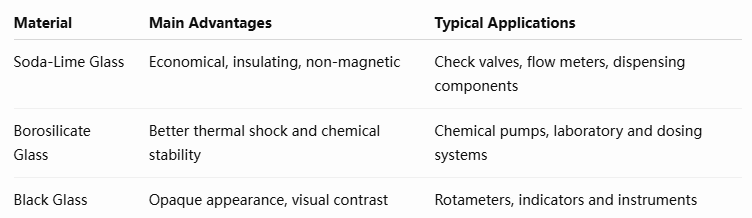
The correct material depends on the actual operating environment, required precision and project budget.
Decorative glass marbles are a separate product category. They should not be treated as precision industrial glass balls unless their dimensional and technical requirements have been specifically verified.
7. What Information Is Needed for a Quotation?
To select and quote the appropriate precision glass balls, buyers should provide:
- Material: Soda-lime, borosilicate or black glass.
- Diameter: Required nominal size in millimeters or inches.
- Precision Grade: Required grade or dimensional tolerance.
- Quantity: Initial order quantity and estimated annual demand.
- Application: Valve, metering pump, flow meter, laboratory equipment or another application.
- Working Conditions: Chemical medium, operating temperature and pressure.
- Surface Requirements: Transparency, finish, cleanliness and visible-defect criteria.
- Inspection Requirements: Drawings, samples or inspection documentation.
- Packaging: Standard industrial or customized packaging.
Providing a drawing, sample or existing technical specification can help reduce communication time and improve quotation accuracy.
8. Frequently Asked Questions
Are precision glass balls magnetic?
No. Soda-lime, borosilicate and black glass balls are non-magnetic materials.
What is the difference between soda-lime and borosilicate glass balls?
Soda-lime glass is generally a more economical option for stable operating environments. Borosilicate glass offers better thermal shock resistance and improved chemical stability for more demanding applications.
Quali dimensioni sono disponibili?
SDBALLS lists diameters from 2.0 mm to 100.0 mm for its soda-lime and borosilicate glass ball ranges. Specific size and grade availability should be confirmed for each project.
Can glass balls be used in check valves?
Yes. Glass balls are used in selected check valves and fluid-control components. Material compatibility, ball diameter, precision requirements, seat design and operating pressure should be confirmed.
Can glass balls replace stainless steel balls?
Only in suitable applications. Glass provides electrical insulation and non-magnetic properties, but it is more brittle than stainless steel. High-load and impact applications require careful material evaluation.
Which glass material is suitable for higher temperature variation?
Borosilicate glass is generally preferred because of its better thermal shock resistance. Actual operating conditions must be confirmed before selection.
Can SDBALLS provide customized glass balls?
SDBALLS lists multiple glass materials, diameters and precision grades. Customized requirements can be discussed based on drawings, samples, specifications and production feasibility.
Looking for a Precision Glass Ball Supplier?
Choosing the right glass ball requires more than confirming its diameter. Material composition, precision grade, surface condition and working environment all contribute to the final application requirements.
SDBALLS supports inquiries for soda-lime, borosilicate and black glass balls for industrial and OEM applications.
Contact our team with your required specifications, drawings or samples to discuss a suitable solution.
Request a Quote: https://sdballs.com/contact-us/

Informazioni sull'autore
Siamo SD Ball, un'azienda specializzata nella produzione di sfere d'acciaio di alta precisione per il mercato globale. Grazie a un'esperienza pluriennale, ci distinguiamo per processi produttivi avanzati, un rigoroso controllo qualità e soluzioni personalizzate a supporto di diverse applicazioni industriali. Dalla selezione dei materiali all'ispezione finale, garantiamo prodotti affidabili e prestazioni costanti, aiutando i nostri clienti a raggiungere maggiore efficienza, durata e qualità del prodotto.
Condividere
Categoria di prodotto
Articoli correlati
-
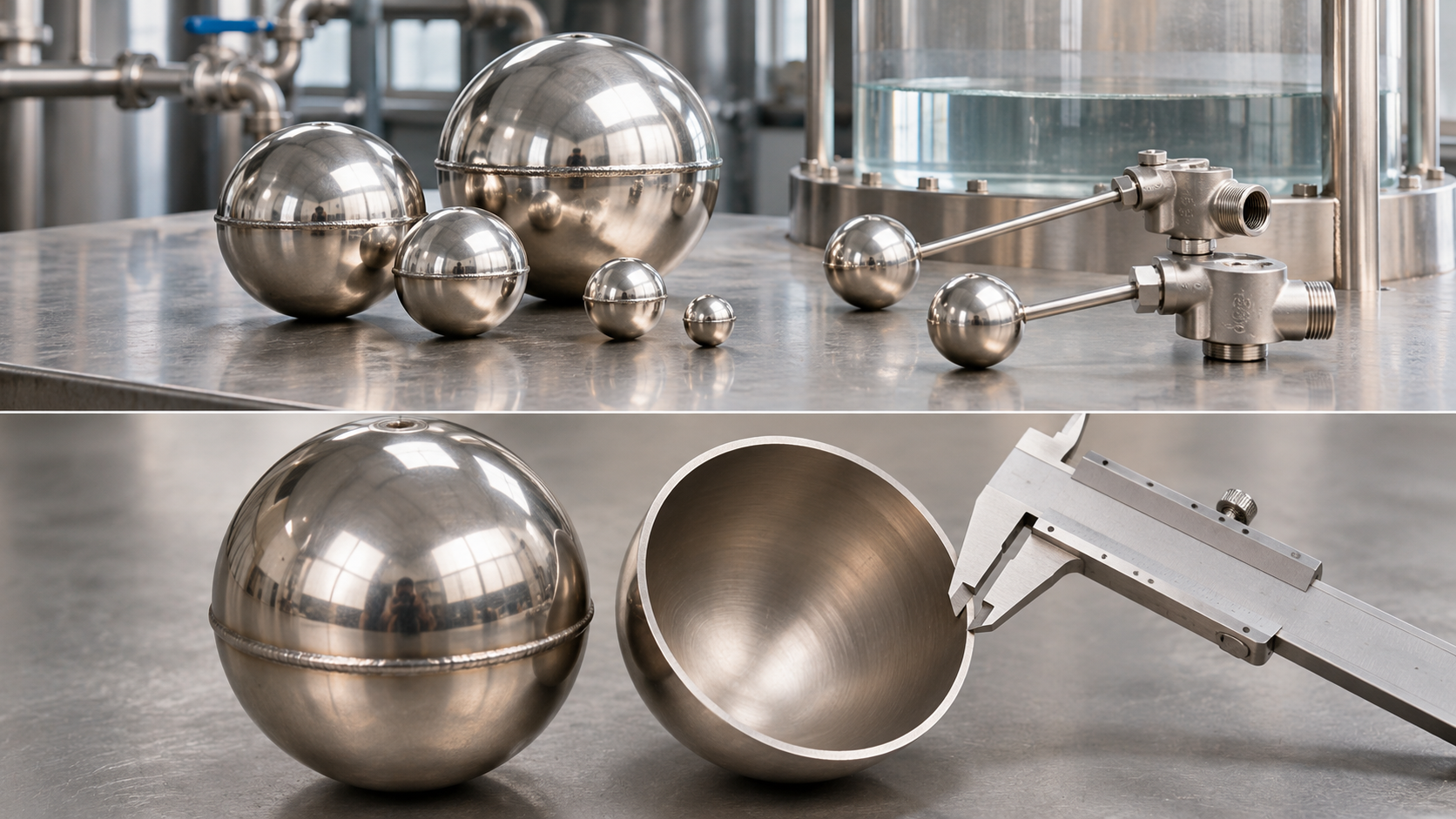
How to Choose Hollow Stainless Steel Balls for Float Valves: Size, Wall Thickness and Buoyancy
A hollow stainless steel ball may look like a simple component, but selecting one for a float valve or liquid-level control assembly requires more than choosing a diameter and material grade. The sphere must displace enough liquid to support its own weight and operate the mechanism. At the same time, its shell, welds and attachment… -
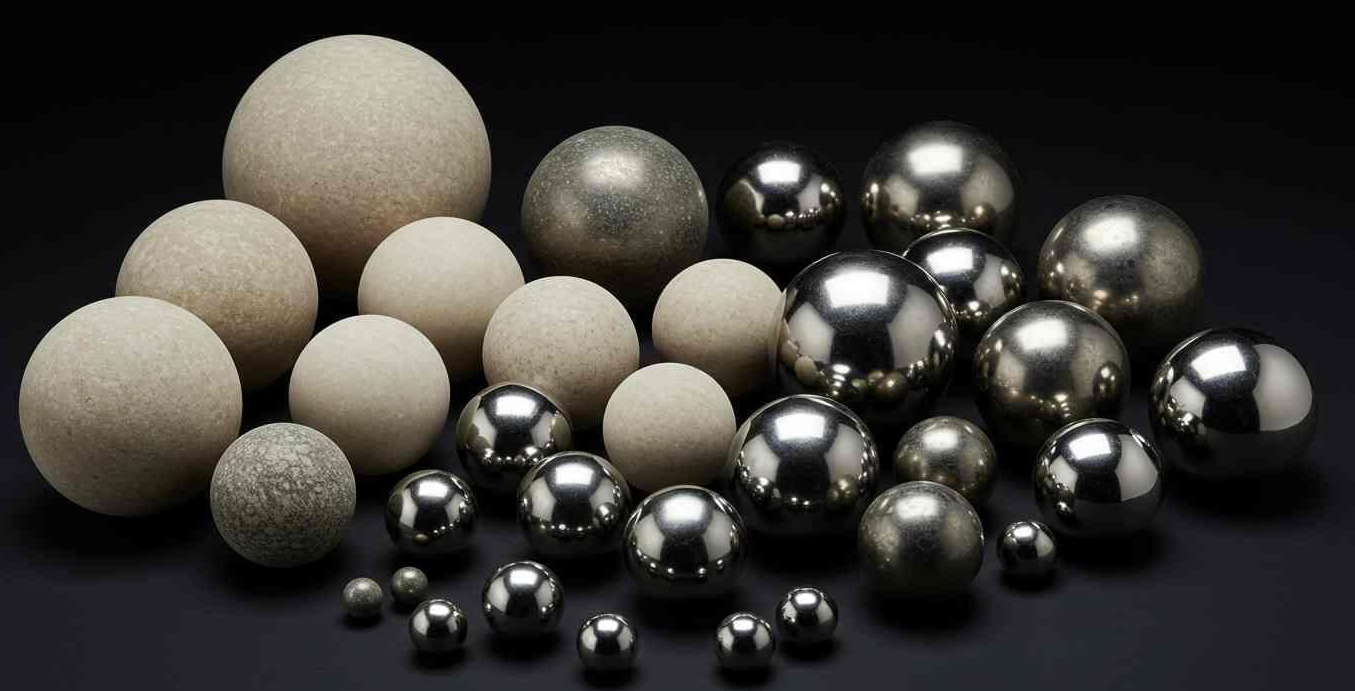
How to Choose Grinding and Polishing Media for Industrial Applications
Choosing the right grinding and polishing media is an important step in achieving consistent industrial processing results. Whether your application involves removing burrs from metal parts, improving surface smoothness, refining materials or polishing precision components, the type of media you select can influence processing efficiency, wear, surface quality and operating costs. However, not all grinding…